Two slim fitness bands now occupy the same crowded wrist space: the Fitbit Inspire 3 and the Samsung Galaxy Fit3. One leans on years of health-sensor refinement, the other on a bright AMOLED panel and an unusually long battery rating. This guide exists for one reason: to help a buyer decide between them without returning to a spec sheet twenty times. Keep it bookmarked; the criteria below are the ones that actually decide the purchase.
| Feature & Selling Point | Fitbit Inspire 3 | Samsung Galaxy Fit3 |
|---|---|---|
| Display Type | Colour AMOLED, always-on option | 1.6-inch AMOLED, wider viewing area |
| Battery Life (rated) | Up to 10 days | Up to 13 days on a single charge |
| Field-Swappable Band | Yes, quick-release silicone straps | Yes, proprietary clasp straps |
| Water Resistance Rating | 5 ATM (swim-proof) | IP68 (splash and dust proof) |
| Sleep Tracking Depth | Sleep stages, Sleep Score, Smart Wake | Sleep stage tracking with SpO2 |
| Built-in GPS | Connected GPS via phone | Connected GPS via phone |
| Stress Management Tools | EDA sensor, on-screen guided breathing | Stress score via heart-rate variability |
| Workout Modes | 20+ exercise modes | 100+ workout types, auto-detect motion |
| SpO2 and Heart Rate | 24/7 heart rate, SpO2 sensor | 24/7 heart rate, SpO2 sensor |
| Phone Pairing | Android and iOS | Android only (ecosystem requirement) |
| Subscription Separate From Hardware | Premium tier unlocks deeper analytics | Samsung Health is free at base level |
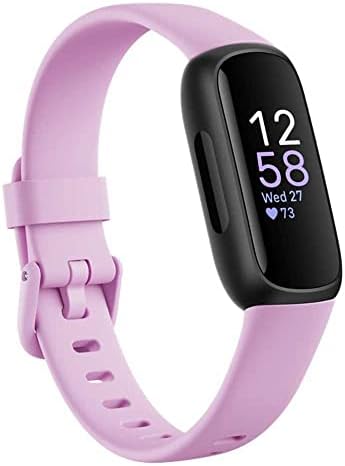
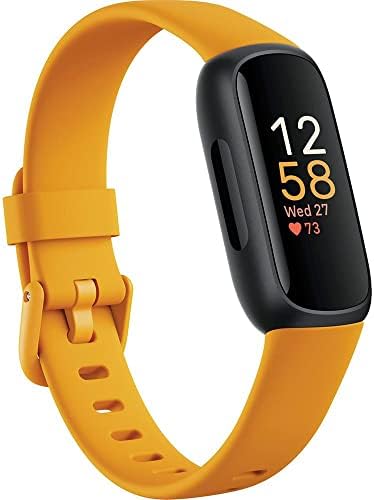
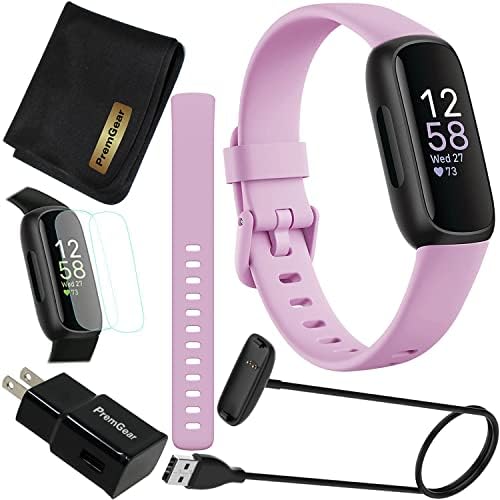
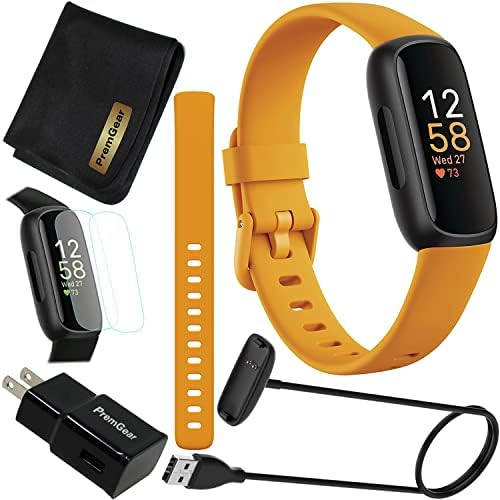
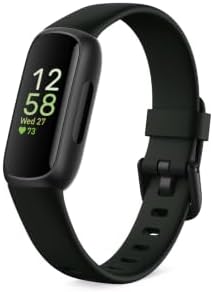
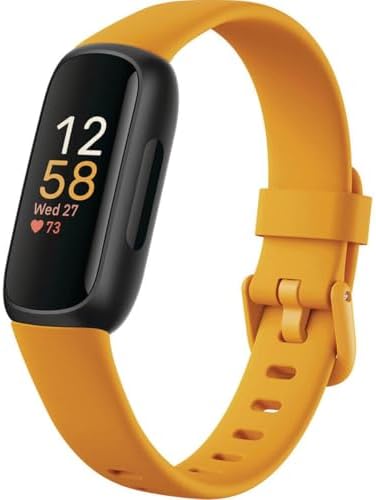
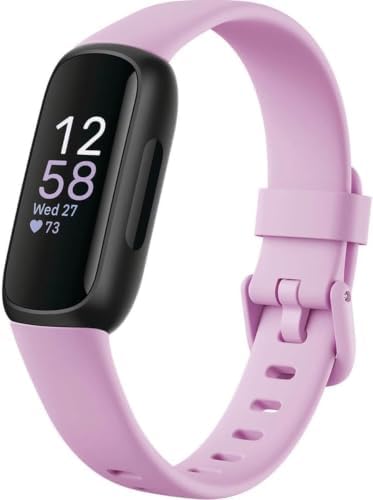
| Case and Finish Options | Midnight Zen, Morning Glow, Lunar White | Grey, Silver, Pink Gold aluminium |
| Strap Weight and Feel | Ultra-light compact case | Slightly wider lug-to-lug profile |
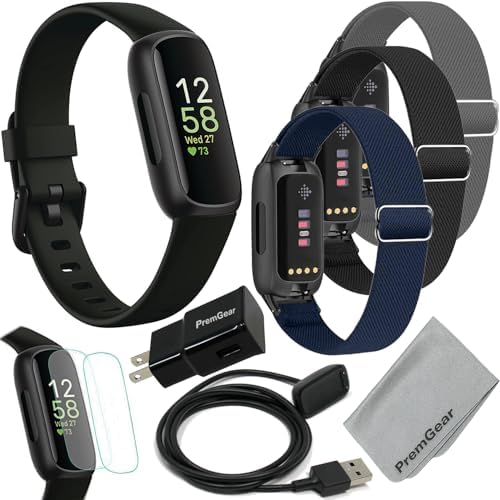
| Battery Charging Method | Magnetic pin charging cable | Magnetic cradle connection |
| Best Suited User | Cross-platform health tracking | Android screen-first interaction |
| Value Position | Sensor depth over screen size | Larger display and longer rated battery |
The table tells a compact story. The Fitbit brand’s engineering budget goes into measurement quality and recovery insight, while the Samsung brand’s budget goes into a larger panel, a newer screen technology, and a battery figure that stretches three extra rated days. Neither column is universally right, which is exactly why the choice has to follow wrist behaviour rather than brand loyalty.
What the Fitbit Inspire 3 Actually Tracks Well
The Inspire 3 belongs to a lineage that treats the wrist as a continuous measurement point rather than a small notification screen. Browse the models inside the Inspire 3 lineup and a pattern becomes obvious: the sensor array is the flagship component, not the display.
Two capabilities give the band its character. The first is the EDA sensor, which reads minute electrodermal changes tied to sympathetic nervous system activity. Instead of guessing at stress from heart-rate variability alone, the band gives the user a moment-by-moment physiological trace. The second is a full sleep architecture breakdown, adding Sleep Score, Smart Wake windows, and a respiration metric to the standard stages of light, deep, and REM. The hardware cost of this approach is modest, which keeps the case thin and the wrist load low.
Connected GPS is built into the experience, not the case. When paired to a phone, the band borrows the handset’s positioning for outdoor walks and runs and reports pace, effort, and splits on return. It is a sensible trade for anyone who does not want to carry a second screen, though it means workouts can be logged without a phone only if location data is not essential to that session.
Why the Samsung Galaxy Fit3 Feels Bigger Than It Looks
Samsung took the opposite route. Its engineering priority is the glass. The Galaxy Fit3 carries a 1.6-inch AMOLED panel, a notably large surface for this class, and the company states the watch lasts up to 13 days on a single charge while tracking over 100 workouts and daily activities, including sleep. Samsung’s own support material also describes an auto-detect workout system that uses motion sensors to log physical activity without pressing start, with the resulting data reviewable later inside the app.
That combination changes the feel of daily use. A larger AMOLED screen supports more characters in notifications, richer watch-face customisation, and glanceable metrics that do not require pinching to read. Samsung rates the model IP68, which covers dust ingress and water immersion in typical splashing scenarios but differs from the 5 ATM designation used on swim-oriented hardware. Anyone who trains in open water or laps pools should weigh that distinction carefully before deciding. Additional configurations sit within the Galaxy Fit3 lineup, where colour variants and storage bundles can be compared side by side.
Battery Life: Rated Numbers and Realistic Expectations
Battery claims always deserve a second look, because listed figures assume specific settings. Fitbit’s ten-day rating for the Inspire 3 generally holds with always-on display disabled and SpO2 monitoring off overnight. Enabling the always-on panel, continuous heart-rate zones, and nightly blood-oxygen tracking can compress the figure meaningfully, though most users still cross a full week between charges.
Samsung states a 13-day ceiling for the Galaxy Fit3, again tied to default configurations. Independent long-form reviews published inside Samsung’s own community forums describe a shorter real-world span when sleep tracking, SpO2 plus snore detection, and notification load are all active, with roughly three days reported in one week-long test. The gap between rated and observed battery is neither a flaw nor a scandal, but it does mean the correct way to compare these two bands is to look at how each arranges power priorities, not simply how many days the marketing copy lists.
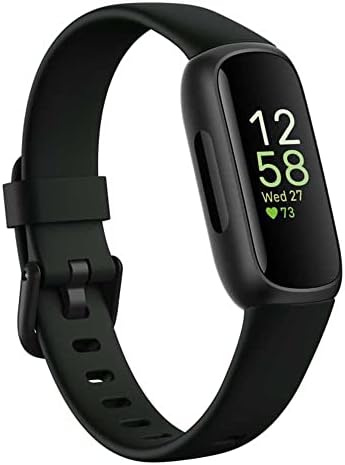
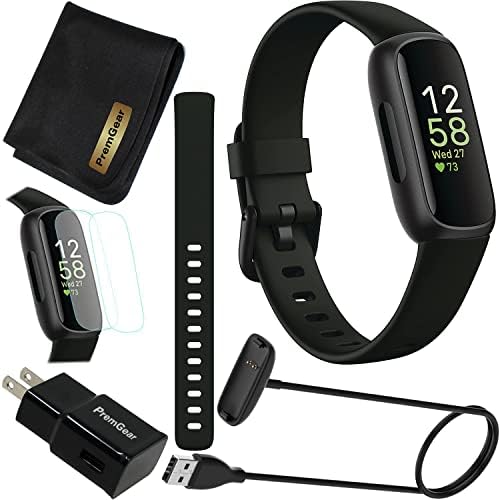
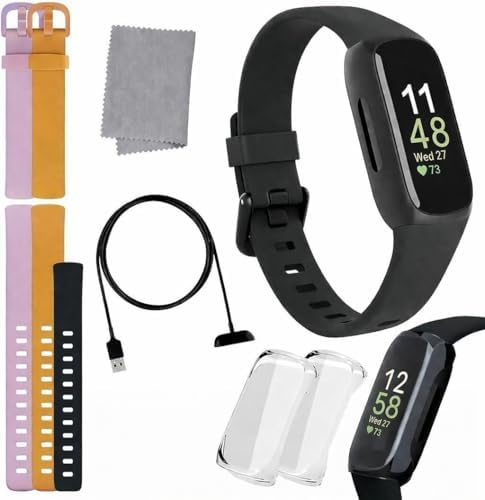
Charging approach matters here as well. The Fitbit Inspire 3 Health & Fitness Midnight Black uses a magnetic pin cable, and because the band itself is compact, a short top-up chargers comfortably around a morning routine.
Sleep, Stress, and Records That Hold Up Over Months
Data quality is invisible on launch day and decisive in month three. Fitbit’s approach favours longitudinal consistency: the same sensor layout sits on the same section of wrist with the same pull tension, which stabilises week-over-week comparisons of resting heart rate, breathing rate, and sleep debt. Samsung’s platform counters with a wider display that makes reviewing nightly trends genuinely pleasant on the wrist rather than on a phone. Both methods work; they simply reward different habits.
Stress handling already divides the two bands. Guided breathwork happens visually on the small screen, and a larger AMOLED renders the pacing animation more legibly, which is why the SAMSUNG Galaxy FIT 3 [2025 40MM] Black 40MM has an edge for users who prefer to complete a calm-down session without pulling out their phone. Fitbit, by contrast, wins for anyone who wants the raw EDA trace recorded and reviewed later, because that format lends itself to a deeper retrospective once the day is done.
Watchfaces, Alerts, and the Screen-Time Question
Smart bands now double as notification relays, and here Samsung’s larger screen is hard to argue against. Samsung states that more than 100 watch faces are available, and palm of hand interactions shape how quickly messages can be read and dismissed. The Fitbit ecosystem keeps the experience quieter, prioritising taps that dismiss rather than taps that invite scrolling.
Neither design philosophy is objectively better. A user who already lives inside a Samsung phone and wants mirror-level notifications will find the Galaxy Fit3 workflow intuitive; a user who explicitly wants to reduce time staring at a screen will find the smaller Inspire 3 surface easier to ignore between glances.
Sizing, Strap Feel, and Daily Comfort
Weights and builds diverge in a way that daily wear reveals. The Inspire 3 sits in a compact case that practically disappears on smaller wrists and stays clear of cuff sleeves. The Galaxy Fit3 grows noticeably at the lugs to accommodate its panel, and wearers who type or lift frequently report more pressure points after a long day.
Strap compatibility is the second variable. Fitbit uses a quick-release system that accepts a much wider aftermarket range, which matters if a leather, woven, or sport-specific band is planned. Samsung relies on its distinctive clasp, so aftermarket flexibility narrows. Neither will be replaced every month, but the decision does shape how comfortable the tracker will feel two seasons in.
Who Should Buy the Fitbit Inspire 3
The Inspire 3 is the stronger choice for the buyer who wants detailed physiological data and access to a mature health-tracking ecosystem. If morning resting heart rate trends, sleep-stage consistency, and stress-responsiveness patterns are the reason for wearing a tracker, the higher sensor fidelity inside this band will produce material it can act on. iPhone owners should note this is one of the few strong bands in the class that pairs cleanly with both operating systems, which matters for mixed households.
The trade-offs to accept are deliberate: a smaller screen, a shorter rated battery, and deeper analysis tied to a subscription tier. For users whose primary question is how the body is actually doing, that trade remains sensible.
Who Should Buy the Samsung Galaxy Fit3
The Galaxy Fit3 belongs on the wrist of an Android user who values reading notifications at a glance, browsing health data directly on the device, and stretching charging intervals over a typical work week. A rated 13 days is a material convenience for travel or for anyone not used to nightly charging routines. The larger AMOLED panel also makes this band a reasonable choice for older users, or for anyone whose eyes prefer more generous type sizes.
The trade-offs stand equally clearly in the other direction. Phone pairing is restricted to Android, water resistance is rated IP68 rather than a swim-standard ATM class, and the most detailed recovery insight lands best inside the broader device ecosystem. As a primary tracker for an active lifestyle that stays near a pool or shore, the Fitbit is the more defensible pick; as a second screen for an Android phone and a glanceable daily tracker, the Samsung Fit3 is the more natural fit.
Decision Summary for Long-Term Wearers
Predicting satisfaction three months out is more useful than ranking specifications at launch. The Fitbit Inspire 3 succeeds because the sensor stack continues returning meaningful trend data long after novelty fades, provided the owner is willing to review it. The Galaxy Fit3 succeeds because the experience of wearing it stays pleasant: bright, legible, and rarely interrupted by low-battery warnings. Anyone who values measurement will gravitate toward one column, anyone who values glanceability toward the other. Both bands justify their place; only the question of what the wrist should actually do all day determines which side of the comparison belongs at home.