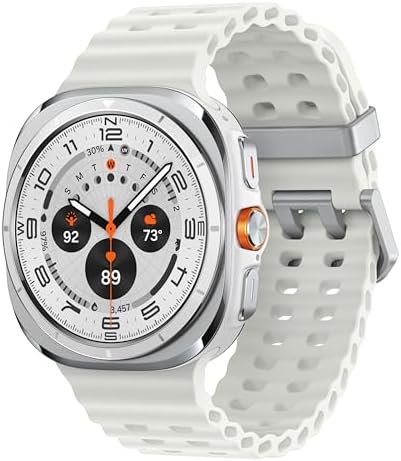
The Galaxy Watch Ultra 2025 and the Galaxy Watch Ultra2 represent two consecutive generations of Samsung’s rugged, titanium-built smartwatch line, both sharing a 47mm case and a dual-frequency GPS system, yet differing in battery capacity and internal refinements. This comparison is written as a practical buying reference for shoppers weighing the two models, breaking down the specifications and selling points that matter most before a purchase decision.
| Feature & Selling Point | Galaxy Watch Ultra 2025 | Galaxy Watch Ultra2 |
|---|---|---|
| Case Size | 47mm | 47mm |
| Case Material | Titanium | Titanium |
| Display Type | AMOLED | AMOLED |
| Battery Capacity | 590mAh | 800mAh |
| GPS System | Dual-frequency GPS | Dual-frequency GPS |
| Connectivity | LTE, BT 5.4, Wi-Fi, NFC | LTE, BT 5.4, Wi-Fi, NFC |
| Health Tracking | Heart rate, sleep, rate tracking | Advanced health tracking |
| Water Resistance | Yes | Yes |
| Band Type | Trail fabric | Trail fabric |
| Color Options | Titanium Blue, Grey | Titanium Gray, Titanium Blue |
| Operating System | Wear OS | Wear OS |
| Target User | Outdoor athletes, adventurers | Outdoor athletes, adventurers |
The table above highlights the single most consequential difference between the two models: battery capacity. The Ultra2 carries a larger 800mAh cell, while the Galaxy Watch Ultra 2025 is listed with a 590mAh battery. Both share nearly identical materials, display technology, and connectivity, so the choice largely comes down to how much runtime a buyer needs between charges and whether the latest generation’s refinements justify the jump.
Battery Life and Real-World Endurance
Battery capacity is the clearest dividing line between these two rugged Samsung smartwatches. Samsung lists the Watch Ultra2 with an 800mAh battery, a meaningful step up from the 590mAh figure associated with the Galaxy Watch Ultra 2025 in Samsung’s own comparison documentation. For users who take multi-day hikes, long trail runs, or weekend camping trips, that difference can translate into extra hours of GPS tracking and sleep monitoring before a charger is needed.
The Galaxy Watch Ultra 2025 itself was never a slouch on endurance, but the larger cell in the Ultra2 gives it extra headroom for the power-hungry combination of an always-on AMOLED display, dual-frequency GPS, and continuous heart-rate sampling. Buyers who prioritize maximum uptime per charge will likely lean toward the newer model, while those who charge nightly may find either option sufficient. The Samsung Galaxy Watch Ultra 2025 (64GB, 47mm, LTE) pairs this endurance profile with 64GB of onboard storage for offline maps and media.
Design, Materials, and Wearability
Both generations share Samsung’s titanium case construction, a material chosen for its strength-to-weight ratio and resistance to corrosion from sweat and saltwater. The 47mm case size positions both watches firmly in the large-watch category, aimed at users who want a substantial wrist presence and don’t mind the extra bulk in exchange for a bigger display and battery.
Band compatibility follows the same trail-oriented design language on both models. Samsung’s fabric trail bands use a triangle latch-and-hook system that adjusts continuously rather than relying on fixed holes, which helps maintain a stable fit during running and climbing. A titanium build with an AMOLED display and a lightweight woven band is a combination designed to hold up to abrasion, moisture, and temperature swings without adding unnecessary weight.
Users who want the same core physical blueprint in a Titanium Blue finish can look at the Samsung Watch 7 Ultra 2025 LTE Titanium Blue 47mm, which carries an LTE configuration aimed at accurate route tracking without a phone.
GPS, Connectivity, and Outdoor Performance
Dual-frequency GPS is one of the standout features carried across both the Galaxy Watch Ultra 2025 and the Watch Ultra2. Dual-frequency positioning uses two satellite signal bands to reduce the multipath errors that can occur in dense urban environments, canyons, and forested trails, where signals bounce off buildings, cliffs, and trees before reaching the receiver. The result is a more reliable track log and more consistent distance and pace data during outdoor sessions.
Connectivity is equally consistent across both models. LTE support allows calls, messages, and streaming without a paired phone, while Bluetooth 5.4, Wi-Fi, and NFC round out the wireless stack for audio, data syncing, and contactless payments. Buyers who prefer a Titanium Gray finish will find the Samsung Galaxy Watch Ultra2 Titanium Gray 47mm LTE carries the same connectivity across multiple colorways, giving flexibility in matching the watch to outdoor gear.
Health Monitoring and Sleep Tracking
Both watches are built around continuous health monitoring, covering heart rate, sleep stages, blood oxygen, and workout-specific metrics. Rate tracking and sleep fitness tracking are highlighted features on Samsung’s Ultra-class models, and the platform is designed to surface recovery insights alongside activity data. For endurance athletes, the combination of overnight recovery metrics and daytime training load is often more valuable than any single measurement.
Samsung has also integrated AI-assisted features into the Ultra line, using on-device processing to interpret patterns in sleep and activity data. The practical benefit is a clearer, more digestible summary of how rest and exertion interact, rather than a raw stream of numbers. These features are present on both the Galaxy Watch Ultra 2025 and the Ultra2, so the health-tracking experience is broadly shared between the generations.
Software, Ecosystem, and Wear OS Integration
Samsung’s Ultra watches run Wear OS with Samsung’s One UI Watch layer on top, which brings the familiar tile-based interface, rotating bezel-style navigation through touch, and deep integration with Galaxy smartphones. The ecosystem covers notifications, wallet payments, music control, and third-party app support through the Play Store, meaning both the Galaxy Watch Ultra 2025 and the Ultra2 can run the same broad library of fitness, navigation, and productivity apps.
The AI features Samsung has been rolling into its wearable platform, such as smarter workout suggestions and energy-score style insights, are shared across the Ultra family. This consistency means buyers are not choosing between two fundamentally different software experiences, but rather between two hardware packages running largely the same platform. Samsung’s smartwatch lineup reflects this approach, with the Ultra tier sitting above the standard Galaxy Watch line in durability and battery capability.
Which Model Should You Choose?
The deciding factor is straightforward for most buyers. The Galaxy Watch Ultra 2025 remains a capable rugged smartwatch with dual-frequency GPS, a titanium case, LTE connectivity, and a 590mAh battery. The Watch Ultra2, by contrast, steps up to an 800mAh battery, which is the most tangible spec advantage across the two generations. Users who run long distances, hike multi-day routes, or simply dislike charging every night will find the larger cell in the Ultra2 worth the consideration.
On the other hand, buyers who prioritize value or who can find the Galaxy Watch Ultra 2025 at a lower price point may prefer the older model, since it delivers the same core GPS, health tracking, and connectivity experience. Because both watches share a 47mm titanium case, AMOLED display, and dual-frequency GPS, the performance gap in daily use is narrower than a surface-level spec sheet might suggest.
Market Positioning and Long-Term Value
Samsung’s Ultra line is positioned as the flagship tier of its smartwatch range, sitting above the standard Galaxy Watch series in both durability and battery capability. The two-generation span between the Ultra 2025 and the Ultra2 mirrors the broader smartwatch industry pattern: incremental battery and efficiency gains rather than dramatic redesigns. That pattern works in buyers’ favor, because it means last-generation models remain relevant for years.
For outdoor enthusiasts, the practical sweet spot is determined by how the watch fits into an existing routine. Those who rely on GPS-heavy activities and extended time away from power sources will benefit most from the Ultra2’s larger battery. Those who use the watch primarily for daily wear, gym sessions, and notifications may find the Galaxy Watch Ultra 2025 more than sufficient. Either way, both models bring the titanium build, dual-frequency positioning, and health-tracking depth that define Samsung’s push into the adventure-watch category.
![Samsung Galaxy Watch Ultra (2024) 47mm LTE AI Smartwatch w/Energy Score, Wellness Tips, Heart Rate Tracking, Sleep Monitor, Fitness Tracker, GPS, Titanium Gray [US Version, 1Yr Manufacturer Warranty]](http://www.donysterling.com/images/202608/1785845310189_987pss_0.jpg)
![Samsung Galaxy Watch Ultra (2024) 47mm LTE AI Smartwatch w/Energy Score, Wellness Tips, Heart Rate Tracking, Sleep Monitor, Fitness Tracker, GPS, Titanium White [US Version, 1Yr Manufacturer Warranty]](http://www.donysterling.com/images/202608/1785845331583_j2xoqb_0.jpg)
![Samsung Galaxy Watch Ultra (2024) 47mm LTE AI Smartwatch w/Energy Score, Wellness Tips, Heart Rate Tracking, Sleep Monitor, Fitness Tracker, GPS,Titanium Silver [US Version, 1Yr Manufacturer Warranty]](http://www.donysterling.com/images/202608/1785845293832_tby7r0_0.jpg)
![Samsung Galaxy Watch Ultra (2024) Bespoke Edition 47mm LTE AI Smartwatch, Wellness Tips, Heart Rate, Sleep Monitor, Fitness Tracker, Titanium Silver [US Version, 1Yr Manufacturer Warranty]](http://www.donysterling.com/images/202608/1785845204080_cj9m8z_0.jpg)
![Samsung Galaxy Watch Ultra (2024) LTE 47 mm Titanium Smartwatch 鈥� White 鈥� Rugged Design with Dual-Band GPS, 100-Hour Battery, Fitness & Health Tracking, 10 ATM Water Resistant [International Version]](http://www.donysterling.com/images/202608/1785844095734_26m4my_0.jpg)
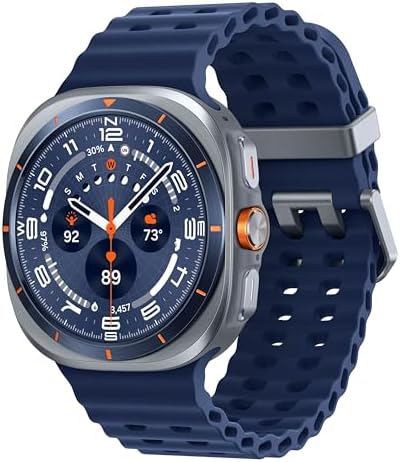
![Samsung Galaxy Watch Ultra (2025) 47mm LTE Smartwatch, Titanium Casing, Advanced Sleep Coaching, Running Coach, Energy Score, Heart Rate Tracking, GPS, Titanium Blue [US Version, 2 Yr Warranty]](http://www.donysterling.com/images/202608/1785850134018_qgztvp_0.jpg)
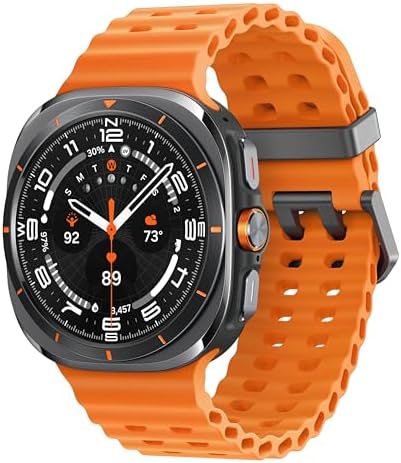
![Samsung Galaxy Watch Ultra (2025) 47mm LTE Smartwatch, Titanium Casing, Advanced Sleep Coaching, Running Coach, Energy Score, Heart Rate Tracking, GPS, Titanium Gray [US Version, 2 Yr Warranty]](http://www.donysterling.com/images/202608/1785849800787_joye99_0.jpg)
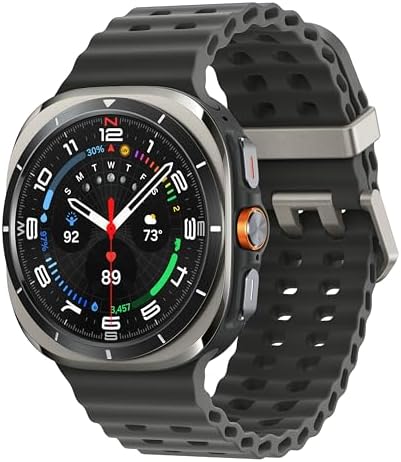
![Samsung Galaxy Watch Ultra (2025) 47mm LTE Smartwatch, Titanium Casing, Advanced Sleep Coaching, Running Coach, Energy Score, Heart Rate Tracking, GPS, Titanium Silver [US Version, 2 Yr Warranty]](http://www.donysterling.com/images/202608/1785850097351_bemdr5_0.jpg)