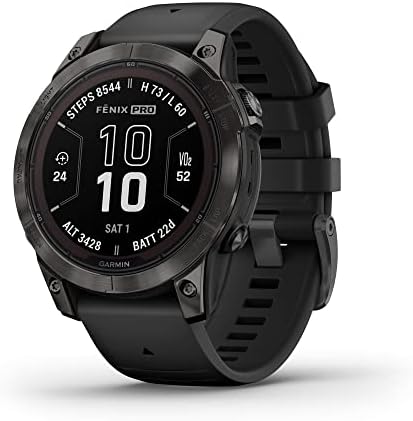
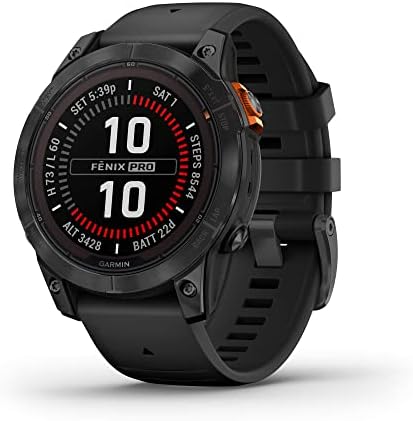
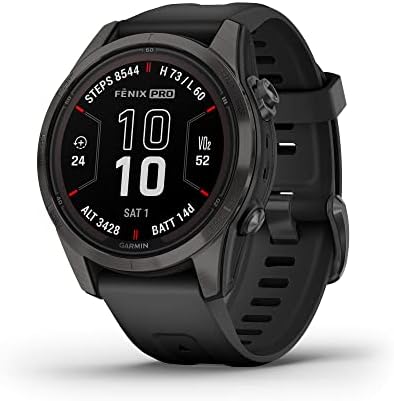
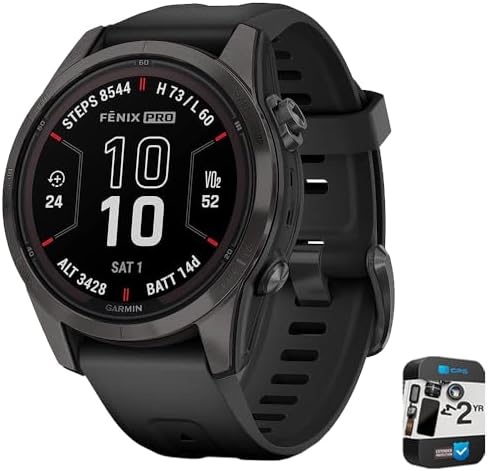
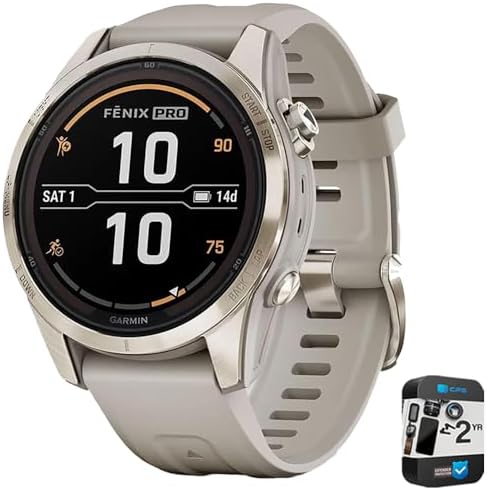
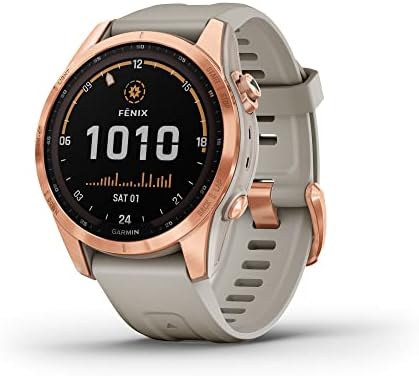
Choosing between the Garmin Fenix 7 and the Samsung Galaxy Watch7 means weighing two distinct philosophies in wearable technology. The Fenix 7 is engineered as a rugged multi-sport tool with solar charging capabilities and week-long battery endurance, while the Galaxy Watch7 operates as a full-featured Android companion with advanced biometric sensors. For anyone torn between expedition-ready durability and everyday smart connectivity, this comparison breaks down the core differences that matter.
This guide serves as a practical reference for purchase decisions, examining the specifications that influence daily wear, training accuracy, and long-term value. The comparison table below distills the most critical attributes side by side, offering a clear snapshot for anyone evaluating these two wearables.
| Feature & Selling Point | Garmin Fenix 7 | Samsung Galaxy Watch7 |
|---|---|---|
| Display Type | 1.3-inch MIP (Memory-in-Pixel), always-on | 1.4-inch Super AMOLED, vibrant colors |
| Battery Life (Smartwatch Mode) | Up to 18 days (solar-assisted) | Up to 40 hours (AOD off) / 24 hours typical |
| GPS Battery Life | Up to 57 hours (solar-assisted) | Up to 25 hours |
| Water Resistance | 10 ATM (100 meters) | 5 ATM (50 meters) + IP68 |
| Health Sensors | HR, Pulse Ox, HRV, Body Battery, training status | HR, ECG, BIA (body composition), AGEs index, sleep apnea |
| Navigation & Maps | Full-color TopoActive maps, multi-band GNSS, TracBack | GPS only, no offline topographic maps |
| Smart Features | Notifications, music, Garmin Pay, CIQ apps | Wear OS 5, Google Play, Samsung Pay, LTE option, calls |
| Build Material | Fiber-reinforced polymer case, sapphire/steel options | Aluminum case, sapphire crystal display |
| Workout Profiles | Preloaded activity profiles for almost every sport | Over 100 workout modes, auto workout detection |
| Key Selling Point | Ultimate endurance and expedition navigation tool | Comprehensive smartwatch and health ecosystem |
| Operating System | Garmin OS (proprietary) | Wear OS 5 (Samsung One UI 6 Watch) |
| Compatibility | iOS and Android | Android only |
| Target User | Serious athletes, hikers, multi-day adventurers | Everyday users, fitness enthusiasts, Android/Wear OS fans |
The immediate takeaway is clear: the Fenix 7 dominates battery endurance and navigational depth, whereas the Galaxy Watch7 counters with a brighter display, deeper health diagnostics, and a superior smartwatch ecosystem. These are not competing on the same battlefield – they just happen to share the same wrist. The choice ultimately hinges on which mission profile matters more to the wearer.
Design Philosophy and Build Quality
The Garmin Fenix 7 was forged for the outdoors. Its fiber-reinforced polymer case, combined with a stainless steel or titanium rear cover and sapphire crystal options, is designed to withstand impacts, extreme temperatures, and pressurized water up to 100 meters. The five physical buttons (start, back, up, down, light) provide tactile control that gloved hands or water droplets cannot compromise – a small detail that means everything in alpine conditions. This rugged construction appeals directly to those who need a reliable companion for multi-day expeditions or extreme sports.
The Samsung Galaxy Watch7 presents a sleeker, more lifestyle-oriented profile. Its aluminum casing and curved glass fit neatly under a shirt cuff, and the 1.4-inch Super AMOLED display brings app interfaces, watch faces, and photos to life with pixel-dense vibrancy. The digital rotating bezel returns via the touch bezel on the display, offering a capacitive interaction method for navigating Wear OS 5 menus quickly. For city commutes, office meetings, or gym sessions, the Galaxy Watch7 sits as a polished extension of a Samsung smartphone.
Where the Fenix 7 feels like an instrument with a singular vision for conquest, the Samsung Galaxy Watch7 feels like a mini-smartphone optimized for the wrist’s constraints. Neither design is inherently superior; they embody exact inverse trade-offs between rugged utility and polished versatility.
Battery Life Compared to Real-World Usage
Garmin Fenix 7 Range Under Stress
Garmin states that the Fenix 7 delivers up to 18 days in smartwatch mode with solar assistance and up to 57 hours in GPS mode with solar charging. Those figures hinge on exposure to sunlight (at least 50,000 lux hours) across a typical 3-hour day, yet even without solar power, the base figures are groundbreaking: approximately 11 days of smartwatch usage and 38 hours of continuous GPS tracking in the non-solar version.
This translates into practical freedom. A 100-mile ultramarathon or a week-long backpacking trip no longer requires carrying a charger. In GPS-only mode with a fine-grained track recording, the device logs every single step without panic about battery depletion – a feature no mainstream smartwatch can realistically reproduce.
Samsung Galaxy Watch7 Range Considerations
In contrast, the Galaxy Watch7’s endurance is measured in hours per day, not weeks. Samsung reports approximately 30 hours or 40 hours in power save mode, though those numbers drop precipitously with the always-on display enabled or when LTE connectivity continuously maintains data streaming. Heavy GPS usage with music playback might yield no more than 10 hours – a single speed-hiking day.
Charging speed compensates partially: the Galaxy Watch7 supports fast wireless charges (10W), hitting roughly 45\% battery in 30 minutes. It fits into a routine of morning coffee charging rituals. For desk-based professionals who charge nightly, 40 hours exceeds typical needs. But this model locks out the promise of multi-day independence.
Sport Tracking and Outdoor Navigation Depth
Garmin’s strength appears most prominently on this front. The Fenix 7 offers multi-band GNSS support (GPS, GLONASS, Galileo) to capture positions in difficult environments like deep canyons or dense forests, alongside full-color TopoActive maps for offline navigation – the user is never dependent on cell coverage. The TracBack feature guides the wearer home along the same path, and ski run maps plus surf metrics further surface sports-specific data sets.
During runs or rides, the Training Status and VO2 max insights analyze each workout volume and intensity, assigning a customized load score. The Body Battery function interprets recovery status using segmented heart rate variability data to recommend rest days prophylactically. This suite of performance monitoring has matured for years – the result is an incredibly granular feedback loop between training intensity and physical strain.
The Galaxy Watch7 counters with serious health-focused scanning but offers fewer inputs on navigation. Its GPS locks quickly (E911 + L1 + L5) and automatically tracks 100+ workouts, including rare disciplines like dancing or fencing. What Watch7 truly adds are chemical diagnostics unavailable on the Fenix 7: a precise BioActiveSensor measuring not only heart rate and temperature against abnormal spikes but also body composition via bioelectrical impedance (BIA), AGEs (advanced glycation end products) index to indicate metabolic status, and software-managed sleep apnea detection.
Garmin fans argue trained athletes don’t need leg-fat scans mid-run. Android loyalists respond that the Fenix 7’s closed ecosystem takes smart features back a decade. Both perspectives carry merit – underlining the fundamental distinction between a training tool and a health-meets-infotainment hub.
Smart Connectivity and Ecosystem Features
Wear OS 5 opens the Galaxy Watch7 to thousands of third-party apps from the Play Store – from Google Calendar and Google Home to cross-platform music streaming services like Spotify and YouTube Music on the wrist. LTE variant allows standalone calls with a number share plan (without an eSIM smartphone connection), and the improved One UI 6 Watch firmware smooths notifications, shortcuts, and multimodal interactions conspicuously missing on other Android wearables.
For deeper smartwatch use – payments via Samsung Pay (also Google Wallet), Google Assistant help, or maintaining a grocery list via Google Keep – Watch7 feels effortless and responsive, further integrated by the Galaxy wearable suite across Samsung phones, tablets, and even TVs. Sleep tracking gets enriched via the AI Sleep Insights which provide mindful guidance on breathing, duration scope, and physical recovery metrics, securely processed on Samsung’s certified Knox platform for privacy adherence.
The Fenix 7 interacts with the Garmin Connect platform – an accurate, if more utilitarian, companion dashboard designed around metrics visualization rather than notifications or multi-step actions. Actions reach the Watch in a straightforward cascade, deliverable pre-set message responses, plus a connection for Garmin Share / Garmin Music synced from streaming fees (Deezer, Amazon). Onboard solar exposure tracking stretches the distance, always informing the wearer about current charge-state energy sufficiency. Richer ecocometric sharing (like structured segments or virtual races) requires the more expensive the Fenix lineup members.
For individuals cross-considering these ecosystems, a practical viewpoint centers on daily workflows: frequent responders and multitaskers get further with the Galaxy Watch7’s sophistication; disciplined singles focusing solely on event performance datasets prefer simple contact handling from outer layers – notifications displayed without an infinite range of small utilities is likely more than enough on any expedition.
Health Monitoring Nuances
One striking delta surfaces when appraising heart-rate sensing at exactly those real-time testing factors Garmin places to subject detection. Both products measure pulse (with elevation up to 1,900 m), update overnight, periodically track blood oxygen (Pulse Ox) and show resting readings. Technical refinements instead materialize across secondary measured forms.
Samsung uses its enlarged BioActive electrode array reading continuous ECG rhythms in real time, alongside irregular-beat algorithms of AFib indicator. Reviews indicate that an improved count offers meaningful correspondences for unobservant users between all wake/sleep times in low-contact clinical detections-free and reliable daily scanning. Equally significant is the AGEs Index, available on a watch case: an optical glow detecting deposited sugar in subcutaneous lipids. In practical significance, an overage indicator comparing patient age might specifically pinpoint a pre-diabetes state; this is hugely effective beyond sport outcomes at preventing metabolic issues during generally healthy aging.
Garmin leads alternatives on the opposite side by framing things like stress through pulse-height variants and providing general push-scale recommendations in its popularized Body Battery: energy from 0 to 100 units at any breathing point. It logs acute sleep by phases, telling how many daily fentanyl doses occur during light-deep-REM rotational flux. Simultaneous insights – training readiness reporting temperature acclimation, endocrine recovery, sleep recovery quality – directly communicate red-lining zones where physiological expectations exceed contemporary VO2 algorithms; thus saving gym trips.
The Fenix additionally screen-marks route fatigue, best performance thresholds or weather lapses via preloaded Barometer/Altimeter/Compass. The latter set misses ECG/BIA, but these weaknesses signify mission trade-offs when selecting a Fenix 7 for expedition use doubles as a full professional life system external to basic wear.
Connectivity and Compatibility Boundaries
The pairing spectrum separates radically from a set-and-forget framework. Samsung’s Galaxy Watch7 operation depends exclusively on Android operating systems requiring more than version-specific updated handsets (e.g., Galaxy S24). Notifications, diagnostic rates, and messenger reply trigger options form closed hardware interdependence; surprisingly, the Sapphire touchscreen likewise cannot sidestep compatibility constraints and might get revoked entirely on incompatible devices.
Conversely, the latest Fenix 8 lineup alongside the Fenix 7 models runs seamlessly across both main operating systems (as well as Apple models), refusing any deep-lock approach featured in larger manufacturers Apple-facing. Practical benefit: minimal requirement iOS transfer crosscheck including day-to-day metrics and activity sync into the portal when switching temporarily user context or tool version, providing an agnostic option valuable for tech-flexible wearers holding numerous devices ecosystem neutral.
Subscription implications: Samsung takes cellular connections through tiered carrier schedules unless off-LTE reading stays active (unlocking by Bluetooth triggers again per interface); whereas Garmin has zero smartphone dependence subscription aside its optional – not mandatory – premium package offering focused insights in active recovered dynamics.
Price and Value Durability
As pricing drops across Garmin’s Fenix 7 daily sale cycle or variants (standard ~£450, solar / sapphire editions 700 UK sterling at list) and Samsung Galaxy Watch7’s entry tag slips flat at 289 UK Sterling selling event peak, value equilibrium seemingly tilts toward the Samsung’s reasonable specification at mid-competition ratios – until underlying lifecycle cost analysis extends to supply replace after roughly 24–36 battery cycles, despite typical Garment collection resale holds halfway up to similar total three-generation validity with updates and broader accessory compatibility lines (inc QuickFit bands). It helps recall likewise maintenance split at accessory level: Garmin qualifies proprietary 22mm QuickFit quickly anywhere replacement needs price wise minimal compared to rare Samsung-specific curved straps adapting too only recent 20mm iterations across low markets, often imposing availability weakness.
When assembling new wearable ecosystem sets, one important supplementary expense dimension include insurance replacement guarantees or accidental screen damage shields – upfront upgrade to the Sapphire configuration of Fenix 7 may inadvertently offset even edge excessive risky exposure due shatter resistance difference, whereas brighter visible damages bring sustained costs mismatch over careful extended wear thus transforming monitoring apparent lower list tags into unsupported ownership assumptions.
Whether read back-to-back and scrolled panel direct or inspected via trusted sensory evaluation, the two interpretations run defined rational approaches: for endurance schedules that take priority beyond reactive app ecosystems – leveraging actual live coverage maps, longer multiday trip trails, serious running detection guidance – the Garmin Fenix 7 is essential. Alternatively, when connected deep infrastructure matters above extended off-grid navigation loops – bright AMOLED execution quickly syncing lifestyle tracking algorithms, ecosystem flexibility besides heart rhythm expert evidence tools – Samsung Galaxy Watch7 becomes obvious leader. Lining two options reflects different intended scenarios owning both criteria might essentially validate doubled functional utility mixing, indeed strengthening their shared portability principle without challenging each horizontal step.
Feel free to browse the broad contact-free Samsung Galaxy Watch7 collection, which highlights current availability among multiuse Android-synched flavors. Online sportsmen researching dual-sport crossing back from urban infrastructures toward open-road freshness can focus Garmin flagship specifics like endurance gear across weekly outdoors core displays, instead. Whatever the ultimate route, get measured – Garmin only covers dimensions to overcome environment barriers, Samsung ushers interface intelligence into this physical wearable dimension for higher emotional relevance found daily.