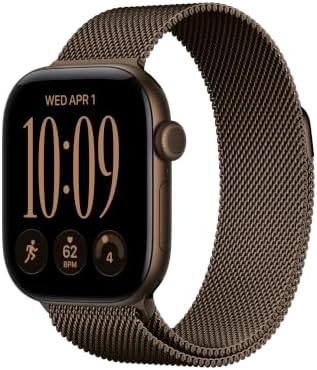
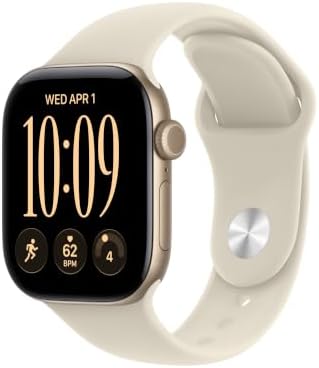
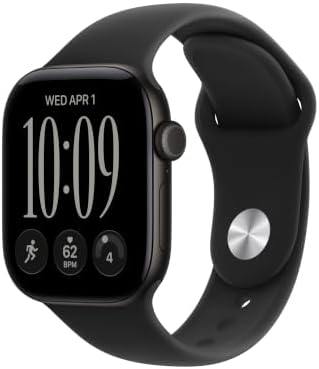
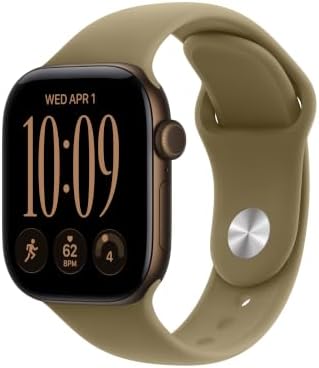
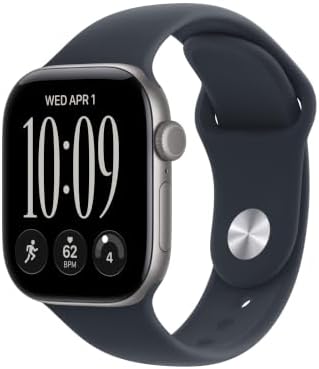
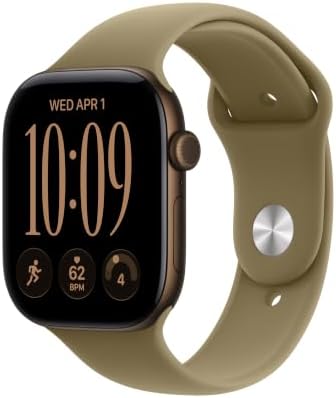
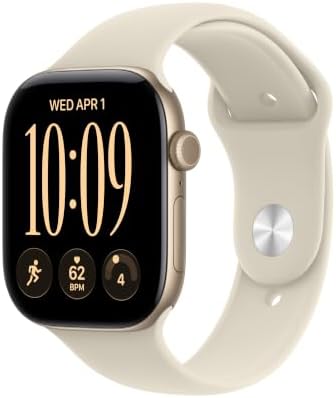
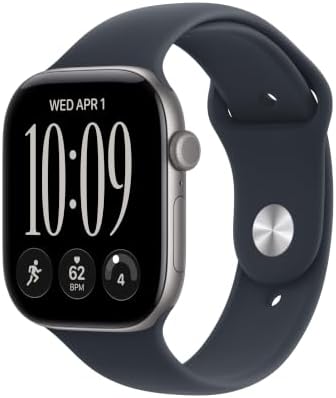
The Apple Watch Series 12 arrives with a new Health Sensing System and the S11 chip, and Apple states that this hardware samples heart rate and heart rate variability at a higher frequency than the previous generation. The Series 11, by contrast, is a mature, widely available model that already covers the essentials of health tracking, fitness logging, and iPhone connectivity. Choosing between them is not a question of which watch works, because both do, but of which set of trade-offs matches how you actually wear a watch.
This guide is built for that decision. It lays out the specifications that change daily use, identifies who each generation suits, and marks the criteria that should settle the purchase before you spend.
| Decision Factor | Apple Watch Series 12 | Apple Watch Series 11 |
|---|---|---|
| Processor | S11 chip | Previous-generation chip |
| Health Sensing | New Health Sensing System, higher-frequency heart rate and HRV sampling | Standard heart rate and HRV tracking |
| Battery Life (Normal Use) | Up to 24 hours | Comparable all-day rating |
| Low Power Mode | Up to 38 hours | Extended mode supported |
| Workout Battery | Up to 10 hours | Long-session tracking supported |
| Case Sizes | Multiple sizes including 46mm | 42mm and 46mm |
| Display Area (46mm) | Large edge-to-edge panel | 1196 sq mm, 416 by 496 pixels |
| Case Depth (46mm) | Slim aluminium profile | 9.7mm |
| Connectivity Options | GPS and GPS + Cellular | GPS and GPS + Cellular |
| iPhone Requirement | iPhone 11 or later with iOS 27 or later | Earlier iOS baseline |
| Water Resistance | Swim-proof sealing | Water resistant |
| Material and Finish | Aluminium case options | Aluminium case, Jet Black finish among options |
| Best For | Buyers who want the newest health sensors and longest software runway | Buyers who want proven tracking at a lower entry point |
| Value Position | Premium, newest-generation pricing | Established model, often discounted |
The table makes the central trade-off visible: the Series 12 concentrates its advantage in the sensing hardware and the software horizon, while the Series 11 holds its ground on the fundamentals that most people use every day. Battery figures sit close enough that neither watch wins on endurance alone, which means the deciding rows are health sensing, iPhone compatibility, and price.
What the Health Sensing System Actually Changes
Apple’s own announcement describes the Series 12 as introducing an all-new Health Sensing System paired with the S11 chip, and the company states that this combination delivers higher-frequency heart rate and heart rate variability measurements. Frequency matters in wearable physiology because the body does not change state on a fixed schedule. A sensor that samples more often captures the transition into recovery, the spike during interval work, and the drift during sleep with finer resolution than one that samples less frequently.
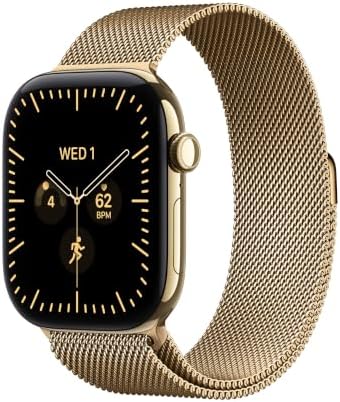
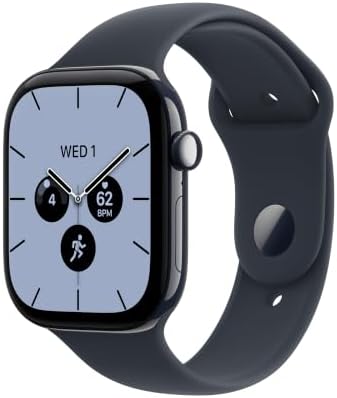
For a runner logging intervals or a shift worker tracking recovery, that resolution can change what the data is useful for. Averages still tell you where you ended up. Denser sampling tells you how you got there, and that is the difference between a number you glance at and a trend you act on. The Apple Watch Series 12 GPS + 46mm Cellular is the configuration that carries this sensing hardware alongside independent connectivity, which matters if you want to leave the phone behind on runs.
The Series 11 is not a weak tracker. It records heart rate, HRV, sleep, and workouts reliably, and for the majority of users the practical output looks similar day to day. The gap appears in edge cases: high-intensity intervals, overnight recovery analysis, and any scenario where you want the raw signal rather than the smoothed summary.
Battery, Charging, and the Realistic Daily Routine
Apple lists all-day battery life of up to 24 hours of normal use for the Series 12, up to 38 hours in Low Power Mode, and up to 10 hours of workout tracking. Those figures describe a watch that comfortably covers a full day and a night of sleep tracking, then needs a top-up. Low Power Mode extends that window for travel days or weekends away from a charger.
The practical question is not which watch lasts longer on paper, because the two generations sit in the same endurance class. The question is whether your routine tolerates a nightly charge. Anyone who tracks sleep needs a charging window in the morning or evening, and both models fit that pattern. If you dislike charging rituals entirely, neither generation solves that problem, and a different category of device is the honest answer.
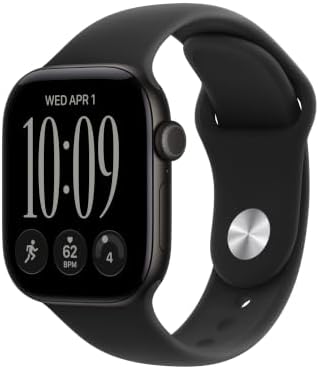
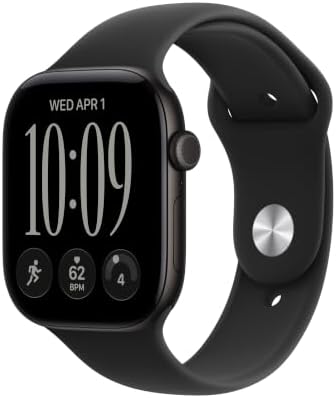
Charging speed and magnetic charging behaviour carry over between generations, so the habit you build with one transfers to the other. The Apple Watch Series 11 [GPS 46mm] Jet Black Aluminum Black 46mm M/L GPS demonstrates how little the daily charging loop changes across the two generations, which is worth knowing if battery anxiety is your main reason for considering an upgrade.
Display, Case Size, and Wrist Fit
Apple’s technical documentation for the Series 11 lists the 46mm case at 46mm height, 39mm width, and 9.7mm depth, with a 416 by 496 pixel resolution across a 1196 square millimetre display area. That is a large, legible panel, and the aluminium case keeps the weight down for all-day wear and overnight sleep tracking.
Case size is the specification most likely to decide whether you enjoy wearing the watch. A 46mm case suits larger wrists and reads clearly at a glance during a run. A 42mm option suits narrower wrists and reduces the chance of the case catching on sleeves. Both generations offer size choices, so the deciding factor is not the generation but the fit you choose.
- Larger wrists: 46mm cases sit flatter and avoid overhang
- Narrower wrists: 42mm cases reduce bulk and sleeve friction
- Sleep tracking: lighter aluminium cases disturb sleep less
- Sport bands: breathable fluoroelastomer suits sweaty sessions
Display brightness and always-on behaviour remain consistent across the lineup, so the visual experience differs far less than the sensor package does.
Software Longevity and iPhone Compatibility
Apple states that the Series 12 requires an iPhone 11 or later running iOS 27 or later. That requirement is the single most important compatibility check before buying, because it determines whether your current phone can pair with the watch at all. If you are on an older iPhone, the Series 12 may not be an option regardless of how much you like the hardware.
Software runway is the quieter advantage of the newer generation. A watch released later typically receives major watchOS updates for longer, which extends its useful life and improves resale timing. Buyers who keep devices for four or five years should weigh that runway heavily, because it converts directly into years of new features without new hardware.
The Series 11 remains fully supported and receives updates, but its update horizon is naturally shorter. For someone who upgrades every two years, that difference is negligible. For someone who holds onto hardware, it is a real cost consideration.
Connectivity: GPS Versus GPS + Cellular
Both generations offer GPS-only and GPS + Cellular variants, and the choice between them affects daily use more than the generation gap does. A cellular model keeps calls, messages, and streaming music working when the phone stays home, which changes how you run, walk, or commute. A GPS-only model costs less and covers the majority of training and notification needs as long as the phone is nearby.
The decision rule is simple. If you regularly leave your phone behind for exercise or errands, cellular earns its premium. If your phone is always within Bluetooth range, the GPS-only configuration is the better allocation of budget, and the money saved is better spent on the newer sensing hardware if health data is your priority.
Who Should Buy the Series 12
The Series 12 is the right purchase for anyone who treats wearable health data as a primary reason for wearing a watch. Higher-frequency heart rate and HRV sampling, the S11 chip, and the longer software runway combine into a device that will stay current for years. It also suits buyers on a modern iPhone who want the newest sensor architecture and are willing to pay the newest-generation premium for it.
It is also the sensible choice for anyone upgrading from a Series 8 or older. The jump in sensing capability and software support is large enough to feel like a genuine change rather than a sideways move.
Who Should Buy the Series 11
The Series 11 is the better buy for someone who wants reliable health and fitness tracking without paying for the newest sensor generation. It covers heart rate, HRV, sleep, workouts, notifications, and contactless payments, and it does so with a proven track record and a lower entry price. Buyers who upgrade frequently, or who mainly want notifications and workout logging, will not notice the sensing difference in daily use.
It also makes sense for anyone whose iPhone sits below the Series 12 compatibility threshold, or who prefers to spend the difference on a cellular plan, extra bands, or AppleCare coverage instead of the hardware itself.
The Criteria That Should Decide Your Purchase
Work through four questions in order. First, does your iPhone meet the Series 12 requirement of iPhone 11 or later with iOS 27 or later? If not, the decision is made. Second, do you act on heart rate variability and recovery data, or do you mainly glance at steps and rings? If you act on it, the newer sensing hardware justifies itself. Third, how long do you keep a watch? Long holders should weight software runway heavily. Fourth, do you need cellular independence, and if so, does that push the total cost of the Series 12 beyond what you want to spend?
Answer those four and the choice becomes obvious. The Series 12 is the forward-looking purchase, and the Series 11 is the value purchase, and neither answer is wrong. What matters is matching the watch to how you actually use it, because a generation gap only pays off when the newer capability lands inside your routine.