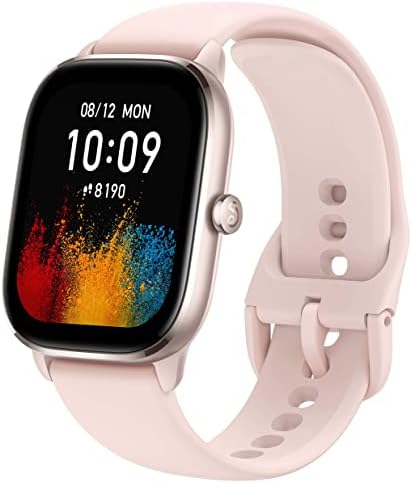
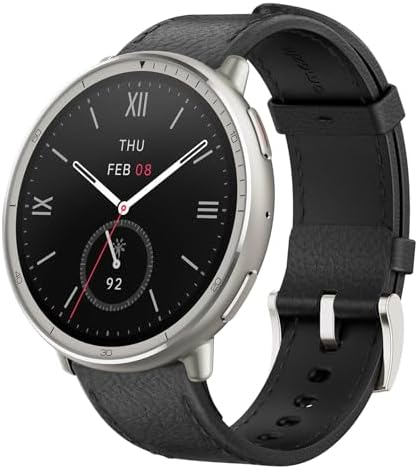
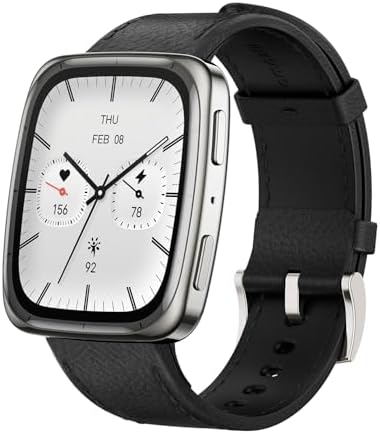
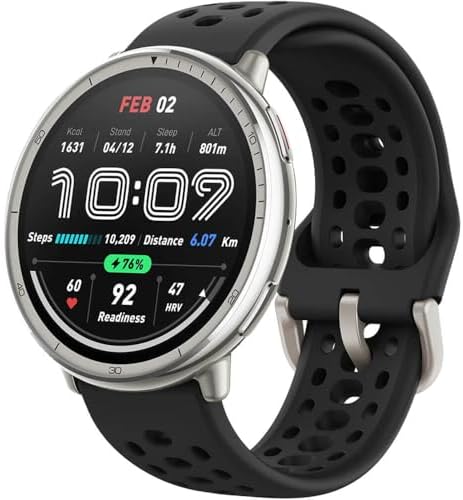
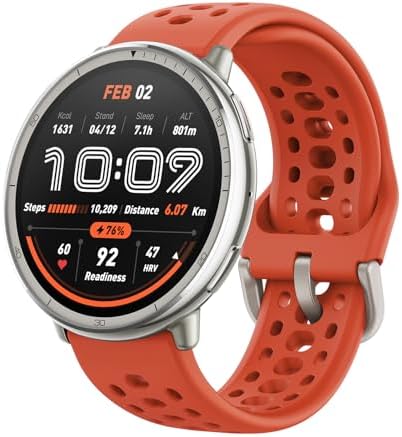
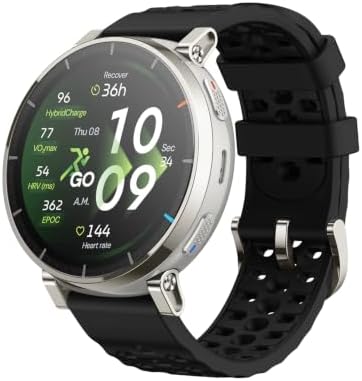
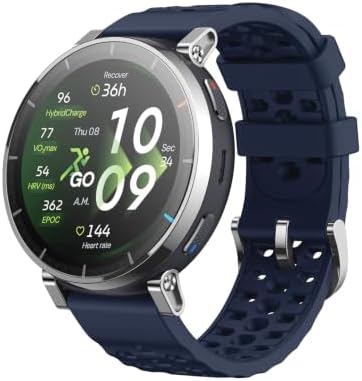
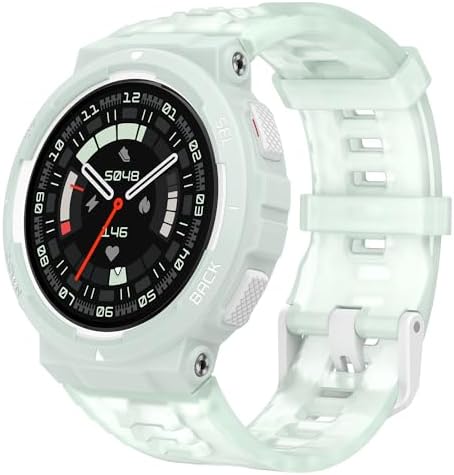
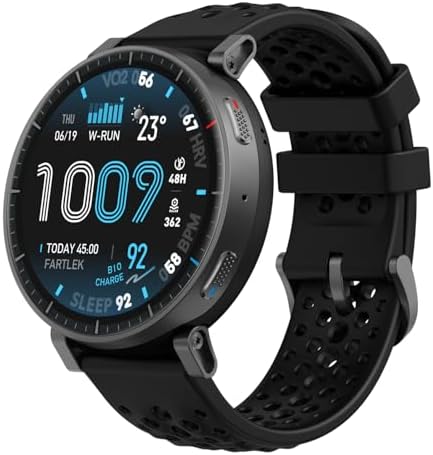
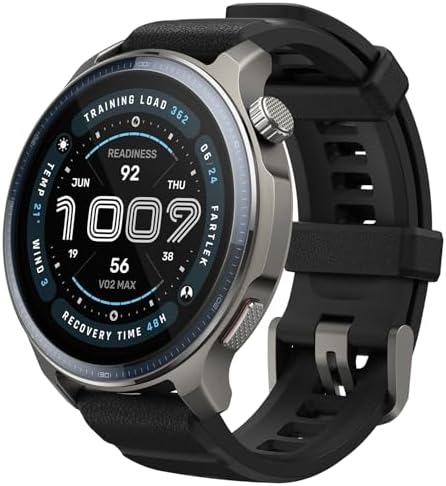
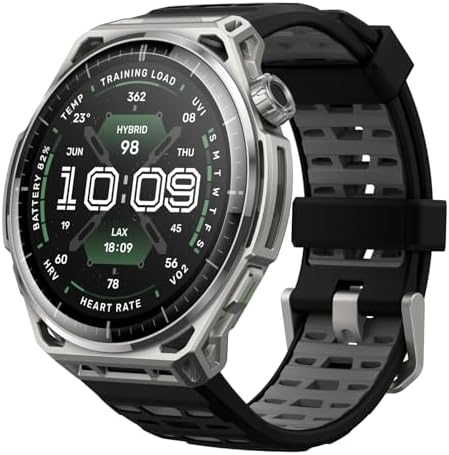
The Amazfit GTS 4 is a smartwatch built around a simple premise: deliver serious fitness tracking without the bulk that defines many GPS watches. It weighs well under 50 grams and measures just over 9mm thick, so it sits close to the wrist during runs, rides, and long workdays alike.
That lightweight approach reflects how the Amazfit brand has evolved, favoring slim silhouettes over rugged, overbuilt casings across its GTS line.
Design and Wearability
The case measures roughly 42mm across, with a slim profile that keeps the watch from catching on sleeves or weighing down the wrist during exercise. The 1.65-inch HD AMOLED panel covers most of the front face, leaving a narrow bezel that keeps proportions balanced.
Everyday Comfort and Weight
At around 19 grams for the compact variant in the family, the case is light enough to be forgotten during sleep tracking. The silicone strap molds to the wrist without pinching, which matters for users who wear a watch continuously through workouts, showers, and overnight monitoring.
Display and Visibility
An always-on AMOLED mode keeps the time visible without a wrist raise. In direct sunlight, the panel holds contrast well, and the ambient light sensor adjusts brightness automatically as conditions shift between indoor gyms and outdoor roads.
GPS and Positioning Performance
The watch supports multiple satellite positioning systems rather than relying on a single constellation. This matters in urban environments where buildings block signals, and on trails where tree cover can degrade accuracy.
For runners and cyclists who care about pace and route mapping, the combination of GPS, GLONASS, Galileo, BeiDou, and QZSS gives the watch more options to lock onto a signal quickly. Route data syncs back to the companion app, where distance, pace, and elevation can be reviewed after a session.
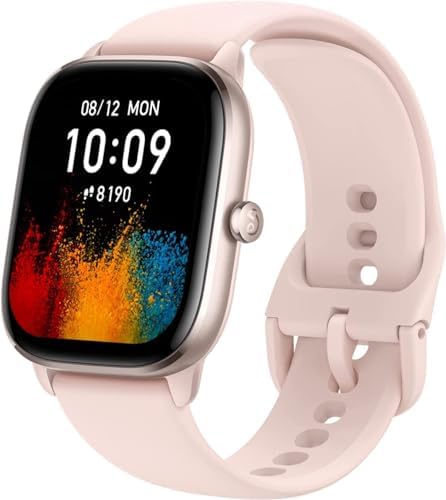
Those who prefer a smaller case can look at the Amazfit GTS 4 Mini Smart Watch Pink GPS, which carries the same multi-satellite positioning hardware in a reduced form factor, while this renewed Amazfit GTS 4 Mini Smart Watch Pink GPS offers a budget-conscious alternative for the same compact footprint.
- Satellite systems: GPS, GLONASS, Galileo, BeiDou, QZSS
- Water resistance: 5 ATM
- Sport modes: 120 or more activity profiles
- Battery (typical use): up to 15 days
Battery Life and Charging Habits
Battery life is often the first compromise users accept when buying a GPS watch. The GTS 4 counters this with a 270 mAh-class cell that stretches across days, not hours, in typical use. GPS tracking does drain the battery more aggressively, but the watch recharges quickly through its magnetic charging base.
For anyone who has owned a smartwatch that needed nightly charging, the multi-day cycle changes the routine. Sleep tracking, notifications, and step counts continue overnight without the watch being tethered to a cable.
Health and Fitness Tracking Features
Optical heart rate monitoring, blood-oxygen saturation measurement, and stress tracking form the core health suite. These sensors run continuously in the background, feeding data into daily summaries and longer-term trend reports.
Sleep analysis breaks down light, deep, and REM stages, and pairs those results with breathing quality data. Over weeks, the app builds a picture of resting heart rate trends that can flag recovery issues before they become obvious.
Smart features round out the package: Alexa voice control for quick queries, Bluetooth calling, text notifications, and music storage for phone-free listening during workouts. Compatibility extends across both Android and iOS platforms. A related option with a larger display is the Amazfit Bip 6 Smart Watch 46mm GPS Bluetooth, which pairs a broader screen with similar battery priorities.
App Ecosystem and Data Review
Pairing happens through the Zepp app, which aggregates workout history, sleep logs, and heart rate trends into a single dashboard. Syncing is straightforward, and the app also supports third-party platforms like Strava for users who prefer their existing tracking ecosystem.
One practical advantage: workout data syncs automatically after each session, so nothing needs to be manually exported. Over months, this builds a useful archive for tracking progress on a specific route or training plan.
Who the Amazfit GTS 4 Suits Best
This watch fits users who want reliable GPS, multi-day battery life, and a display that looks sharp on the wrist, all without a premium price tag. It is less suited to athletes needing advanced power metrics or offline topographic maps, but for daily runs, gym sessions, and general wellness tracking, the feature set lines up well with the price.
For anyone comparing options in the lightweight GPS smartwatch space, the GTS 4 makes a compelling case: it trades extreme ruggedness for wearability, and it trades bleeding-edge sport science for battery longevity. The result is a device that earns a place on the wrist daily rather than being reserved for workout days, a quiet reminder that fitness tracking works best when the hardware disappears into the routine.