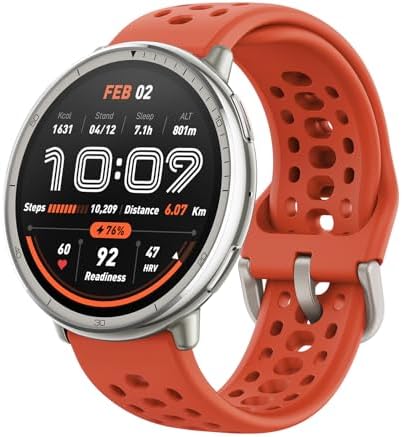
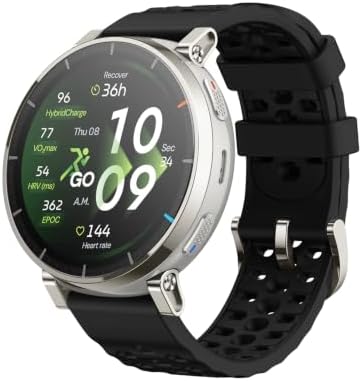
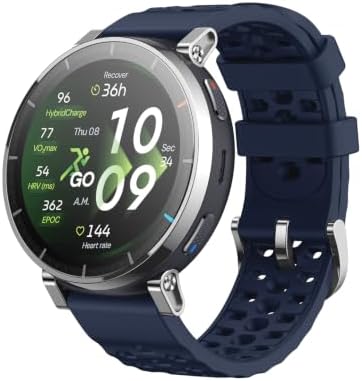
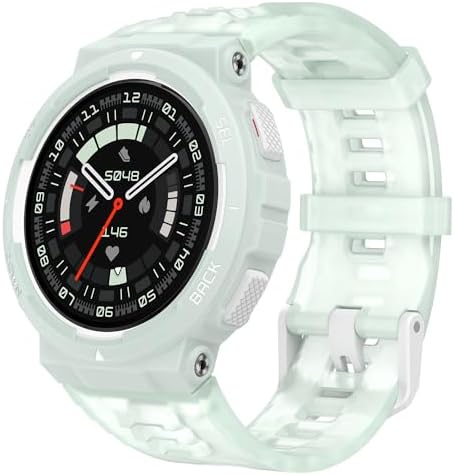
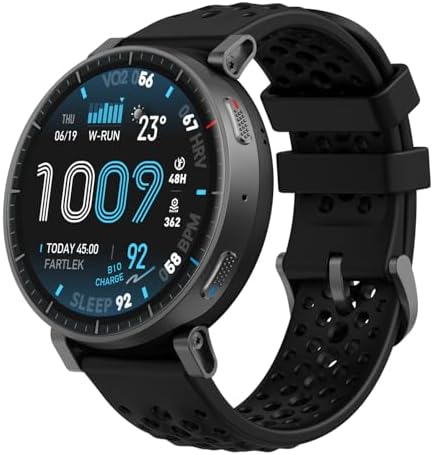
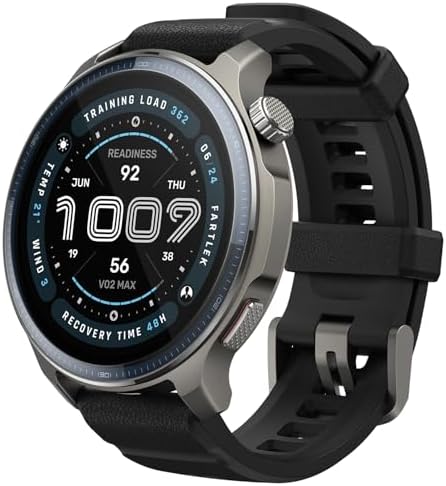
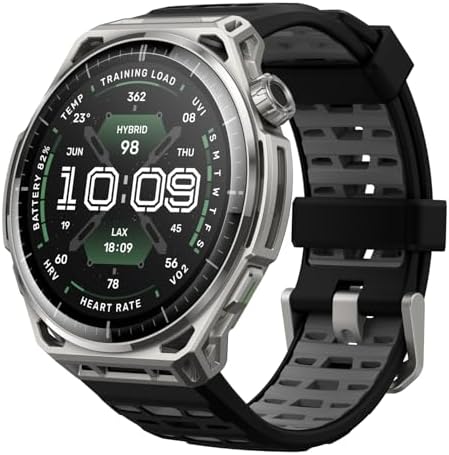
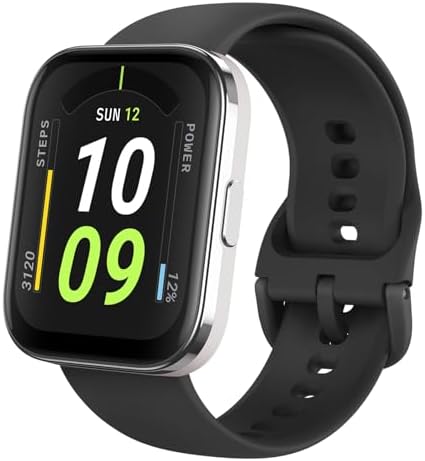
The Amazfit Bip 6 and the Fitbit Inspire 3 answer two different questions about what a wrist device should do. The Bip 6 puts a 1.97-inch AMOLED panel, standalone satellite positioning and on-watch calling on a 46mm case; the Inspire 3 strips the concept down to a slim band built around continuous heart rate and sleep data. Neither is the wrong answer, but the two devices reward very different daily routines.
This guide is written as a purchase-decision reference worth keeping on hand while weighing the two. The Amazfit brand’s Bip line targets people who want a readable watch face, offline maps and long stretches between charges. The Fitbit brand positions its Inspire 3 series around all-day wellness interpretation in a form factor that stays out of the way during sleep and office hours. The comparison table below isolates the dimensions that actually change a buying decision.
| Feature & Selling Point | Amazfit Bip 6 | Fitbit Inspire 3 |
|---|---|---|
| Display panel | 1.97-inch AMOLED | Slim colour touchscreen |
| Case footprint | 46mm watch format | Compact band form |
| Built-in GPS | Standalone GPS with free maps | Relies on paired phone GPS |
| Bluetooth calling | Call and text handling on watch | Call and text notifications only |
| Typical battery life | Up to 14 days | Up to 10 days, sensor dependent |
| Workout programme count | 140+ workout modes | Core activity and exercise modes |
| Continuous heart rate | All-day tracking | 24/7 heart rate with resting trends |
| Sleep intelligence | Sleep staging with AI summaries | Sleep tracking with detailed sleep score |
| Stress management tools | General wellness scoring | Dedicated stress and body response readouts |
| Water resistance | Water-resistant for swimming | Rated for shallow-water swimming |
| Navigation and mapping | Free offline maps on the watch | Route geometry via app only |
| Sleep-time comfort | Large body, more noticeable at night | Slim band suited to overnight wear |
| Software ecosystem | Zepp app, iOS and Android pairing | Google Health ecosystem integration |
| Included membership value | Standard companion app access | Three-month Google Health Premium bundle |
| Best-fit user | Outdoor exercisers and long-battery users | Daily wellness monitoring and light workouts |
The widest gap in that table is navigation. The Amazfit Bip 6 includes its own satellite positioning and free maps, so a run or ride can leave the phone at home and still log a clean route. The Inspire 3 depends on a paired phone for the same job, which is fine for commuting but redundant for anyone who prefers distance work untethered.
Display, Form Factor and Wrist Presence
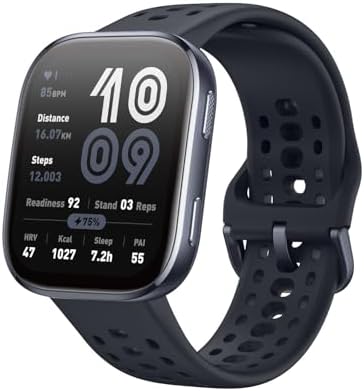
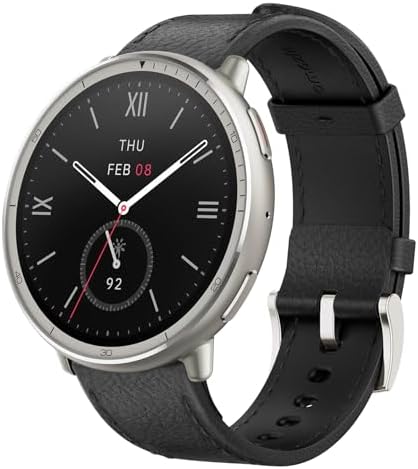
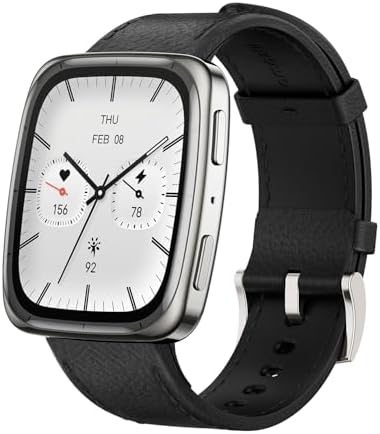
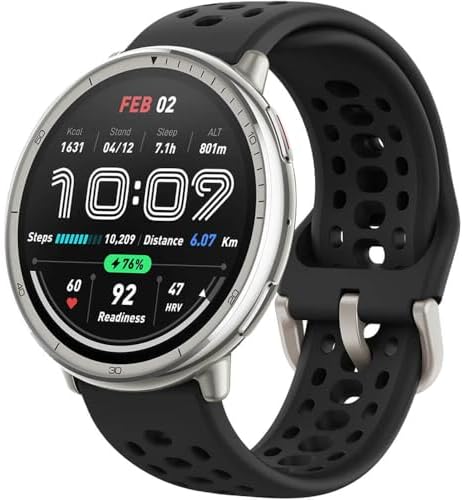
The Bip 6 approaches the wrist the way an entry-level sports watch does: a 1.97-inch AMOLED panel, a 46mm case, and enough surface area to show maps, workout stats and incoming call information at once. AMOLED technology delivers deep blacks and high contrast, which matters most in bright outdoor conditions where conventional LCD segments wash out. The trade-off is physical visibility, since a 46mm watch reads as a piece of equipment on smaller wrists rather than a quiet accessory.
The Inspire 3 takes the opposite route. Its engineering brief prioritises barely-there wear, using a narrow touchscreen within a slim band construction. This is deliberate: a device designed to be worn overnight during sleep tracking should not interfere with resting positions or catch on bedding. Neither approach is superior in the abstract, but they serve incompatible habits. Someone who tracks sleep as the centrepiece of their health picture will resent a large shell; someone who glances at GPS routes mid-run will resent a screen too small to read at arm’s length.
Sensor Behaviour and Wellness Depth
The Fitbit Inspire 3 is built around continuous measurement rather than episodic measurement. Its optical heart rate array operates around the clock, feeding resting heart rate trends, workout intensity classification and stress management readouts drawn from heart rate variability patterns. The companion membership bundle extends into deeper guided programmes, and that service layer is a genuine part of the value proposition rather than an afterthought.
Where the Bip 6 Matches and Where It Diverges
The Bip 6 covers the same foundational terrain: all-day heart rate, sleep staging, blood oxygen style wellness metrics and AI-assisted summaries. Its attention, however, is spread across a much wider feature surface. On-device music control, Bluetooth call handling and text reading are integrated, and the workout library reaches past 140 modes, covering niche disciplines that mainstream trackers often skip. For a training-focused user who wants a display rather than a band, this breadth is the deciding factor; for a wellness-focused user, breadth can read as noise.
Practical Sensor Trade-Offs
Accelerometer and optical sensor accuracy in this tier is broadly comparable in steady-state conditions, and the larger divergence appears in how the data is presented. Fitbit’s interface leans toward interpretation, with scores, readiness suggestions and trend language, while Amazfit’s leans toward raw metrics and configurable displays. Users who want to be told what their data means tend to prefer the former; users who want to read the raw number and decide for themselves tend to prefer the latter.
Battery Strategy and Real-World Charging Habits
A claimed 14-day battery life on the Bip 6 changes how the device is used in practice. Sensor sampling can stay at maximum frequency, the always-on display option becomes viable, and overnight wear is never interrupted by a mid-sleep top-up. Exercise tracking with GPS engaged shortens the window, but the baseline is generous enough that charging becomes a fortnightly habit rather than a nightly ritual.
The Inspire 3 sits in a similar endurance class by reputation, though the exact figure depends heavily on which sensors remain active. The meaningful difference is not the number of days but the consequence of forgetting: a band that needs charging loses sleep data first, while a large-format watch loses navigation and call functions first. Whichever function a user relies on most should determine which failure mode is tolerable.
Ecosystem Lock-In and Long-Term Ownership
Software ecosystems are the hidden decision criterion in this comparison. The Inspire 3 operates inside the Google Health framework, which brings cross-device data continuity and, for some users, a migration path if they later adopt a smartwatch in the same family. The three-month membership adds a trial period during which deeper analytics can be evaluated before deciding whether the subscription is worth renewing.
The Amazfit platform, by contrast, emphasises device independence. Pairing works across iOS and Android without deep integration into either operating system’s health service, and the data lives primarily in the Zepp app. This is convenient for users who switch phones frequently or dislike platform entanglement, but it means fewer cross-application data flows. Buyers should weigh how much they value portability of their own health history against how much they value integration with the services they already use.
Who Should Choose Which
The decision separates cleanly along activity style. The Bip 6 rewards users whose fitness is primarily outdoor and location-based: trail running, cycling, hiking and open-water swimming, where an on-watch map and independent GPS reduce the bag they carry. Frequent call handlers and text responders also gain real utility from full message display on a 1.97-inch AMOLED panel. Larger-wristed users generally find the 46mm case proportionally natural.
The Inspire 3 rewards users whose health interest is centred on sleep quality, stress patterns and daily movement rather than mapped routes. It suits office environments where a discreet band is preferable to a prominent watch face, and it suits sleep-tracking routines that demand overnight comfort. Those who want the health platform to explain the data, rather than simply present it, lean toward this route.
Neither purchase is a compromise; each is a decision about which functions must not be compromised. The Bip 6 keeps navigation, screen space and standby time at full strength. The Inspire 3 keeps wellness interpretation and slim wearability at full strength. Defining the one or two functions that would genuinely annoy a person to lose will settle the choice faster than any specification comparison, and that clarity is what makes this guide worth returning to before checkout.