Two watches share the same software platform yet pull in opposite directions. The Series 10 lineup is a slim aluminum everyday watch with a wide display and a charge-every-night rhythm. The Ultra 3 is a 49mm titanium instrument built for diving, trail running, and multi-day trips away from power outlets. Both run watchOS, both track heart rate and sleep, and both pair with an iPhone in the same way. The decision between them comes down to how you actually wear a watch, not which model carries a higher number. This guide sets the two side by side across the specs and features that shape daily ownership, and it is written as a decision reference worth saving before you commit.
| Feature & Selling Point | Apple Watch Series 10 | Apple Watch Ultra 3 |
|---|---|---|
| Case Sizes | 42mm and 46mm | 49mm |
| Case Materials | Aluminum, titanium | Rugged titanium |
| Display | Wide-angle OLED, 416 x 496 pixels on 46mm | Always-on OLED, brightest in the lineup |
| Profile / Build | 9.7mm depth on 46mm | Thicker, raised edges for impact protection |
| Weight | From 36.4 grams (46mm aluminum, GPS) | Heavier titanium construction |
| Battery Life | All-day use on a single charge | Up to 42 hours |
| Fast Charging | Yes | 15 minutes for up to 12 hours of use |
| Water Resistance | 50m, swim proof | 100m, EN13319 dive rated |
| Satellite Communications | Not available | Yes, Emergency SOS via satellite |
| Navigation Extras | GPS and compass | Dual-frequency GPS, precision start, siren |
| Health Sensors | Heart rate, ECG, blood oxygen, sleep, temperature | Same core sensor set plus depth and water temperature |
| Controls | Digital Crown, side button | Crown, Action button, side button |
| Speaker and Mic | Media playback through speaker | Louder speaker rated for wind and surf |
| Connectivity | GPS, GPS + Cellular options | GPS + Cellular standard |
| Best For | Daily wear, sleep tracking, fitness | Trail running, diving, multi-day trips |
| Positioning | Everyday flagship | Adventure and performance flagship |
The table shows where the two watches genuinely diverge. Battery life and satellite messaging are the clearest splits, while water depth rating and the extra Action button shape how the Ultra 3 handles diving, hiking, and trail use. The Series 10 stays lighter and thinner, which matters if you wear a watch to sleep or under a dress cuff.
Design Philosophy: Light Everyday Wear vs Rugged Utility
Apple built the Series 10 around comfort first. The 46mm aluminum version measures 9.7mm deep and starts around 36.4 grams, so it disappears on the wrist during sleep tracking and long workdays. The thin case also lets the watch slide under a shirt sleeve without catching. Apple enlarged the display relative to earlier generations without making the body feel bulky, which is why this model reads as a general-purpose watch rather than a training tool.
The Ultra 3 takes the opposite approach. Its 49mm titanium case, raised bezel, and thicker profile exist to survive rock contact and salt water. The weight is deliberate: titanium resists corrosion and holds up to scratches better than aluminum in abrasive environments. Apple markets the Ultra 3 as a watch for diving, trail running, and multi-day expeditions, and the build reflects that. Buyers who want the rugged-titanium concept in a complete package often look at the Apple Watch Ultra 3 in titanium when durability is the deciding factor.
Battery Life and Charging: The Biggest Practical Difference
Apple states that the Ultra 3 offers up to 42 hours of battery life, and that a 15-minute charge delivers up to 12 hours of use. That combination changes how people travel. A weekend camping trip no longer requires a charger, and a quick top-up during a shower covers most of the next day. For hikers and endurance athletes, that headroom is the single most persuasive reason to move up to the Ultra.
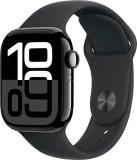
The Series 10 is designed around a charge-every-night routine. Fast charging softens the habit, since a short top-up restores most of a day of use, but the watch still expects daily attention. If sleep tracking is a priority, you will need to charge during the evening instead. The Apple Watch Series 10 in Jet Black Aluminum keeps the weight low while retaining the same core sensors as the larger model, which suits sleep tracking and all-day wear.
Display, Controls, and Daily Handling
Both watches use always-on OLED panels that stay readable in direct sun, and both support the wide-angle viewing that keeps the screen legible when you glance at it from an angle. The Ultra 3 pushes brightness higher, which helps on glacier fields, open water, and other highly reflective surfaces. Apple also rates the Ultra speaker for wind and surf, so calls and Siri replies remain usable outdoors.
- Series 10: Digital Crown plus side button, thin 9.7mm profile, 42mm and 46mm sizes
- Ultra 3: Crown, Action button, and side button, with the Action button mappable to workouts, dive modes, or shortcuts
The Action button is the control difference that matters most. On the Ultra 3 it can start a dive session, mark a split on a trail run, or trigger the siren without digging through menus. Series 10 users get the same software but fewer physical shortcuts, which slows down split-second actions in the field.
Outdoor Safety and Connectivity
The Ultra 3 is the first Apple Watch with satellite communications, providing Emergency SOS and messaging via satellite when there is no cellular or Wi-Fi coverage. It also carries a siren audible at long distances and dual-frequency GPS, which improves position accuracy in canyons, dense forest, and urban buildings where standard GPS drifts. Apple positions this model as a safety tool for remote areas, not just a fitness tracker.
The Series 10 covers day-to-day connectivity well. Cellular versions handle calls and messages without a phone, and fall detection, crash detection, and Emergency SOS still work over cellular or Wi-Fi. What it cannot do is reach help where no network exists. That gap is the dividing line for anyone who hikes, dives, or trains beyond reliable coverage. The broader Apple brand splits along exactly this line, with satellite safety reserved for the Ultra tier.
Health and Fitness Tracking Compared
Core sensors are closely matched. Both watches track heart rate, take ECG readings, monitor blood oxygen, log sleep stages, and record wrist temperature for cycle tracking and recovery context. Workout recording covers the same activity types, and both integrate with Apple Fitness and third-party apps that write to Apple Health.
- Diving: Ultra 3 adds depth and water temperature sensors plus an EN13319 dive rating at 100m, making it usable as a dive computer
- Multisport: Ultra 3 supports precision start, custom training views, and the Action button for transitions
- Daily wellness: Series 10 delivers the same heart, sleep, and temperature data in a lighter case
The practical takeaway is that sensor parity is high, but the Ultra 3 gives that data more contexts to shine in. Divers get depth logging without a separate computer, and trail runners get a screen and battery that survive a full-day effort. The Series 10 delivers the same health insight to someone who mostly walks, runs, swims laps, and sleeps.
Which Apple Watch Fits Your Routine
Pick the Series 10 if the watch is primarily a daily companion: it is lighter, thinner, cheaper to own, and easier to sleep in. Pick the Ultra 3 if you dive, hike remote trails, race long distances, or simply hate charging every night. The mountain of specs reduces to one question: do you need satellite safety, 42-hour battery life, and a 100m dive rating? If yes, the Ultra 3 justifies its weight. If not, the Series 10 covers nearly every daily and fitness need without the bulk.
That framing also explains why Apple keeps both models in the lineup. The same watchOS experience shifts from a slim aluminum case to a rugged titanium instrument, and the decision is really about lifestyle rather than generation. Match the watch to how you move through the world, and either model will serve for years.

![Apple Watch Series 10 [42mm] - Solo Loop (Renewed)](http://www.donysterling.com/images/202508/thumb_img/70671_thumb_G_1754035651336.jpg)
![Apple Watch Series 10 [42mm] - Solo Loop (Renewed)](http://www.donysterling.com/images/202508/thumb_img/70733_thumb_G_1754035935157.jpg)
![Apple Watch Series 10 [GPS + Cellular 42mm case] Silver Aluminum Case with Denim Sport Band - S/M (Renewed)](http://www.donysterling.com/images/202508/thumb_img/70854_thumb_G_1754036525250.jpg)
![Apple Watch Series 10 [GPS + Cellular 42mm case] Silver Aluminum Case with Denim Sport Band - S/M (Renewed)](http://www.donysterling.com/images/202607/1785404135397_cmaghf_0.jpg)
![Apple Watch Series 10 [GPS + Cellular 42mm case] Smartwatch with Jet Black Aluminium Case with Ink Sport Loop. Fitness Tracker, ECG App, Always-On Retina Display, Carbon Neutral (Renewed)](http://www.donysterling.com/images/202609/1789643131377_0vugni_0.jpg)
![Apple Watch Series 10 [GPS + Cellular 42mm case] Smartwatch with Natural Titanium Case with Stone Grey Sport Band - S/M. Fitness Tracker, ECG App, Always-On Retina Display, Water Resistant](http://www.donysterling.com/images/202607/1785404542566_9baixv_0.jpg)
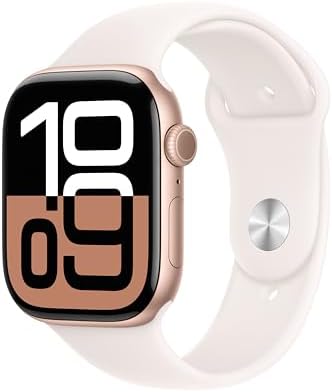
![Apple Watch Series 10 [GPS + Cellular 42mm case] Smartwatch with Rose Gold Aluminum Case with Light Blush Sport Band - S/M. Fitness Tracker, ECG App, Always-On Retina Display, Water Resistant](http://www.donysterling.com/images/202609/1789643531705_1nlv6i_0.jpg)
![Apple Watch Series 10 [GPS + Cellular 42mm case] Smartwatch with Silver Aluminium Case with Blue Cloud Sport Loop. Fitness Tracker, ECG App, Always-On Retina Display, Carbon Neutral](http://www.donysterling.com/images/202508/thumb_img/70764_thumb_G_1754036089646.jpg)