The Apple Watch SE 3 and the Garmin Vivoactive 5 occupy different corners of the mid-range smartwatch market, yet they frequently land on the same shopping shortlist. One is built around deep iPhone integration and an app-first experience, while the other prioritizes multi-day battery life and fitness-first tracking. This comparison serves as a practical buying reference for anyone weighing both models, and it is worth bookmarking if a purchase decision is approaching.
| Feature & Selling Point | Apple Watch SE 3 | Garmin Vivoactive 5 |
|---|---|---|
| Display Type | Always-On Retina LTPO OLED | AMOLED touchscreen |
| Case Size | 40mm / 44mm | 42mm (single size) |
| Battery Life | Up to 18 hours | Up to 11 days |
| GPS | Built-in GPS | Built-in GPS |
| Water Resistance | 50m (WR50) | 5 ATM |
| Heart Rate Monitor | Optical, high/low alerts | Elevate optical sensor |
| Sleep Tracking | Sleep stages, apnea notifications | Sleep score, nap detection |
| ECG Feature | Not available | Not available |
| SpO2 Monitoring | Not available | Pulse Ox sensor |
| Compatible OS | iPhone only | iOS and Android |
| Contactless Payment | Apple Pay | Garmin Pay |
| App Ecosystem | Extensive App Store | Focused Connect IQ store |
| Body Battery / Energy | No equivalent metric | Body Battery energy monitoring |
| Best Use Case | All-day iPhone companion | Multi-day training and recovery |
The most consequential difference in this table is battery life: the Apple Watch SE 3 requires a nightly charge, while the Garmin Vivoactive 5 stretches across roughly a week and a half of typical use. A second major fork appears in operating system compatibility. The Apple Watch SE 3 operates exclusively with an iPhone, whereas the Vivoactive 5 connects to both iPhone and Android devices.
Design Language and Everyday Wearability
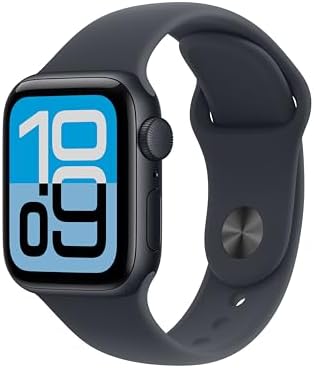
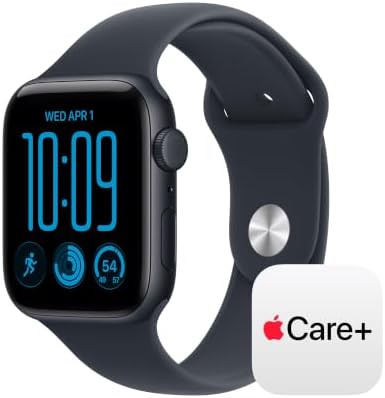
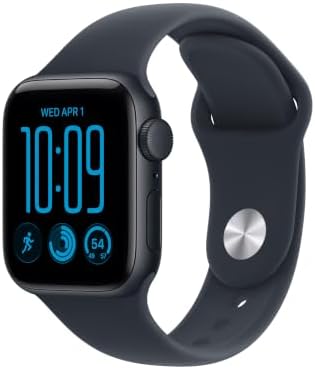
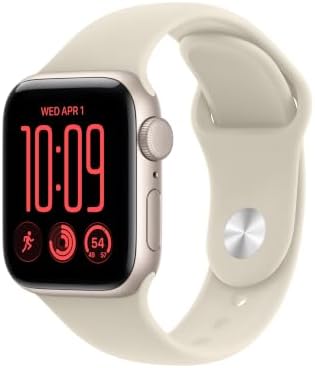
The Apple Watch SE 3 continues Apple’s rounded-rectangle design language, which has become instantly recognizable since the original Apple Watch debuted. Its aluminum case is offered in midnight and starlight finishes at 40mm or 44mm, and the display uses an LTPO OLED panel that can dim to a low refresh rate for always-on visibility. The Apple Watch SE 3 [GPS 40mm] Midnight Aluminum 40mm S/M GPS is the smallest and lightest option in the lineup.
The Garmin Vivoactive 5 counters with a circular 42mm case, an AMOLED display, and an aluminum bezel. The circular form factor gives it a more traditional watch silhouette, which may appeal to buyers who prefer something that reads less like a computer on the wrist.
- Apple Watch SE 3: Rectangular screen, Digital Crown and side button controls, extensive band compatibility via the standard Apple strap rail
- Garmin Vivoactive 5: Circular dial, five-button navigation, silicone band paired at purchase
Neither case is heavy, and both use aluminum to keep weight low. The difference comes down to preferences. The Apple model offers more screen real estate for text-heavy apps like messages and notifications, whereas the rounded case of the Garmin Vivoactive line reads more like a conventional timepiece during formal occasions.
Display Quality and Readability
Both watches use OLED-based displays with deep blacks and strong contrast, but they approach brightness and duty cycles differently. Apple’s LTPO OLED panel on the SE 3 enables an always-on mode that dims the display when the wrist is lowered, keeping time and complications visible without engaging the full brightness level. The Garmin Vivoactive 5 uses an AMOLED panel that can also host an always-on display mode, though users often disable it to preserve the multi-day battery figure.
Readability outdoors on both is helpfully strong. Both brands tune their displays for direct sunlight, and both offer gesture-based wake behavior. The bigger distinction is interface density. The Apple Watch is designed to show more text per screen thanks to the wider chassis, while the circular Garmin splits information across dedicated widget pages.
Health, Fitness, and Sensor Accuracy
Sensor parity between these two models is closer than the price and category differences might suggest. Both offer continuous heart rate monitoring via optical sensors, both support sleep tracking with stage breakdowns, and both calculate metrics tied to recovery and daily readiness. This category requires care because the marketing language on both sides uses different terms for similar capabilities.
Apple Watch SE 3 Sensors
Apple includes an optical heart sensor, high and low heart rate notifications, and irregular rhythm notifications. Sleep tracking is built into the WatchOS ecosystem, including Sleep Stages and sleep apnea notifications where regional approvals allow. Blood oxygen measurement and ECG are confined to higher-tier models, so these features are intentionally not part of the SE 3 specification set. Apple’s broader health feature catalog includes HRV, hypertension notifications, and AFib history across its product range.
Garmin Vivoactive 5 Sensors
Garmin’s Elevate heart rate sensor handles continuous tracking, and the Pulse Ox sensor provides blood oxygen readings, typically on demand or during sleep. The standout Garmin-specific feature is Body Battery, which estimates energy reserves throughout the day based on stress, sleep, and activity data. Health Snapshot, nap detection, and detailed sleep scoring round out the wellness suite. The Garmin v铆voactive 5 Health and Fitness Ivory GPS has the same core sensor package as the rest of the Vivoactive 5 range.
Battery Life and Charging Reality
Battery life is the clearest practical divide. Apple rates the SE 3 at up to 18 hours of typical use, which in real terms usually translates to a nightly charge. The Garmin Vivoactive 5 is rated at up to 11 days in smartwatch mode, dropping to roughly 21 hours with GPS active. That longer window appeals to users who dislike taking their watch off every night, whether for convenience or to preserve sleep tracking without interruption.
Both watches use proprietary charging cables, so there is no ecosystem shortcut that favors one over the other. The charging frequency difference is where the trade-off really bites. Two nights a week versus seven nights a week is not a trivial luxury.
Smart Features and Ecosystem Integration
Apple punches well above its weight in this category. The Apple WatchOS foundation on the SE 3 mirrors what higher-end models run, which means full access to the App Store, wallet integration through Apple Pay, precise Find My device tracking, and deep messaging and call handling from the wrist. iPhone users get tighter integration for notifications, Siri, and health data flowing into the Health app.
Garmin takes a different route. Garmin Pay is supported, and smart notifications work with both iPhone and Android, but the Connect IQ store has a smaller catalog and the widget-based approach to interface design differs from the app-heavy model on WatchOS. Garmin positions itself primarily as a wellness and fitness company, with smartwatch features as enhancements to that core mission. Buyers who value a rich app platform will notice the gap immediately.
Sports and Training Features
Both watches cover the essentials: running, cycling, swimming, walking, and general strength training. Apple brings activity rings, deep integration with Apple Fitness Plus, and structured workout APIs that third-party apps like Strava or TrainingPeaks can use effectively. Garmin brings decades of endurance sports heritage, plus specialized modes like yoga, pilates, pool swimming, and advanced running dynamics when paired with accessories.
Where Garmin pulls away is breadth. The Vivoactive 5 includes more than 30 built-in sport profiles and Garmin Coach adaptive training plans directly on device. The Apple Watch SE 3 relies more on third-party apps for advanced training structure, which keeps the core platform more focused but pushes distance-paced training into the app ecosystem.
Making the Choice
Buyers anchored in the iPhone ecosystem who want the strongest smart features in the segment will likely find the Apple Watch SE 3 the more engaging daily companion. Its display, app store, and messaging workflow set a standard that the Vivoactive 5 does not aim to match. On the other hand, anyone who places battery life, recovery tracking, or cross-platform compatibility at the top of their needs will likely find the Garmin Vivoactive 5 a better fit. The Vivoactive 5 also serves Android users, a group entirely closed off from Apple’s smartwatch line.
An honest read is that neither is a compromise pick. The two watches solve overlapping but not identical problems. Apple builds to make notifications, payments, and app-driven convenience effortless. Garmin builds to keep wellness and training data front and center while staying on the wrist for days at a time. Whether the deciding factor is ecosystem, battery, or training structure, one of these two is likely the answer.
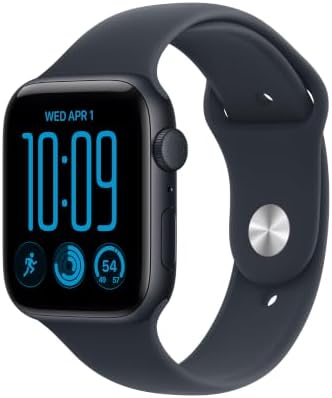
![Apple Watch SE 3 [GPS + Cellular 40mm] Smartwatch with Midnight Aluminum Case with Midnight Sport Band - M/L. Fitness and Sleep Trackers, Heart Rate Monitor, Always-On Display, Water Resistant](http://www.donysterling.com/images/202605/thumb_img/71863_thumb_G_1778570092390.jpg)
![Apple Watch SE 3 [GPS + Cellular 40mm] Smartwatch with Midnight Aluminum Case with Midnight Sport Band - S/M. Fitness and Sleep Trackers, Heart Rate Monitor, Always-On Display, Water Resistant](http://www.donysterling.com/images/202607/1785407537941_9xajm4_0.jpg)
![Apple Watch SE 3 [GPS + Cellular 40mm] Smartwatch with Starlight Aluminum Case with Starlight Sport Band - M/L. Fitness and Sleep Trackers, Heart Rate Monitor, Always-On Display, Water Resistant](http://www.donysterling.com/images/202607/1785403090816_nw2iia_0.jpg)
![Apple Watch SE 3 [GPS + Cellular 44mm] Smartwatch with Midnight Aluminum Case with Midnight Sport Band - M/L. Fitness and Sleep Trackers, Heart Rate Monitor, Always-On Display, Water Resistant](http://www.donysterling.com/images/202607/1785407556372_ikfjn2_0.jpg)
![Apple Watch SE 3 [GPS + Cellular 44mm] Smartwatch with Midnight Aluminum Case with Midnight Sport Band - S/M. Fitness and Sleep Trackers, Heart Rate Monitor, Always-On Display, Water Resistant](http://www.donysterling.com/images/202605/thumb_img/71861_thumb_G_1778570084364.jpg)
![Apple Watch SE 3 [GPS + Cellular 44mm] Smartwatch with Starlight Aluminum Case with Starlight Sport Band - M/L. Fitness and Sleep Trackers, Heart Rate Monitor, Always-On Display, Water Resistant](http://www.donysterling.com/images/202607/1785407204165_o4az75_0.jpg)
![Apple Watch SE 3 [GPS + Cellular 44mm] Smartwatch with Starlight Aluminum Case with Starlight Sport Band - S/M. Fitness and Sleep Trackers, Heart Rate Monitor, Always-On Display, Water Resistant](http://www.donysterling.com/images/202605/thumb_img/71859_thumb_G_1778570075819.jpg)