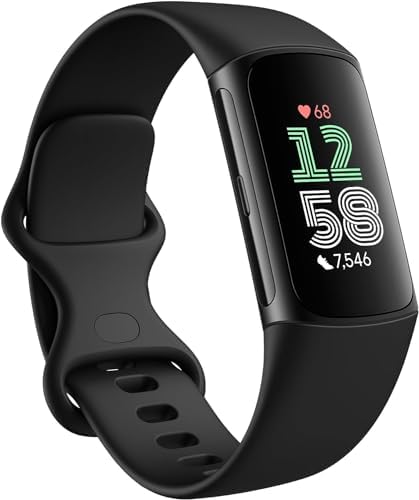
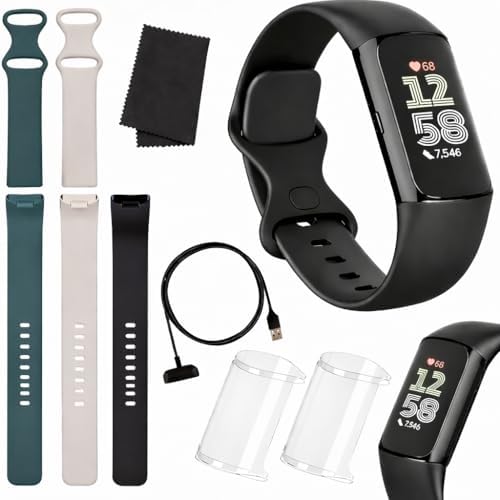
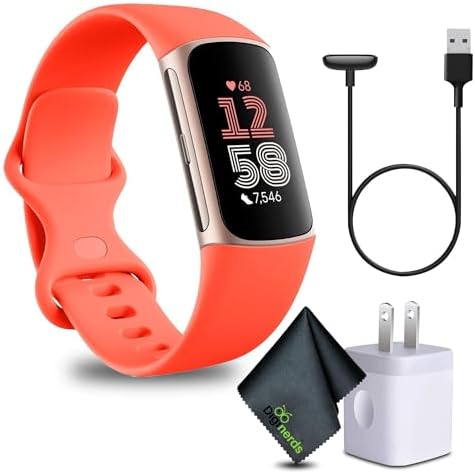
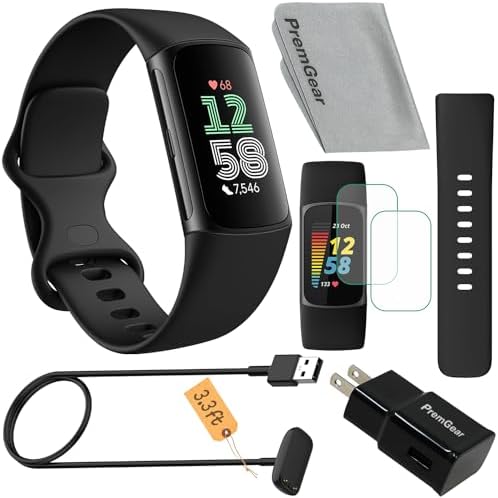
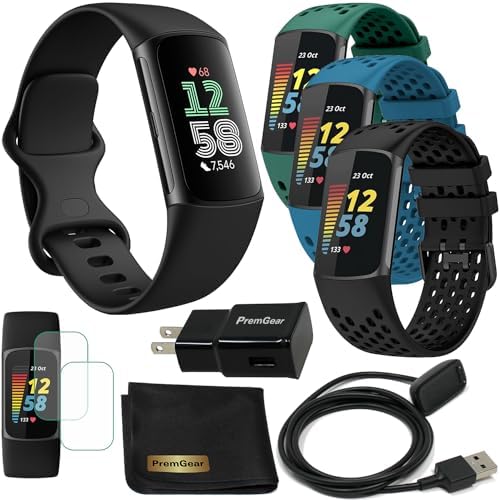
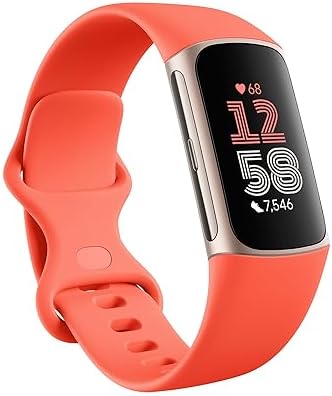
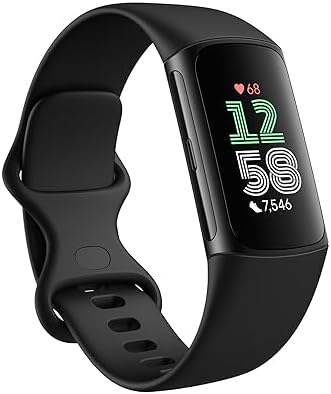
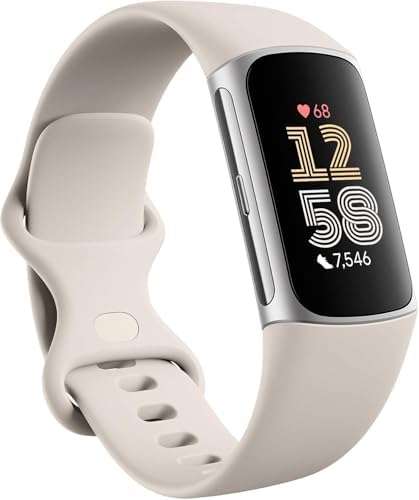
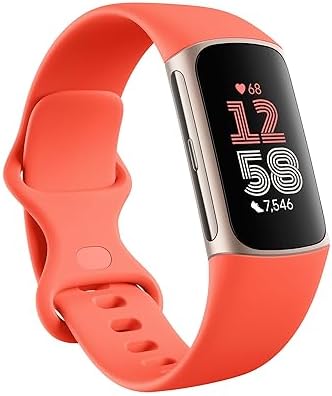
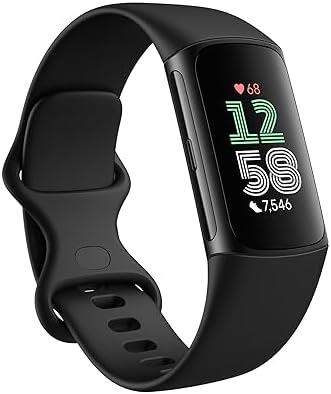
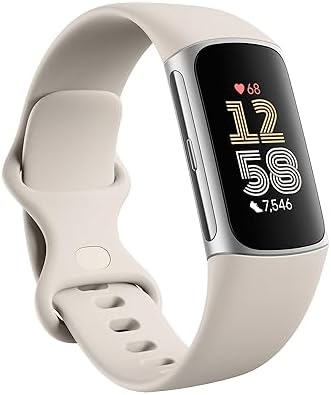
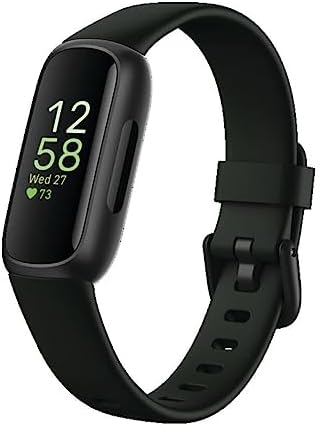
The Fitbit Charge 6 and the Apple Watch SE 3 sit at opposite ends of the wearable spectrum, yet both target the same person: a buyer who wants reliable health tracking without paying for features that may never be used. The Charge 6 is a slim fitness band built around the Google ecosystem, while the SE 3 is Apple’s most affordable smartwatch, now carrying the S10 chip and an always-on display that was once reserved for pricier models. The two devices diverge sharply in battery life, app flexibility, and physical form. This comparison is written as a decision-making resource, setting out the specifications and real-world trade-offs so you can match either tracker to your own routine.
| Feature and Selling Point | Fitbit Charge 6 | Apple Watch SE 3 |
|---|---|---|
| Form Factor | Slim fitness band | Square smartwatch |
| Display | Color AMOLED, always-on | LTPO OLED, always-on |
| Processor | Not disclosed by Fitbit | Apple S10 chip |
| Battery Life | Up to 7 days | Up to 18 hours |
| Water Resistance | 50 meters | 50 meters |
| Onboard GPS | Built-in GPS | Built-in GPS, GLONASS, Galileo, QZSS |
| Key Health Sensors | Heart rate, SpO2, EDA, skin temperature | Heart rate, sleep tracking, temperature sensing |
| ECG App | Not available | Available via the ECG app |
| Sleep Tracking | Yes, with Sleep Score | Yes, with Sleep Score and Sleep Apnea notifications |
| Contactless Payments | Google Wallet | Apple Pay |
| App Ecosystem | Limited third-party apps | Extensive App Store |
| Phone Compatibility | Android and iOS | iPhone only |
| Subscription | Google Health Premium optional | No mandatory subscription |
| Best Suited For | All-day fitness tracking, week-long battery | iPhone users wanting a full smartwatch experience |
The table makes the central trade-off clear. The Charge 6 runs for up to seven days on one charge, while Apple’s own technical documentation for the SE 3 places battery life at up to 18 hours, which for many owners means charging every night. In return, the SE 3 adds an ECG app, a full App Store, and tighter integration with iPhone. The choice therefore hinges less on raw tracking accuracy and more on whether you value long battery life and cross-platform support over a complete smartwatch platform.
Battery Life: The Single Biggest Difference
Battery life is the metric that shapes daily ownership more than any other, and here the two devices are worlds apart. The Google Fitbit Charge 6 – Fitness Black is rated for up to seven days, a figure that holds up because a narrow band does not carry a bright square display or a full operating system running background apps. Even with continuous heart rate monitoring and overnight sleep tracking, most owners will charge roughly once a week. The practical effect is that the band disappears into your routine: you wear it, forget it, and remember it only when the battery indicator finally dips low.
The Apple Watch SE 3 operates under a different set of constraints. Apple lists battery life of up to 18 hours, which means a nightly charging ritual for anyone who wears it to bed for sleep tracking. Pair the Apple Watch SE 3 [GPS 40mm] Midnight Aluminum 40mm S/M GPS with a quick top-up before bed or during a morning shower, and the fast charging helps. Still, the charging habit never fully goes away, and travel or long field days demand deliberate planning that a multi-day band simply does not require.
Design, Size, and Wearing Comfort
The Charge 6 series follows Fitbit’s long-standing approach of keeping the tracker narrow and light. Its aluminum body and soft band let it slip under a shirt cuff or sleep comfortably against the wrist. This remains one of the most subtly wearable product lines in the company’s catalog, and the slim profile is a deliberate design choice rather than a limitation. For people who dislike the sensation of a large watch on their wrist, this matters more than any specification sheet suggests.
The SE 3 is unmistakably an Apple Watch. Its rectangular case, curved edges, and vivid OLED panel are the product of a design language refined across several generations. Apple offers it in two case sizes and a wide assortment of band styles, and the case is also available in the Apple brand’s finishes, including Midnight and Starlight. The screen supports an always-on mode, which the Charge 6 also offers but in a more compact form. A larger canvas changes how information is read at a glance, and for users who occasionally want to reply to a message or glance at a map from the wrist, the square display is a genuine advantage.
Health and Fitness Tracking Capabilities
Both devices handle the fundamentals well: continuous heart rate, workout detection, sleep tracking, and blood oxygen monitoring. The Fitbit brand’s platform layers on its own interpretation with a Daily Readiness Score, Active Zone Minutes, and an EDA sensor for stress measurement that has become a signature of its higher-end bands. The watch also pairs with gym equipment to broadcast heart rate during a session.
The SE 3 serves up the standard Apple health framework. Workout modes span the usual list, the Workout app logs cardio fitness as a trend, and sleep apnea notifications have been pushed out through watchOS, giving users a useful early alert to take up with a clinician. Users who want an ECG function to check their heart rhythm will find that the Charge 6 does not include that specific sensor. For iPhone owners already tracking steps and heart rate, the SE 3 is designed to live inside that environment without friction. The stronger note on both devices is that they serve as trackers first and medical tools second; neither replaces a professional diagnosis.
Apps, Payments, and Everyday Connectivity
The App Store defines the SE 3. From Spotify and Strava to meditation timers and smart home controls, the watch becomes a small extension of the phone. Apple Pay completes the day-to-day picture, and the whole package works without the watch ever being taken off. This is what separates a smartwatch from a fitness band, and it is the reason many buyers accept the daily charging cycle.
The Charge 6 runs with Google Wallet for contactless payments and Google Maps for turn-by-turn directions on the go. Its own app store is far more modest. That limitation is less painful than it sounds if your main goal is daily movement and sleep data. Both devices handle notifications; the difference lies in how much you want to interact with them rather than simply read them.
Software, Ecosystem, and Who Each One Suits
The software lines split along platform boundaries. The Charge 6 pairs with both Android phones and iPhones, which makes it one of the more flexible trackers on the market. Advanced insights such as its Daily Readiness Score surface through the Fitbit app, and Google has made several of the deeper tools available through its Health Premium membership. Because the Charge 6 also works with Fitbit-specific features like Active Zone Minutes, it fits well for runners and swimmers whose priorities sit on workout logging rather than app access. The combination of week-long battery life and a compact band also makes it a natural companion for activities where a watch-style device would be intrusive.
The SE 3 is locked into the iPhone ecosystem, and in practice that is the point. For an Apple user, pairing is instant, health and activity data flow into one app, and the watch integrates with features such as Find My and activity sharing with friends. Buyers who carry an Android phone should dismiss the SE 3 outright, because it will not work with their device. Given that constraint, the target audience narrows to iPhone owners, but within that group it has few competitors at the value end of the smartwatch market. Anyone weighing whether to add a phone-free day or a workout-only device to their routine will find that a band-based tracker and a full smartwatch answer different questions rather than simply doing the same thing at different prices.
A buyer deciding between these two products is not actually choosing a better or worse tracker. One is a narrow device engineered to run for a week on a charge, track movement thoroughly, and stay out of the way. The other is a compact wrist computer that happens to be very good at tracking, but asks for a nightly charge in exchange for apps, payments, and deeply integrated iPhone support. Matching a purchase to a charging habit, a phone brand, and a preferred wrist feel is the most honest way to make the decision. The wearable that gets worn consistently is the one that records the data that matters, and both of these will do exactly that for the person they were built for.