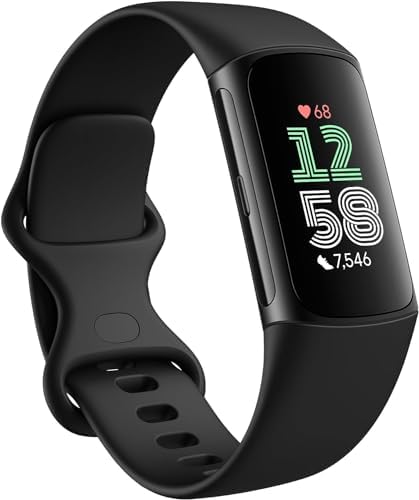
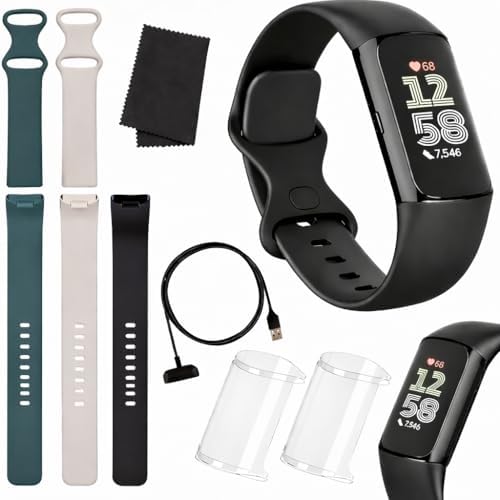
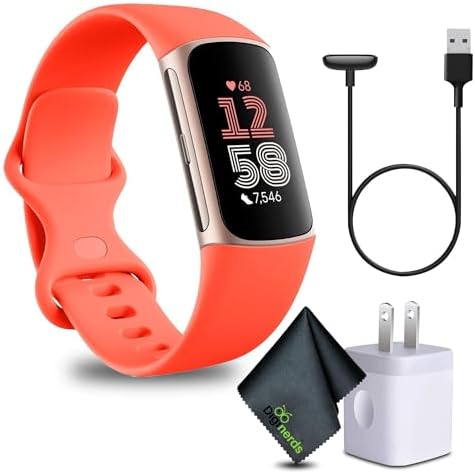
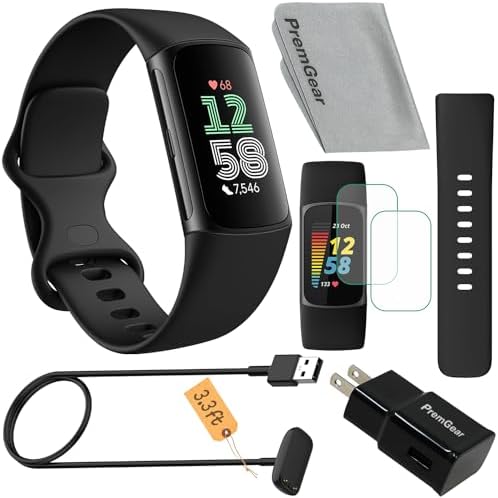
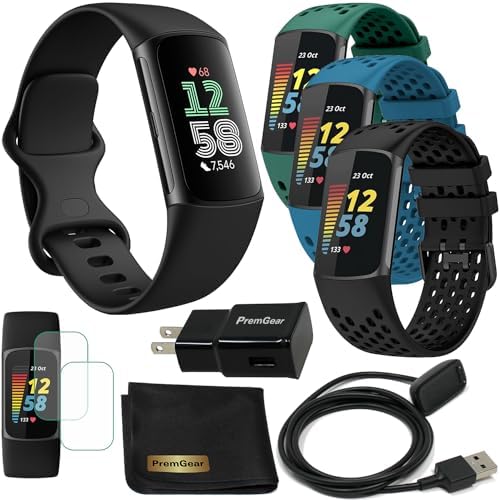
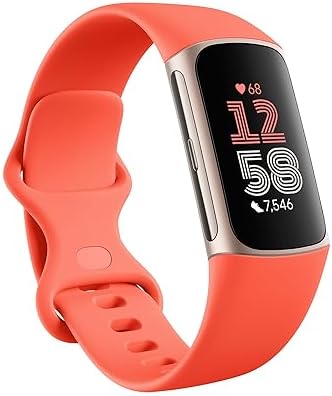
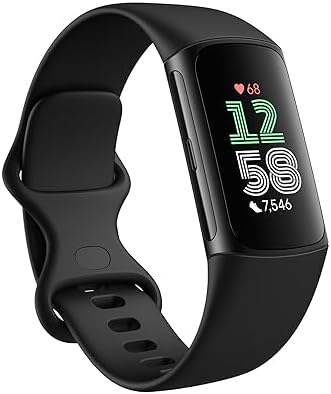
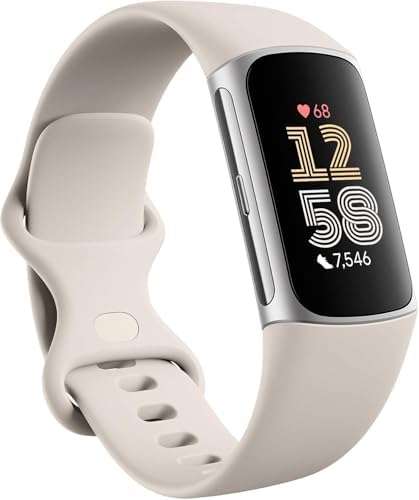
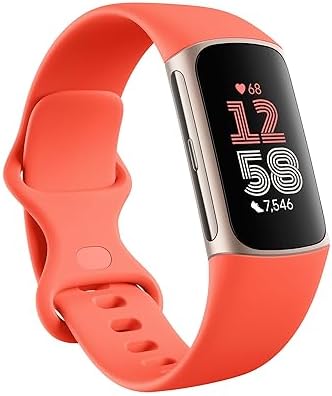
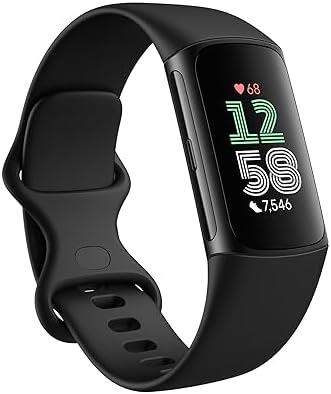
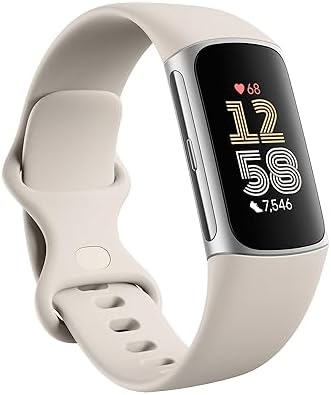
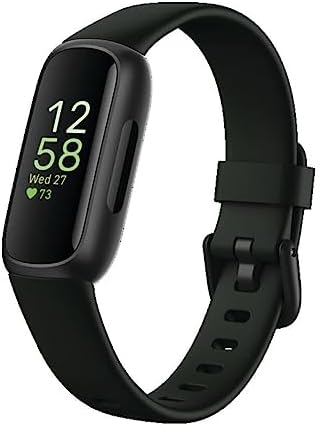
The Google Fitbit Charge 6 – Fitness Black is a slim band-style tracker built around continuous biometric monitoring, while the Google Pixel Watch 4 (45mm) – 45mm Wi-Fi is a round smartwatch that runs Google collection services on the wrist. This comparison is written as a practical buying reference for anyone deciding between a dedicated fitness band and a full smartwatch, and it is worth bookmarking before committing to either device.
| Feature and Selling Point | Fitbit Charge 6 | Google Pixel Watch 4 |
|---|---|---|
| Device Type | Fitness tracker band | Full round smartwatch |
| Case Dimensions | Approx. 34.9 x 17 x 8.3 mm | 41mm or 45mm round |
| Display Shape | Vertical rectangular | Circular with domed glass |
| Case Material | Aluminum and polished trim | Aerospace-grade aluminum |
| Stated Battery Life | Up to 7 days typical use | Up to 40 hours |
| Charging Solution | Proprietary charging cable | Side dock fast-charging dock |
| Health Sensors | Continuous heart rate, EDA, blood oxygen | Heart rate, blood oxygen, skin temperature |
| ECG Support | Not included | Not specified in source |
| Built-in GPS | Yes, with heart rate broadcast | Yes, with route mapping |
| Smart Features | Google apps, Wallet, Maps | Full Google ecosystem, voice, LTE option |
| Subscription Perk | 3-month Google Health Premium membership included | Not specified in source |
| Band Options | Small and large bands included | Interchangeable straps, multiple sizes |
| Water Resistance | Swim-proof, 50m | Swim-proof, 5 ATM |
| Best For | All-day fitness tracking and multi-day battery | Notification-rich wrist experience and Google services |
The table shows the sharpest split between these two devices: the Charge 6 stretches battery life across a week, while the Google Pixel Watch 4 (45mm) – 45mm Wi-Fi, with a stated 40 hours of use and a dedicated dock. Which direction makes sense depends less on sensor counts and more on whether the wearer wants a device that disappears into a band or a round screen that behaves like a small phone on the wrist.
Two Wearables, Two Design Languages
The Fitbit Charge 6 follows a lineage of slim bands that sit close to the wrist. Its 34.9 x 17 x 8.3 mm body keeps the profile low, which reduces snagging on sleeves and makes it easy to wear overnight for sleep tracking. The narrow, vertical display is optimized for glanceable data: steps, heart rate, and short messages rather than full apps.
The Google Pixel Watch 4 moves in the opposite direction. Google describes it as featuring next-level health and fitness tools on a bigger, brighter domed display, and the round case comes in 41mm and 45mm sizes. The domed glass gives the screen a jewel-like curve that catches light, echoing the round-face tradition of analog watches. Aerospace-grade aluminum is used for the case, a material choice borrowed from the aerospace and cycling industries that favors strength-to-weight ratio.
These silhouettes are not interchangeable. A band-style tracker like the Charge 6 collection sits flush against the skin, favoring accuracy in heart-rate readings during exercise. A round smartwatch elevates the sensor pod slightly above the wrist and emphasizes the dial as a visible object, which suits those who treat a wearable as jewelry-adjacent.
Sensors, Data, and What They Track
Both devices descend from Fitbit’s sensor platform, now integrated into Google’s hardware family. The Charge 6 includes continuous heart rate monitoring, electrodermal activity for stress tracking, and blood oxygen readings. The Pixel Watch 4 covers heart rate, blood oxygen, and skin temperature, alongside Google’s health and fitness suite.
A practical advantage of the Fitbit line is the ability to broadcast heart rate to gym equipment, a niche but useful feature for treadmill and stationary bike users. The Pixel Watch 4 emphasizes broader smartwatch functions, including Google services such as Maps, Wallet, and voice assistance, making it less of a passive sensor and more of an active companion.
- Fitbit Charge 6 strengths: continuous EDA stress sensing, multi-day battery, gym equipment heart-rate broadcast
- Google Pixel Watch 4 strengths: domed display with always-on visibility, Google app integration, skin temperature sensing
For buyers weighing data depth, the choice often comes down to what happens when the wearer is not exercising. A tracker like the Charge 6 quietly logs all day and needs charging once a week, while the Pixel Watch 4 answers texts, shows turn-by-turn directions, and presents health data through a brighter, larger dial.
Battery Life and Charging Habits
Battery life is perhaps the most decisive difference. The Fitbit Charge 6 is rated for up to seven days on a full charge, which means charging becomes a weekly ritual rather than a nightly one. The Google Pixel Watch 4 is certified by Google for up to 40 hours of battery life, and the brand offers a quick-charge dock designed to top it up in shorter sessions.
These two philosophies create different habits. A weekly charge suits users who dislike routine management; a nightly or every-other-night charge suits users who already remove their watch at bedtime. The Pixel Watch 4’s compatibility with the side-mounted dock makes replenishing faster for those who forget to charge until morning.
Battery specs also correlate with display technology. A rectangular screen at minimal brightness and a low refresh rate performs differently from a round, domed display engineered for visibility in outdoor light. This does not make one better; it explains why smart wearables diverge so dramatically in runtime.
Wearability and Daily Use
Wearability is subjective, yet some patterns hold. Band-style trackers tend to sit more comfortably under gloves and long sleeves, and they are less prone to catching on fabric. A round smartwatch like the Pixel Watch 4 commands more visual attention and typically weighs more due to the case architecture and the glass dome.
The Charge 6 ships with both small and large bands, which reduces the chance of needing a separate strap purchase. The Pixel Watch 4 supports interchangeable straps across both 41mm and 45mm case sizes, allowing users to shift between sport and dress looks without buying a second device.
Sleep tracking favors lightness. A slim band that does not shift during the night produces fewer motion artifacts than a weightier watch. In contrast, a full smartwatch may be removed at night by users who find it intrusive, which would interrupt temperature and sleep-stage data. Choosing a form factor is therefore not purely aesthetic; it affects the completeness of the data set.
Fitness Features and Smart Integration
Both devices belong to Google’s hardware family, which means shared access to Google Health Premium membership in certain bundles. The Fitbit Charge 6 is sold with a three-month membership, providing extended access to premium metrics and guided programs. The Pixel Watch 4 sits inside the same health ecosystem, benefiting from Google’s emphasis on consolidating Fitbit and Pixel data.
For training, the Charge 6 supports heart-rate broadcasting, useful when pairing with compatible gym machines. The Pixel Watch 4 supports GPS tracking with route mapping, which is more relevant for outdoor runners who want to see their path after a session. These are complementary strengths rather than direct replacements.
- Battery consumption in GPS mode: relevant for long hikes and marathon training
- Smart features: notifications, voice, payments, and maps favor the Pixel Watch 4
- Data continuity: both integrate with Google’s health tools
Which Device Fits Your Wrist?
The Fitbit Charge 6 is the choice for users who value multi-day battery life, a discreet profile, and continuous biometric logging. The Google Pixel Watch 4 is the choice for those who want a round display, Google services, and fast charging in a package that looks and behaves like a modern smartwatch.
Neither device replaces the other in every scenario. Many buyers might pair a tracker for sleep and a smarter watch for daytime use, or prioritize one based on which sensor matters most. The Fitbit brand’s heritage in fitness tracking is evident in the Charge 6, while Google’s ecosystem brings a wider suite of services to the Pixel Watch 4.
The market now treats dedicated trackers and full smartwatches as distinct categories rather than competitors. This distinction gives shoppers the freedom to choose based on lifestyle, wrist comfort, and how much interaction is wanted from the device itself.