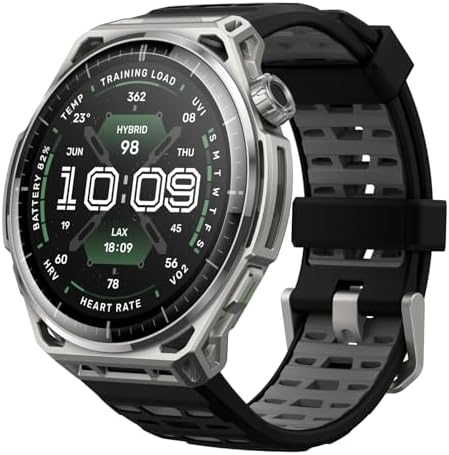
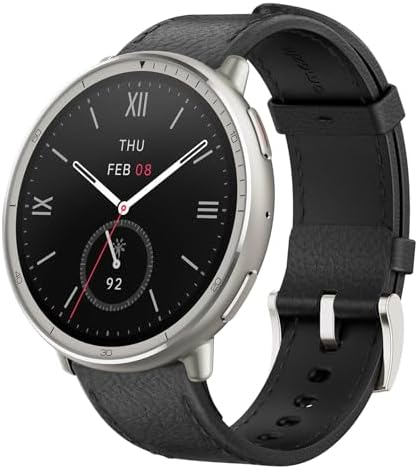
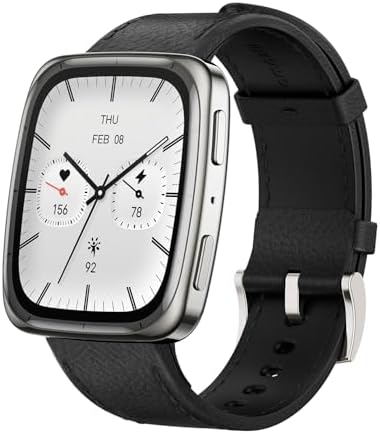
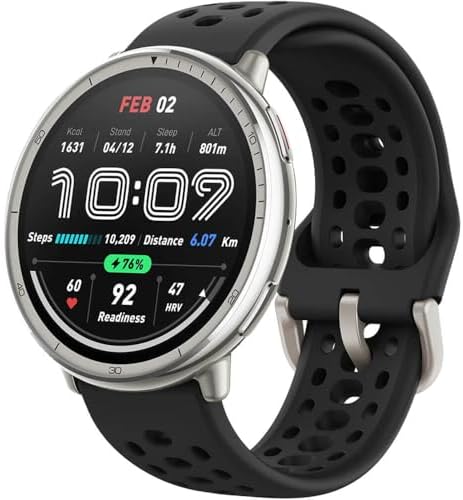
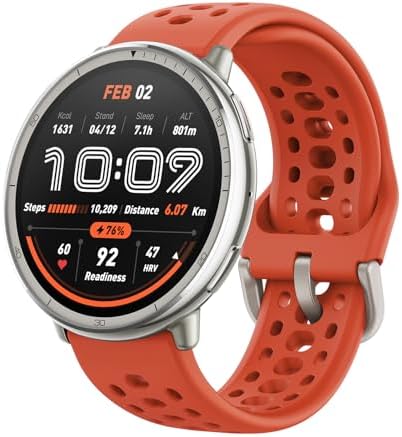
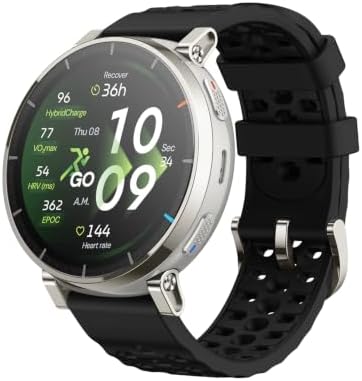
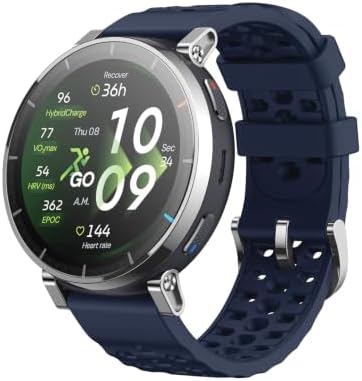
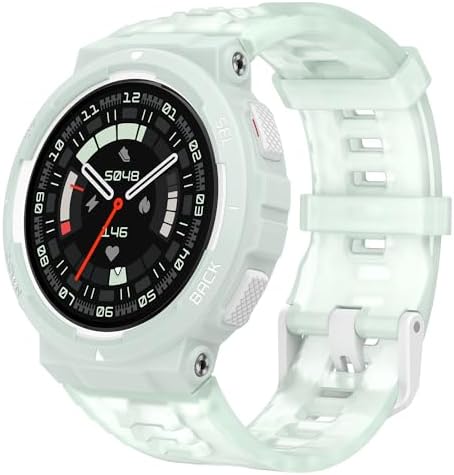
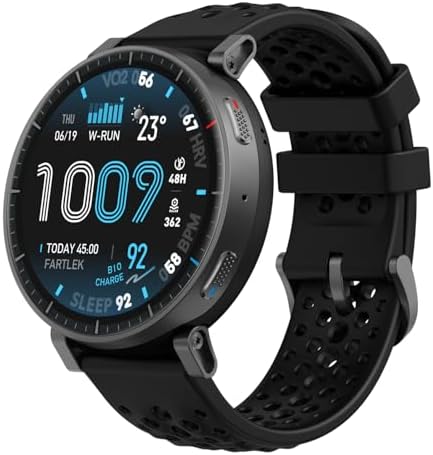
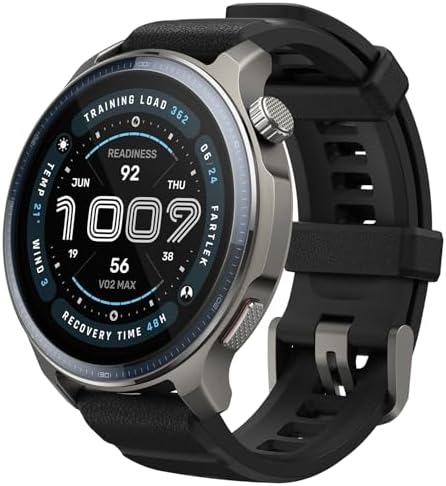
The Amazfit Balance 3 pairs a stainless steel case with a 1.5-inch AMOLED sapphire-covered display and a claimed 21-day battery rating. The Garmin Fenix 8 47mm answers with a fiber-reinforced polymer case, an AMOLED panel, and a multisport architecture refined across generations of the Fenix 8. These two watches sit at different points on the premium spectrum, yet shoppers cross-shop them constantly.
One trades on battery endurance and lifestyle versatility, the other on training depth and outdoor resilience. What follows is a buyer’s guide built to be kept and revisited: specs, trade-offs, and clear guidance on which wrist each watch belongs on.
| Decision Factor | Amazfit Balance 3 | Garmin Fenix 8 (47mm) |
|---|---|---|
| Display Size and Type | 1.5″ AMOLED, sapphire glass | 1.4″ AMOLED, sapphire option |
| Case Material | Stainless steel | Fiber-reinforced polymer with metal bezel |
| Case Diameter | 48mm | 47mm |
| Battery (Smartwatch Mode) | Up to 21 days | Up to 15 days |
| GPS Battery Life | Extended multi-day tracking | Up to 26 hours (GPS-only) |
| GNSS Support | Dual-band GPS | Multi-band GNSS with SatIQ |
| Onboard Storage | 64GB | 32GB |
| Offline Maps | Yes | Yes, with TopoActive mapping |
| Built-in Flashlight | Yes | Yes, LED with multiple intensities |
| Sport Modes | 180+ modes | Deep multisport profiles with training metrics |
| Water Resistance | Water-resistant for swimming | 10 ATM with dive-rated modes |
| Training Ecosystem | General fitness and wellness tracking | Advanced metrics, Stamina, Endurance Score |
| Voice and Smart Features | Bluetooth calling, smart assistant support | Voice commands, smartphone notifications |
| Rugged Durability | Stainless steel build, lifestyle-grade toughness | Military-grade thermal, shock, and water testing |
| Best For | All-day wear with week-long battery convenience | Trail athletes, divers, and expedition use |
The table makes the central tension obvious: the Balance 3 leans on battery longevity, storage, and a stainless steel finish, while the Fenix 8 leans on multisport depth and environmental testing. Battery figures come directly from Garmin’s own specification pages, where the 47mm Fenix 8 is rated at up to 15 days in smartwatch mode, up to 26 hours in GPS-only mode, and up to 23 hours with SatIQ auto-select GNSS engaged. Those numbers matter most when a watch is asked to log long efforts far from a charger.
Display and Case Design: Two Different Philosophies
The Balance 3 uses a 1.5-inch AMOLED panel protected by sapphire glass, wrapped in a stainless steel case measuring 48mm across. It reads as a dress-adjacent smartwatch: polished, reflective, and comfortable in an office or at dinner. The Fenix 8, by contrast, wears its outdoor DNA openly. Its 47mm case combines fiber-reinforced polymer with a metal bezel, a construction chosen for impact absorption rather than visual shine.
Sapphire on the Amazfit is a notable inclusion at this tier, since sapphire resists scratches far better than standard glass. Garmin offers sapphire on select Fenix 8 configurations, which means buyers chasing ultimate scratch resistance need to check the specific variant they intend to purchase. For anyone weighing Garmin’s broader lineup, Garmin typically means accepting a more technical aesthetic in exchange for field-tested construction.
Battery Endurance: The Balance 3’s Biggest Argument
Amazfit rates the Balance 3 at up to 21 days in typical use, a figure that comfortably exceeds the Fenix 8’s 15-day smartwatch rating. For a buyer who dislikes charging rituals, this gap is meaningful. Two extra days per cycle may sound modest, but across a year it reduces charging interruptions noticeably, particularly for users who track sleep continuously.
Garmin’s approach to battery is more situational. In GPS-only GNSS mode the Fenix 8 is rated for up to 26 hours, and with SatIQ auto-select enabled that figure drops to roughly 23 hours. SatIQ dynamically switches satellite systems to balance accuracy against power draw, a technique that benefits runners and hikers who want reliable tracks without manually managing settings. Neither figure is a weakness on its own; the question is whether the buyer prioritizes standby endurance or extended active-tracking sessions. Garmin’s official comparison pages list these ratings directly, so buyers can benchmark their own typical session lengths against them.
Mapping, Storage, and Navigation Tools
The Balance 3 includes 64GB of storage and offline maps, allowing routes to be downloaded and consulted without a phone connection. That storage figure is double what the Fenix 8 offers, and it gives the Amazfit headroom for music, map tiles, and future app data.
The Fenix 8 counters with TopoActive mapping, a terrain-focused cartography system that has been refined across successive Garmin generations. TopoActive maps emphasize trails, elevation contours, and off-road detail, which suits hikers and trail runners more than urban users. Both watches include a built-in flashlight, a genuinely useful feature for early starts and late finishes, though Garmin’s LED implementation offers multiple brightness intensities and a strobe mode for visibility.
Training Depth and the Outdoor Ecosystem
Garmin’s advantage here is structural rather than cosmetic. The Fenix 8 inherits training tools such as Stamina, which estimates how much energy remains during an activity, and Endurance Score, which tracks long-term aerobic capacity. These metrics go beyond raw heart-rate and pace data into guidance territory, helping athletes plan pacing and recovery. Garmin’s own community forums show runners actively comparing the Fenix 8’s training feature set with the Forerunner 970, which indicates how seriously the brand treats its performance ecosystem.
The Balance 3 covers 180 sport modes, a figure that comfortably handles gym work, cycling, swimming, and team sports. For the majority of recreational athletes this breadth is sufficient. The distinction appears when training becomes structured: interval targets, race-day pacing, and load management are areas where Garmin’s software maturity shows. Buyers who follow training plans rather than simply logging workouts will feel the difference.
Water resistance also splits the two. The Fenix 8 carries 10 ATM rating with dive-rated modes, making it suitable for snorkeling and recreational diving. The Balance 3 is water-resistant and fine for swimming, but its design brief is daily wear rather than submersion sports. Similarly, the Fenix 8’s military-grade thermal, shock, and water testing reflects an expectation of abuse that the stainless steel Balance 3 is not built to absorb. For reference, the Amazfit brand’s approach has consistently favored accessible pricing alongside generous hardware, and the Balance 3 continues that pattern.
Smart Features and Daily Wear
Both watches support notifications, Bluetooth calling, and voice assistant integration. The Balance 3 pairs with both iOS and Android, and its stainless steel case and sapphire display give it an appearance that transitions easily into professional settings. The Fenix 8 handles the same smartwatch duties, though its bulkier 47mm profile and utilitarian bezel are less discreet under a shirt cuff.
Notifications on both devices are readable and dismissible from the wrist. The practical difference lies in tone: Amazfit positions the Balance 3 as a lifestyle device with fitness capability, while Garmin positions the Fenix 8 as an outdoor instrument that happens to be smart. Buyers who want one watch for the office and the trail will find the Balance 3 easier to justify aesthetically; buyers who accept a rugged look in exchange for capability will lean toward the Fenix 8.
Which Watch Should You Buy?
The decision comes down to honesty about use. The Amazfit Balance 3 Smart Watch 1.5″ 48mm GPS suits buyers who prioritize battery life, want sapphire glass and a stainless steel case, value 64GB of storage, and keep their activities broad rather than specialized. It is the better watch for someone who wants a premium-looking device that rarely needs charging and handles swimming, running, and gym work without fuss.
The Garmin Fenix 8 47MM AMOLED Multisport Slate Black GPS rewards buyers who train with structure, hike or dive, need mapping systems built around terrain, and require 10 ATM durability plus military-grade environmental testing. The shorter battery cycle is the price of that capability, and for many outdoor users the trade is straightforward.
What makes this comparison durable is that neither watch is compromised. They simply optimize for different owners. The Balance 3 answers the question of how much premium hardware can be delivered without daily charging anxiety. The Fenix 8 answers the question of how much capability can be packed into a case that survives the environments it is designed to explore. Matching the watch to the wrist, rather than the spec sheet to the moment, remains the surest way to buy well.