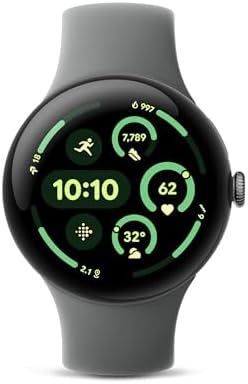
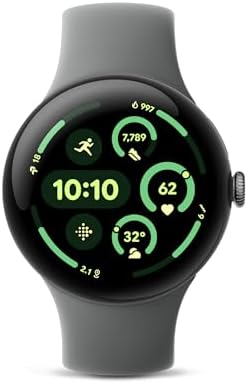
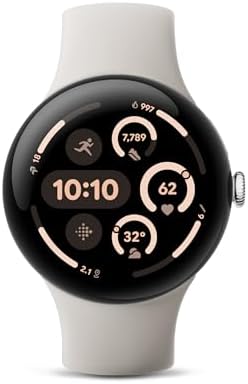
The Google Pixel Watch 3 and the Garmin Vivoactive 6 sit at opposite ends of the modern smartwatch spectrum, yet they compete for the same wrist space. One leans into Google’s Wear OS ecosystem and Fitbit-powered health analytics, while the other carries Garmin’s decades of GPS and sports tracking heritage. Choosing between them comes down to what you value most: deep smartphone integration or long-distance endurance and training precision. This guide breaks down every meaningful difference so the right call becomes obvious for your lifestyle.
| Feature & Selling Point | Google Pixel Watch 3 | Garmin Vivoactive 6 |
|---|---|---|
| Display | AMOLED, 2000 nits peak, always-on | AMOLED, 42mm, always-on option |
| Case Sizes | 41mm and 45mm | 42mm only |
| Battery Life | Up to 36 hours (always-on off) | Up to 11 days smartwatch mode |
| Operating System | Wear OS 5 | Garmin proprietary OS |
| GPS | Dual-frequency GPS, GLONASS, Galileo | GPS, GLONASS, Galileo |
| Health Sensors | Heart rate, SpO2, skin temperature, ECG | Heart rate, SpO2, HRV status, sleep |
| Sports Modes | 40+ modes via Fitbit | 80+ preloaded sports apps |
| Water Resistance | 5 ATM (50m) | 5 ATM (50m) |
| Contactless Payments | Google Wallet | Garmin Pay |
| Music Storage | Offline via YouTube Music, Spotify | Offline via Spotify, Deezer |
| Smart Features | Full Wear OS app ecosystem | Notifications, weather, safety tracking |
| Phone Compatibility | Android only | Android and iOS |
| Charging | Magnetic pogo pin, fast charge | Proprietary cable |
| Best For | Android users wanting a true smartwatch | Multi-day athletes and outdoor users |
The table reveals the fundamental split. Battery life is the most dramatic divergence: the Vivoactive 6 delivers up to 11 days in smartwatch mode, while the Pixel Watch 3 requires a nightly charge. However, the Pixel Watch 3 counters with an ECG sensor and the full Wear OS app library, features the Garmin cannot match. These trade-offs define which buyer each watch serves.
Battery Endurance and Charging Routines
Battery life shapes daily habits more than any other specification. The Garmin Vivoactive 6 runs up to 11 days in smartwatch mode, a figure confirmed by Garmin’s own product documentation. Even with always-on display enabled and regular GPS sessions, most users will see five to seven days between charges. That translates to charging on a Sunday evening and forgetting about the cable for the rest of the week.
The Pixel Watch 3 operates on a different rhythm entirely. Google rates it at up to 36 hours with the always-on display disabled, which realistically means charging every night or every other night. Fast charging mitigates this somewhat, delivering roughly 50 percent battery in about 30 minutes, but the habit of daily charging is unavoidable. For anyone who has grown accustomed to a traditional watch that runs for years, the Garmin approach feels far less intrusive.
This difference matters most for sleep tracking. A watch that needs nightly charging forces users to choose between wearing it overnight or topping up before bed. The Garmin Vivoactive 6 Fitness GPS AMOLED Slate Black eliminates that conflict, tracking sleep, overnight heart rate variability, and recovery metrics without ever leaving the wrist.
Health Tracking Depth and Accuracy
Both watches cover the essentials: continuous heart rate monitoring, blood oxygen measurement, sleep staging, and stress tracking. Where they diverge is in the depth of analysis and the specific sensors onboard. The Pixel Watch 3 benefits from Fitbit’s health platform, which includes an ECG app for detecting atrial fibrillation, skin temperature sensing for cycle tracking, and a Daily Readiness Score that blends activity, sleep, and heart rate variability into a single actionable number.
The Vivoactive 6 focuses on training-oriented metrics. Garmin’s ecosystem provides HRV status, Body Battery energy monitoring, and detailed sleep scores that feed into recovery guidance. The watch lacks an ECG sensor, but it compensates with a broader set of performance analytics aimed at people who train systematically rather than casually. Garmin’s documentation highlights overnight heart rate variability status and sleep monitoring as core features of the Vivoactive 6 experience.
- Pixel Watch 3 advantages: ECG sensor, skin temperature, Fitbit premium insights, Daily Readiness Score
- Vivoactive 6 advantages: HRV status, Body Battery, training load focus, recovery time advisor
- Both offer: Continuous heart rate, SpO2, sleep staging, stress tracking, respiration rate
For someone managing a heart condition or wanting clinical-grade atrial fibrillation detection, the Pixel Watch 3 holds a clear edge. For an athlete tracking training stress and recovery balance, the Vivoactive 6 provides more relevant data.
Sports and Outdoor Capabilities
The Vivoactive 6 ships with more than 80 preloaded sports apps according to Garmin’s official specifications, covering everything from running and cycling to swimming, golf, skiing, and martial arts. Each mode includes sport-specific metrics: running dynamics, cycling power compatibility, swim stroke detection, and golf course maps. The watch also supports Garmin’s safety and tracking features, which can send a live location to emergency contacts during outdoor activities when paired with a smartphone.
The Pixel Watch 3 offers over 40 exercise modes through Fitbit, including running, cycling, swimming, and HIIT tracking. Its dual-frequency GPS is a genuine strength, improving positional accuracy in dense urban environments and challenging terrain where standard GPS signals bounce off buildings or canyon walls. Google has also added running form metrics and a pace training feature that guides users through interval workouts with haptic and audio cues.
Neither watch is a dedicated multisport tool like the Garmin Fenix or Forerunner series, but the Vivoactive 6 leans closer to that territory. Its 5 ATM water resistance covers swimming and showering on both models, so pool sessions are equally viable. The practical difference emerges on multi-hour hikes, bike tours, or ski days where the Pixel Watch 3’s battery may not last the full outing with GPS active.
Smart Features and Ecosystem Integration
This is where the Pixel Watch 3 pulls ahead decisively. Wear OS 5 provides access to Google Maps, Gmail, Calendar, Assistant, and thousands of third-party apps from the Play Store. Notifications are rich and interactive, allowing replies directly from the wrist. Google Wallet handles contactless payments, transit cards, and loyalty programs. The watch also integrates tightly with Pixel phones and other Android devices, offering features like camera control, Find My Device, and seamless handoff between devices.
The Vivoactive 6 takes a more utilitarian approach. It displays notifications, supports quick replies on Android, handles contactless payments through Garmin Pay, and offers weather, calendar, and music controls. But the app ecosystem is limited to Garmin’s own suite and a handful of partnerships. There is no Google Maps navigation on the wrist, no third-party app store, and no voice assistant beyond basic Bluetooth calling. For iPhone users, the Vivoactive 6 is one of the few Garmin models that works well with iOS, whereas the Pixel Watch 3 is strictly Android-only.
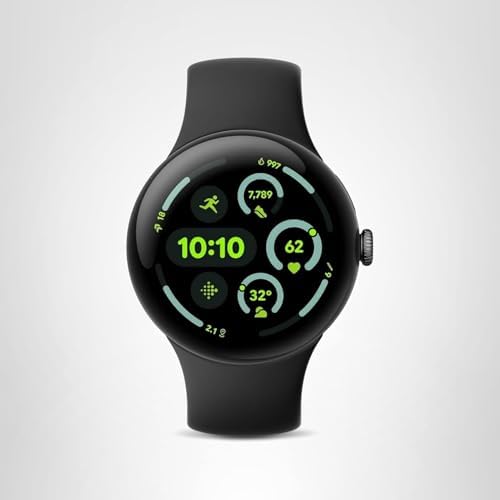
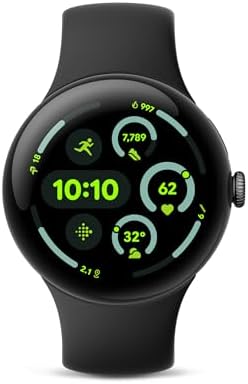
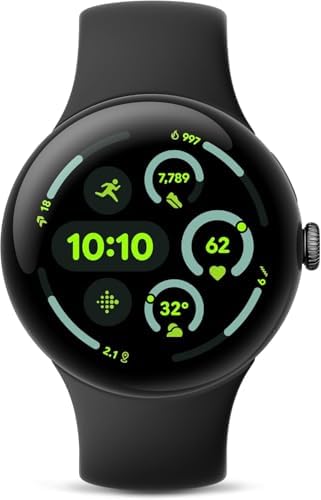
Garmin’s wearable lineup shows how consistently the company prioritizes function over app flexibility, while Google’s smartwatch range confirms that deep smartphone integration remains the Pixel Watch’s defining strength. The Vivoactive 6 illustrates the full scope of Garmin’s sports-first design philosophy, while the Google Pixel Watch 3 (45mm) Latest Black Aluminum 45mm Wi-Fi represents the pinnacle of Wear OS hardware refinement.
Design, Build, and Wearing Experience
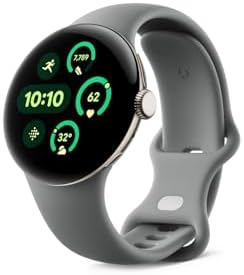
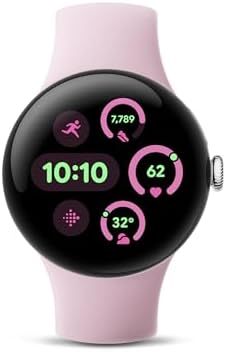
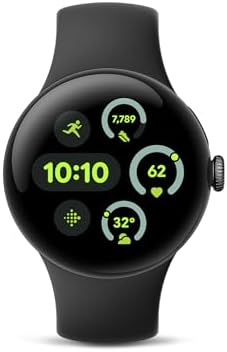
The Pixel Watch 3 features a distinctive domed glass design that wraps seamlessly into the recycled aluminum case, creating a pebble-like profile that sits close to the wrist. The 41mm and 45mm options cater to different wrist sizes, and the proprietary band attachment system allows quick swaps without tools. The Actua display reaches 2000 nits peak brightness, making it readable in direct sunlight, and the always-on mode dims to a useful low level rather than turning off entirely.
The Vivoactive 6 takes a more traditional approach with a 42mm polymer case and a standard silicone band. It is lighter than the Pixel Watch 3 and less obtrusive during sleep or intense exercise. The AMOLED display is bright and responsive, though it lacks the curved elegance of Google’s design. Garmin’s physical button, in addition to touchscreen input, proves invaluable during sweaty workouts or when wearing gloves.
Both watches support always-on display, but the Vivoactive 6’s superior battery means users can leave it enabled permanently without anxiety. The Pixel Watch 3’s always-on mode drains battery faster, forcing a trade-off between convenience and runtime. In terms of durability, both carry 5 ATM water resistance and Corning Gorilla Glass protection, though the Garmin’s raised bezel offers slightly better screen protection against incidental knocks.
Who Should Buy Which Watch
The decision ultimately rests on two questions: how often are you willing to charge, and how deeply do you need smartphone integration? The Pixel Watch 3 is the clear choice for Android users who want a true smartwatch experience on their wrist, complete with apps, voice assistance, Google Maps, and Fitbit’s comprehensive health platform. It suits professionals, city dwellers, and anyone who values a polished interface and seamless phone connectivity over multi-day battery life.
The Vivoactive 6 suits a different profile entirely. Athletes, outdoor enthusiasts, and anyone who travels frequently will appreciate the 11-day battery, the 80-plus sports modes, and Garmin’s robust training analytics. It also works with iPhones, broadening its appeal beyond Android loyalists. The watch prioritizes doing a few things exceptionally well rather than attempting to replicate a smartphone on the wrist.
For the buyer who wants both worlds, the honest answer is that no single watch delivers everything. The Pixel Watch 3 wins on intelligence and integration; the Vivoactive 6 wins on endurance and athletic depth. Identifying which of those two pillars matters more to your daily life is the only test that truly decides the purchase.