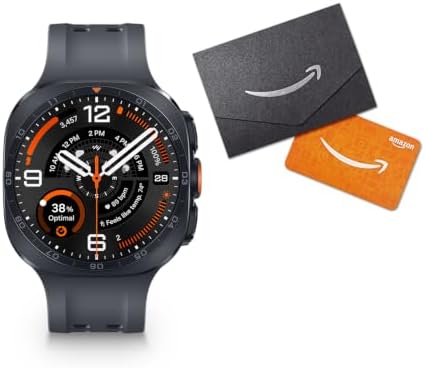
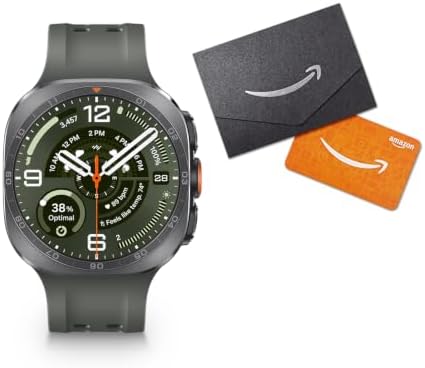
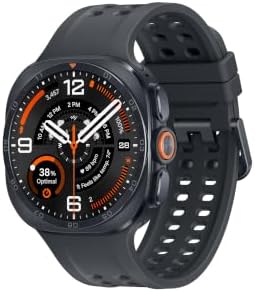
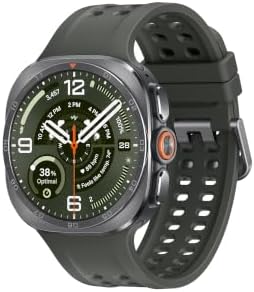
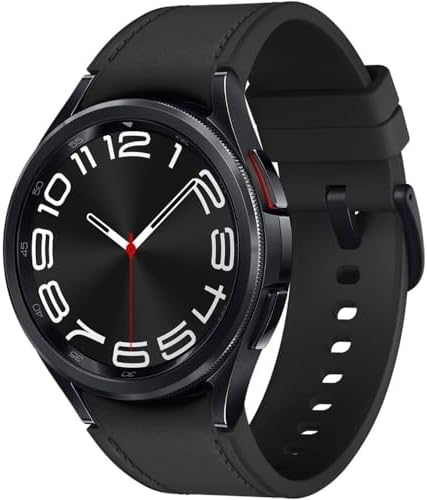
The Samsung Galaxy Watch Ultra2 and the Galaxy Watch9 sit at opposite ends of the same wearable generation, and the gap between them is wider than a simple size difference. One is built around an 800 mAh battery, a titanium case, and a 5,000-nit display, while the other targets everyday wearers who want a lighter aluminium build in 40mm or 44mm. This guide compares them head to head so the choice comes down to your wrist, your training, and your budget rather than a spec sheet alone.
| Feature and Selling Point | Galaxy Watch Ultra2 | Galaxy Watch9 |
|---|---|---|
| Case Sizes | 47mm (single size) | 40mm and 44mm |
| Case Material | Titanium | Aluminium |
| Battery Capacity | 800 mAh | 590 mAh |
| Display Brightness | 5,000 nits | Standard outdoor brightness |
| Screen Sizes | 47mm panel on titanium case | 1.34-inch 40mm; 1.47-inch 44mm |
| Water and Dust Rating | IP69K plus 10 ATM plus EN13319 | IP68 plus 5 ATM |
| Charging Speed | Samsung’s fastest watch charge | Standard wireless charging |
| Connectivity Options | LTE model available in Titanium Gray 47mm | Bluetooth model available in Graphite 40mm |
| Weight and Band Design | Lighter, softer bands for 24/7 wearability | Lightweight aluminium for all-day comfort |
| Health Tracking Depth | Precise biometric data for 24/7 tracking | Core biometric tracking for daily use |
| Best Use Case | Multi-day treks, open water, diving | Office, commuting, everyday health |
| Upgrade Appeal | 88\% larger battery than Watch 6 Classic | 20\% larger battery than prior small models |
| Value Positioning | Flagship, rugged premium tier | Accessible everyday tier |
The table shows where the two diverge most: the Ultra2 carries roughly a third more battery capacity, a titanium shell, and a rating stack built for immersion, while the Watch9 covers 40mm and 44mm case sizes for smaller wrists at a lower entry point. That single split, case size and build versus outright endurance, is what most buyers will actually feel day to day.
Design, Case Sizes, and Who Each Watch Fits
The 47mm Galaxy Watch Ultra2 is a fixed-size proposition, and Samsung does not offer it in a smaller variant. Its titanium case gives it a hardness-to-weight ratio that aluminium cannot match, which matters once a watch is knocked against rock, door frames, and gym equipment over several years. The trade-off is unavoidable: a 47mm titanium body looks and feels substantial on a wrist, and buyers with a wrist circumference below roughly 160mm often find it visually oversized.
The Galaxy Watch9 answers that concern directly with two aluminium options. The 40mm model uses a 1.34-inch panel at 438 x 438 resolution, while the 44mm model steps up to a 1.47-inch 480 x 480 display. Aluminium keeps the weight down, which is the main reason the Watch9 disappears on the wrist during sleep tracking and long working days. If 24/7 wear is the priority rather than expedition durability, the smaller case sizes make a measurable comfort difference. Buyers weighing the two handling philosophies before committing can see the full Samsung selection in one place.
Battery, Charging, and Realistic Endurance
The 800 mAh cell inside the Galaxy Watch Ultra2 is the single biggest practical advantage in this matchup. Samsung pairs it with its fastest watch charging to date, which shortens top-up windows during travel. The Galaxy Watch9 carries 590 mAh, which Samsung describes as around 20\% larger than the equivalent small-model battery from the previous generation. In real use the arithmetic is simple: the Ultra2 tolerates multi-day hikes, back-to-back GPS sessions, and overnight tracking without reaching for a charger, while the Watch9 leans on a nightly top-up routine.
What Changes With GPS and Sleep Tracking On
Continuous GPS plus always-on display is the most demanding combination either watch can run. On the Ultra2 the reserve lasts noticeably longer, which is the difference between charging mid-trek and simply wearing it. The Watch9 handles a morning run and a full working day comfortably, but a weekend of unbroken outdoor tracking will require a cable.
Charging Habits Over Time
Battery health degrades over years of cycles, so a larger starting capacity retains usable life for longer. Users who keep devices for four years or more should weigh the 800 mAh capacity as a longevity feature, not just a convenience one.
Durability Ratings and Water Resistance in Practice
Samsung rates the Galaxy Watch Ultra2 at IP69K for dust and high-pressure water, alongside 10 ATM water resistance and EN13319 compliance, a standard used for diving depth instruments. The matching titanium 47mm LTE variant keeps cellular connectivity in that same shell, so the rugged build does not cost you standalone calling.
The Galaxy Watch9 classifies at IP68 and 5 ATM. That covers pool swimming, showers, and rain without hesitation, but open water swimming, snorkelling, and pressure-heavy water sports sit outside its intended envelope. The practical guidance is straightforward: if your training involves entering the sea, the Ultra2’s rating stack is the appropriate category, and the Watch9 is designed for pool lanes and daily exposure rather than depth.
Display Brightness and Outdoor Readability
Samsung describes the Ultra2 as the first watch with a 5,000-nit display. That figure is not a marketing abstraction: direct-sunlight readability is governed by peak brightness, and 5,000 nits keeps maps, split times, and incoming notifications legible at noon on a glacier or a beach. The Watch9’s panel is sized generously for its case, with the 1.47-inch 44mm version offering the larger canvas, but it does not target that peak brightness class.
Both watches handle low light with automatic dimming well. The visible difference appears only in extreme daylight, meaning hikers, sailors, and anyone training outdoors in strong sun should treat the Ultra2’s brightness ceiling as a genuine functional choice, not a specification bragging right. For city use, screen size matters more than nits, and here the 44mm Watch9 offers a larger reading area than the smaller 40mm variant.
Health Tracking, Sensors, and Software Support
Both watches run the same Samsung wearable platform generation and use tighter, lighter band designs intended to improve skin contact. Samsung states that the Galaxy Watch Ultra2 delivers highly precise biometric data tracking for round-the-clock wear, a claim rooted in sensor contact quality rather than a separate sensor array. The Watch9 uses the same tracking architecture in a lighter body, which benefits sleep staging accuracy because the watch shifts less on the wrist overnight.
The meaningful software differences are practical rather than medical: GPS accuracy in urban canyons and under tree cover, recovery metrics after hard sessions, and how aggressively each watch samples heart rate during interval work. Samsung’s own guidance for both models converges on the same advice: consistent fit produces consistent data. The 40mm option with a smaller band profile may therefore suit users who currently see gaps in overnight readings, and the Graphite 40mm Bluetooth model is the entry point for that size class.
Which Model Owns Which Buyer
The Galaxy Watch Ultra2 is for the buyer whose watch is equipment. If your week includes open water, alpine trails, multiday routes, gloves, and a charger that may not be nearby, the 800 mAh battery, titanium case, 5,000-nit screen, and IP69K plus 10 ATM plus EN13319 rating stack are all doing real work. Its 88\% larger battery versus the Galaxy Watch 6 Classic positions it as a generational jump rather than a small refinement.
The Galaxy Watch9 is for the buyer whose watch is a daily companion. Two case sizes, aluminium construction, and a 590 mAh battery tuned for a 24-hour cycle suit office life, commuting, pool sessions, sleep tracking, and notifications. The smaller 40mm option is the better fit for narrower wrists, and the 44mm gives more screen without moving into rugged territory. The Galaxy Watch9 sizing is worth checking before deciding.
The Decision Criteria That Actually Settle It
Work through four questions in order. First, measure your wrist: at or below roughly 160mm, the Watch9’s smaller case is the more comfortable long-term tool. Second, be honest about water: sea, depth, and high-pressure exposure belong to the Ultra2’s rating class. Third, count your charging opportunities: if you sleep away from power regularly, the 800 mAh capacity changes the experience. Fourth, decide whether peak outdoor brightness is a working requirement or a nice-to-have. Two or more answers pointing toward extremes make the choice obvious; mixed answers usually mean the Watch9 is the better daily watch and the Ultra2 is the better adventure watch.
Neither model is simply an upgrade of the other. They represent two different answers to the same wearable question, one optimised for endurance under harsh conditions and one for comfort across ordinary daylight hours. Matching the watch to the life it will actually live, rather than to the largest number on a specification sheet, is what keeps either purchase satisfying three years from now.