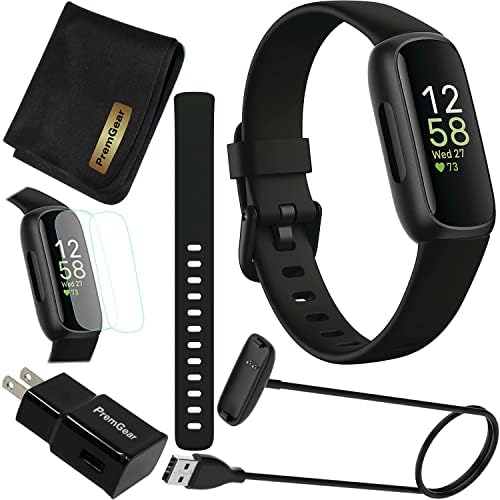
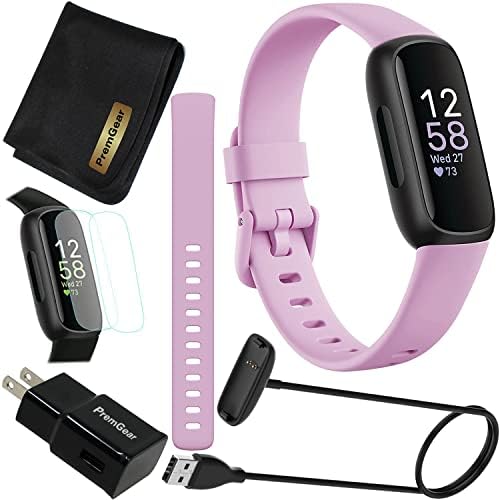
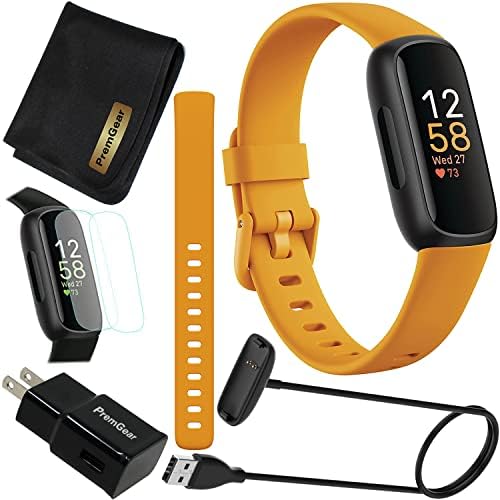
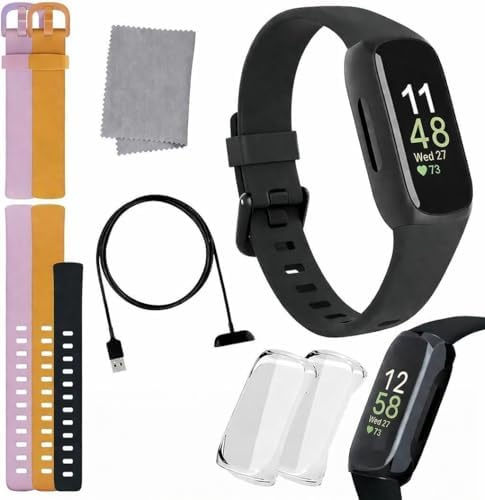
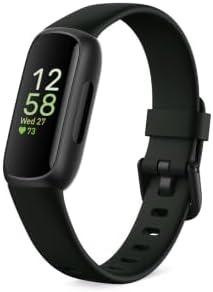
The Fitbit Inspire 3 measures roughly 39.3 mm across and weighs around 17.7 grams, a form factor designed to sit almost unnoticed on the wrist through sleep and work hours alike. That modest footprint is the foundation of its appeal: a slim band that collects continuous heart rate data, blood oxygen readings, skin temperature variation, and sleep stages without demanding a nightly charging ritual.
Fitbit positions this model as a health-focused daily tracker rather than a training computer for athletes. The Fitbit brand’s product range has long separated its trackers from its smartwatch lines, and the Inspire line sits at the leanest end of that range. What separates the Inspire 3 from its predecessors is not a single headline feature but the accumulation of medical-adjacent metrics, an always-on display option, and the inclusion of a Google Health Premium membership trial that unlocks deeper analysis.
Continuous Health Monitoring: Sensors Behind the Numbers
At the core of the Inspire 3 is a 24/7 heart rate sensor paired with a red and infrared SpO2 monitor. Heart rate is sampled throughout the day and night, feeding into resting heart rate trends, calorie estimation, and heart rate zone calculations during exercise. The blood oxygen sensor estimates variations in oxygen saturation during sleep, which Fitbit presents as a nightly range rather than a single fixed figure.
Skin temperature variation adds another layer. The tracker records a nightly baseline and reports deviations from that baseline, a measurement that is useful for spotting patterns across weeks rather than interpreting any single night. Because temperature fluctuation is influenced by alcohol, late meals, room climate, and illness, the value here is longitudinal rather than diagnostic.
These sensors work together through the Google Health app, which consolidates heart rate variability, breathing rate, and temperature deviation into daily readiness scores. Fitbit states that the Daily Readiness Score weighs activity fatigue, heart rate variability, and recent sleep quality to suggest whether a hard workout or a recovery day makes more sense. Users who want the tracking hardware but prefer a straightforward daily experience can lean on the basic metric screens and skip the more elaborate scoring features.
Sleep and Stress: Where the Inspire 3 Earns Its Place
Sleep tracking is arguably the strongest reason to choose a tracker of this size. The Inspire 3 logs time in light, deep, and REM sleep, assigns a nightly sleep score, and displays a monthly sleep profile that identifies patterns such as consistently short sleep or irregular bedtimes. The slim case is deliberately engineered for overnight wear, since a bulky watch creates pressure points that cause people to remove it at 2 a.m., precisely when the most valuable deep-sleep data is generated.
Stress management on this model centers on the EDA Scan app, which measures electrodermal activity, the subtle changes in skin conductance associated with sweat gland activity and sympathetic nervous system arousal. A two-minute or longer scan produces a stress response reading and offers guided breathing sessions. The metric is an indication of physiological arousal rather than a clinical stress diagnosis, and Fitbit frames it accordingly as a body-response signal that can be tracked over time.
- Menstrual health tracking: log periods, record symptoms, and estimate ovulation windows through the app
- Active Zone Minutes: counts minutes in fat-burn, cardio, and peak heart rate zones against weekly goals
- Guided breathing sessions: short paced-breathing exercises accessible from the tracker
- Silent alarms and reminders: vibration-based alerts for wake-up, movement, and hydration
Activity Tracking and the Display Decision
Twenty exercise modes cover the usual ground: walking, running, cycling, swimming, interval training, and weight work among them. The tracker carries a water resistance rating suitable for swimming and showering, and it counts swim laps together with stroke type. Connected GPS is available when the paired phone is nearby; the Inspire 3 does not carry an internal GPS chip, so distance and pace for outdoor runs are drawn from the handset. That is a reasonable compromise for a device of this weight class, and it keeps the battery draw low.
The color AMOLED touchscreen measures about 0.7 inches diagonally and offers an always-on display setting. Enabling that always-on mode shortens battery life noticeably, while the standard configuration reaches up to ten days between charges depending on usage and display settings. Charging runs through a magnetic proprietary cable rather than USB-C, a detail worth knowing for travel packing.
Notifications arrive as vibration alerts with on-screen previews for calls, texts, and calendar items, and quick replies are limited to Android handsets. The interface is deliberately shallow: swiping moves between metric tiles rather than an app grid. Buyers weighing this sensor package against the broader Inspire 3 lineup will find the deciding factor is the breadth of health metrics rather than software depth.
Design, Fit, and Everyday Wearability
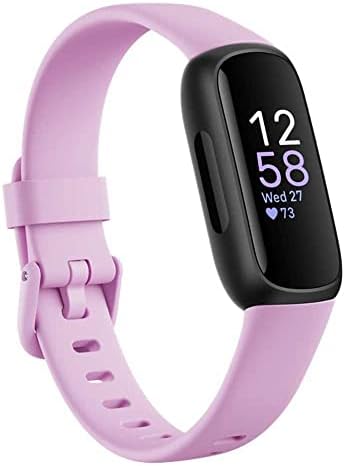
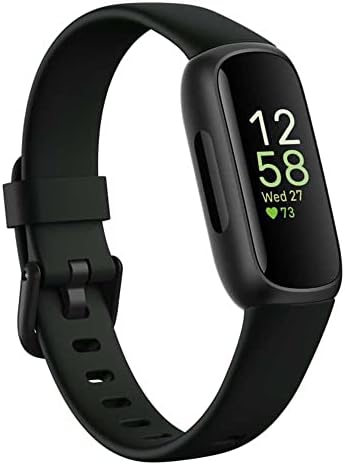
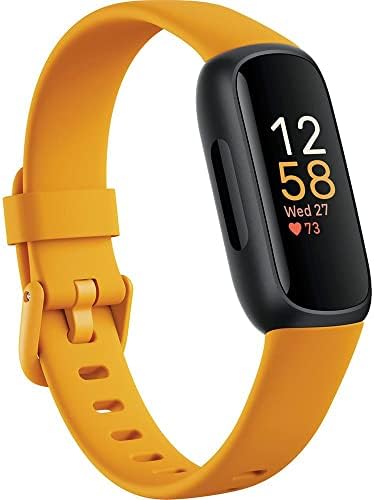
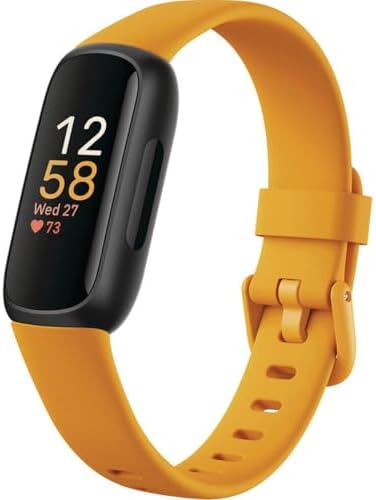
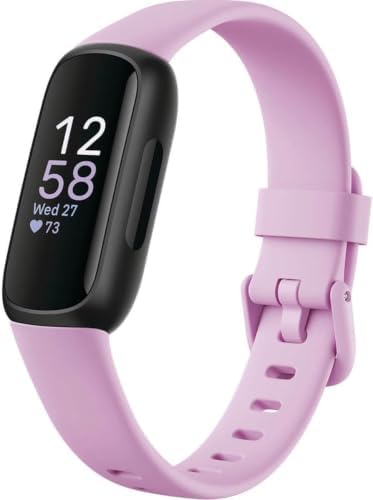
The case is built from a plastic composite with an aluminum-like finish on some colorways, and the band uses a soft, flexible silicone that resists sweat buildup during exercise. A buckle closure keeps the fit secure during swimming and high-movement activities, and the band is user-replaceable without tools. Colors span Midnight Zen with a black band, Lilac Bliss, and Morning Glow among others, each aimed at buyers who want a fitness device that reads as an accessory rather than medical equipment.
Small wrists benefit most here. The narrow profile reduces rotation on the forearm during runs, which improves optical heart rate accuracy at higher intensities, and the low weight means the band can be worn snugly without discomfort. Users who prefer a larger display for reading notifications or glancing at workout data mid-set will find the screen size the main tradeoff.
Battery, App Ecosystem, and Membership Value
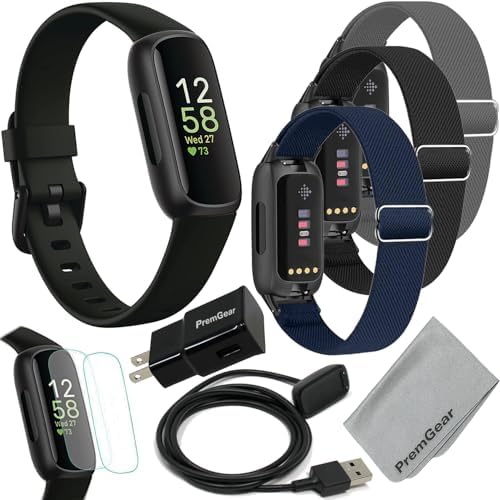
Fitbit rates the Inspire 3 for up to ten days of battery life under typical conditions, with the always-on display reducing that figure substantially. Charging from empty takes roughly two hours on the included magnetic dock. The Google Health app handles data review, sleep profiles, readiness scores, menstrual logging, and food tracking, and it syncs continuously over Bluetooth to iOS and Android devices.
Included in the retail package is a three-month Google Health Premium membership, which unlocks detailed sleep breakdowns, full readiness analysis, and expanded workout insights. Buyers who want to evaluate the premium analytics layer before committing to a subscription can start with the Fitbit Inspire 3 Health & Fitness Tracker Midnight Zen/Black, which bundles the tracker with that trial membership.
| Specification | Detail |
|---|---|
| Display | Color AMOLED touchscreen with always-on option |
| Weight | Approximately 17.7 grams |
| Battery Life | Up to 10 days typical use |
| Water Resistance | Swim-proof, suitable for pool and shower |
| GPS | Connected GPS via paired phone |
| Sensors | Optical heart rate, SpO2, skin temperature, EDA |
Two limits deserve honesty. There is no built-in GPS and no NFC payment chip, so runners must carry a phone for route mapping and shoppers cannot tap to pay. Those omissions keep the price and the size down, and they are consistent with a device built around health data collection rather than training performance or contactless convenience.
Who Should Wear It and What It Replaces
The Inspire 3 suits the person who wants continuous physiological data with minimal wrist presence: someone tracking sleep quality and recovery, managing stress responses, monitoring cycle patterns, or simply trying to move more each day. It also works well as a second device for people who already own a mechanical watch and want health tracking during workouts and overnight without duplicating a large screen.
It is a weaker fit for serious runners who need onboard GPS and structured interval programming, for contactless payers, and for anyone who wants on-wrist app installs beyond Fitbit’s own services. Within the tracker category, its value proposition rests on sensor breadth at a slim size, a combination that few competitors replicate at the same weight.
A fitness tracker succeeds when it disappears into routine and returns meaningful information without friction. The Inspire 3 is engineered around that idea: a light band that measures quietly across days and nights, then turns those measurements into readiness scores, sleep profiles, and stress readings that invite small, sustainable adjustments. Buyers hunting for deeper Fitbit hardware on the same site can also explore the Charge and Versa models, though neither matches the Inspire 3 on lightness.
Health monitoring of this kind is most useful as a long conversation with your own baseline rather than a single snapshot, and a tracker light enough to never come off is the instrument that makes that conversation possible.