The Bulova Lunar Pilot descends from a prototype chronograph worn on the lunar surface during the Apollo 15 mission in 1971, and the automatic references carry that archival link into a mechanical package. Where the quartz-powered originals relied on battery-driven accuracy, the self-winding editions reveal an oscillating weight and regulating organ through an exhibition caseback, trading grab-and-go convenience for the tactile pull of a mainspring.
The family spans several references, from quartz reissues to automatic models with distinct case dimensions and dial treatments. Understanding what separates these versions helps buyers match a specific reference to their wrist size, water-resistance needs, and appetite for mechanical ownership, rather than assuming every Lunar Pilot wears and performs identically.
Apollo 15 Provenance and the Archive Strategy
According to Bulova, the Lunar Pilot design traces back to a chronograph that astronaut David Scott carried to the lunar surface in 1971, a provenance the brand has documented across the modern line. That historical anchor gives the collection a verified narrative few affordable chronographs can claim, and Bulova has expanded it deliberately rather than issuing a single novelty piece.
Within the Archive Series, Bulova states that certain releases use a dial material with 99.4\% light-absorbing capability. That figure, cited by the brand, explains the near-black depth of select dials and shows how a historical reference point can be reinterpreted through modern material science rather than copied outright. The result is a dial that reads almost as a void, sharpening hand and marker contrast in daylight.
Movement Architecture and the Automatic Proposition
The automatic Lunar Pilot references house self-winding calibres, and Bulova’s archive documentation cites a Swiss automatic movement with a 62-hour power reserve in related release materials. For daily wear, that reserve window means the watch can rest over a weekend and still be running on Monday, a practical threshold that separates a competent automatic from one demanding constant attention.
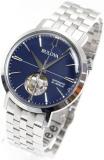
The mechanical layout also changes the wearing experience versus the quartz Lunar Pilot. A sweeping chronograph seconds hand replaces the quartz tick, and the exhibition caseback turns the watch over into a view of the oscillating weight and escapement. Enthusiasts who value observable mechanics over battery convenience will find the automatic framing more rewarding, while those prioritising set-and-forget accuracy may still prefer the original quartz execution. The same self-winding technology appears elsewhere in the line, and the open-aperture dial of the Classic Sutton 4-Hand Automatic shows how one movement family can serve a very different, dress-oriented brief.
Case Dimensions, Materials, and Wearability
Case sizing across the Lunar Pilot family varies meaningfully by reference. According to Bulova’s official product pages, one 41mm automatic reference measures 41.2mm in width with a 20mm lug width and a black stainless steel case rated to 100m water resistance. A separate silver-tone reference in the line lists a 43.5mm case width, the same 20mm lug spacing, and a WR50 rating suitable for still-water swimming.
That spread matters because wrist presence is not uniform across the collection. The smaller 41.2mm case suits narrower wrists and slips under a cuff more easily, while the 43.5mm option delivers the broader, more overtly instrument-like stance many collectors associate with the lunar chronograph silhouette. Buyers should weigh case width and lug-to-lug proportions against their own wrist measurements rather than assuming all Lunar Pilot references wear alike.
- Case material options: Black stainless steel and silver-tone stainless steel, depending on reference
- Lug width: 20mm across the documented automatic references
- Water resistance: 100m on the 98A335-style reference, WR50 on the silver-tone 98K112-style reference
- Crystal: Anti-reflective treated mineral or sapphire depending on edition
These specifications should be verified against the specific reference number at the point of purchase, because the Lunar Pilot line spans quartz and automatic movements alongside differing water-resistance ratings and case finishes.
Dial Design, Legibility, and the Black Hole Finish
The Lunar Pilot dial follows a functional chronograph architecture: dual sub-registers, a tachymeter scale where specified, and hands proportioned for quick reading at a glance. Legibility governs the layout rather than decoration, which aligns with the instrument-panel logic of the original flight watch.
The blacked-out finish on select references is the most visually distinctive treatment in the modern range. Bulova’s stated 99.4\% light-absorbing material produces a dial that absorbs rather than reflects ambient light, and in daylight this creates a matte, non-reflective surface that photographs with unusual depth. It marks a clear point of differentiation from conventional sunray or lacquer dials in the same price bracket, and it appeals to collectors who want a conversation piece rather than a broadly pairable everyday dial.
Chronograph Function in a Mechanical Context
The chronograph complication is where the Lunar Pilot earns its instrument designation. A mechanical chronograph engages a column wheel or cam-actuated mechanism to start, stop, and reset the central seconds hand, and the pusher feel on a well-executed calibre offers tactile feedback that digital timing cannot replicate.
For timing tasks like elapsed intervals during a run, a cooking sequence, or a short task, the chronograph remains genuinely practical rather than purely decorative. The mechanical architecture does impose considerations, though: running the chronograph continuously adds wear to the movement and slightly reduces power reserve, a trade-off common to all mechanical chronographs rather than a flaw specific to this model. Users who intend frequent timing use should keep that in mind, while occasional use is entirely within the design brief.
Ownership Costs and Long-Term Servicing
Mechanical ownership carries a different cost profile than quartz. A self-winding movement requires periodic servicing, typically at intervals measured in years, and the chronograph module adds complexity that can influence service pricing. Buyers entering the automatic segment should budget for eventual maintenance rather than treating the purchase as maintenance-free.
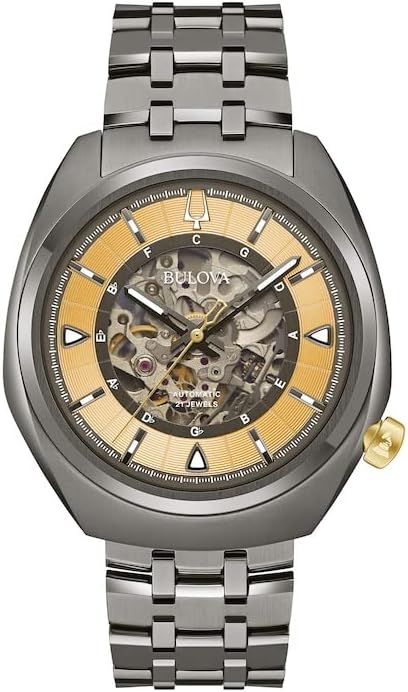
On the wrist, the automatic Lunar Pilot rewards consistent wear. Daily movement keeps the mainspring wound and the 62-hour reserve topped up, so wearers who alternate with other watches should consider a watch winder or a manual wind routine. Exhibition casebacks recur across Bulova’s self-winding range, and owners drawn to that view of the escapement often look at the 98A187 automatic as another way to watch a mainspring unwind through the caseback.
Buying Guide: Which Lunar Pilot Reference Suits Which Buyer
Prospective buyers should begin with wrist size and water-resistance requirements. The 41.2mm automatic reference with 100m resistance suits daily wear where the watch may meet rain, handwashing, or accidental splashes, and its smaller case serves wrists below roughly 7 inches comfortably. The 43.5mm silver-tone reference with WR50 is best treated as a casual and dress-adjacent piece, since 50m resistance covers swimming in still water but not diving or high-impact water sports.
Next, decide between originality and novelty in the dial. The black hole finish is the rarer, more visually arresting option and appeals to collectors who want a conversation piece, while more conventional dial treatments offer broader pairing flexibility with straps and outfits. Finally, decide on movement. The automatic versions deliver mechanical engagement and the sweeping chronograph hand, while quartz versions offer set-and-forget convenience and typically lower entry pricing. Neither is objectively superior, and the choice depends on whether the owner values horological involvement or frictionless utility. For those weighing the automatic against the quartz original, the quartz Lunar Pilot Chronograph 96B258 remains the reference against which the mechanical versions are judged.
Anyone comparing the automatic against the rest of the Bulova brand’s catalog will find the Lunar Pilot sitting at the intersection of heritage storytelling and mechanical value, a positioning that has made the line a reference point for collectors seeking space-connected chronographs without the pricing of legacy Swiss houses.
The automatic Lunar Pilot ultimately represents a coherent argument about heritage design in a modern context. Its archival anchor is verified and specific, its mechanical execution is visible and engaging, and its specification spread across references acknowledges that a single watch cannot serve every wrist and use case. The value it offers lies in translating a genuine moment of horological history into a wearable, serviceable mechanical object, and that translation is what keeps the collection relevant to a new generation of enthusiasts.