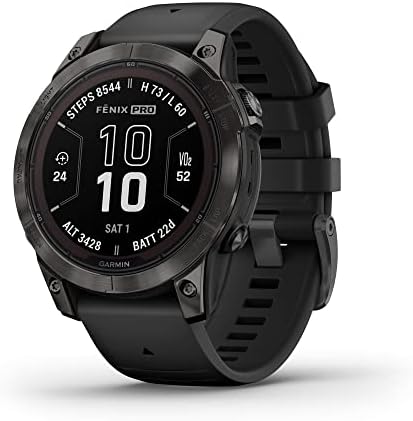
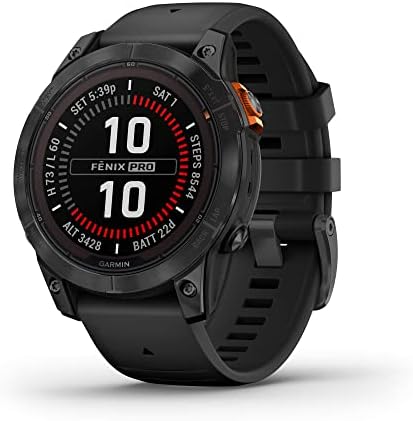
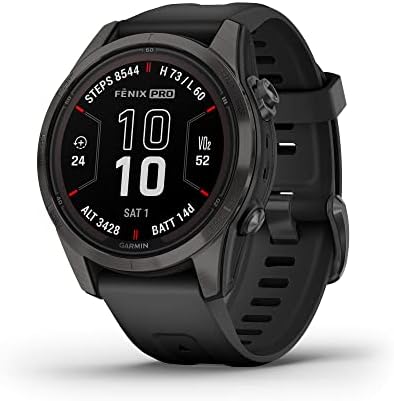
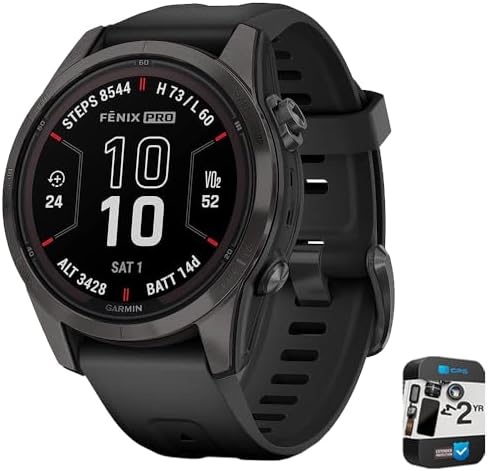
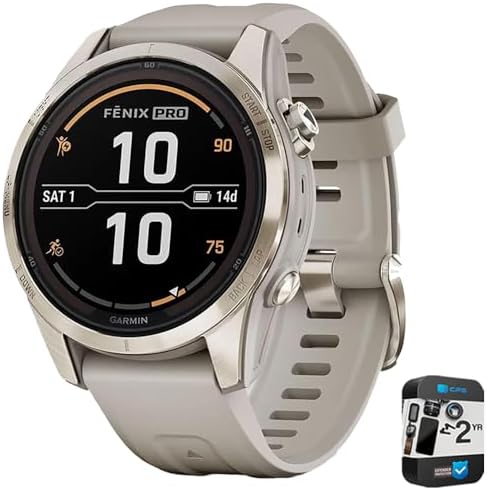
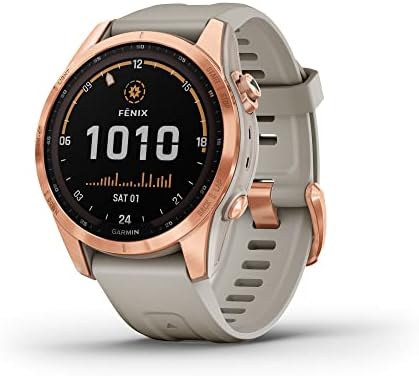
Two distinct philosophies shape the Garmin brand’s approach to wearable design, and the Fenix 7 series versus Venu 4 series debate captures that split perfectly. The Fenix 7 is built around sapphire-grade durability, solar charging, and multi-band GNSS for people who leave the pavement behind. The Venu 4 leans into a bright AMOLED panel, a lighter chassis, and wellness-focused tools for daily wear. This comparison is a practical reference for anyone weighing a rugged multisport tool against a polished lifestyle tracker, so it is worth saving for later.
| Feature and Selling Point | Garmin Fenix 7 | Garmin Venu 4 |
|---|---|---|
| Display Type | MIP transflective, always-on | AMOLED, 1.2 inch |
| Battery Life (Smartwatch Mode) | Up to 18 days, solar extends further | Up to 10 days |
| Case Material | Fiber-reinforced polymer with steel or titanium bezel | Stainless steel bezel |
| Water Rating | 10 ATM, dive-rated | 5 ATM |
| Satellite Positioning | Multi-band GNSS (L1 and L5) | Single-band GNSS |
| Training Metrics | VO2 max, Stamina, ClimbPro, training load | VO2 max, activity profiles, workout analysis |
| Health Monitoring | HRV status, Pulse Ox, sleep score | ECG app, HRV status, Pulse Ox, sleep score |
| Built-in Speaker and Microphone | Not included | Yes, supports wrist calls |
| Offline Music Storage | Yes | Yes |
| Contactless Payments | Garmin Pay | Garmin Pay |
| Weight | Approx. 79 g | Approx. 45 g |
| Topographic Maps | Preloaded, full navigation | Limited |
| Solar Charging | Available on Solar editions | Not available |
| Best Use Case | Expeditions, ultrarunning, mountaineering | Daily fitness, wellness tracking, urban training |
The table highlights the sharpest divides: battery endurance, satellite accuracy, and case construction favor the Fenix 7, while display vibrancy, weight, and call functionality favor the Venu 4. Those three or four rows alone often settle the decision before any deeper reading begins.
Design Language and Physical Presence
The Fenix 7 is shaped by field utility rather than street style. Its fiber-reinforced polymer case is paired with a metal rear cover and a bezel in stainless steel or titanium, a combination selected for impact resistance and thermal stability rather than cosmetic appeal. The physical buttons are textured and raised, designed to be pressed through gloves in rain or snow. On the wrist, the watch sits tall, and that height is a deliberate reminder of the hardware inside: barometric altimeter, compass, and multi-band antenna array.
The Venu 4 takes the opposite route. Its stainless steel bezel is polished, the case is slim, and the profile is tuned to slide under a shirt cuff without catching. Interaction is built around a responsive touchscreen, and the overall silhouette echoes a conventional smartwatch rather than a piece of expedition gear. It is still a durable device, but its design brief centers on daily integration rather than month-long wilderness exposure.
Display Technology and Readability in the Field
The Fenix 7 relies on a Memory-in-Pixel transflective panel. This is a foundational choice in Garmin’s outdoor strategy: the screen is always visible without a wrist flick, and it actually becomes easier to read as ambient light increases. The backlight only engages in shadows or at night, which is a major reason the platform can stretch toward 18 days per charge. Colors are muted compared with modern phone panels, but contrast in direct sun remains excellent.
The Venu 4 adopts an AMOLED display, and the difference is immediate indoors. Blacks are deep, colors are saturated, and watch faces and maps carry a visual fidelity the Fenix 7 cannot reproduce. Historically, AMOLED meant shorter battery life and weaker sunlight visibility, though Garmin’s software tuning has narrowed that gap considerably. For media viewing, animated watch faces, and general aesthetics, the Venu 4 panel is the more rewarding screen.
Battery Endurance and Charging Rhythm
Battery life is where the Fenix 7 establishes its clearest advantage. In smartwatch mode it can run up to 18 days, and Solar editions extend that further through a lens that converts daylight into charge. In GPS mode, the watch can operate for days, which removes the need to carry a charger on multi-day treks. The solar feature is not decorative; it measurably stretches time between charges for anyone who spends long hours outdoors.
The Venu 4 still manages up to 10 days in smartwatch mode, which is strong for an AMOLED device. GPS runtime is shorter, suited to daily runs and gym sessions rather than backpacking trips. The built-in speaker and microphone also draw power for wrist-based calls when paired with a phone, so the charging rhythm is naturally more frequent than the Fenix series.
Training Metrics and Navigation Depth
Hardware defines much of the training gap. The Fenix 7 supports multi-band GNSS using both L1 and L5 frequencies, which improves positional accuracy in dense forests and deep canyons where signal reflection distorts single-band readings. It also carries preloaded topographic maps, ClimbPro, and Stamina, tools aimed at mountaineering, ultrarunning, and tactical navigation. The watch is designed to answer the question of how to reach a summit and return safely.
The Venu 4 addresses a different question: how a workout affects the body. It includes VO2 max, activity profiles, and workout analysis, along with the ECG app for detecting atrial fibrillation. Its GPS is accurate in urban and suburban settings, though it does not match the Fenix 7 in challenging terrain. Where the Fenix 7 navigates, the Venu 4 interprets.
Health Monitoring and Smart Features
Both watches cover the core wellness suite: HRV status, Pulse Ox, sleep scoring, and body battery style energy tracking. The Venu 4 adds the ECG app as a headline feature, giving users a way to record heart rhythm data for later review. This makes it a compelling option for anyone whose primary concern is cardiovascular awareness during everyday life rather than summit logistics.
Smart connectivity also diverges. The Venu 4 includes a speaker and microphone, enabling calls from the wrist and voice assistant interaction when paired with a smartphone. The Fenix 7 omits the speaker, a trade-off that preserves battery and reduces points of failure in wet or dusty environments. Both support Garmin Pay and offline music storage, so contactless payments and phone-free listening are available on either platform.
Choosing Between Endurance and Everyday Polish
The decision comes down to an honest read of your routine. If training happens in a gym, on local roads, or on park loops, and you value a vivid screen, a light profile, and wrist calling, the Garmin Venu 4 41mm Advanced Fitness Gold GPS is the more natural fit. It blends health telemetry with smart notifications and looks appropriate in an office setting.
If you have ever been off-trail with no phone signal, the Fenix 7 is the safer investment. Its sapphire crystal options, 10 ATM dive rating, and multi-band positioning point to a service life that matches the price. The tactile buttons and MIP display are not compromises; they are deliberate choices for reliability where a touchscreen might misread a wet finger. Community discussions often circle the same pivot: whether solar charging and topographic maps justify the extra weight, or whether the multimedia-friendly Venu 4 series covers the actual use case.
Both watches sit at the serious end of Garmin’s catalog. For anyone drawn to the Fenix lineage but wanting a newer AMOLED panel and a dive-rated build, the Garmin 010-02540-00 fenix 7 adventure rugged silver graphite GPS is the model that anchors the series. The Venu 4 argues that wellness tracking and daily convenience need not come in a bulky package, and it delivers that argument with a refined finish. The right answer depends on whether the next adventure unfolds in a national park or in the ordinary rhythm of a working week.