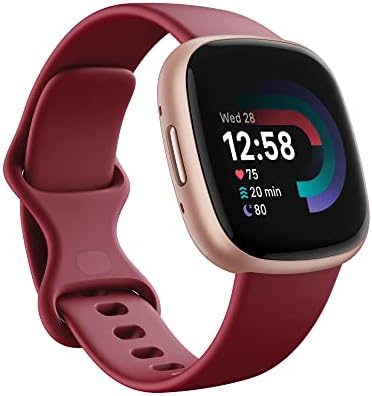
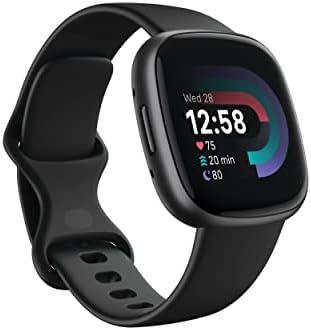
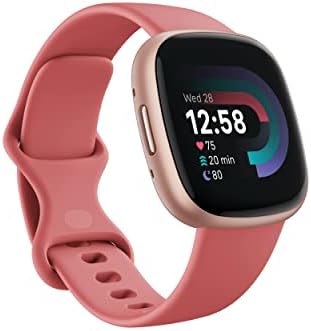
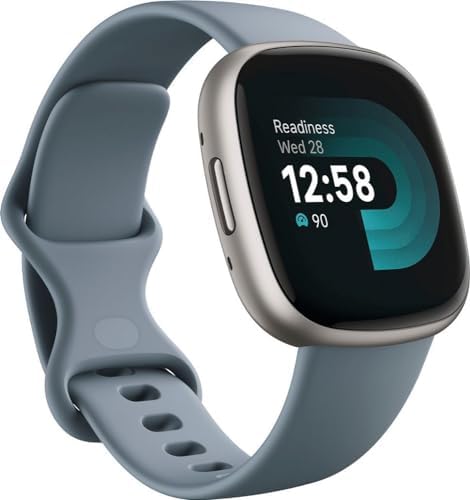
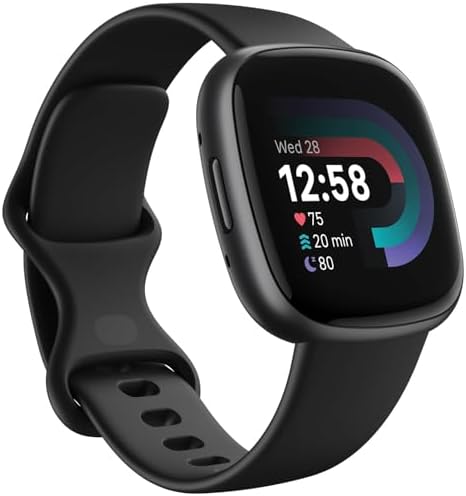
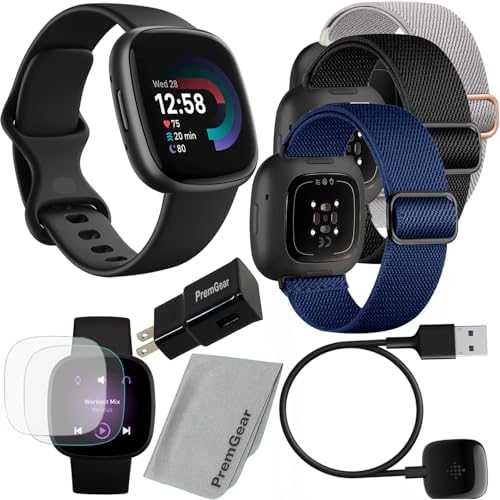
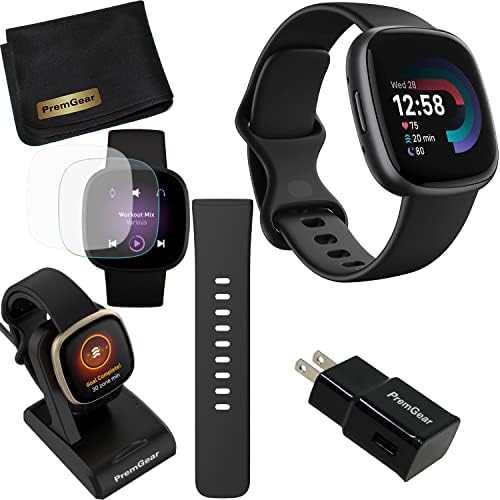
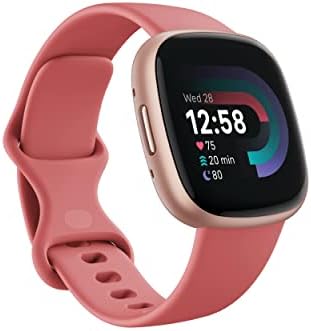
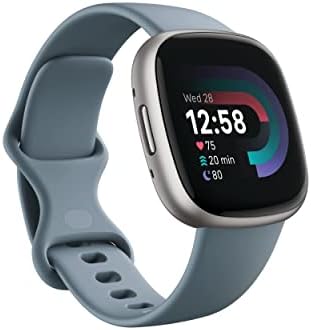
The Fitbit Versa 4 and the Garmin Forerunner 55 answer two different questions about wrist-based training, and the right choice depends on whether the priority is all-day wellness scoring or structured run guidance. The Versa 4 pairs a bright AMOLED touchscreen with a slim aluminum body and the Fitbit collection’s Daily Readiness framework, while the Forerunner 55 strips the experience back to five physical buttons, a sunlight-readable MIP panel, and a battery rating measured in weeks rather than days.
| Feature & Selling Point | Fitbit Versa 4 | Garmin Forerunner 55 |
|---|---|---|
| Display Type | AMOLED touchscreen | Sunlight-visible MIP, button-led |
| Battery Life (Smartwatch Mode) | Up to 6 days | Up to 2 weeks |
| GPS Battery Life | Reduced significantly with GPS active | Up to 20 hours GPS-only |
| Case Size | 40.5 mm | 42 mm |
| Case Material | Aluminum with reinforced glass | Polymer with chemically strengthened glass |
| Weight | Approx. 37 g | Approx. 37 g |
| Water Resistance | 5 ATM (swim-proof) | 5 ATM (swim-proof) |
| Training Guidance | Daily Readiness Score | Daily Suggested Workouts |
| Recovery Metrics | Sleep Score, Active Zone Minutes | Recovery Advisor, Race Predictor |
| Exercise Modes | 40+ modes | Run, bike, swim, cardio profiles |
| Companion App | Fitbit app with Premium tier | Garmin Connect, no paywall |
| Bluetooth Calling | Supported | Not supported |
| Offline Music | Not available on this model | Not available on this model |
| Charge Time | Roughly 2 hours | Roughly 2 hours |
| Best Suited For | General wellness and daily activity | Planned running and race training |
| Key Selling Point | Polished touchscreen interface | Two-week battery with pace coaching |
The largest fork in this table sits between Fitbit’s six-day battery window and the Forerunner 55’s two-week smartwatch rating, and that single number reshapes almost every other trade-off. Around it, the Versa 4 offers a brighter, more phone-like screen experience, while the Forerunner 55 trades display glamour for a readable always-on MIP panel and physical buttons that work with sweaty fingers at mile ten.
Who Each Watch Was Built For
The Fitbit Versa 4 addresses someone tracking a full day rather than a single session. Its brief is daily readiness, sleep scoring, and a fast, finger-friendly menu system. That combination suits people who walk, cycle casually, do classes, and want one number in the morning telling them whether to push or back off. Anyone weighing this model against dedicated running hardware should start with the Versa 4 series as the baseline and judge every other option against it.
The Garmin Forerunner 55 answers a narrower but deeper question: can this watch make a runner faster? Garmin built it around pace, cadence, and duration cues rather than a daily score. The daily suggested workout function proposes a session based on recent load, and the watch walks a runner through warm-up, intervals, and cool-down without requiring a phone. The wider context behind that approach is documented across the Garmin brand’s sport-watch range, where the Forerunner line sits alongside Fenix and Venu families.
Display, Controls, and Everyday Handling
The Versa 4 carries a 40.5 mm aluminum case with an AMOLED touchscreen, and that panel is the single most persuasive argument for choosing it over a dedicated running watch. Colors are saturated, animations are smooth, and replying to notifications feels closer to a phone than a sports instrument.
The Forerunner 55 uses a 42 mm polymer case and a memory-in-pixel display that stays legible in direct sun rather than producing deep blacks. The trade-off is deliberate. Five physical buttons control the watch, and the benefit is not abstract: in colder conditions the buttons keep orientation clear, and during intervals they deliver stronger tactile feedback than a capacitive touchscreen.
For anyone who wears a watch overnight, the Versa 4 has an obvious edge: it is comfortable sleeping with a knit band and a thin profile, and its sleep staging is broader than the Garmin’s. The Forerunner 55 does track sleep and provides a sleep score, but its focus lies more on recovery than on deep stage breakdown.
Training Tools, Recovery, and Metrics
This is where the two devices diverge most sharply. The Versa 4 bundles roughly 40 exercise modes, and it leans on Fitbit’s signature Active Zone Minutes to translate heart-rate zones into a daily target. The Daily Readiness Score takes sleep, heart-rate variability, and recent activity into account, and it is the clearest daily decision shortcut Fitbit has built into this generation.
The Forerunner 55 goes further into structured training. The daily suggested workout feature proposes speed, base, or recovery runs according to recent load and training history. The Recovery Advisor recommends rest periods, and the Race Predictor estimates the finish time a user can expect over 5K, 10K, half marathon, and marathon distances based on current form.
Both watches include built-in GPS and continuous heart-rate monitoring, both use optical wrist sensors, and both sync workouts to a companion app. The quality of the GPS fix on a short run is comparable, and on a longer trail outing the Forerunner 55 fares slightly better because it samples position data through fewer power-hungry processes. The running-first case is laid out in more depth on the Forerunner 55 series page, which positions the model against Garmin’s broader offering.
Battery Life, Charging, and Week-Long Practicality
Battery life is the stat that keeps resurfacing in owner discussions, and both models handle it differently. The Versa 4 is rated up to roughly six days in mixed use with the always-on display disabled, and that figure drops considerably with built-in GPS active. A long run or a multi-hour hike can reduce charge across a single day to a meaningful degree.
The Forerunner 55 is rated at up to two weeks in smartwatch mode, and roughly twenty hours in GPS-only mode. That structure matters for a specific user: someone who runs every day but not all day, and who does not want to place a charger on the nightstand. Neither watch supports music streaming or offline downloads on this tier of the range, which is a limitation for runners who prefer tracking without a phone.
Each watch charges fully in roughly two hours through a proprietary cable. Neither offers wireless charging, so a short trip that includes a hotel stay should still include the correct cable.
The App Experience and What Everyday Monitoring Really Costs
The Fitbit app presents health data with a cleanup-first philosophy: the home screen is organized around sleep, activity, and readiness scores. Certain features like the full library of guided programs and deeper sleep analytics sit behind Fitbit Premium, which is a subscription rather than a one-time charge and should be counted in the true ownership cost.
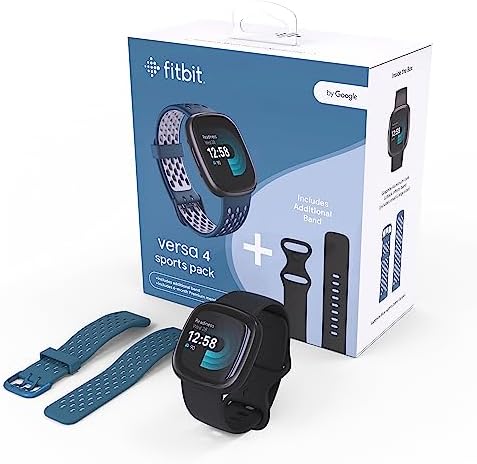
The Garmin Connect app takes an analytical route. It exposes body battery, training load, VO2 max estimates, and detailed lap analysis without a paywall in front of most training features. The full package, including both small and large straps, ships as Fitbit Versa 4 Fitness with Daily Black Graphite GPS and daily wellness tracking is fully functional without a paid tier.
Bluetooth calling on the Versa 4 is a meaningful daily feature. Calls can be answered directly on the wrist when a phone is nearby. The Forerunner 55 does not support voice calls, and on that model phone notifications are read-only. The remote notifications experience on Garmin remains reliable, particularly when the watch is used frequently around a city or on a track.
Design Details and Everyday Durability
Both units carry a 5 ATM water resistance rating, meaning pool swimming and showering present no issue. Case coating differs: the Versa 4 uses an aluminum body and a reinforced glass face, while the Forerunner 55 uses a polymer shell with a chemically strengthened glass covering. Over time, the polymer case on the Garmin has proven more resistant to scratches on its edges, while the polished aluminum bezel on the Versa 4 can accumulate fine scuffs from contact with a desk or car door.
The standard quick-release band system on both watches is a low-cost, high-value feature. Any 20 mm band fits the Versa 4, and the Forerunner 55 accepts 20 mm spring bars whose silicone finish is well suited to sweaty sessions and to frequent washing.
Decision Guide: Which Watch Belongs on Your Wrist
For people whose priority is a daily wellness number, a bright touchscreen, and quick phone replies, the Versa 4 solves more of the actual friction in the day. It works hardest for those who walk, cycle casually, attend classes, and want a single vitality score each morning to help them decide how hard to push.
For runners who follow structure, chase a specific 5K or 10K goal, and dislike chargers, the Forerunner 55 is the better fit. Daily suggested workouts, race prediction, and two-week battery life form a training-only package that sits closer to a coach than to a general fitness tracker. The exact training features are collected in one place on Garmin Forerunner 55 GPS Running Watch Black which makes a direct spec-by-spec check straightforward.
Both watches ultimately land on the same side of an important line: neither is a luxury object, and each one costs a modest amount relative to what it delivers across a year. What differs is whether that return arrives through a softer everyday rhythm or through measurable improvement over a specific race distance. Someone weighing these two models should therefore ask which morning habit matters more: walking out the door with a score telling them how hard to push, or following a plan that turns a slower pace into a faster one by autumn.