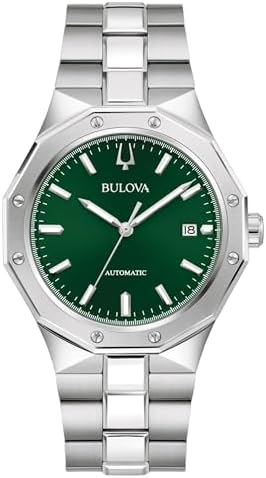
The Bulova Lunar Pilot Chronograph descends from a prototype wristwatch worn on the lunar surface during the Apollo 15 mission, and that origin shapes every decision in the modern production line. A high-precision quartz movement with a sweeping chronograph seconds hand anchors the package, while the case architecture retains the purposeful proportions of a purpose-built instrument. This is not a watch leaning on nostalgia alone; it translates an archival tool into a wearable daily chronograph with specifications that hold up under contemporary scrutiny.
A Chronograph Rooted in Mission Hardware
The story begins with the chronograph prototype that accompanied astronaut David Scott to the lunar surface in 1971, serving as a backup timing instrument after the issued watch on his wrist was damaged. Following the mission, the strap-and-case assembly was auctioned, and the private buyer later brought the piece to the archivists at Bulova for authentication. That documentation eventually enabled a faithful commercial revival, and today’s Lunar Pilot line carries that authenticated legacy rather than a loosely inspired tribute.
Understanding this provenance matters because it explains the watch’s functional priorities. A lunar surface instrument had to be legible, robust, and operable while wearing gloves. Those constraints produced a large dial aperture, broad hands, and pushers sized for deliberate actuation.
The brand states that the original was one of only a small number of watches flown and operated on the lunar surface, and the production Lunar Pilot references that mission directly in its dial printing and caseback engraving. For collectors who value documented tool-watch history, this lineage positions the model alongside a select group of chronographs with verifiable extraterrestrial use.
Case Architecture and Wrist Presence
The modern Lunar Pilot family spans multiple case sizes, and the dimensions determine how the watch wears on different wrists. The classic reference uses a 43.5mm stainless steel case with a 20mm lug width, which places it firmly in the large-chronograph category without tipping into oversized territory. A more recent addition reduces the case to 41mm, addressing collectors who wanted the same dial architecture in a more compact package.
Both case sizes share a brushed-and-polished finishing regime that keeps the tool-watch character intact. The lugs curve downward at a pronounced angle, which helps the 43.5mm version sit closer to the wrist than its nominal diameter might suggest. Lug-to-lug measurements, rather than diameter alone, are the better predictor of fit for this model, and buyers with wrists under seven inches often find the 41mm variant the more balanced choice.
Water resistance is rated to 100 meters across the standard references, sufficient for swimming and showering but not intended for mixed-gas diving. The pushers are not screw-down, so the chronograph should not be actuated underwater; this is standard for the genre rather than a deficiency.
Movement and Timing Performance
The Lunar Pilot’s movement is central to its identity. A high-precision quartz chronograph calibre runs at a frequency of 262 kHz, roughly eight times the oscillation rate of a conventional quartz movement. The practical consequence is a sweeping chronograph seconds hand that advances in fine increments rather than the once-per-second jump typical of battery-powered chronographs, plus a stated accuracy tolerance of a few seconds per month.
That precision specification is the model’s engineering signature. It reframes the quartz chronograph as a legitimate precision instrument rather than an economy compromise, and it explains why the Lunar Pilot appeals to buyers who appreciate mechanical craftsmanship but want the timing certainty only a high-frequency quartz can deliver.
The chronograph itself is a six-hand implementation with a 60-minute and a 1/10-second counter on the sub-registers at six and nine o’clock. A date window sits at the three o’clock position. The 41mm Black Dial reference adds a “Black Hole” edition dial treatment in which the sub-dials appear to absorb light, a subtle visual flourish that changes reading character depending on the angle.
Crystal, Dial Legibility, and Everyday Durability
A domed anti-reflective sapphire crystal protects the dial. The crystal is specified as impact and shatter resistant along with its anti-reflective coating, which matters on a watch with a pronounced dome, since glare reduction is not cosmetic when the dial is recessed beneath curved glass.
Legibility follows the tool-watch brief. Applied indices and skeletonized hands carry luminous treatment, and the chronograph sub-dials sit on contrasting backgrounds so the running chronograph remains readable at a glance. The dial printing is restrained: the brand marking and reference details stay peripheral, keeping the center field clear for elapsed-time reading.
- Case: Stainless steel, 41mm or 43.5mm variants
- Lug width: 20mm
- Water resistance: 100 meters
- Crystal: Anti-reflective sapphire with impact resistance
- Chronograph: Six-hand, 1/10-second and 60-minute counters
- Movement: 262 kHz high-precision quartz
Strap and bracelet options vary across the range. The reference configurations pair stainless steel bracelets with supplemental straps, and certain SKUs ship with a bracelet-and-strap combination so the watch can shift from formal bracelet wear to a more casual textile or leather setup.
Collecting the Lunar Pilot and the Wider Bulova Lineup
Within the catalog, the Lunar Pilot sits at the top of the chronograph hierarchy in terms of historical significance, but it is not the only route into the brand’s timing instruments. Buyers who want the same six-hand chronograph layout in a sportier stainless steel package may find the Bulova Men’s Marine Star Series B, with its blue dial, a natural alternative, trading mission lore for a more conventional sports-chronograph brief.
For the core reference, the Bulova Men’s Lunar Pilot Chronograph Watch remains the centerpiece of the line, and its production details are worth verifying per SKU since dial treatments, strap bundles, and case sizes differ between iterations. Buyers should confirm the case diameter, the specific dial variant, and the included strap set before committing, because the 41mm and 43.5mm versions wear quite differently.
For a completely different use case, the Bulova Men’s Snorkel America’s 250th Edition pairs a hybrid-ceramic case with a rubber strap, serving as a reminder that the same brand covers both precision timing and water-sports tool design. That breadth is part of what makes the catalog’s engineering story worth following across categories.
Comparing the Lunar Pilot against generic quartz chronographs also highlights where the model justifies its position. Many chronographs at similar price points use standard 32 kHz quartz movements with a jumping chronograph hand, while the Lunar Pilot’s 262 kHz calibre delivers a visibly smoother sweep and tighter drift figures. That difference is measurable rather than marketing language, and it is the strongest practical argument for choosing this model over a conventional alternative in the same segment.
Who Should Consider the Lunar Pilot
The Lunar Pilot suits three buyer profiles. First, collectors drawn to documented spaceflight hardware, for whom the authenticated prototype lineage is the primary draw. Second, chronograph users who prefer the reliability of high-precision quartz over mechanical maintenance schedules and want timing that holds its accuracy without a service interval. Third, wristwatch buyers looking for a legible instrument with a large dial and a strong historical narrative at a fraction of the cost of a comparable mechanical chronograph.
Buyers prioritizing compact proportions should look at the 41mm reference, while those who want the classic mission-watch footprint will find the 43.5mm version closer to the original. Regardless of size, checking the specific dial variant and included straps is essential, since several editions have been released under the Lunar Pilot name with differing finishes and bundle contents.
The Lunar Pilot endures because it is a rare case where a heritage story is backed by a genuinely distinctive movement specification. The space provenance draws people in, but the 262 kHz calibre and sapphire-protected dial keep the watch on the wrist long after the novelty of the backstory fades, a precision instrument with a past worth remembering and a specification list built for daily use.