Choosing between two fitness trackers from the same family often comes down to a handful of hardware decisions that shape daily wear. The Fitbit Inspire 3 and the Fitbit Charge 6 share a software platform, a health ecosystem, and a similar design language, yet they diverge sharply on GPS, sensor depth, and on-wrist presence. This guide exists to make that divergence legible, so the decision rests on verifiable specifications rather than marketing gloss. Keep it bookmarked as a reference point before committing to either band.
| Feature & Selling Point | Fitbit Inspire 3 | Fitbit Charge 6 |
|---|---|---|
| Display | Colour AMOLED, slim band profile | Colour AMOLED, larger touchscreen |
| Built-in GPS | Connected GPS only (via phone) | Yes, built-in GPS |
| Battery Life | Up to 10 days | Up to 7 days |
| Heart Rate Tracking | 24/7 continuous heart rate | 24/7 heart rate with ECG and EDA |
| Stress Management | Mindfulness and stress tracking | EDA sensor for stress and ECG readings |
| Sleep Tracking | Sleep score and smart wake | Sleep score, smart wake, sleep profile |
| Water Resistance | Water resistant to 50m | Water resistant to 50m |
| Google Apps | No built-in Google apps | Google Maps, Wallet, and YouTube Music |
| Heart Rate on Exercise Equipment | No | Yes, broadcasts to gym equipment |
| Premium Membership | 3-month Google Health Premium included | 3-month Google Health Premium included |
| Weight & Profile | Ultra-light, slim band design | Slightly larger, tracker form factor |
| Best For | All-day wear, sleep, step tracking | Running, gym workouts, smart features |
| Key Selling Point | Up to 10-day battery in a near-weightless band | Built-in GPS plus Google app integration |
The table makes the central trade-off visible at a glance. GPS is the sharpest dividing line: the Charge 6 carries its own satellite receiver, while the Inspire 3 borrows a paired phone’s signal. That single hardware choice explains much of the battery gap that follows, and it also frames every other comparison that follows in this guide.
Where the Inspire 3 Earns Its Place
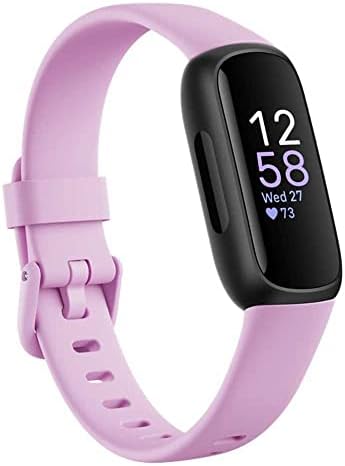
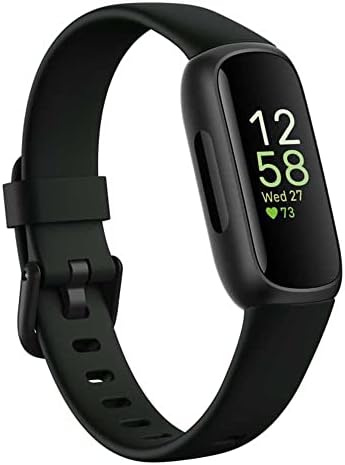
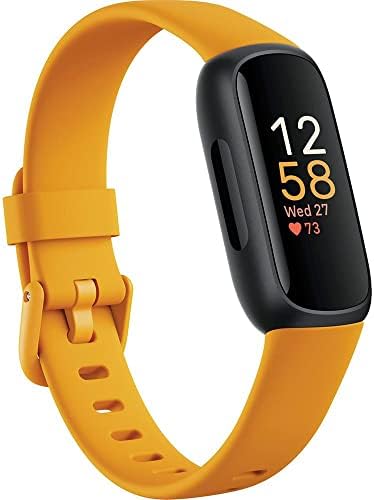
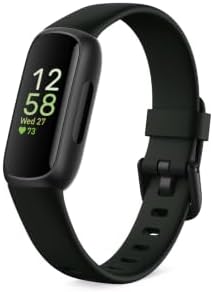
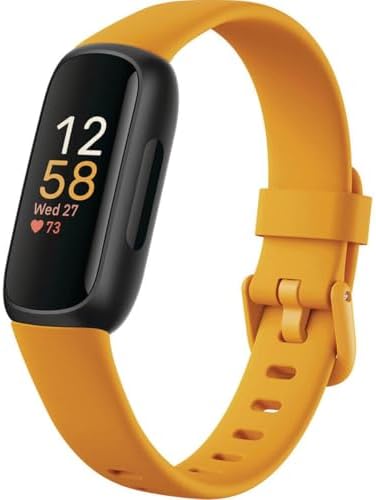
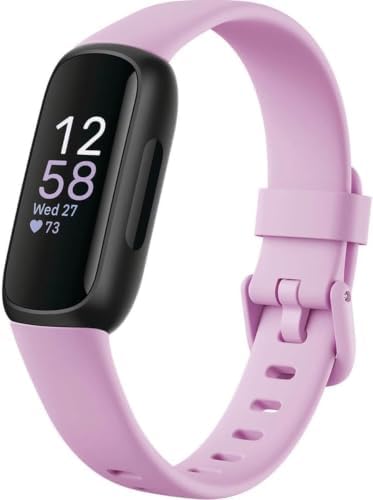
There is a particular kind of buyer who has tried a smartwatch, found it heavy, and quietly stopped wearing it. The Inspire 3 answers directly to that person. Its band-and-buckle silhouette is closer to a slim bracelet than a wrist computer, and because the body is so light, it largely disappears during sleep, which matters enormously for anyone relying on overnight data rather than daytime workout logs. Continuous heart rate capture, automatic activity recognition, and a colour AMOLED panel that shows sleep stages at a glance all fit inside a package designed to be forgotten until you check it.
Battery Life That Removes a Daily Chore
Fitbit positions the Inspire 3 around a battery that lasts up to ten days, and that figure changes behaviour. Charging stops being part of the nightly routine; it becomes a roughly weekly event. For people who wear a tracker principally to monitor resting heart rate trends, daily steps, and sleep quality, that rhythm is a practical advantage rather than a spec-sheet curiosity, since a drained tracker records nothing at all.
A Screen That Knows It Is Not the Point
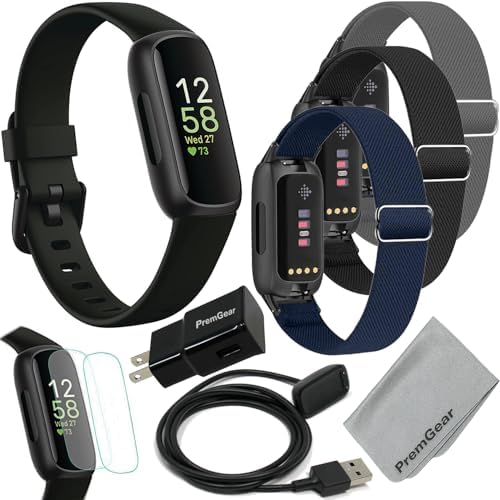
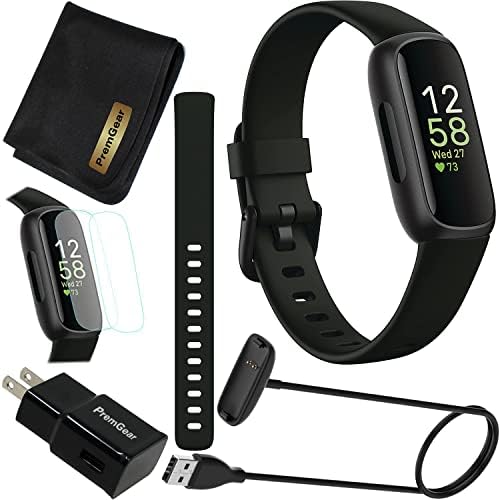
The display strategy here is deliberately restrained. Brightness is tuned for quick glances rather than media or map browsing, and the interface stays tappable and legible without demanding attention. The trade-off is real: text replies, contactless payments, and on-wrist navigation are not part of the package. What remains is the tracking core, a device whose identity is built around monitoring quietly rather than displaying loudly. For anyone who wants a tracker that behaves like a slim band rather than a wrist screen, the Fitbit Inspire 3 Health & Fitness Midnight Black is the configuration that best embodies that intent.
Where the Charge 6 Pulls Ahead
The Charge 6 is the upgrade for people whose training happens outdoors or in the gym and who want the tracker to keep up without a phone in reach. Built-in GPS is the headline change, but the sensor suite runs deeper as well. An EDA sensor reads electrodermal activity for stress response, and ECG capability adds heart rhythm readings that the Inspire 3 does not offer at all. For anyone who has watched a resting heart rate chart for months, adding rhythm and stress signals is a meaningful expansion of what the wrist can measure.
Google Integration Changes the Daily Experience
Because the Charge 6 sits inside Google’s ecosystem, it gains access to Google Maps navigation, Google Wallet for contactless payments, and YouTube Music controls. It can also broadcast your heart rate to compatible gym equipment, which turns a treadmill or spin bike display into a live readout of your effort. These are conveniences rather than medical functions, but they shift the Charge 6 closer to a smartwatch-without-the-bulk position.
A Larger Canvas for Real-Time Data
Running or cycling with the Charge 6 means pace, distance, and heart rate zones rendered on a genuinely readable colour AMOLED screen, refreshed continuously during the session. The Inspire 3 can log workouts, but it depends on a paired phone for route calculation and offers a smaller visual surface for mid-session glances. Between them, the choice comes down to whether the workout is something you watch closely or simply accumulate in the background.
Sleep, Stress, and Recovery: Closer Than Expected
This is where the two devices converge most clearly. Both generate nightly sleep scores, both track stress through daytime metrics, and both bundle a 3-month Google Health Premium membership that opens deeper sleep and wellness insights. The Inspire 3 has one structural edge for sleep-specific use: its lighter build reduces the chance of wrist awareness disrupting rest. The Charge 6 counters with a broader sensor set, including stress readings drawn from electrodermal activity, which feed richer recovery context for someone mapping how work pressure shows up in physical signals.
Water, Wear, and Everyday Durability
Each tracker carries a 50m water resistance rating, covering pool swims, showers, and the occasional downpour. Neither is a dedicated dive instrument, and neither is positioned as one. What differs is the wear experience: the Inspire 3 sits almost unnoticed under a shirt cuff, while the Charge 6 announces itself a little more on the wrist. For a buyer whose priority is unobtrusive 24/7 wear, that distinction carries more weight than the spec tables imply.
Choosing Between Fitness Tracking Philosophies
The Inspire 3 works best as a background instrument, with long battery, minimal footprint, complete sleep and heart-rate history, and no insistence on attention. It suits desk workers, light walkers, and anyone whose primary curiosity is how they recover rather than how hard they push. The Charge 6 suits the opposite instinct: the runner who wants route mapping without carrying a phone, the gym member who wants heart rate on the equipment console, the commuter who wants to tap and pay. Reviewing the Fitbit brand’s broader lineup makes this split even more apparent, since each model narrows toward a specific type of user rather than trying to cover everyone at once.
A Broader Look at What Google Health Now Offers
Both devices are now fully situated under Google Health, which means the software layer, including activity logging, readiness signals, guided breathing, and long-term trend views, is shared. The difference in hardware simply governs how much raw data flows into that shared system. Someone tracking a ten-year step-count streak will find either device sufficient. Someone building a training log around outdoor distance will find the Inspire 3 falls short of the mark, not through any flaw, but because connected GPS is a fundamentally different proposition from a dedicated satellite receiver.
A Note on Sizing and Fit
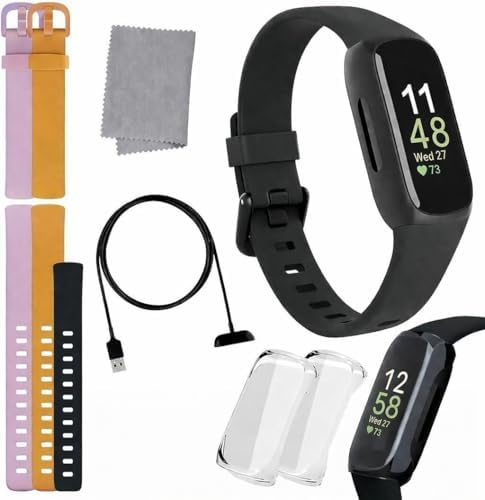
The Charge 6 ships with small and large bands, letting buyers adjust without a separate order, a small but genuinely practical detail for gifting or first-time purchases. The Inspire 3 lands in a more singular band configuration, prioritising the slim profile over modular sizing. Neither detail will overwhelm a purchase decision on its own, but together they hint at the design intentions behind each model. Readers weighing the two directly can browse the Fitbit Inspire 3 and the Fitbit Charge 6 to see how each line is positioned, while the Google Fitbit Charge 6 – Fitness Black shows the related model’s full configuration.
Fitbit Inspire 3 vs Charge 6: Final Selection Logic
If the goal is a tracker you forget you are wearing, that lasts over a week between charges, and that quietly compiles sleep and heart-rate history without demanding screen time, the Inspire 3 delivers exactly that. If the goal is a tracker that replaces the phone on runs, broadcasts heart rate to gym equipment, and layers Google apps onto the wrist, the Charge 6 is the correct side of the fence. Both serve the same broader mission, turning everyday movement and rest into readable data, just from different vantages. Matching the device to your existing habits, rather than to the longest feature list, is the decision that tends to age best over months of consistent wear.