The Fitbit Inspire 3 and the Garmin Vivosmart 5 occupy the same narrow slice of the wearable market, yet they answer a single question in two distinct ways: how much health insight can a slim band deliver without demanding a daily charge or a subscription? One leans on a bright color screen and a guided wellness framework, the other on a monochrome-friendly display and an open data platform. This comparison is built as a practical buying reference, and it is worth bookmarking for anyone weighing a decision between the two.
| Feature & Selling Point | Fitbit Inspire 3 | Garmin Vivosmart 5 |
|---|---|---|
| Display Type | Color AMOLED touchscreen | OLED touchscreen |
| Battery Life | Up to 10 days | Up to 7 days |
| Water Resistance | 5 ATM (swim-proof) | 5 ATM (swim-proof) |
| Sleep Tracking | Sleep Score, Smart Wake | Sleep Score, Advanced Sleep |
| Heart Rate Monitor | 24/7 continuous | Elevate wrist-based |
| GPS | Connected GPS only | Connected GPS only |
| Stress Management | EDA Scan, Stress Score | Relaxation Reminders |
| SpO2 Sensor | Yes | Yes |
| Body Battery / Energy | Daily Readiness Score (Premium) | Body Battery |
| Display Size | 0.76 inch | 0.41 x 0.73 inch |
| Replaceable Band | Yes (proprietary) | Yes (proprietary) |
| Subscription Required | Fitbit Premium (optional) | No |
| Compatibility | iOS, Android | iOS, Android |
| Weight | 17.7g (case only) | 24.5g (with band) |
| Best For | Sleep & stress management | All-day activity & battery |
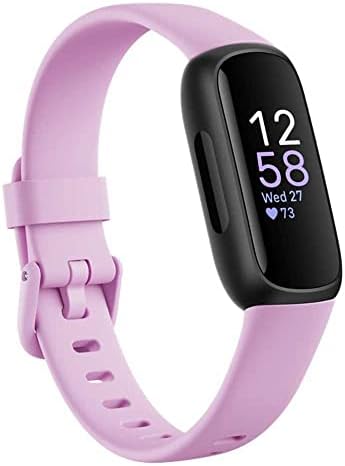
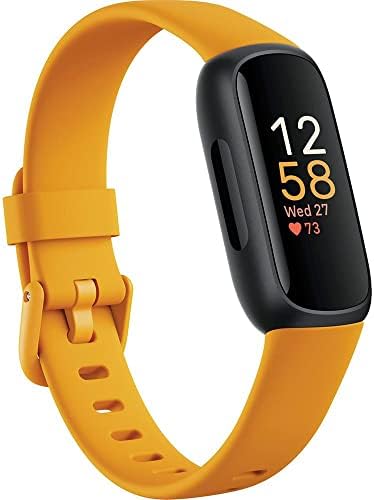
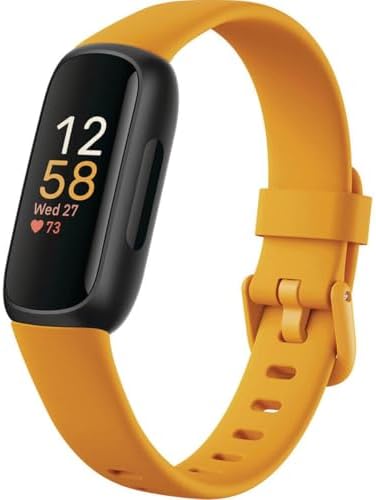
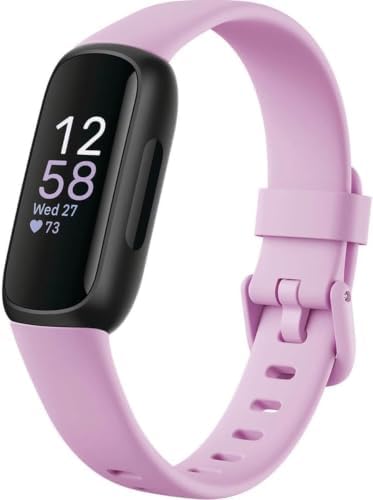
| Colors Available | Midnight Zen, Lunar White, Desert Rose | Black, White, Sage Grey |
The table surfaces two contrasting philosophies. The Fitbit Inspire 3 builds its case around an EDA sensor and a structured stress score, while the Garmin Vivosmart 5 answers with the Garmin brand’s Body Battery metric and a subscription-free data model. The head-to-head is less about a single winner and more about which tracking style suits a given routine.
Design and Display: Two Takes on the Slim Band Format
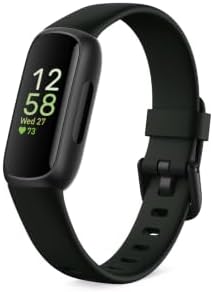
The Fitbit Inspire 3 carries a rounded, slightly pebble-like case that sits flush against the wrist. Its 0.76-inch color AMOLED display is unusually vivid for this segment, producing deep contrast even under direct sunlight. Fitbit’s design language retained a small indent below the screen that serves as a capacitive touch area for navigation, a detail that keeps the surface free of physical buttons.
Materials and Wearability
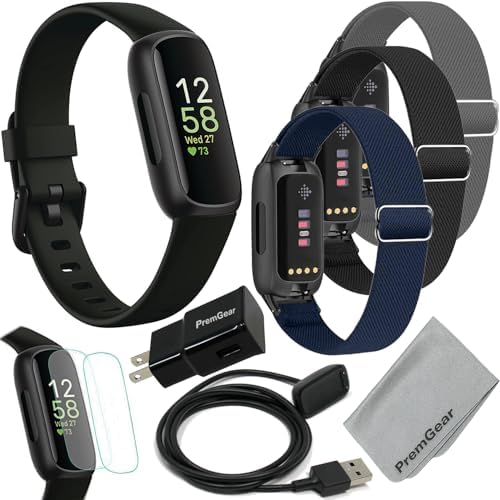
The elastomer band on the Inspire 3 uses a smooth, matte finish that resists sweat buildup. At around 17.7 grams for the case alone, the device all but disappears on the wrist during sleep, which matters given the tracker’s core focus on sleep staging. Fitbit has kept the band proprietary, meaning replacements come from Fitbit or licensed third parties rather than the general band market.
The Vivosmart 5 series approaches the form factor differently. Its case is narrower and slightly longer, and it was the first Vivosmart to adopt a removable band system. The display measures roughly 0.41 by 0.73 inches, with a grayscale-friendly OLED panel that prioritizes legibility over color richness. Garmin built the touchscreen around a single physical button on the underside of the band, a design choice that simplifies menu navigation for users who dislike swipe-heavy interfaces.
Build quality on both units is rooted in polycarbonate shells with a water resistance rating of 5 ATM. That covers pool swimming, showering, and rain exposure, though neither is intended for high-impact water sports. The Garmin device weighs approximately 24.5 grams with its band, slightly heavier than the Inspire 3, though the difference is subtle enough that most wearers will not notice it after a few days.
Health Tracking: Wellness Metrics That Diverge
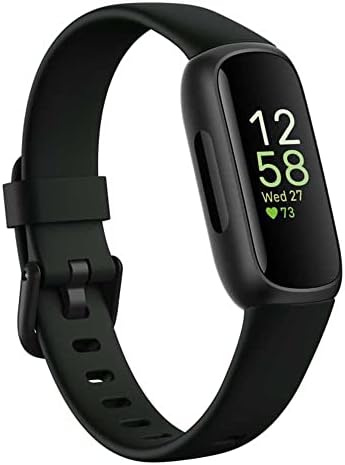
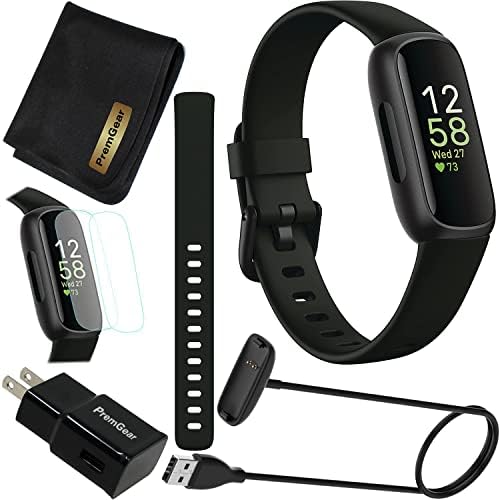
Heart rate monitoring is handled by a 24/7 continuous sensor on the Fitbit Inspire 3 Health & Fitness Midnight Black, while Garmin relies on its own optical heart rate technology. Both produce comparable resting heart rate readings in typical conditions, though chest strap pairing is available on both for users who need higher precision during interval training.
Stress and Recovery Tools
Fitbit distinguishes itself with an electrodermal activity sensor, or EDA, which measures sweat gland response as a proxy for stress. The resulting Stress Management Score is one of the most developed features in the Inspire line, and it pairs with a guided breathing session and a detailed breakdown of sleep stages, including a nightly Sleep Score. Fitbit Premium unlocks a Daily Readiness Score that interprets these signals into a single training recommendation.
Garmin’s answer is Body Battery, an energy reserve metric that fluctuates throughout the day based on heart rate variability, stress, and activity. It requires no subscription, and it integrates directly into the Garmin Connect ecosystem. The Vivosmart 5 also includes Relaxation Reminders and a breathwork activity, though its stress tracking depends on heart rate variability rather than an EDA sensor.
Battery and Ecosystem: Where the Real Trade-Off Lives
Fitbit rates the Inspire 3 at up to 10 days of battery life, a figure that assumes typical use with always-on display disabled. In practice, enabling SpO2 tracking and frequent GPS-connected workouts pulls that number down toward the seven-day mark. Charging is handled through a proprietary clip that attaches to the back of the case, a design that works but requires keeping track of the cable.
The Garmin v铆vosmart 5 Fitness Long-Lasting Battery Black carries a battery claim that undercuts the Inspire 3 on paper, up to seven days in smartwatch mode. Counterintuitively, this shorter rating can feel longer in daily life because Garmin’s ambient display approach uses far less power per screen wake. Both devices use standard magnetic charging pucks, though the connectors are not interchangeable.
App Ecosystems
Fitbit’s platform is built around a clean, coach-like interface that surfaces readiness recommendations and community challenges. Premium unlocks deeper analytics, guided programs, and a wellness report, but the free tier remains functional. Garmin Connect leans toward data density, giving users access to trend charts, training load, and a wider array of export options, all without a paid tier.
The practical difference is philosophical rather than technical. The Inspire 3 lineup and the Vivosmart 5 both support iOS and Android, both sync via Bluetooth, and both offer smartphone notifications. What separates them is whether the user prioritizes a guided wellness experience or an open data platform.
Which Fitness Tracker Fits Which User
Someone who struggles with sleep consistency or wants structured stress insight will likely find more value in the Inspire 3, particularly with the EDA sensor and Sleep Score system. The brighter AMOLED screen also makes glanceable data easier to read, which helps during workouts. The trade-off is that some of the most useful features sit behind Fitbit Premium.
The Vivosmart 5 suits users who already own Garmin gear or who prefer a subscription-free data model. Body Battery and the variety of sports profiles make it a capable companion for weight training, walking, and cycling, even without built-in GPS. The monochrome-friendly OLED display is less striking, but it delivers on readability and outdoor visibility.
For swimmers, both trackers are rated 5 ATM and will record laps once pool swim mode is enabled. Neither offers open-water GPS on its own, so distance is estimated from arm motion rather than satellite data. That limitation is worth remembering for anyone planning triathlon training or open-water swim sessions.
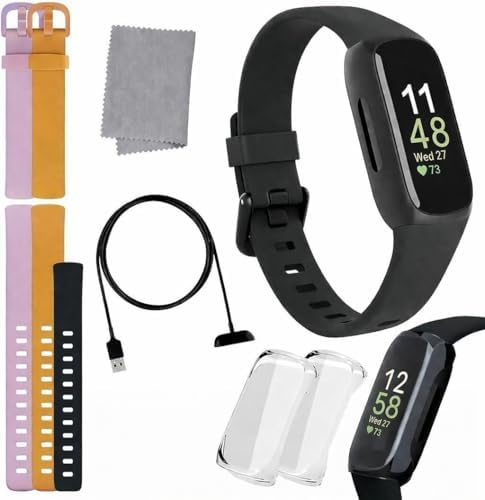
Band replacement is another practical consideration. Garmin uses a standard quick-release mechanism on the Vivosmart 5, making it easy to swap in third-party bands. Fitbit’s Inspire 3 band system is more restrictive, so color changes are mostly limited to Fitbit’s own selections. For users who treat the tracker as an accessory, that distinction can carry real weight.
Both devices have an established place in the daily-wear tracker segment, and neither is designed to replace a full smartwatch. The Inspire 3 delivers a more polished wellness narrative, while the Vivosmart 5 rewards users who value data ownership and battery predictability. The right choice depends less on specs than on how a wearer prefers to engage with personal health data day after day.