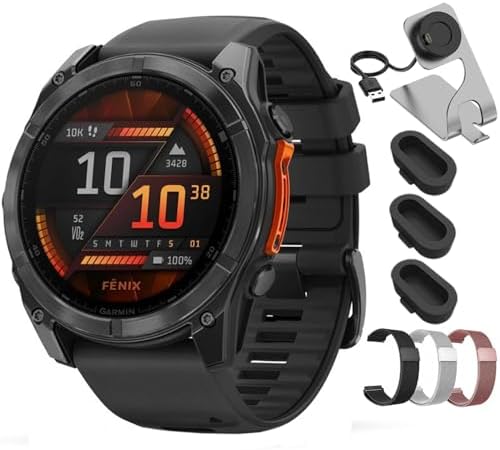
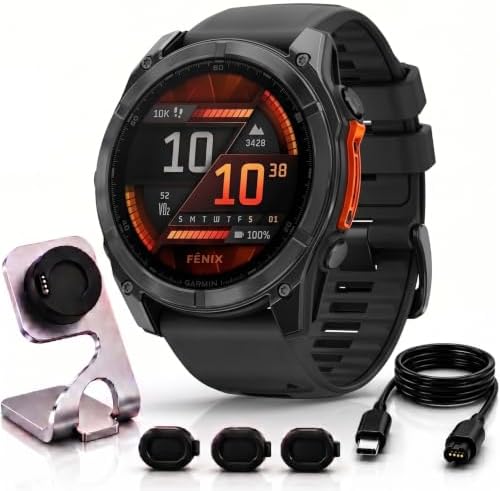
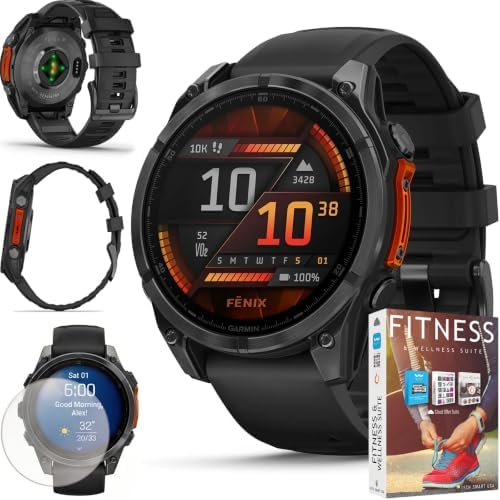
Two Garmin smartwatches sit at opposite ends of the same AMOLED generation, and choosing between them comes down to how far off the pavement the wearer intends to go. The Epix 2 arrived as Garmin’s first multisport watch to pair a bright AMOLED display with full topographic mapping, while the Venu 4 positions itself as a slimmer everyday fitness tracker with a built-in flashlight and a smaller case option. This guide compares the Garmin Epix 2 against the Garmin Venu 4 41mm across the specifications that actually change a purchase decision.
| Feature & Selling Point | Garmin Epix 2 | Garmin Venu 4 |
|---|---|---|
| Display Type | AMOLED, always-on capable | 1.2 in AMOLED, always-on capable |
| Case Size Options | 42mm / 47mm / 51mm | 41mm and 45mm |
| Weight Trend | Heavier titanium or steel build | Lighter everyday profile |
| Smartwatch Battery | Up to 16 days (standard use) | Up to 10 days |
| GPS Battery Life | Up to 42 hours | Significantly shorter, activity dependent |
| Onboard Mapping | Topo maps, ski, golf | Breadcrumb navigation only |
| Built-in Flashlight | Available on select sizes | Yes, integrated LED |
| Training Metrics | Advanced: stamina, load focus | Standard fitness and wellness set |
| Touchscreen Control | Touch + five-button layout | Touchscreen primary |
| Built-in Storage | 32GB for offline music | Music storage available |
| Case Materials | Titanium, steel, sapphire lens | Stainless steel bezel, glass lens |
| Water Rating | 10 ATM | 5 ATM |
| Typical Target User | Trail, alpine, endurance | Gym, commute, everyday wear |
| Positioning | Flagship multisport tool | Accessible fitness companion |
The table surfaces one decisive split: the Epix 2 carries topographic mapping, deeper battery reserves, and training analytics that escalate with the athlete, whereas the Venu 4 counters with a physical flashlight, a lighter 41mm option, and a 10-day smartwatch rating that covers most commuting weeks without a charger nearby. Everything that follows unpacks those rows in more detail.
What the Numbers Say Before Any Wrist Time
The Epix 2, with a sapphire lens over its AMOLED panel and an onboard 32GB for offline music, is built around long outdoor sessions. Garmin’s own comparison sheets place the smartwatch-mode rating in the days column rather than the weeks column, and GPS-only GNSS runtimes stretch well beyond a single day hike. That orientation toward long outdoor sessions is not an accident; the Epix line was built for athletes who navigate by topo map and treat battery life as a safety margin rather than a convenience.
By contrast, the Venu 4 anchors its case design around flexibility. A 41mm version sits closer to a traditional wrist than most GPS sports watches, and the integrated LED flashlight is a genuine field advantage that smaller fitness trackers rarely include. Garmin states the Venu 4 delivers up to 10 days in smartwatch mode, which is a conservative claim rather than a marketing exaggeration.
Display, Case, and Wrist Presence
Both watches use AMOLED, and both support always-on modes that extend the display without draining the battery to nothing by mid-afternoon. Differences emerge in the housing around the screen. The Epix 2 is offered with titanium and stainless steel case options and a sapphire crystal that resists scratches from rock scrapes, pack buckles, and road grit. People who wear a watch against rock and metal for hundreds of hours per year tend to notice lens haze over time, and sapphire sidesteps that slow deterioration.
Case sizing is where the divide widens. The Epix 2 spans 42mm, 47mm, and 51mm sizes, with the largest favoring wrists above roughly 170mm circumference; the 42mm variant is the only realistic match for slimmer wrists, and it still carries the same sensor suite. The Venu 4 sticks to two sizes, and the 41mm version tested in this comparison is the more approachable of the pair for smaller frames, an intended audience of women, teenagers, and men who dislike oversized sports watches.
Battery Strategy: Charging Habits Dictate Choice
Garmin positions the Venu 4 at around 10 days of smartwatch battery life, a number verified across its floor documents as the baseline for the series. The Epix 2 outpaces that comfortably in standard use, and the gap becomes a chasm under GPS workload. Multi-day treks, ultra-distance runs, and cold-weather mountaineering eat battery time faster than any smartwatch timer predicts, so the practical question is not which number is larger but whether the wearer will be far enough from a power outlet for the difference to matter.
Garmin’s specifications place the Epix with up to 42 hours of GPS-only endurance, a figure explicitly named by the company as the headline GPS estimate. For weekend hikers, the Venu 4’s charging cycle may be perfectly acceptable. For people whose activities outlast daylight and whose routes cross forest service roads without vehicle rescue access, the epix battery becomes the one feature the Venu 4 cannot replicate. The reverse applies to everyday convenience: a lighter watch with a modest battery is easier to charge and travels the same nightly routine without the psychological overhead of trying to stretch days between charges.
Maps, Flashlight, and the Off-Trail Question
Onboard topographic mapping is the clearest functional divide. The Epix 2 renders topo, ski, and golf maps directly on the AMOLED display, with turn-by-turn routing cues and trend lines for uphill grades; multisport mode tracks not just pace but stamina and load focus. Someone planning a new trail can follow the watch rather than a printout, and someone who becomes lost mid-wilderness can rely on the map to back-track to a known junction.
The Venu 4 substitutes that navigational autonomy for a breadcrumb style workflow guided by the paired phone and introduces the flashlight as its practical hook. The flashlight is not a novelty: walking a dog after dark, setting up a tent, or reading a tool label in low light all benefit from an LED strapped to the wrist. Buyers who spend most outdoors hours on groomed trails, city paths, and post-dinner neighborhood loops may find a compact daily tracker with an LED more useful in their actual life. The decision hinges on whether the watch is expected to replace a phone for navigation or complement one.
Training Analytics and Everyday Health
Training-feature depth separates the products again. The Epix 2 belongs to Garmin’s full multisport platform, which includes the training load, recovery, and stamina stacks that help endurance athletes choose rest and intensity. The Venu 4 runs Garmin’s lighter fitness package, with body battery, sleep staging, VO2 max estimation, and guided breath work, appropriate for someone whose principal goal is general health rather than race performance.
This is not a knock either way. A reasonable answer to which one should be bought is that the more-laden platform is not automatically the better match: an ambitious feature set that never gets used adds weight without adding value. Someone conducting indoor cycling sessions, basic lifts, and weekly runs may not use stamina or trail routing even once, and the sleeker Venu 4 becomes easier to keep on because it is less obtrusive.
Materials, Water Rating, and Repair Realities
The Epix 2 is usually supplied with a titanium or stainless steel bezel and a sapphire crystal front; the Venu 4 pairs a stainless steel bezel with chemically strengthened glass. On water resistance, the Epix 2 is rated to 10 ATM, sufficient for snorkeling and pool swimming with submersion exposure, while the Venu 4 is rated at 5 ATM, which Garmin notes is reserved for surface swimming and showering rather than diving. That 5 ATM vs 10 ATM distinction is worth remembering for anyone considering either watch for open-water swim training.
Weight shapes long-term comfort in a specific way. A heavier case exerts more pressure on the wrist overnight and under a sleeve, and a lighter case can disappear on the arm during sleep-stage tracking. Conversely, titanium and sapphire construction from the Epix design generally wear more slowly over years; a steel case with a glass lens is more susceptible to cosmetic deterioration during the same period.
Who Should Buy Which
The purchase criteria are simpler than the spec sheet suggests. Buy the Epix 2 when the watch is expected to work as an outdoors tool: topo mapping is a fixed requirement, GPS sessions frequently exceed one full day, and advanced training analytics inform real training decisions. A detour through the Venu 4 remains valuable for comparing overall design language, but the deeper platform is the point of the purchase in this scenario.
Buy the Venu 4 when the watch is expected to blend into daily life. Its 41mm case, built-in flashlight, and 10-day smartwatch battery hit an arrangement that the larger Epix cannot match, and its lighter training stack is sufficient for gym, run, recovery, and hourly-movement reminders. The same purchase criteria that pull one buyer toward the Epix push another away, which is why the Venu name plate exists in the lineup at all.
The overlap remains substantial: both watches share the AMOLED generation, both track the day-to-day metrics most people actually open, and both function as reliable on-wrist companions when the smartphone stays pocketed. What separates them is the shape of the user they are designed to serve.
Deciding the one purchase boils down to whether the next several years will contain more trails or more tarmac. A GPS unit that lives among asphalt, treadmill decks, and office corridors rewards a lighter build; a tool chosen for ridgelines and roadless forest passes rewards topo cartography, endurance-grade reserves, and a case that can take a hit. The safest approach for undecided buyers is to map a typical week honestly and let that shape the choice; weight, battery lifestyle, and mapping availability are better predictors of whether a smartwatch remains on the wrist a year later than any specification line by itself.