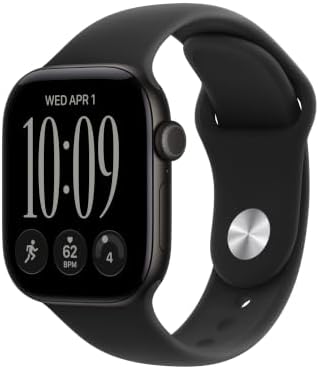
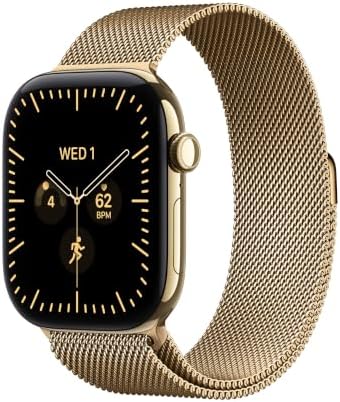
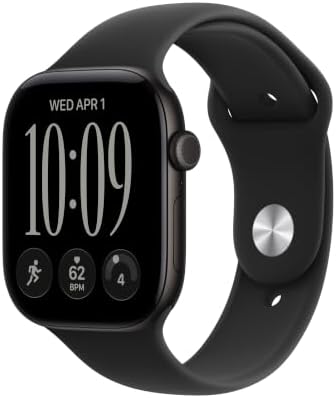
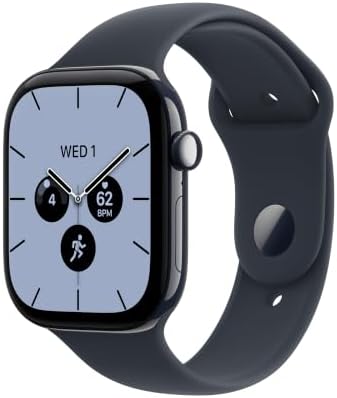
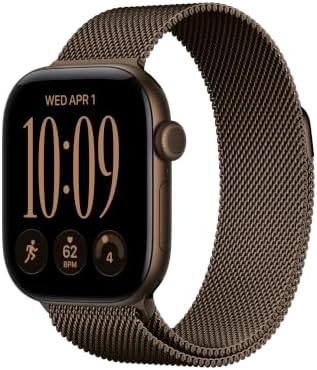
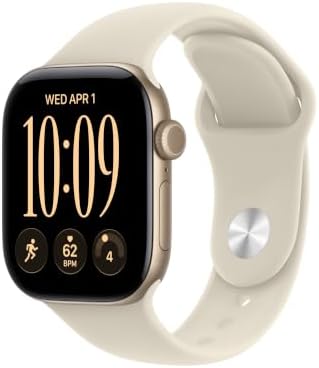
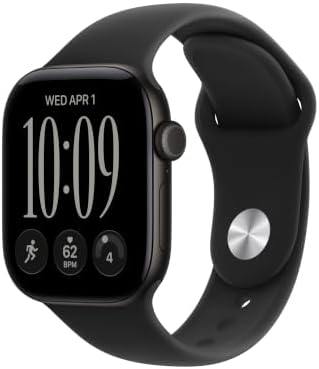
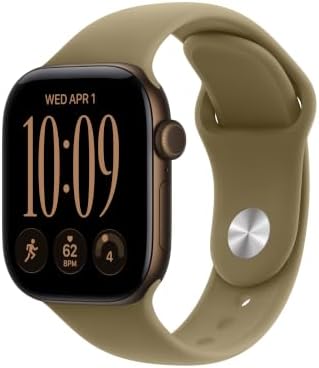
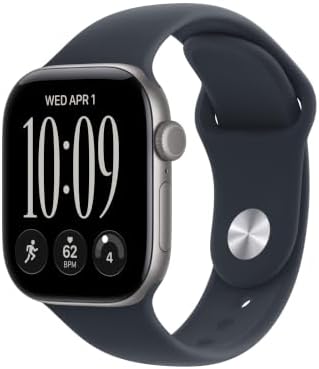
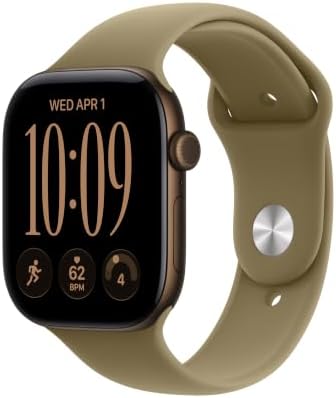
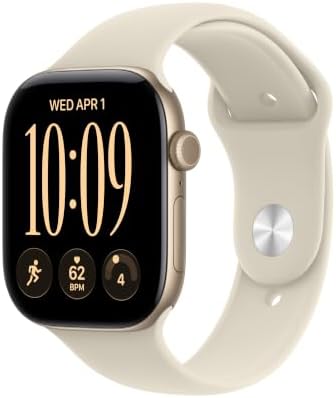
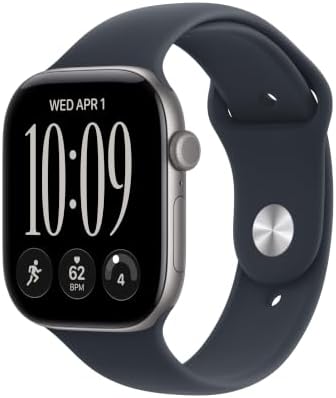
The Apple Watch Series 12 and the Apple Watch Ultra 2 sit at two very different points on the same family tree, and the gap between them has never been wider or more interesting. One is the mainstream flagship, rebuilt around a brighter wide-angle OLED panel and a tougher aluminum case. The other is Apple’s rugged titanium tool, sized for divers, hikers, and anyone who treats a wristwatch as expedition equipment rather than a daily accessory.
Choosing between them is not a question of which watch is newer. It is a question of which set of trade-offs fits your wrist, your charging habits, and your training schedule. This guide is built to be kept: the table below isolates the decision points that actually change a purchase, and the sections that follow explain the real-world consequences of each one.
| Decision Factor | Apple Watch Series 12 | Apple Watch Ultra 2 |
|---|---|---|
| Case Sizes | 42mm and 46mm | 49mm only |
| Case Materials | Aluminum, titanium, stainless steel | Grade 5 titanium |
| Display | Wide-angle OLED, LTPO3, 1Hz always-on | Always-On Retina, 3,000 nits peak |
| Glass Protection | Ceramic Shield 2 on aluminum | Flat sapphire crystal |
| Dust and Water Rating | 50m water resistance, WR50 | IP6X dust resistance, 100m water resistance, EN13319 dive rated |
| Battery Life (Normal Use) | Up to 18 hours | Up to 36 hours |
| Battery Life (Low Power Mode) | Up to 36 hours | Up to 72 hours |
| Charging | Fast charge, roughly 80\% in 45 minutes | Fast charge, same magnetic puck |
| Processor and Storage | 64-bit dual-core, 4-core Neural Engine, 64GB | 64-bit dual-core, 4-core Neural Engine, 64GB |
| Navigation Sensors | GPS, GLONASS, Galileo, QZSS | Precision dual-frequency GPS, plus the same constellations |
| Physical Controls | Digital Crown, side button, touch | Digital Crown, side button, Action Button, touch |
| Depth and Dive Features | Basic water resistance only | Depth app, dive computer integration, 40m recreational diving |
| Audio | Speaker and microphone | 86-decibel emergency siren plus standard speaker |
| Weight | Noticeably lighter, especially in aluminum | 61.8 grams in the black titanium finish |
| Wrist Fit | Multiple sizes suit narrow to wide wrists | Fits 130mm to 210mm wrists |
| Best Suited To | Daily wear, sleep tracking, everyday health | Multi-day outdoor use, diving, endurance events |
The single row that most often decides the purchase is battery life. The Ultra 2 delivers roughly twice the endurance of the Series 12 in normal use, and the gap widens further in Low Power Mode. The second row that matters is water and dust protection: 100 metres and an IP6X rating versus 50 metres changes what you can physically do while wearing the watch. Everything else on that table is a refinement of those two structural truths.
Displays and Case Design: Two Different Priorities
The Series 12 pushes display technology forward for a general-purpose smartwatch. Apple specifies an always-on Retina panel built on wide-angle OLEDs with LTPO3 backplane technology, capable of dropping to a 1Hz refresh rate when the wrist is down. In practical terms this means the screen stays visible at an angle rather than requiring a direct line of sight, and the low refresh floor helps the display remain on without draining the cell as quickly as older always-on implementations. The aluminum variants now carry Ceramic Shield 2, a front crystal Apple rates as 60 percent tougher than the older Ion-X glass.
The Ultra 2 takes a different route. Its crystal is flat sapphire, the material chosen for scratch resistance in a case that is expected to encounter rock, saltwater, and dive equipment. Peak brightness reaches 3,000 nits, which matters far more on a glacier at noon than on a city commute. The 49mm grade 5 titanium case is a deliberate statement: this watch is designed to be visible under a wetsuit sleeve and to survive being knocked against a dive boat ladder. Buyers who want a watch that disappears under a shirt cuff should recognize that the Ultra 2 will not do that. At 61.8 grams in its black finish, it is a substantial object on the wrist, and its fitment range of 130mm to 210mm excludes neither very slim nor very broad wrists, but it does dictate a bold presence.
Screen Size and Legibility
The Series 12 offers two case sizes, 42mm and 46mm, giving wearers a genuine choice about how much screen area they want versus how much weight they want to carry. On the 42mm model the display’s active area covers 374 by 446 pixels, which is dense enough for complications, maps, and workout metrics without visible pixelation. The Ultra 2 has one size only, but it uses that single canvas for a layout that prioritizes glanceable data during activity.
Materials and Long-Term Durability
Both watches can be had in titanium, but the intentions differ. The Series 12 family spans aluminum, titanium, and stainless steel, letting buyers trade weight against finish. The Ultra 2 is titanium or nothing, with a raised bezel that shields the crystal from direct impact. Over several years of ownership the Ultra 2’s flat sapphire and reinforced geometry will show fewer marks, while the Series 12’s lighter aluminum case will feel less fatiguing during sleep tracking and long meetings.
Battery, Charging, and Multi-Day Realities
Apple rates the Series 12 for up to 18 hours of normal use, or 36 hours in Low Power Mode. The Apple Watch Ultra 2 [GPS + Cellular, 49mm] Titanium Case with Blue Ocean Band is rated for up to 36 hours of normal use and up to 72 hours in Low Power Mode. Read those numbers as an honest disclosure of engineering intent: one is built to be charged every night on a bedside puck, and the other is built to leave the charger at home for a weekend.
In Low Power Mode, the Series 12 can just about reach a second day, but that mode disables or reduces always-on display behavior, background heart rate reads at certain intervals, and some connectivity features. By the time you are actively suppressing the features you paid for, the argument for a nightly charge has already been made. The Ultra 2 reaches the same second day without asking the owner to give anything up, and a third day is plausible on a long trek.
Charging speed is worth a closer look, because it changes how you use a watch rather than simply adding convenience. Both models use the same magnetic charging puck, and both support fast charging that brings the battery to roughly 80 percent in about 45 minutes. For someone who sleeps with a watch to track sleep stages, a short top-up before bed covers the night without a full recharge cycle. The Ultra 2’s larger cell benefits disproportionately from that habit: a 45-minute morning charge is a smaller fraction of a bigger battery, so the covered window extends well into the following day.
Navigation, Sensors, and the Precision GPS Gap
The two watches share a processor architecture, with a 64-bit dual-core chip and a four-core Neural Engine, paired with 64GB of storage on both. The computational layer is effectively the same, which means the difference in experience comes from hardware outside the chip: antenna design, satellite handling, and physical controls.
This is where the Ultra 2 separates itself. Dual-frequency precision GPS acquires the L1 and L5 bands simultaneously, which mitigates the multipath errors that plague single-band receivers in cities with tall buildings and in canyons with high walls. The Series 12 carries standard multi-constellation GPS covering GPS, GLONASS, Galileo, and QZSS. For a runner logging an easy 5km in a park, both will produce credible tracks. For a trail runner pacing long efforts in tree cover, or a cyclist riding an urban route with frequent turns, precision dual-frequency fixes reduce the small accumulated errors that make route maps drifty and pace averages unreliable. One watch treats exact position as an engineering requirement; the other treats it as a basic feature.
Physical Controls and the Action Button
The Series 12 uses the familiar Digital Crown and side button combination. This is an entirely workable interface for everyday use: scroll the crown for notifications, double-press the side button for Wallet. The Apple Watch Series 12 GPS + Cellular 46mm Smartwatch adds 46mm of screen real estate to that setup, which matters when reading a message or adjusting a workout mid-run.
The Ultra 2 adds a third physical input, the Action Button, which can be programmed to start a dive session, mark a waypoint, begin a workout, or trigger the built-in siren. This is where the watches diverge most sharply in daily use. The Action Button allows a physical start or mark without looking at the screen, which matters with wet hands, gloved hands, or in the second before a sprint begins. An extra physical button sounds like a minor detail until you have tried to begin a timed segment with sweaty or gloved fingers.
Water Resistance, Diving, and Emergency Features
The Series 12 is rated for 50 metres of water resistance, sufficient for swimming and showering. The Ultra 2 is rated for 100 metres and carries an IP6X dust resistance rating, which is the more interesting number for anyone who has watched dust destroy a device’s seals rather than water. It is also EN13319 compliant, the standard used for dive instruments, and it supports a depth app and integration with dive computer software for recreational diving to 40 metres. That is a categorical gap. A swimmer gets everything they need from the Series 12. A diver, or someone who regularly swims in open water with equipment, cannot use the Series 12 for the same purpose.
The Ultra 2 also carries an 86-decibel siren, loud enough to be heard over wind in terrain where getting lost has real consequences. That feature exists because the Ultra line is designed for scenarios where communication is not guaranteed and visibility is not certain. It is the clearest example of Apple designing for a buyer who expects to be somewhere unhelpful.
Price, Value, and Who Should Buy Which
The purchase decision ultimately comes down to honest self-assessment about use rather than features on paper. The Series 12 is the right answer for the buyer who wants an excellent smartwatch and uses it the way most people actually use one: notifications, health tracking, sleep monitoring, and workout logging on familiar routes. It is lighter, available in two case sizes, and charges fast enough that a nightly routine never becomes a problem. Anyone with a wrist under roughly 45mm of comfortable diameter should be looking here first, and the 42mm option deserves serious consideration from buyers who have found previous 45mm and 49mm watches cumbersome.
The Ultra 2 is the right answer for the buyer who will genuinely use what it offers. That means: overnight and multi-day trips away from a charger, recreational diving or serious open-water swimming, trail running or riding where precise position matters, and demanding outdoor work where an extra physical button and a louder alarm are practical assets rather than spec-sheet entries. It is heavier, it is only available in one size, and it requires a commitment to the larger circle on the wrist. In exchange it provides the battery headroom, water resistance, voice-assist siren, and precision GPS that the standard model cannot match.
The useful framing is not which watch is better, but which watch stops being annoying in your specific routine. A buyer who charges every night never experiences the Series 12’s shorter battery. A buyer who leaves the charger behind for three days experiences the Ultra 2’s advantage every single day. Anyone shopping broadly across the platform may also want to browse the wider Apple watch range for other sizes and finishes that straddle these two extremes, though few models hit such distinct use cases so clearly.
The Apple Watch Series 12 and Ultra 2 represent two coherent philosophies rather than one good and one compromised design. The Series 12 refines the smartwatch into something lighter, brighter, and more approachable, while the Ultra 2 commits fully to the idea that a wristwatch can be an outdoor instrument with enough endurance to earn its place in the field. Matching the watch’s strengths to how you actually live, rather than to what looks most capable on a product page, is what makes either choice worth keeping for years rather than months.