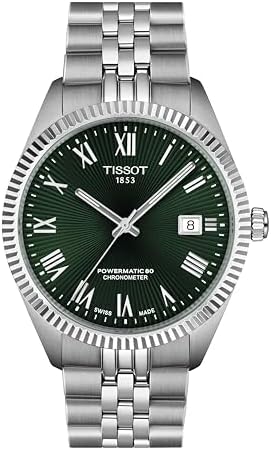
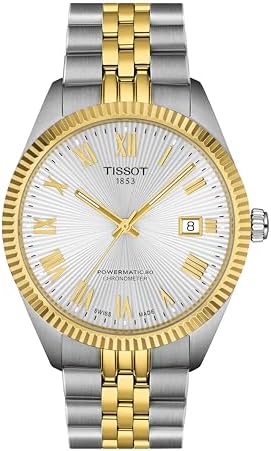
The Tissot PRX Chronograph Automatic carries a 42 mm tonneau-shaped case carved from 316L stainless steel, a silhouette lifted straight from the integrated-bracelet sports watches that defined the early 1970s. What separates this reference from a straightforward nostalgia piece is the running seconds exhibition at 6 o’clock and a trio of counters that turn a lean everyday watch into a genuinely useful timing instrument. The dial combines a vertical brushed finish with archival proportions, giving the PRX a visual identity that reads as modern without pretending the quartz crisis never happened.
This is a watch built for people who want the geometry of a vintage design language but refuse to give up mechanical craft. Before buying, three questions matter most: does the case size suit the wrist, does the chronograph movement justify the premium over the quartz PRX, and how well does the design hold up across formal and casual wear? The answers below draw on published Tissot specifications and hands-on type considerations rather than marketing language, so the trade-offs stay visible. Anyone comparing the chronograph against the three-hand automatic or the digital variants will find the decision framework mapped out below.
What Defines the PRX Chronograph Automatic
The PRX name carries specific meaning in the Tissot catalogue: a flat, tapering bracelet integrated directly into the case, a brushed-and-polished alternation across every link, and a dial layout that prizes legibility over decoration. The chronograph version amplifies that formula with two registers flanking a central chronograph hand, all driven by a Swiss automatic movement that Tissot documents with a 65-hour power reserve. That reserve figure matters in practice because it means the watch keeps running through a long weekend off the wrist, so a Friday evening removal will not require winding on Monday morning.
The chronograph functions follow conventional Swiss tri-counter logic: a 60-second central hand, a 30-minute counter, and a 12-hour counter for extended events. Pushers sit at 2 and 4 o’clock, shaped rather than cylindrical, which ties into the case’s angular vocabulary. Water resistance is rated for everyday exposure rather than diving, keeping the caseback flush and the profile relatively slim for an automatic chronograph. On the wrist, the integrated bracelet gives the case an unusually planted feel, and the flat link geometry means the watch sits close to the skin rather than floating above it.
Dial and Case Proportions
The dial is where the PRX’s 1970s lineage is most visible. Applied indices sit on a flat plane, the date window lives at the bottom edge of the layout, and the counters use contrasting rings to keep them legible without cluttering the surface. Tissot finishes the case with a mix of vertical brushing along the flanks and polished bevels that catch light along the top edge, a treatment that keeps the watch looking sharper than its price bracket normally allows. Lug-to-lug proportions run shorter than the 42 mm width suggests, which is why the chronograph wears closer to a 40 mm piece on most wrists above six and a half inches.
Bracelet Integration and Comfort
The bracelet is not an accessory here; it is half the design argument. Links taper from the case outward, the clasp sits flush with the underside, and the brushed finish resists fingerprints in a way polished centre links never do. Owners who rotate watches frequently tend to value this because the PRX never looks untidy after a week of daily wear. The strap options beyond steel are limited on this reference, so the decision is largely settled the moment the bracelet is attached.
Movement, Accuracy, and Daily Use
Inside sits a Swiss automatic chronograph calibre that Tissot specifies with a 65-hour power reserve and a full chronograph module driving the three counters. The rotor winds with normal wrist motion, and the movement can be hand-wound through the crown if the watch has sat idle. Accuracy for this calibre sits in the range Swiss regulators consider acceptable for the segment, which means it keeps time well enough for daily wear and casual timing but is not a certified chronometer. For buyers coming from quartz, the adjustment period is real: expecting plus or minus a few seconds a day is normal, and the seconds sweep is part of the appeal rather than a flaw.
Practically, the chronograph counters make this watch more useful than a pure dress piece. Timing a commute segment, a coffee brew, or a meeting overrun takes one button press, and the 30-minute counter covers most real-world intervals without needing to reset. The date function adds day-to-day utility, while the flat profile keeps the watch under a shirt cuff. Compared with the quartz PRX Chronograph, which uses shaped pushers and a date at 4 o’clock for a lighter case, the automatic version trades some thinness for mechanical character and a longer service life between battery replacements. The Tissot Men’s PRX Automatic Chronograph forms the steel-on-steel core of this lineup.
Where the PRX Chronograph Fits in the Range
The wider Tissot collection places the PRX Chronograph Automatic alongside several siblings, and the differences are worth understanding before committing. The three-hand automatic strips the dial to bare essentials for buyers who prefer a cleaner face, while the Tissot PRX Digital offers a retro-futurist alternative with a quartz heart and a display layout that appeals to a completely different taste. Each version keeps the integrated bracelet and tonneau case, so the decision is really about dial complexity and movement type rather than silhouette.
- Chronograph automatic: three counters, 65-hour reserve, thicker case
- Three-hand automatic: clean dial, slimmer profile, same bracelet architecture
- Digital: quartz movement, LCD readout, lightest wearing experience
Buyers who want the automatic look without the chronograph complexity should consider the Tissot Men’s PRX 316L Stainless Steel Case Dress Watch, which keeps the bracelet language with a simpler calibre and can be the better daily choice if the counters would rarely be used. The chronograph, by contrast, appeals to buyers who like the visual density of a multi-register dial and the tactile ritual of pressing a pusher.
Comparing Against the Quartz Chronograph
The quartz PRX Chronograph documented in Tissot’s own magazine coverage uses a 41 mm steel case with shaped pushers and a date at 4 o’clock. That version is thinner, lighter, and effectively free of winding maintenance for years at a time. The automatic counterpart requires the wearer to accept slightly more case height and the habit of minding the power reserve if the watch is not worn daily. The trade is mechanical versus electronic: the automatic offers a sweeping chronograph hand and a movement that will outlast any battery, while the quartz offers lower upfront cost and greater convenience. Neither is objectively better; the choice depends on how much the wearer values mechanical character against maintenance simplicity.
Design Context and the Steel Sports Chronograph Tradition
Integrated-bracelet steel sports watches became a defining category in the 1970s, when designers began treating the bracelet as an extension of the case rather than an afterthought. The PRX channels that era of design through its flat link profile and angular bezel, but the execution belongs firmly to the present: modern tolerances on the link spacing, sapphire crystal, and a decorated movement visible through the caseback. That combination places the chronograph at an accessible entry point into Swiss mechanical watchmaking, where buyers receive genuine horological construction without the servicing costs attached to higher complications.
What makes the design relevant rather than merely retro is how it handles scale. The brushed surfaces keep the watch from reading as jewellery, while the polished bevels introduce just enough light play to suit evening wear. The dial’s vertical texture catches light in a way flat lacquer cannot, and the applied markers sit raised enough to throw subtle shadows. Together these details mean the chronograph works with a suit in daylight and a jacket at night without ever demanding to be the loudest thing on the wrist.
Buying Considerations for Prospective Owners
Wrist size deserves an honest assessment. At 42 mm with a full-width integrated bracelet, the chronograph has significant presence, and buyers with wrists under six and a half inches may prefer the 40 mm three-hand auto or the 35 mm variants in other PRX references. The bracelet’s flat links distribute weight well, but the geometry means the watch looks formally proportioned on larger wrists and slightly imposing on smaller ones. Try-before-buying, where possible, removes the guesswork.
Servicing and ownership should be planned for the long term. Swiss automatic chronographs generally warrant a factory-recommended service interval of several years, with costs covering movement cleaning and re-lubrication. Buyers used to quartz maintenance budgets should factor this in. On the other hand, the mechanical movement will not become obsolete, and the 65-hour reserve means the watch stays accurate through inactive periods. For collectors building a small rotation, that combination of durability and mechanical substance tends to justify the investment.
The steel case also reinforces the casual-to-formal range of the design. A leather strap can dress the watch down for weekend wear, while the steel bracelet returns it instantly to office-appropriate trim. This flexibility is the real argument for a steel chronograph over a formal-only piece. The bezel edge and bracelet bevels carry just enough finishing to feel considered, the dial has texture worth examining, and the chronograph controls add a layer of interaction that makes wearing the watch active rather than passive. The calibre’s sweep and the mechanical integrity of its counters reveal a design philosophy: one case architecture, detailed with intention, built to stay out of the way and show its fine points when the light is right. That is a watch designed for the wearer, and it rewards that attention with every second swept and every measured evening moved with quiet symmetry across the dial.