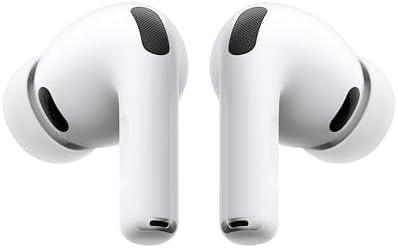
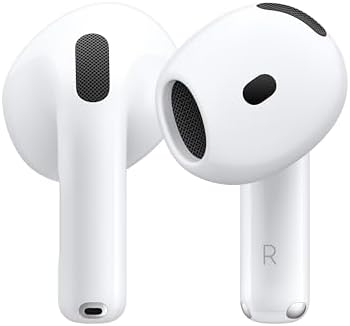
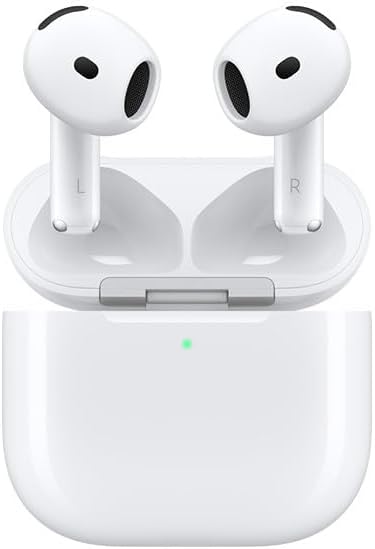
The Apple AirPods Pro 3 and the AirPods 5 sit at two distinct points on Apple’s earbud spectrum: one uses a sealed in-ear design with silicone tips, the other an open-ear shape without them. That single structural difference shapes almost everything else a buyer cares about, from how securely each bud stays put during a run to how much outside noise reaches the ear. This comparison is built as a practical buying reference, laying out the specifications and selling points that matter most so the choice between the two comes down to fit and feature priorities rather than marketing language.
| Feature & Selling Point | AirPods Pro 3 | AirPods 5 |
|---|---|---|
| Fit Type | In-ear with silicone tips | Open-ear, no silicone tips |
| Active Noise Cancellation | Yes | Not offered |
| Transparency Mode | Yes | Natural open-ear passthrough |
| Ear Tip Sizes Included | Multiple sizes supplied | None |
| Primary Use Case | Commuting, air travel, focused listening | Daily wear, long runs, awareness-first listening |
| Charging Case | Standard Apple case | Standard, with a wireless charging variant |
| Apple Ecosystem Pairing | Automatic across iPhone, iPad, Mac | Automatic across iPhone, iPad, Mac |
| Sound Isolation Style | Passive seal plus electronic ANC | Passive isolation only |
| Pressure Sensation | Noticeable seal in the ear canal | Minimal, nothing seated in the canal |
| Running and Sweat | Secure, but seal can shift with movement | Stays positioned, full ambient awareness |
| Conversation Awareness | Handled through software modes | Inherent to the open design |
| Who It Suits | Listeners who want noise removed | Listeners who want surroundings kept |
| Signature Strength | Active Noise Cancellation | Tip-free open-ear comfort |
The table compresses the decision into two lines: the Pro 3 buys silence through a seal and electronics, while the AirPods 5 buys endurance and awareness by leaving the ear canal open. Almost every practical difference downstream, from how a bud feels at hour three to whether traffic is audible mid-run, traces back to that split.
Two Philosophies of Listening
Apple has effectively split its earbud lineup along a line that has little to do with sound quality and everything to do with how much of the world the wearer wants to keep out. The AirPods Pro 3 belongs to the sealed school of design, where soft silicone tips press into the ear canal to create a physical barrier that passive isolation and electronic cancellation can then build upon. Reviewers who have alternated between the two during long runs, including a twenty-two-mile test reported by Tom’s Guide, single out the absence of a tip on the AirPods 5 as its defining trait.
The AirPods 5 take the opposite route. With an open-ear shape and no silicone tips to customise the fit, sound is delivered to the entrance of the ear canal rather than channeled into it. That design produces three immediate consequences: nothing presses against the canal, ambient sound passes through naturally, and deep low-frequency and high-energy genre reproduction are noticeably harder to lock in. For runners, commuters on foot, or anyone who needs to hear a horn, a colleague, or a platform announcement, the open approach is a feature rather than a compromise.
Active Noise Cancellation and What It Costs
Active Noise Cancellation is the single most consequential feature separating these two products, and it is exclusive to the Apple AirPods Pro 3 Wireless Earbuds with Active Noise Cancellation. The system works by sampling incoming sound with microphones and generating an inverted waveform that cancels much of the low-frequency rumble of engines, air conditioning units, and train carriages. Combined with the passive barrier created by the silicone tip, the result is a pronounced drop in perceived background noise.
None of that machinery exists on the AirPods 5, and it cannot be added through software. What the open model offers instead is instant, unprocessed awareness that no transparency mode can fully replicate, because there is no sealed cavity to open up in the first place. Buyers weighing the two should treat cancellation as an either-or proposition rather than a matter of degree: the decision is not which earbuds cancel noise better, but whether noise cancellation is required at all for the listening environments the user actually occupies.
Fit, Comfort, and the Long-Wear Question
The fit debate is usually framed as comfort versus security, but the more useful framing is which ear the design was built around. Sealed earbuds depend on a reliable seal to reproduce bass and to let cancellation function, which is why the Pro 3 ships with multiple tip sizes and why a poor seal degrades performance on both counts. Ears that reject deep insertion, or that change shape over a long session, tend to lose that seal gradually.
Open-fit earbuds sidestep the seal requirement entirely, which is why they stay comfortable for extended periods and rarely need reseating. The trade-off runs in the other direction: because the fit cannot be customised, isolation varies with ear shape and the sound signature shifts with positioning. For listeners who have never found silicone tips tolerable across a full workday, the AirPods 5 solve a problem the Pro 3 were never designed to address.
Battery, Charging, and Case Options
As with most earbuds, rated battery life should be read alongside the features competing for it. Active Noise Cancellation draws continuous power to run the microphone array and processing, so the Pro 3 lasts less between charges when cancellation is engaged and longer when it is switched off. Apple publishes separate figures for each mode, and the practical guidance is simple: compare the two models using the numbers for the mode the buyer will actually use most days.
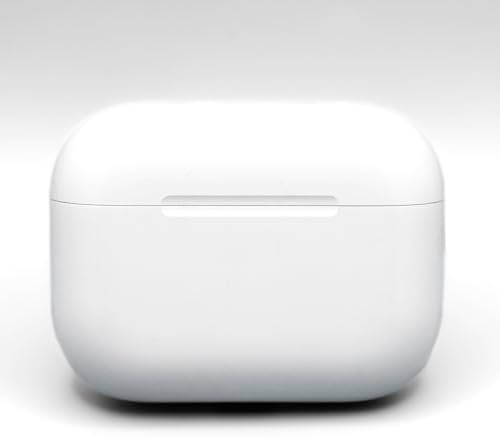
The charging case is the other variable. Both lines rely on a compact case that both stores and recharges the buds, but the AirPods 5 range includes a variant supplied with a wireless charging case, while the rest of the Apple earbud lineup varies in what ships in the box. Checking which case variant is included matters more than the headline listening figure, since it determines whether the case itself needs a cable.
Sound Character and Where Each Excels
Neither model should be judged on a single frequency sweep, because the acoustic design constrains what the software can achieve. In the Pro 3, the sealed cavity allows deeper, more controlled bass and more consistent tuning across listeners, since the tip normalises the coupling between driver and ear. The emphasis lands on density and isolation, which suits genres built on low-end weight and rewards a quiet listening environment.
The AirPods 5 cannot pressurise the ear canal, so low-frequency extension is inherently limited and the perceived balance tilts toward midrange and upper frequencies. In exchange, listening feels airier and less fatiguing over long sessions, and spatial audio cues often read more naturally because ambient sound and audio blend rather than compete. The practical conclusion is that each model is optimized for a different output: the Pro 3 for immersion, the AirPods 5 for coexistence with the environment.
Ecosystem, Controls, and Everyday Ownership
Both sit inside the same integration layer, which means automatic pairing with an iPhone, instant switching between an iPad and a Mac, spoken notifications, and shared audio settings that follow a listener across Apple devices. That parity removes ecosystem loyalty from the decision entirely: neither model carries an advantage in connectivity, and choosing between them never requires abandoning the conveniences of the Apple audio stack.
Controls and case handling are similarly consistent, with press or squeeze interactions, automatic pausing when a bud is removed, and firmware updates delivered through the paired device. Day-to-day ownership therefore differs mainly in handling routines: sealed buds need occasional tip cleaning and a quick seal check, while open-fit buds require almost no maintenance, though they also have less hardware to maintain in the first place.
Which One Belongs on the Shortlist
The Pro 3 is the stronger match for frequent flyers, open-plan office workers, and anyone who treats quiet as a listening requirement rather than a luxury. Where ambient noise is constant and cancellable, the sealed design earns its complexity. The model is also the more natural fit for listeners who want the deepest bass response and the most consistent tuning independent of ear shape.
The AirPods 5 rewards a different profile: runners, cyclists, and commuters whose route runs through traffic, plus anyone who has abandoned sealed earbuds after repeated discomfort. For these users, awareness and all-day comfort outrank isolation, and the tip-free design delivers both without configuration or compromise.
A Choice Between Two Listening Styles
Framed properly, this is not a contest between a better and a lesser product but a fork in how audio is meant to sit against daily life. Apple has deliberately charted the space between immersion and awareness, and each model stakes out one end with conviction.
Choosing well comes down to an honest inventory of where and how the earbuds will be worn: in a noisy cabin or on an open road, for deep focus or constant reference to the world outside. Match the design to that answer, and either pair settles into its role quickly, which is the surest sign that the right side of the split was chosen.

![SAMSUNG Galaxy Buds 3 FE (2025) True Wireless Bluetooth Earbuds, Active Noise Cancellation, Powerful Sound, Clear Calls, Long Lasting Battery, Hands Free AI, Black [US Version, 2 Year Warranty]](http://www.donysterling.com/images/202608/1785850214202_oap9yb_0.jpg)
![Samsung Galaxy Buds 3 FE (2025) True Wireless Bluetooth Earbuds, Active Noise Cancellation, Powerful Sound, Clear Calls, Long Lasting Battery, Hands Free AI, Gray [US Version, 2 Year Warranty]](http://www.donysterling.com/images/202608/1785849913697_ryknlb_0.jpg)