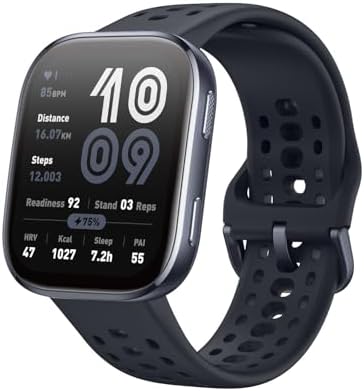
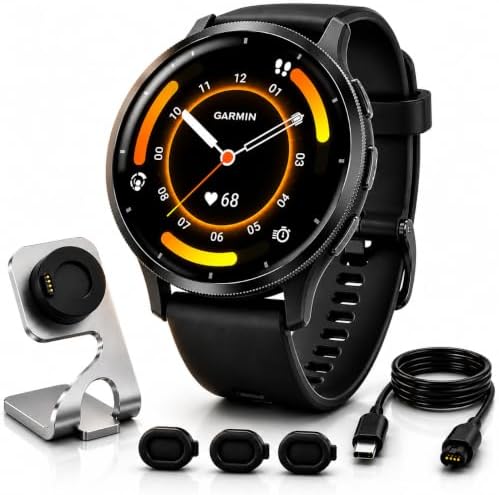
The Amazfit Bip 6 carries a 1.97-inch AMOLED panel and a 46mm case, while the Google Fitbit Charge 6 stays slim with a 1.04-inch display and a band-first profile. Both trackers sit in a similar price bracket, yet they solve different problems. One stretches battery life past a full week, the other leans on Google services and ECG-capable sensing. The table below lays out the specs that actually change daily ownership, from charging cadence to workout coverage, so the decision rests on how each tradeoff fits a real routine.
| Buying Decision Factor | Amazfit Bip 6 | Fitbit Charge 6 |
|---|---|---|
| Real-World Battery Between Charges | Up to 14 days typical use; roughly weekly or longer even with heavy GPS | Up to 7 days mixed use; drops fast with always-on display and GPS |
| Screen Size and Readability | 1.97-inch AMOLED, 46mm case; shows maps and notifications without scrolling | 1.04-inch AMOLED; compact, glanceable, limited information density |
| Wrist Fit and Wearability | 46mm watch-style body; more presence, may snag on cuffs | Slim band-first profile; disappears under a sleeve, small and large bands included |
| Health Sensing Depth | Continuous optical heart rate, blood oxygen, AI sleep analysis | Optical heart rate with ECG capability and gym-equipment heart rate broadcasting |
| Sleep and Readiness Scoring | AI-driven sleep insights in Zepp, no readiness score framework | Sleep Score plus Daily Readiness Score built into the Fitbit app |
| On-Wrist Calling | Yes, built-in mic and speaker for calls and texts | No; notifications only, phone required to talk |
| Navigation Without a Phone | Built-in GPS with free offline maps stored on the watch | Built-in GPS with Google Maps integration, phone-linked |
| Workout Mode Coverage | 140+ modes, including niche disciplines like rowing and roller skating | 40+ modes, focused on mainstream activities |
| Subscription Cost After Purchase | No premium tier required; AI insights included free | Optional Google Health Premium for deeper analysis; 3-month trial included |
| Ecosystem and App Integration | Zepp app with AI coaching; works with iOS and Android equally | Google Fitbit with Google Maps, YouTube Music, Wallet, Find My Device |
| Strap Replacement and Fit Flexibility | Standard straps; easy third-party swaps | Proprietary clasp system; fewer aftermarket options |
| Water Resistance for Swimming | 5 ATM | 5 ATM |
| Best For | Long battery, big screen, on-wrist calls, offline maps, subscription-free tracking | Slim wear, Google integration, ECG sensing, refined sleep and readiness scoring |
Two rows decide most purchases. The Bip 6 roughly doubles battery endurance, which matters for anyone unwilling to charge a tracker nightly. The Charge 6 counters with ECG-capable heart rate sensing and a tighter Google Fitbit experience, plus stronger sleep and readiness scoring. Bluetooth calling and offline maps tilt convenience toward the Bip 6. The rest of this guide unpacks those tradeoffs so the right tracker for a specific wrist and routine becomes clear.
Design, Display and Build Quality
The Amazfit Bip 6 Smart Watch 1.97″ 46mm GPS Bluetooth uses its 1.97-inch AMOLED panel and 46mm case to breathe in a wider canvas. That extra real estate turns the tracker into a miniature smartwatch capable of showing notifications, maps, and workout data without endless scrolling. Brightness holds up in midday sunlight, and the touch interface responds quickly to swipes. Amazfit describes the Bip 6 as retaining the Bip family’s battery-first DNA while modernizing the screen and case proportions, and the 46mm build reflects that balance between wearable presence and comfort.
Fitbit’s design language takes a different path. The Google Fitbit Charge 6 – Fitness Black keeps a slim, band-oriented profile that hugs the wrist and disappears under a sleeve. Fitbit positions the Charge 6 as a tracker for users who want minimal bulk and continuous wear. The Obsidian and Black colorway pairs with both small and large bands in the box, giving immediate fit flexibility without a separate strap purchase. Those who dislike watches that snag on cuffs will lean toward the Charge 6’s low profile, while anyone who prefers on-wrist information density will appreciate the Bip 6’s larger canvas.
Battery Endurance and Charging Rituals
Battery life remains where these two diverge most sharply, and it is often the single factor that settles a purchase. The Bip 6 advertises up to 14 days of typical use thanks to its larger chassis and efficient AMOLED driver. That figure drops with always-on display or continuous GPS, but even reduced, it translates into roughly weekly-or-longer charging cycles. A tracker that survives a full work week plus weekend adventures removes the anxiety of forgotten charging cables.
The Charge 6 targets around seven days of mixed use, which still outpaces most mainstream smartwatches but requires noticeably more frequent charging. Google Fitbit touts the Charge 6 as offering extended battery in its class when used without always-on display and heavy location tracking, and that framing acknowledges the tradeoffs. Users who want a rechargeable rhythm closer to a traditional watch will find the Bip 6 easier to live with. Users who prioritize short, familiar top-up sessions may treat the Charge 6’s endurance as acceptable, especially given the ECG feature set that requires more power.
Health Sensors, Sleep Tracking and Readiness
Sensor depth is where Fitbit traditionally pushes hardest, and the Charge 6 reflects that heritage. It packs an optical heart rate array that supports exercise heart rate broadcasting to compatible gym equipment, plus proprietary sleep and readiness scoring inside the Fitbit app. The inclusion of ECG capability positions the Charge 6 as a tracker that collects data a physician might actually review. Adding the optional Google Health Premium membership unlocks deeper analysis, though the tracker functions well without it.
The Bip 6 matches many basics with continuous optical heart rate tracking, blood oxygen measurement, and AI-driven sleep analysis inside the Zepp app. With 140+ workout modes, it records a broader variety of activities out of the box than the Charge 6’s roughly 40 modes. That breadth suits athletes who dabble in niche disciplines, from rowing to roller skating. What the Bip 6 lacks in medical-grade ECG sensing it offsets with a larger library of exercise profiles and free AI insights that do not require a subscription. Buyers looking for clinical-grade extras should favor the Charge 6; buyers who want variety and offline workout flexibility will find the Bip 6 more generous.
Smart Features, Software and Ecosystem
Software ecosystems often determine long-term satisfaction more than hardware specs. The Charge 6 sits within the Google Fitbit platform, which now weaves Google services into the tracker. Google Maps integration provides turn-by-turn style navigation on the wrist, and YouTube Music controls arrive via the Google account linkage. Find My Device and Google Wallet round out the connected experience. This integration appeals to Android users already invested in Google’s world, though iPhone owners can still use a Fitbit account. Recall that Google Health Premium unlocks advanced readiness and stress analysis, but the core tracking works without it.
The Amazfit brand’s approach leans on the Zepp app, which delivers AI-driven coaching, sleep insights, and free offline maps directly on the Bip 6. Bluetooth calling distinguishes the Bip 6 from the Charge 6, allowing calls to be placed and answered on the wrist. That feature alone reshapes a run or a commute, making notifications actionable without a phone check. Anyone who wants the large display to function as a phone extension rather than a passive log will favor the Bip 6. Those who want tighter Google integration will prefer the Charge 6.
Who Should Buy Each Tracker
The buying decision condenses to a few criteria. Pick the Bip 6 if a large display ranks high, if weekly-plus battery life matters, if Bluetooth calls and offline maps appeal, and if subscription-free insights and 140+ workout modes provide value. Pick the Charge 6 if slim wrist presence, the Google ecosystem, ECG-capable sensing, and refined sleep and readiness scoring align with your habits. Budget-conscious buyers may also weigh whether the Bip 6’s larger feature package at a comparable price represents better value for how they actually use a tracker.
Neither tracker is universally superior. The Bip 6 is the more autonomous device, capable of stretching days between charges while handling calls and maps. The Charge 6 is the more integrated device, channeling Google’s services and sensors into a compact band. A trail runner logging long GPS sessions and expecting Bluetooth calls will gravitate to the Bip 6. A health-focused user comparing chronic sleep trends or syncing with gym equipment will find the Charge 6 series feature set more aligned. Those who rotate between the two priorities can also examine the Fitbit brand’s broader lineup of trackers to see whether a different sensor mix better fits a specific routine.
The result is a split verdict rather than a single winner. The Amazfit Bip 6 represents the value play with extended battery, larger screen, and independent features. The Fitbit Charge 6 represents the sensor play with ecosystem synergy and advanced wellness analytics. Considering who buys which product and what each person actually performs each day, the smarter purchase usually emerges from how a tracker’s weakest trait interfaces with real life. Use the comparison table above as a starting point, then weigh which constraint is easier to live with: charging more often, or living without a larger screen and on-wrist calling.