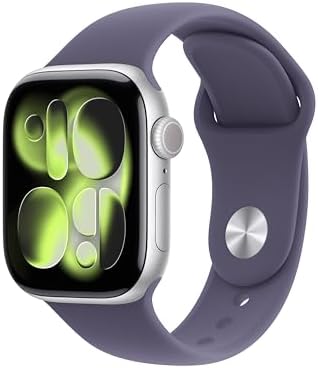
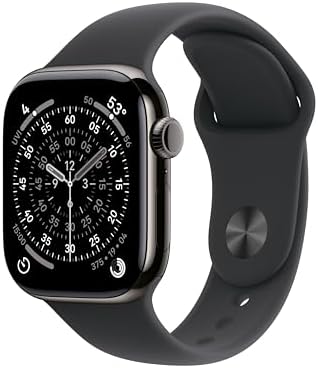
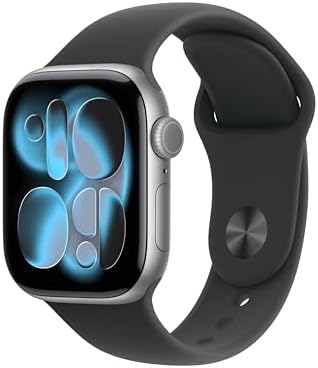
The Apple Watch Series 11 collection and the Apple Watch SE 3 collection sit at opposite ends of Apple’s current smartwatch range, and the gap between them has never been narrower or more confusing to shoppers. This comparison is built as a permanent buying guide: every row in the table below reflects a decision point that actually changes what you wear on your wrist, not marketing copy. Read it once, keep it saved, and the choice between these two families becomes a matter of matching specs to daily habits rather than guessing at which tier sounds more impressive.
| Feature and Buying Factor | Apple Watch Series 11 | Apple Watch SE 3 |
|---|---|---|
| Case Sizes | 46mm and 42mm | 44mm and 40mm |
| Case Materials | Aluminum or titanium | Aluminum only |
| Display Brightness | Up to 2000 nits | Up to 1000 nits |
| Always-On Display | Yes, Always-On Retina | Yes, Always-On Retina |
| Display Resolution (large case) | Higher pixel density on 46mm | 368 by 448 pixels on 44mm |
| Weight (GPS, large case) | Aluminum profile comparable to SE 3 | 32.9 grams (44mm GPS) |
| Case Thickness | Slimmer than preceding SE generation | 10.7mm |
| Health Sensor Suite | ECG, blood oxygen, temperature sensing | Heart rate, sleep, cycle tracking |
| Vitals App Support | Yes | Yes (heart rate and respiratory metrics) |
| Sleep Score and Fitness Tracking | Included | Included |
| Water Resistance | 50m swimproof | 50m swimproof |
| Cellular Option | Yes | Yes |
| Software Requirement | iPhone 11 or later with iOS 26 | iPhone 11 or later with iOS 26 |
| Best Suited To | Advanced health monitoring, outdoor visibility | First-time buyers, value-focused tracking |
The table reveals where the two families genuinely diverge: brightness, sensor depth, and case material options. Everything else, including Always-On display, water resistance, and cellular connectivity, has converged, which is exactly why the SE 3 now forces a real decision instead of an automatic upgrade to the flagship.
Display Brightness and Case Sizing Decide Daily Usability
Apple specifies the Series 11 panel at up to 2000 nits, double the 1000-nit ceiling of the Apple Watch SE 3. That number matters in direct sun, on bright ski slopes, and during outdoor runs where a glance at the wrist has to register instantly. The SE 3 remains readable in most conditions, but the difference is measurable rather than cosmetic.
Case sizing follows a different logic. The Series 11 collection offers 46mm and 42mm aluminum or titanium bodies, while the SE 3 sticks to 44mm and 40mm aluminum. Smaller wrists often prefer the 40mm SE, whereas buyers who want a titanium finish have no SE option at all. Case thickness also separates them: the SE 3 measures 10.7mm deep with a 368 by 448 pixel display on the 44mm model, and checking the full specification sheet before ordering prevents a size surprise on delivery.
Health Sensors: Where the Extra Money Goes
Both watches cover the basics well, including heart rate monitoring, sleep tracking, cycle tracking, and the Vitals app that surfaces respiratory and heart rate metrics overnight. The Series 11 adds ECG and blood oxygen sensing along with temperature sensing, features Apple positions as tools for users who want deeper cardiovascular and recovery data.
- SE 3: heart rate, sleep stages, fitness rings, Vitals app, safety features such as fall detection
- Series 11: everything above plus ECG, blood oxygen, and temperature-based cycle and sleep insights
- Shared: Always-On Retina display, 50m water resistance, cellular option, iPhone 11 or later with iOS 26
The practical question is whether those extra sensors change behavior. For someone managing a heart condition or training seriously, ECG and blood oxygen readings add context that the SE 3 cannot provide. For a step-counter-and-notifications user, the SE 3 sensor set covers the essentials without paying for hardware that stays idle.
Battery, Weight, and Wrist Time
At 32.9 grams in the 44mm GPS configuration, the SE 3 is light enough to disappear during sleep tracking, and the Series 11 keeps a similar weight profile in aluminum. Neither watch asks the wearer to choose between daytime training and overnight recovery data, which is a meaningful shift from earlier generations where sleep tracking meant skipping a charge.
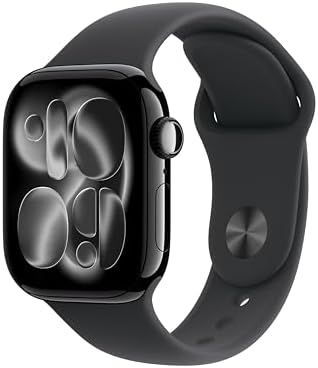
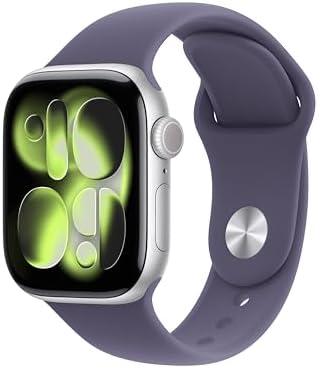
Buyers stepping up to the Apple Watch Series 11 [GPS 46mm] Jet Black Aluminum Black 46mm M/L GPS get the brighter panel and full sensor suite in a familiar case, and the Jet Black finish reads cleanly with both sport and formal bands. Those prioritizing budget can turn to the Apple Watch SE 3 [GPS 40mm] Midnight Aluminum 40mm S/M GPS, whose understated case and band pairing suit office or gym use equally well.
Who Should Buy Which: A Decision Framework
The purchase criteria come down to three questions. First, will you actually use ECG, blood oxygen, or temperature data? If the answer is no, the SE 3 delivers the same Always-On display, the same 50m water resistance, and the same cellular option at a lower tier. Second, how often are you outdoors in harsh light? The 2000-nit Series 11 panel is the clearer choice for runners, hikers, and cyclists. Third, do you want titanium? Only the Series 11 offers it, and that material choice alone can settle the decision for buyers who dislike aluminum’s softer feel.
Choose the SE 3 if:
- This is a first Apple Watch or a gift for a teenager
- Fitness rings, sleep tracking, and notifications cover your needs
- You prefer the smaller 40mm footprint on a slender wrist
- Budget matters more than sensor depth
Choose the Series 11 if:
- You want ECG, blood oxygen, and temperature readings
- Outdoor visibility in bright light is a daily concern
- A titanium finish or the larger 46mm case appeals to you
- You plan to keep the watch for several years and want the fuller sensor suite
The Convergence Story Behind the Choice
What makes this comparison unusual is how much the two families now share. Apple has pushed Always-On display technology, the Vitals app, sleep scoring, and 50m water resistance down into the SE line, eroding the feature gap that once justified the flagship premium outright. The Series 11’s case rests on brightness and sensor depth rather than a fundamentally different experience.
That shift changes the buying logic. The Apple brand’s current lineup now rewards shoppers who can name the specific sensor or display property they need, and it punishes reflexive upgrading. Anyone who buys the Series 11 purely because it sits higher in the range may find the extra sensors unused after the first week; anyone who buys the SE 3 without checking brightness needs may find themselves squinting at a sunny race start.
Software, Longevity, and Resale Considerations
Both watches require an iPhone 11 or later running iOS 26 or newer, so the upgrade path for the phone matters as much as the watch tier. Apple has historically supported SE models across multiple watchOS cycles, and the shared software baseline here means neither purchase becomes obsolete faster than the other on the operating system side.
Longevity arguments instead favor the Series 11 on hardware. A titanium case resists scratches better than aluminum, the brighter display ages more gracefully in outdoor use, and the fuller sensor set stays relevant as health features expand. The SE 3 counters with lower entry cost and lighter weight, and for buyers who upgrade every two to three years, that trade-off often tips toward the value model.
The smarter path is to decide on the one or two specifications that genuinely affect daily wear, whether that is 2000-nit brightness for outdoor training or a 40mm case for a smaller wrist, then let the rest of the spec sheet fall away. Either family now delivers a complete smartwatch experience, and the right pick is simply the one whose compromises you never notice.