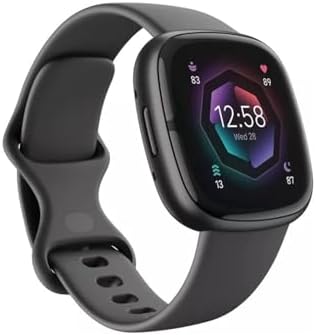
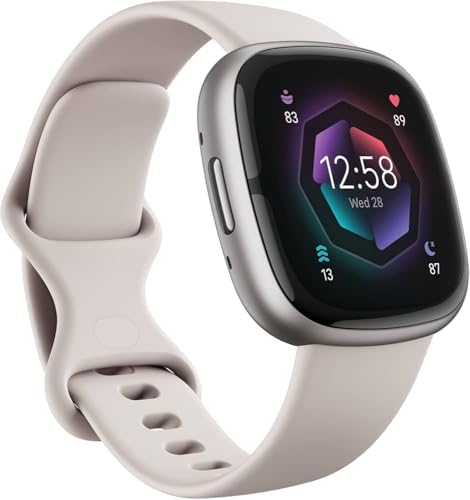
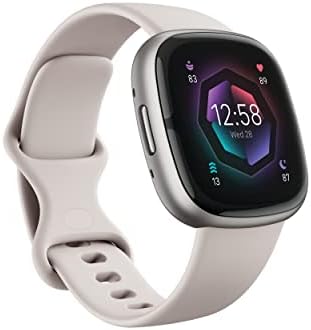
The Fitbit Sense 2 series and the Garmin Vivoactive 6 collection arrive from two distinct health-tracking philosophies. One begins with Google’s deep health-sensor platform and a focus on stress, sleep, and everyday wellness; the other grows from the Garmin brand’s outdoor-navigation heritage and multi-sport training toolkit. This guide compares the two families on the dimensions that actually change a purchase decision, from ECG and body-temperature sensing to AMOLED readability and real-world battery life, so you can match the right watch to how you train, recover, and live.
| Decision Factor | Fitbit Sense 2 | Garmin Vivoactive 6 |
|---|---|---|
| Case Size | Approx. 40mm | 42mm |
| Display | AMOLED touchscreen | AMOLED with always-on option |
| Battery Life (Smartwatch Mode) | Up to 6 days (typical) | Up to 11 days (5 days with always-on) |
| GPS Battery (Full Satellite Mode) | Not officially published for continuous GPS | Up to 21 hours (GPS-only GNSS) |
| ECG / AFib Detection | Yes, ECG app | Not a standard feature on base model |
| Skin Temperature Sensing | Yes, on-wrist temperature | Advanced sleep and training metrics |
| Stress and Wellness Tools | EDA sensor, mindfulness, stress score | Stress score, Body Battery energy monitoring |
| Preloaded Sport Profiles | 20+ core profiles | 80+ sport apps |
| Swim Tracking and Water Resistance | 5 ATM, swim tracking | 5 ATM, swim tracking |
| Navigation and Routing Tools | Basic GPS with connected GPS fallback | Built-in GPS, route and track-back basics |
| Smart Features | Notifications, calls, Google integration | Notifications, Garmin Pay, music controls |
| App Ecosystem and Coaching | the Fitbit app ecosystem, Google Health integration | Garmin Connect, structured workouts |
| Primary Health Focus | ECG, stress, sleep quality | Training load, recovery, multi-sport |
| Best For | Wellness-focused everyday users | Active multi-sport users and hikers |
| Key Selling Point | Full health-sensor suite with ECG | 11-day battery and 80+ sport apps |
The table makes the first real trade-off clear: the Sense 2 leans toward clinical-style wellness tracking, while the Vivoactive 6 responds with training breadth and roughly twice the smartwatch-mode runtime. The ECG row and the battery row are the two cells that most often settle the decision before anything else is considered.
Health Sensors: Clinical Wellness Versus Training Load
The Sense 2 family is built around continuous optical heart-rate sensing paired with an electrodermal activity sensor, a skin-temperature sensor, and an ECG app that records a single-lead trace for atrial fibrillation review. The combination is designed to study the body at rest as much as in motion, producing a daily stress-management score and a readiness signal that respond to the wearer’s nervous-system state. For anyone who has a family history of arrhythmia or simply wants to monitor heartbeat irregularity between check-ups, that ECG capability is the single most important reason this line exists.
Garmin approaches the same wrist with different priorities. The Vivoactive 6 centers on advanced heart-rate tracking with Body Battery energy monitoring, which reads heart-rate variability, stress, and sleep to estimate how much energy the wearer has available across the day. Stress tracking is present, but the deeper structure is training-oriented: recovery time after sessions, sleep-quality breakdown, and the broader Garmin Connect analytics that serious runners and hikers tend to rely on. Garmin states the Vivoactive 6 ships with more than 80 preloaded sports apps, and that count alone signals how the platform is weighted.
Sleep and Recovery Data
The Google-backed side of this comparison offers detailed sleep-stage analysis, a weekly sleep profile, and insights that translate poor rest into concrete behavioral suggestions. Fitbit positions the Sense 2 as a holistic health companion, and the sleep and mindfulness toolset reflects that framing. Those who value a guided, plain-language interpretation of their recovery may find this the more approachable system of the two.
Activity and Sports Coverage
The Garmin side counters with the breadth that matters to people who train across several disciplines. Swimming, cycling, strength work, yoga, and hiking each have their own dedicated profiles, and the Garmin Connect app surfaces training status, VO2 max estimates, and structured workout completion. For a user who runs, rides, and hikes in the same week, the depth of data available on the Garmin v铆voactive 6 Health and Fitness GPS Smartwatch is a meaningful advantage over a wellness-first device.
Battery, GPS, and Everyday Durability
A key data point from Garmin: the Vivoactive 6 was rated at up to 11 days in smartwatch mode, dropping to about five days with the always-on display enabled, and up to 21 hours in GPS-only GNSS mode. The 42 mm case pairs an AMOLED panel with a five-button layout to the side of a touchscreen interface, which many runners find easier to operate with sweaty hands than a purely touch-driven design. That combination of screen quality, battery headroom, and physical controls sets the standard that the rival below must be measured against.
The Fitbit Sense 2 runs for several days per charge, and its AMOLED touchscreen is vivid and legible in daylight. Its GPS is built in, though continuous outdoor GPS utility appears lower than on the rival’s specification sheet. For commuting, gym sessions, and daily wear, several days per charge is workable; for a full day navigating a ridge route, the Garmin model carries more headroom by clear margin. Both lines are rated to 5 ATM and support swim tracking, so pool sessions are within scope for either purchase.
- Charging cadence: the Vivoactive 6 stretches into a second week between charges, while the Sense 2 typically needs a mid-week or end-of-week top-up.
- Outdoor visibility: AMOLED on both, so screen readability is no longer the differentiator it once was.
- Water confidence: 5 ATM protection on both cases covers swimming and showering.
Smart Features and Companion Apps
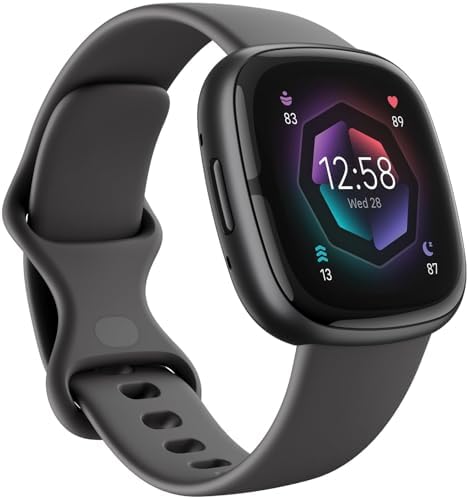
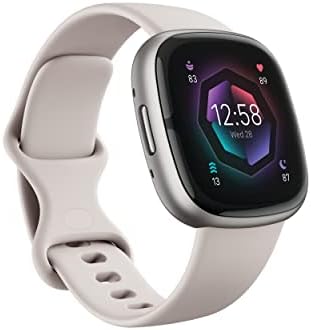
On the wrist, the Fitbit Sense 2 Health and Fitness Smartwatch handles notifications, calls via a paired phone, and quick replies, with Google Wallet and Google Maps adding practical utility for wearers already inside the Google ecosystem. Fitbit Premium unlocks the deeper analysis, guided programs, and the full weekly sleep profile; the bundled three-month membership lowers the entry cost for newcomers. The interface is clean and consumer-friendly, and onboarding from a phone is quick.
The Garmin app story is broader for training. Garmin Pay turns the watch into a contactless payment tool, music controls travel with the wrist, and structured workouts push straight from a coach’s plan to the device. The data export and third-party ecosystem compatibility, from Strava to training platforms, are well established. For someone building a training diary rather than a wellness journal, this is the more useful companion.
Neither platform is short of features, but the emphasis differs. Fitbit’s software reads like a health coach that speaks in plain language, while Garmin’s reads like a performance dashboard aimed at users who already know what training load and recovery time mean. Buyers who want to be told what to do next tend to prefer the former; buyers who want to interrogate their own data tend to prefer the latter.
Design and Wearing Comfort
The Sense 2 sticks to a single compact case profile, roughly 40 mm, with a soft touch-friendly finish and a smooth integrated band. It is light on the wrist and disappears under a shirt cuff, which matters for buyers who sleep with a watch to capture overnight data. The Google-era Fitbit lineup added a physical button alongside the display to speed up navigation, an improvement on early touch-only designs.
At 42 mm, the Vivoactive 6 is a little larger but remains a slim, sport-engineering case. The five-button layout keeps core functions reachable without covering the screen with fingers during a run. The lunar gold colorway and bone-colored band shown in official Garmin imagery are aimed at buyers who want sport functionality in a finish that works away from the trail.
Who Should Buy Which
The decision criteria are surprisingly tidy. Buy the Sense 2 if ECG recording, stress and EDA tracking, on-wrist temperature, and a guided, easy-to-read sleep report carry more weight than training depth. It suits the user who sees a smartwatch as a health monitor first, one who values receiving actionable insights over raw data tables and has little interest in chasing GPS-distance records.
Buy the Vivoactive 6 line if training variety, multi-day battery life, and structured workout support top the list. It fits hikers, triathletes, and gym regulars who own multiple pairs of shoes and want their watch to reconcile the data across them. The always-on AMOLED, 11-day quoted smartwatch mode, and 80-plus sport profiles are the concrete criteria that should tip that decision.
The sensor packages on these two families point in different directions, and the best long-term purchase is simply the one whose daily routine resembles your own. Choosing a watch for the health questions you actually ask, whether that is a rare-heartbeat trace or a weekly training load, is what turns the spec sheet into a tool that earns its place on the wrist.