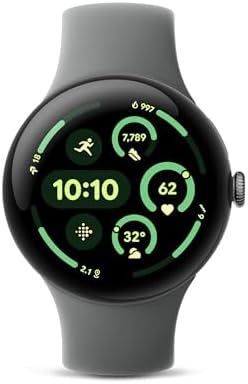
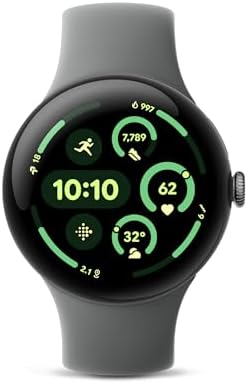
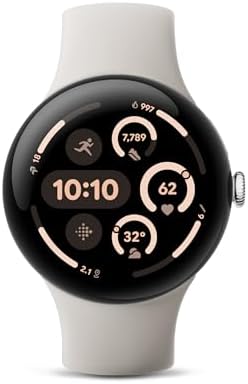
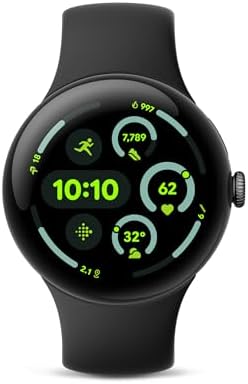
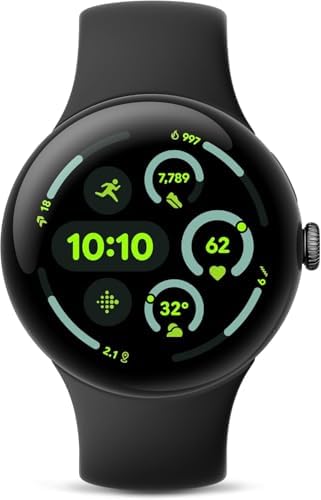
The Google Pixel Watch 3 and the Galaxy Watch8 represent two distinct philosophies in modern wearables. One leans on Google’s Fitbit-derived health platform and a rounded dome aesthetic, while the other refines the cushion-shaped case and deeper Galaxy ecosystem integration that Samsung has been building for years. This guide compares the two series across the specifications that actually change a purchase decision, so the trade-offs are clear before any money changes hands.
| Feature & Selling Point | Google Pixel Watch 3 | Samsung Galaxy Watch 8 (2025) 40mm Graphite Bluetooth |
|---|---|---|
| Case sizes offered | 41mm and 45mm | 40mm and 44mm |
| Case material | 100\% recycled aluminum | Armor aluminum |
| Display type | Actua 2,000-nit LTPO AMOLED | Super AMOLED |
| Processor | Qualcomm Snapdragon W5 Gen 1 | Exynos W1000 (5-core) |
| Battery capacity (large model) | 420mAh | 425mAh |
| Charging method | Magnetic pogo-pin dock | Magnetic wireless charging |
| Google Fast Pair | Yes | No |
| ECG certification | FDA-cleared | FDA-cleared |
| cEDA stress sensor | No | Yes (BioActive) |
| Sleep apnea detection | FDA-authorized | Yes |
| Water resistance | 5 ATM / IP68 | 5 ATM / IP68 |
| Navigation support | GPS, GLONASS, Galileo, BeiDou | GPS, GLONASS, BeiDou, Galileo |
| Offline maps | Yes (offline Google Maps) | Yes (Samsung Maps) |
| Sleep tracking platform | Fitbit Premium integration | Samsung Health with Energy Score |
| Target buyer profile | Fitbit loyalists and Android purists | Galaxy phone owners wanting deeper AI features |
The clearest split sits in health hardware: Samsung fits a BioActive sensor with cEDA for stress tracking, while Google leans on Fitbit’s sleep algorithms and FDA-authorized sleep apnea detection. Both achieve IP68 and 5 ATM, both use 5-core chips, and both last roughly 40 hours with the always-on display off, though Samsung pushes up to 30 hours with AOD active versus Google’s 24 hours.
Design, Case Construction, and Wearability
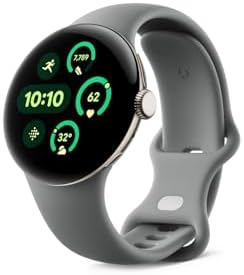
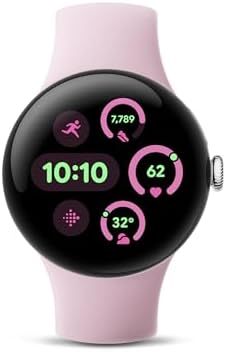
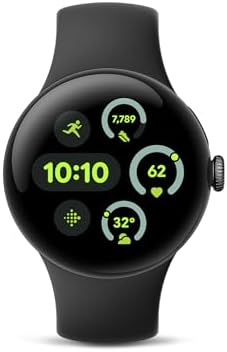
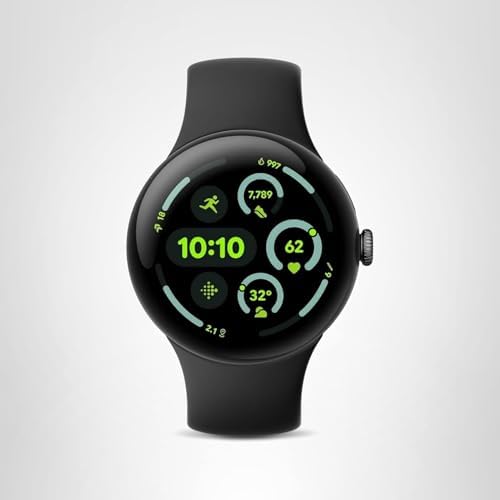
The Pixel Watch 3 keeps the pebble-like domed glass that defined the first Pixel Watch, now in a 100\% recycled aluminum case. Google states that the 45mm variant weighs roughly 37 grams without the band, which sits slightly heavier than the smaller 41mm at around 31 grams. That dome shape tends to sit higher off the wrist than a flat-crystal design, and buyers with smaller wrists often find the 41mm easier to live with day after day.
Samsung moves the Galaxy Watch8 from the flat slab of the Watch6 and Watch7 toward what Samsung describes as a cushion shape, with the frame gently rolling into the bezel. According to Samsung, the Watch8 is 11\% thinner than the Galaxy Watch7, which makes the wearability difference more noticeable at this size than at 44mm. The Graphite finish reads closer to a brushed dark grey than a raw black, so band swaps feel less jarring than with the previous generation.
Which strap matters more than which case. Both watches use a proprietary lug, so aftermarket bands sit flat only on models cut for that connector. Leather and fabric bands on the Pixel tend to expose the dome gap on top of the wrist, while the Galaxy Watch8’s thinner profile reduces that visual break. Neither ship band is outstanding, but third-party quick-release options have caught up on both sides.
Displays, Processors, and Daily Speed
The Pixel Watch 3 uses what Google calls Actua, a 2,000-nit LTPO AMOLED display. Peak brightness matters less for wrist-reading than sustained mid-level brightness, and the LTPO backplane matters more. It lets the Pixel drop to 1Hz refresh rates on the always-on display, which Google reports also enables a token-based mode to keep the AOD at roughly 1Hz when power is tight. In practice that keeps the Pixel from burning the top ten percent of battery for a static clock.
The Galaxy Watch8 runs Super AMOLED panels on the same Exynos W1000 5-core processor used in the Watch Ultra, which sits ahead of the Snapdragon W5 Gen 1 in the Pixel on app cold-start times. Where this becomes visible is in wearable-heavy use: maps rendering, quick replies typed on a keyboard, and Samsung Health’s live workout graphs update feel smoother on the Galaxy. Google counters with its own tuned Wear OS build, but the app load advantage lands on Samsung’s side.
Both watches now support offline Google Maps in Wear OS, which changes how these compare for running and cycling. Offline routing used to be the argument in favor of Garmin’s entry watches; that is no longer the case for these two.
Health Sensors and What Each Platform Actually Measures
Samsung fits the Galaxy Watch8 with its BioActive sensor array, which combines optical heart rate, electrical heart rate for ECG, and a bioelectrical impedance sensor for body composition. Samsung’s cEDA sensor, short for cutaneous electrodermal activity, tracks electrodermal response as a partial read on stress throughout the day. That is the clearest hardware-based differentiator, because it measures something the Pixel Watch 3 does not.
The Pixel Watch 3 routes most health and fitness tracking through Fitbit, and Google now positions the watch as the natural upgrade path for former Fitbit Sense and Fitbit Versa owners. Google secured FDA authorization for sleep apnea detection and an irregular rhythm notification feature that both devices support, but the sleep scoring and coaching tone remains a Fitbit signature. The Pixel’s 41mm sizing also uses the same strap system as the previous generation, so switching from an older Pixel is close to seamless.
Where the Pixel Watch 3 genuinely leads is Fitbit Premium integration. Samsung Health is a strong barebones platform, but its sleep coaching uses a slightly more clinical tone, and its paywall handling differs from Fitbit’s. Which one feels better tracking sleep is a real buying criterion, though not one reviewers can reduce to a spec sheet comparison.
Battery Life, Charging, and Workout Duration
Google lists the Pixel Watch 3’s always-on display endurance at up to 24 hours. Switch to a workout-heavy mode with GPS constantly active and that figure drops, which matters for anyone running long distance or taking the watch on multi-hour cycling routes. The 41mm model hits roughly 420mAh capacities, and Google’s fast charge restores a meaningful amount of battery in about 30 minutes. Wireless charging docks use a pogo-pin connection on the puck, so third-party chargers vary in fit.
Samsung’s Galaxy Watch8 delivers about the same pattern at a slightly larger margin: up to 30 hours with AOD enabled and up to 40 hours with AOD off. Those numbers still fall short of what fitness-first watches offer in multi-day GPS, but they are honest for a Wear OS watch. Magnetic wireless charging on Samsung’s side has more third-party compatibility, so the Google accessory ecosystem remains a more closed loop than Samsung’s.
Software, Ecosystem, and Which Phone You Already Own
Wear OS and One UI Watch now diverge more than they did two generations ago. Google builds the Pixel experience on stock Wear OS with tighter Google Assistant voice handling, faster Google Wallet access, and Google Fast Pair for headphones and earbuds. Samsung’s watch runs One UI Watch 8 on top of Wear OS 6, with a deeper set of AI features tied to Galaxy phones, including now-briefing summaries pulled from the phone.
Phone pairing is where the decision is easiest. iOS users have a separate stack entirely, and the Android section is what most readers are weighing. Pairing the Pixel Watch 3 to a non-Pixel Android phone still works, but some fast-pair and Find Hub features are reduced. Pairing the Samsung Galaxy Watch 8 to a non-Samsung Android phone works well, but AI features built on Galaxy AI stay locked inside a Samsung phone.
Who Should Buy Which
If you already own a Fitbit or came from a Fitbit Sense, the Pixel Watch 3 is the natural step, because Fitbit Premium, sleep scoring, and Fitbit-specific features stay intact. Buyers who value the 2,000-nit Actua screen for outdoor readability, the fully recycled aluminum build, and the offline Maps-in-Wear-OS setup should look at the 45mm Wi-Fi variant first, which is available as the Google Pixel Watch 3 (45mm) Latest Black Aluminum 45mm Wi-Fi for anyone ready to commit to the larger case.
Owners of a Galaxy S-series phone, especially those cycling through Samsung Health heavily and using Samsung Wallet at every till, get more out of the Galaxy Watch8. The 40mm Bluetooth variant covers most wrists and keeps the full AI stack, though the 44mm exists for buyers who want the larger screen without moving up to the Galaxy Watch Ultra. For a closer look at what the lineup offers, the Galaxy Watch8 lineup spans both sizes and both connectivity options, and the Samsung Galaxy Watch 8 (2025) 40mm Graphite Bluetooth is the most direct entry point for the smaller case.
Those wanting military-grade GPS and 100-hour battery should look elsewhere, but for buyers investing in either health platform long-term, both watches make their strongest case inside their own ecosystem. The company decision and the phone decision travel together in 2025 far more than they did three years ago, and the smartest purchase is usually the one that matches the phone already in your pocket.