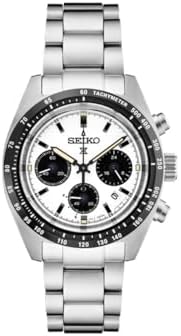
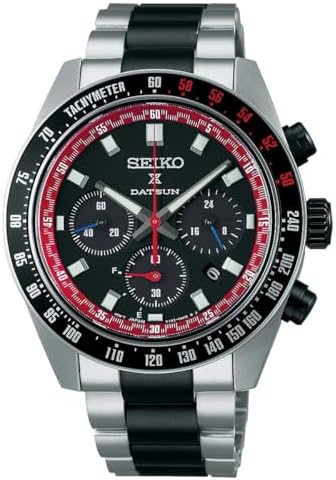
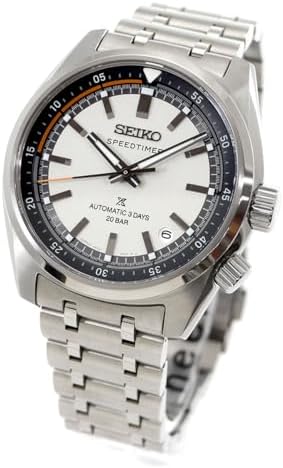
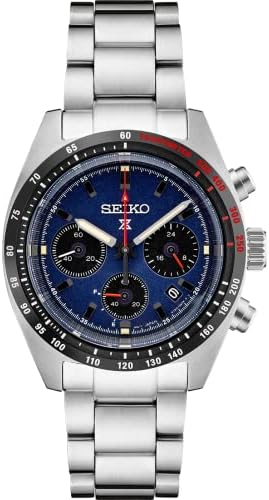
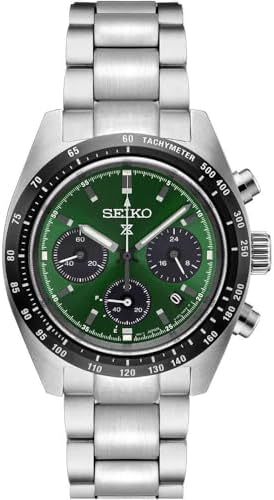
The Seiko Prospex Speedtimer carries a stopwatch-first architecture that separates it from the dress-leaning chronographs crowding the sub-USD 1,000 bracket. Its dial prioritizes elapsed-time legibility over decorative flourishes, and the solar caliber underneath removes the battery service interval that defines most quartz chronographs. The line exists because Seiko chose to modernize a 1969 motorsport story rather than embalm it.
The family traces to the Caliber 6139, which Seiko documents as the first automatic chronograph to pair a column wheel with a vertical clutch. That mechanism mattered because the vertical clutch allowed the chronograph to run continuously without sapping amplitude, a principle still valued in mechanical chronographs today. The current generation translates that racing intent into a solar platform, and the flagship expression of that idea is the SEIKO SSC947 Prospex Speedtimer Men’s Watch, which packages the lineage into a wearable daily instrument.
How the Solar Chronograph Caliber Works
The SSC813 reference runs on Caliber V192, a solar movement that Seiko rates at plus or minus 15 seconds per month. A fully charged cell sustains roughly six months of operation, which means the watch tolerates weeks in a box between wears as long as it sees light beforehand. That specification reframes the chronograph as a grab-and-go tool rather than an object requiring winding rituals or battery swaps.
The register layout follows measurement logic rather than symmetry for its own sake. A 60-minute chronograph counter handles elapsed timing, a 24-hour sub-dial supports a second time zone or day-night reading, and a power reserve indicator removes guesswork about remaining charge. The small seconds hand replaces the central sweep many wearers expect, a deliberate choice that keeps the chronograph seconds hand free for timing duty.
- Caliber: V192 solar quartz
- Precision: plus or minus 15 seconds per month
- Power reserve: approximately six months when fully charged
- Chronograph: 60-minute counter with 24-hour sub-dial
- Case diameter: 39mm on the SSC813 reference
Case Proportions and the 1969 Design Vocabulary
At 39mm across, the SSC813 sits in a proportion band that suits a wide range of wrists without the slab-sided bulk that defined chronographs through the 2010s. The dimension echoes the original Speedtimer’s wrist-calibrated footprint, and the result reads as a precision instrument rather than a display piece. Lugs are shaped to let the case sit close to the arm, which matters for a watch intended to be worn while driving, working, or timing intervals.
The motorsport connection is visual rather than mechanically continuous. The column wheel and vertical clutch of the 6139 remain a documented engineering milestone, and the modern line carries that legacy through dial architecture, pusher placement, and a case profile that prioritizes readability at speed. Buyers who want to explore how the Speedtimer fits beside field and diver models can survey Seiko’s broader Prospex range, where the motorsport branch sits alongside tool watches built to different specifications.
Dial Legibility and Everyday Readability
Dial discipline is where affordable chronographs usually stumble, and the Speedtimer avoids the usual failure modes. Registers are positioned so they do not collide with the hour markers, hands are scaled to the case rather than borrowed from a larger reference, and applied indices create a clear hierarchy. The eye finds the time first and the chronograph counters second, which is the correct order for a watch meant to be read at a glance.
The 24-hour sub-dial earns its place for frequent travelers who want a second time zone without a GMT hand, and the power reserve indicator turns an invisible battery state into visible information. Neither feature feels like filler because each serves a measurement or planning function. That functional honesty is the through-line connecting the Speedtimer to the broader Prospex ethos of legibility and shock resistance.
Wearers who want a more assertive presence within the same family can weigh the SEIKO Prospex Samurai Automatic Red Dial Men’s Watch, which swaps the Speedtimer’s instrument sobriety for an angular case and a saturated dial. The contrast clarifies the decision: the Speedtimer is built around timing precision, while the Samurai leans on dive-watch presence and an automatic movement.
Ownership Rhythm Without Battery Anxiety
Solar timekeeping changes how a chronograph fits into a rotation. With six months of reserve when fully charged, the V192 survives storage in a watch box provided it gets light before being worn again. A standard quartz chronograph drains whether worn or not, which makes the solar platform a practical advantage for collectors who cannot wear every watch daily and do not want to track battery replacement dates.
Recharging is undemanding. A few hours of daylight on a windowsill or under a desk lamp maintains charge, and the on-dial indicator makes the state transparent rather than mysterious. The absence of a battery hatch and its associated service interval is a quiet cost-of-ownership benefit that compounds over years of use, particularly for a watch likely to be kept rather than flipped.
The chronograph function itself honors the racing brief. The 60-minute counter and pusher layout time laps, cooking intervals, or meeting segments, and the small seconds arrangement keeps the dial from feeling overcrowded. For buyers who want the look of a racing chrono without the winding ritual of a mechanical movement, the solar platform delivers the aesthetic with far less day-to-day maintenance.
Where the Speedtimer Sits in the Prospex Line
Prospex spans dive watches, field watches, and motorsport chronographs, so the Speedtimer competes for wrist time with siblings built to different standards. Choosing between a solar chronograph and an automatic diver is really choosing between precision measurement and certified water resistance, and the Speedtimer sits firmly on the measurement side. The shared Prospex standards around legibility and build quality make those comparisons meaningful rather than arbitrary.
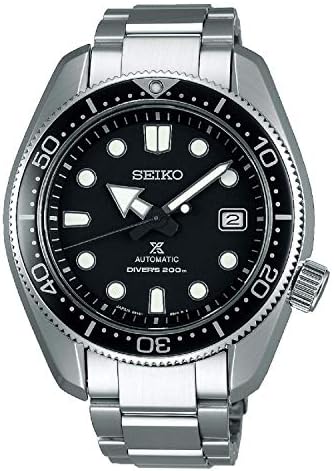
The automatic branch offers a different ownership experience for those who want a mainspring and a sweeping seconds hand. the SEIKO SRPE93 Prospex Men’s Watch Black 45mm Stainless Steel represents that path, pairing a rotating bezel and automatic movement with the same family DNA. Neither approach is superior; they answer different questions about how a wearer wants to interact with a watch.
The Speedtimer’s competitive edge is the authenticity of its technical ancestry rather than the shimmer of a luxury finish. The 1969 Caliber 6139 is a documented milestone, and the decision to pursue solar precision instead of resting on mechanical nostalgia is a defensible evolution of that story. Buyers who value provenance without wanting to service a movement every few years will find the balance appealing.
What to Weigh Before Buying a Speedtimer
Judging the Speedtimer comes down to what a wearer wants from a chronograph. If the goal is a versatile solar watch with motorsport design language, a 39mm case, and a dial that respects legibility, the range delivers with minimal compromise. The V192’s plus or minus 15 seconds per month precision and six-month reserve are strong figures for the price class, and the historical grounding gives the watch a narrative most affordable chronographs lack.
Those wanting a more mechanical relationship with their watch might prefer the automatic Prospex models, where winding action and sweeping seconds tell their own story. But the Speedtimer’s real strength is that it removes friction from ownership while preserving the visual and functional language of a racing chronograph. That combination, backed by a documented lineage, is why the line continues to attract both first-time chronograph buyers and seasoned collectors seeking a low-maintenance daily companion.