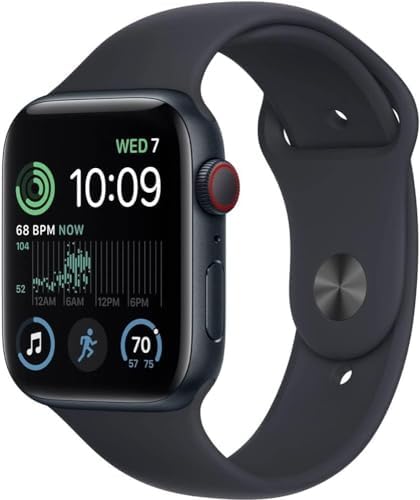
The Apple Watch SE 2nd Generation and Series 11 occupy two very different positions in Apple’s smartwatch hierarchy. One strips the formula back to the essentials and keeps the price within reach; the other layers on an always-on display, a brighter panel, and a broader set of health sensors. The gap between them is not just about cost, it is about which capabilities a wearer will actually use day after day.
This guide puts the two models side by side so the decision becomes clearer. It is written as a practical reference for anyone weighing a first smartwatch against an upgrade, and it is worth bookmarking for a second read before committing to a purchase.
| Feature & Selling Point | Apple Watch SE 2nd Gen | Apple Watch Series 11 |
|---|---|---|
| Display Type | Retina LTPO OLED, no always-on mode | Always-On Retina display |
| Peak Brightness | 1,000 nits | Up to 2,000 nits |
| Case Sizes | 40mm and 44mm | 42mm and 46mm |
| Case Materials | Aluminum | Aluminum or titanium |
| Processor | S8 SiP | S10 SiP |
| Battery Life | Up to 18 hours | Up to 24 hours |
| Charging | Standard magnetic charging | Fast charging support |
| Health Sensors | Heart rate with high and low alerts | ECG and hypertension notifications |
| Sleep Tracking | Basic sleep stages | Sleep score with detailed breakdown |
| Workout Features | Standard fitness tracking | Workout Buddy with AI |
| Water Resistance | 50m (WR50) | 50m (WR50) |
| Connectivity | GPS, Bluetooth 5.3, Wi-Fi | GPS, Bluetooth 5.3, Wi-Fi 4 |
| Target User | First-time buyers and budget-conscious shoppers | Health-focused and feature-demanding users |
| Positioning | Entry-level value pick | Flagship health companion |
The table makes the core trade-offs visible. The Series 11 doubles peak brightness, adds an always-on display, extends rated battery life to 24 hours, and introduces ECG and hypertension notifications. The SE 2nd Generation counters with a lower entry price and a lighter, more compact footprint. For most shoppers, two or three of those differences will settle the decision.
Display and Readability in Everyday Conditions
The first difference a wearer notices is the screen. The Series 11 carries an always-on Retina display that reaches up to 2,000 nits, keeping the time and notifications legible under direct sunlight without a wrist raise. The SE 2nd Generation uses a standard Retina LTPO OLED panel peaking at 1,000 nits, and the screen goes dark once the wrist drops.
For anyone who checks messages during meetings, monitors pace mid-run, or simply prefers a screen that stays visible, the brightness gap is tangible. Outdoors on a bright afternoon, that difference translates into less squinting and faster readability. Indoors, the always-on mode is more about convenience than necessity, but it is the kind of feature that becomes hard to give up once adopted.
Case Design and Wrist Presence
The SE 2nd Generation is offered in 40mm and 44mm aluminum cases, a sizing scheme familiar across several Apple Watch generations. The Series 11 moves to 42mm and 46mm cases with aluminum or titanium options. Apple’s tech specs list the 46mm Series 11 at 37.8 grams in aluminum with GPS and a case depth of 9.7mm.
The shift to larger case sizes gives the Series 11 more wrist presence, which suits users who want a bolder look or need the extra screen area for reading notifications and workout metrics. Buyers who prefer a more compact profile or have smaller wrists may find the 40mm SE 2nd Generation, including Apple Watch SE 2nd Gen (GPS, 40mm) Starlight, easier to wear through a full day. The Starlight finish pairs with a wide range of bands, from fluoroelastomer sport straps to woven nylon, giving the smaller case a versatile, understated character.
Performance and Daily Responsiveness
Under the hood, the SE 2nd Generation runs on the S8 SiP while the Series 11 is powered by the S10 SiP. In daily use, both chips handle navigation, app launches, and workout tracking smoothly. The S10 delivers slightly snappier performance and supports newer on-device features tied to Apple Intelligence, including Workout Buddy.
The performance gap is unlikely to be the deciding factor for most buyers, but it matters over a longer ownership window. Newer silicon tends to receive software features for more years, and the Series 11’s S10 chip positions it closer to the front of Apple’s update queue. For shoppers planning to keep a watch for four or five years, that longevity carries real value.
Health Monitoring Capabilities
This is where the two watches diverge most sharply. The SE 2nd Generation covers heart rate monitoring with high and low heart rate notifications, plus basic sleep stage tracking. The Series 11 expands into ECG readings, hypertension notifications, and a sleep score feature that breaks down sleep quality into measurable components. Apple states that the Series 11 includes hypertension notifications and sleep score as headline health features.
For users with a family history of cardiovascular concerns, or anyone who wants a more complete picture of nightly recovery, the additional sensors on the Series 11 provide data the SE cannot capture. Buyers who only need step counts, activity rings, and basic heart rate trends will find the SE’s sensor suite adequate for their routine.
Battery Life and Charging Convenience
Battery life is a practical divider. Apple rates the SE 2nd Generation at up to 18 hours, while the Series 11 stretches to 24 hours and supports faster charging. That six-hour difference can be the gap between charging every night and occasionally skipping a charge.
Fast charging also reduces downtime when topping up before bed or between workouts. For users who wear their watch overnight for sleep tracking, the Series 11’s longer runtime and quicker recharge cycle make the routine less disruptive. The SE 2nd Generation still covers a full day of typical use, but heavier users will find themselves reaching for the charger more often.
Connectivity and Everyday Features
Both watches support GPS, Bluetooth 5.3, and Wi-Fi connectivity for calls, messages, streaming, and contactless payments. The Series 11 adds support for both 2.4GHz and 5GHz Wi-Fi networks and Wi-Fi 4 (802.11n), which can improve connection stability in congested network environments.
Water resistance remains identical at 50 meters on both models, making either suitable for swimming and showering. The functional overlap here means connectivity is rarely the deciding factor, though the Series 11 edges ahead for users who rely heavily on Wi-Fi calling or home network integration.
Which One Fits Your Needs
The choice between Apple Watch Series 11 [GPS 46mm] Jet Black Aluminum and the SE 2nd Generation comes down to priorities. Buyers who want always-on visibility, ECG and hypertension monitoring, longer battery life, and a larger display will find those features justify the step up. The sleep score capabilities also add value for anyone tracking recovery seriously.
For first-time smartwatch buyers, gift shoppers, or anyone who mainly wants notifications, activity rings, and basic heart rate data, the SE 2nd Generation delivers core Apple Watch functionality at a lower entry point. It covers the fundamentals well and remains a sensible choice for younger users or those testing whether a smartwatch fits their routine.
Both watches share the same app ecosystem, watch faces, and integration with iPhone, so the decision rests on hardware features rather than software experience. Matching the watch to actual daily habits, not to a spec sheet alone, is the most reliable way to avoid paying for capabilities that rarely get used. the Apple brand’s approach has always aimed to offer a model for nearly every budget and priority, and the SE 2nd Generation and Series 11 represent two of the clearest expressions of that strategy. Choosing between them is less about which is better and more about which one disappears into daily life without a second thought.