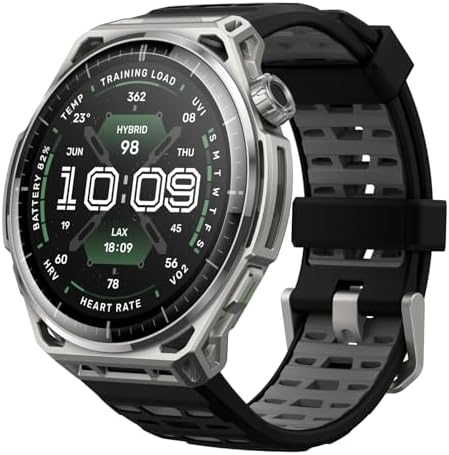
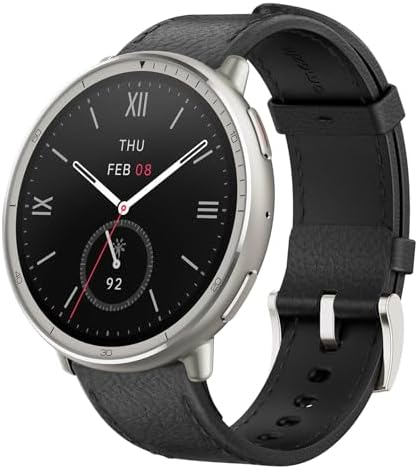
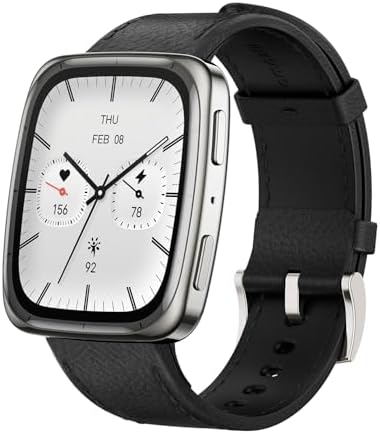
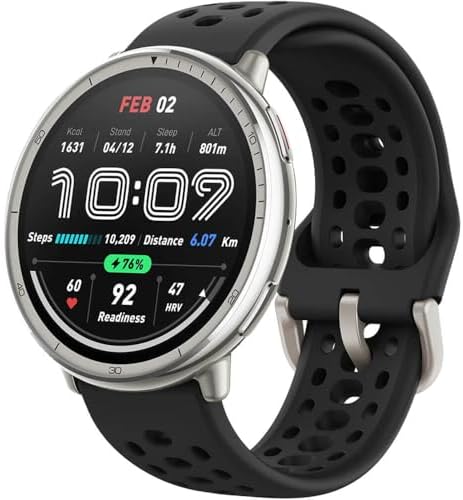
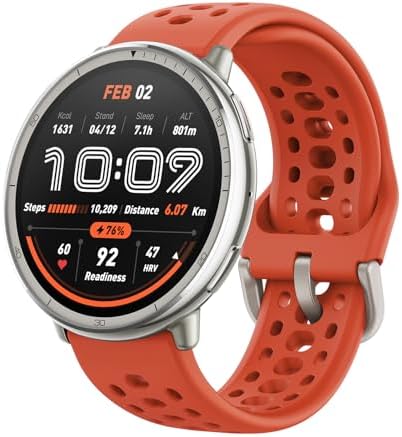
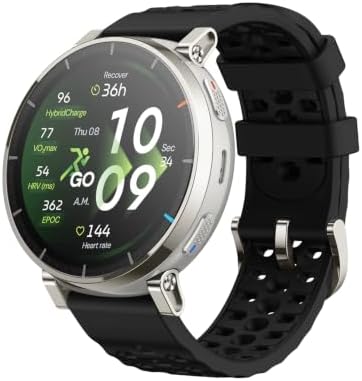
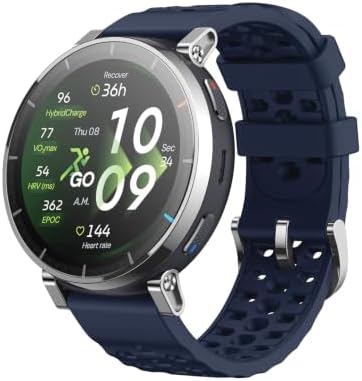
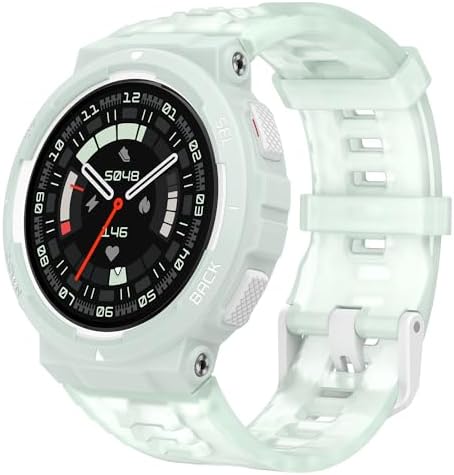
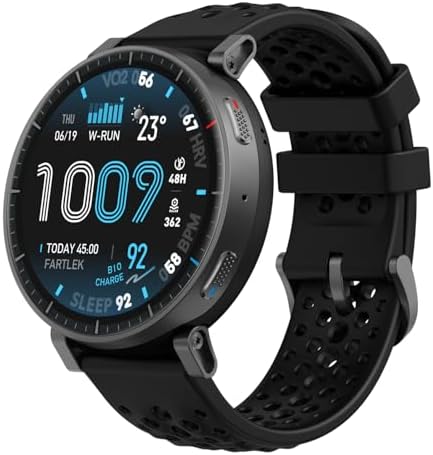
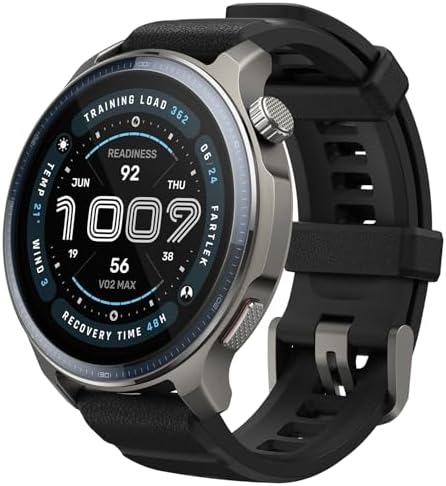
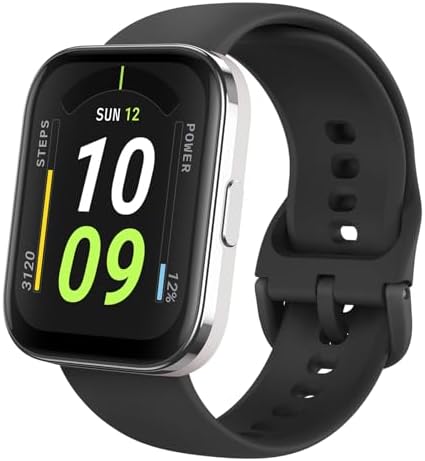
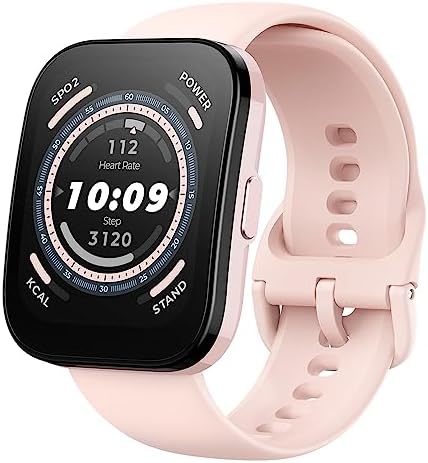
The Amazfit Balance 3 and the Amazfit Active 3 Premium sit on the same value curve but solve different problems. One carries a 1.5-inch AMOLED panel, a stainless steel case, and a rated 21-day typical battery life. The other pairs a compact 1.32-inch AMOLED screen rated up to 3,000 nits of peak brightness with a 45mm four-button case and a 12-day typical rating. Neither requires a subscription for workout or recovery data, which keeps the multi-year cost of ownership low.
| Decision Factor | Amazfit Balance 3 | Amazfit Active 3 Premium |
|---|---|---|
| Display Size | 1.5-inch AMOLED | 1.32-inch AMOLED |
| Peak Brightness | Standard AMOLED output | Up to 3,000 nits |
| Glass and Case | Sapphire glass, stainless steel case | Sapphire glass |
| Case Size and Controls | 48mm, crown layout | 45mm, four-button layout |
| Strap System | 22mm quick release | Quick release, compact sizing |
| Battery Capacity | 658 mAh | 365 mAh rated |
| Typical Battery Life | Up to 21 days | Up to 12 days |
| GPS Battery Life | Up to 41 hours in accuracy GPS mode | Lower runtime on GNSS tracking |
| GPS Implementation | Dual-band GPS | GPS with proactive routing alerts |
| Onboard Storage | 64GB | 4GB internal storage |
| Maps and Navigation | Offline maps support | Offline maps, turn-by-turn routing |
| Sport Modes | 180 sports modes | 170 workout modes |
| Built-In Flashlight | Yes | Not part of the feature set |
| Water Resistance | Water resistant, swim-ready | Water resistant, swim-ready |
| Best Suited To | Ultrarunners, hikers, offline-map users | Entry-level runners wanting a compact watch |
| Subscription Cost for Training Data | No additional subscription | No additional subscription |
The table exposes one decisive split. If your training week regularly runs past ten hours of tracked activity, the Balance 3’s 41-hour accuracy GPS mode removes charging from trip planning. If wrist presence matters more than endurance, the Active 3 Premium’s 45mm four-button case with up to 3,000 nits of brightness is the easier everyday companion.
Two Design Briefs, One Brand
Amazfit has not made one of these a downgraded version of the other. The Balance 3 acts as a tool watch first: stainless steel case, sapphire crystal, integrated flashlight, and a display large enough to hold offline map tiles without squinting. The Active 3 Premium takes the opposite path. Its four-button control scheme, compact 45mm footprint, and 4GB storage describe a watch aimed at runners who want physical buttons they can locate mid-stride without looking down.
That difference in philosophy, rather than any single specification, should drive the purchase. A 48mm steel case carries real wrist presence; a 45mm case with dedicated buttons carries real glove-friendly usability. Neither is automatically better, but on a long run in cold weather, only one keeps working when you are not looking at the screen.
Battery Endurance and What It Actually Buys You
Amazfit rates the Balance 3 at up to 21 days of typical use from a 658 mAh cell, and up to 41 hours in accuracy GPS mode. Those numbers change the practical ownership experience in ways a spec sheet does not spell out. A watch that lasts three weeks between charges is one you can pack without a cable for a short trip. A watch that holds GPS lock for the better part of two days covers a 100-kilometer ultramarathon with battery to spare.
The Active 3 Premium works from a 365 mAh rated cell and is listed at up to 12 days of typical use. That is not a limitation so much as a trade: the smaller capacity is part of why the watch stays compact. For someone running 30 to 50 minutes four times a week and wearing the watch to the office in between, a 12-day cycle still means charging roughly twice a month. For someone logging back-to-back long days in the mountains, it does not.
- Balance 3: 658 mAh, 21 days typical, up to 41 hours GPS mode
- Active 3 Premium: 365 mAh rated, 12 days typical, lower GNSS runtime
The honest framing is that battery life is the single most reliable predictor of whether a watch feels like a tool or a chore. Amazfit has given buyers a clear choice here rather than splitting the difference.
GPS, Navigation, and the Two Map Use Cases
The Balance 3 uses dual-band GPS, a system that improves positional reliability in the places where single-band tracking tends to waver: dense city streets, canyon walls, tall tree cover. Paired with offline maps, it supports a workflow where you load a route in advance and follow it without a phone signal. Amazfit’s own product updates for the Active 3 Premium describe smarter routing with proactive alerts and turn-by-turn guidance, so the smaller watch is not left out of navigation entirely.
The distinction is one of degree. Both watches can guide a route and both store maps offline. The Balance 3’s dual-band receiver and 41-hour tracking window make it the reference tool for off-grid days. The Active 3 Premium’s navigation layer is tuned for urban and suburban routes where you are never truly without cellular coverage for long and charging access is not a concern.
Owners who race, hike, or ride in areas with poor overhead visibility should weight dual-band GPS heavily. Casual users who follow canal paths and park loops will rarely notice the difference.
Display, Materials, and Building a Watch You Keep
Both watches use sapphire glass, which is a meaningful detail at this price level. Sapphire resists the everyday scraping that dulls mineral crystal, so the watch still looks new after a year on the wrist. The Balance 3 adds a stainless steel case and a 22mm quick-release strap system, easing band changes and giving the watch a denser, higher-set feel.
The Active 3 Premium’s headline display number is brightness: up to 3,000 nits of peak output from a 1.32-inch AMOLED panel. Sunlight readability is the practical effect, and it matters most during the exact window when runners check pace and heart rate zones. The Balance 3’s 1.5-inch panel is the larger canvas, and a larger AMOLED makes on-watch map tiles easier to read at a glance without lifting the wrist off the bar.
Storage tells a similar story. The Balance 3 carries 64GB, plenty for offline map regions and music. The Active 3 Premium offers 4GB, enough for maps and a few playlists. Neither watch requires a subscription for workout and recovery data, so the value proposition holds over years rather than months.
Sport Modes, Recovery, and Daily Tracking
Amazfit lists 180 sports modes for the Balance 3 and 170 workout modes for the Active 3 Premium, and the gap between those numbers is less meaningful than where the data goes. Both watches track workout and recovery metrics, and Amazfit’s positioning for the Active 3 Premium specifically targets entry-level runners who want their daily movement translated into meaningful progress.
Read the numbers this way: 180 modes is a signal about breadth, not about priority. Most owners will use a handful. What actually shapes the daily experience is the recovery and readiness layer, the morning snapshot of sleep quality and training load that tells you whether to push or back off. Both watches deliver that without turning it into a paid tier, which is where several competing platforms differ. Buyers who want to stay inside the full Amazfit brand’s ecosystem on this point alone have a defensible reason to choose either model over subscription-based rivals.
Straps, Fit, and the Sizing Decision
A 48mm case and a 45mm case wear very differently, and this is the spec buyers most often get wrong when ordering online. The Amazfit Balance 3 Smart Watch 1.5″ 48mm GPS opens the strap to a wide aftermarket through its 22mm quick-release lugs, from nylon to silicone to leather, and the stainless steel case gives heavier straps something solid to mount to. The Amazfit Active 3 Smart Watch 1.32″ 45mm GPS fits under a sleeve, and its four-button layout keeps control accessible without rotating the wrist to view a digital crown.
Lug-to-lug length, not diameter, decides comfort for most people. Anyone between sizes should bias toward the 45mm option first and step up to 48mm only after confirming they want the extra battery and display real estate.
Choosing Between the Balance 3 and the Active 3 Premium
Match the watch to the training log. The Balance 3 is the right call for runners training toward longer distances, hikers who load GPX routes, and travelers who prefer not to pack a charger for every trip. Its dual-band GPS, 41-hour tracking window, and built-in flashlight are features that only matter on longer outings, and there they matter a great deal.
The Active 3 Premium fits the runner who logs consistent but moderate mileage, values a compact case, and wants the brightest panel Amazfit offers in this range. It covers daily training, sleep, recovery, and offline routing without asking for wrist space the wearer does not want to give.
Both are watches without a recurring subscription attached, which shifts the calculation away from monthly fees and back toward hardware fit. Neither path is the compromise option. One is built for the long outing, the other for the long habit, and Amazfit has left the decision exactly where it belongs.