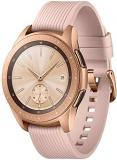
The Samsung Galaxy Watch7 and the Google Pixel Watch 3 both run Wear OS 5, yet they arrive at the wrist from opposite directions. Samsung builds a sensor lab around bioelectrical impedance analysis and military-grade shock testing. Google builds a clean platform around Fitbit’s recovery scoring and a domed Actua display. This guide is a buying reference worth keeping, not a spec dump, because the right watch is the one that matches how you actually sleep, train, and carry a phone.
| Feature & Selling Point | Samsung Galaxy Watch7 | Google Pixel Watch 3 |
|---|---|---|
| Available Case Sizes | 40mm and 44mm | 41mm and 45mm |
| Display Type | Super AMOLED, always-on | Actua LTPO AMOLED, always-on |
| Peak Brightness | 2,000 nits | 2,000 nits |
| Glass Protection | Sapphire crystal | Custom 3D Gorilla Glass 5 |
| Processor | Exynos W1000 (5-core, 3nm) | Qualcomm Snapdragon W5 Gen 1 |
| Operating System | Wear OS 5 with One UI Watch | Wear OS 5 with Pixel interface |
| Health Sensors | BioActive (heart rate, ECG, BIA), temperature | Heart rate, ECG, skin temperature, SpO2 |
| Sleep Tracking Platform | Samsung Health with Sleep Coaching | Fitbit Premium with Sleep Score and readiness metrics |
| Battery Capacity | 300 mAh (40mm) / 425 mAh (44mm) | 306 mAh (41mm) / 420 mAh (45mm) |
| Wireless Charging | WPC wireless power share and pad charging | Magnetic pin charging with fast charging |
| Water Resistance | 5ATM + IP68, MIL-STD-810H | 5ATM + IP68, no military rating |
| Durability Rating | 10ATM-style shock resistance and MIL-STD-810H | Standard activity protection |
| Software Support Window | 4 generations of Wear OS upgrades | 3 years of Wear OS upgrades plus Pixel feature drops |
| Phone Compatibility | Android only, best with Galaxy phones | Android only, works smoothly with any brand |
| Key Selling Point | Advanced BioActive sensors and Watch Ultra design language | Clean Wear OS interface and Fitbit health data |
| Best Use Case | Galaxy phone owners tracking body composition and sleep | Mixed-Android households wanting curated fitness guidance |
The table makes one thing clear quickly: Samsung spends its margin on sensor science and durability, while Google spends theirs on Fitbit’s software polish, faster charging, and the cleaner Wear OS experience. Battery cells land within about 10 mAh of each other at every size, so the endurance difference usually traces back to software and the cellular modem rather than raw capacity.
The most consequential differences for most buyers boil down to two questions. First, does the target phone come from Samsung, or is it a Pixel, Nothing, OnePlus, or something else? Samsung Health features like body composition analysis and irregular heart rhythm notifications are tuned for Samsung’s own hardware, and they feel tighter on a Galaxy phone. The product line behind the Samsung brand’s wearables is built around this tighter phone pairing.
Second, how much does the wrist need to be squeezed for data between charges? The 44mm Watch7 carries a 425 mAh cell, and the 45mm Pixel Watch 3 matches it almost exactly at 420 mAh. Real battery life varies more by how many health sensors are running continuously than by the headline capacity, and Google’s charging is a bit faster with a magnetic pin, so Pixel Watch 3 owners can top up during a shower while Watch7 owners tend to charge overnight.
Sensor Depth: Body Composition versus Fitbit’s Sleep Platform
Samsung’s BioActive sensor cluster on the Galaxy Watch7 packs an optical heart rate array, electrical ECG, and bioelectrical impedance analysis BIA. That last one is the rare feature no current Pixel Watch offers: it estimates skeletal muscle mass, body fat percentage, and body water by passing a tiny current between electrodes. The signal is small enough to be safe, and the estimate correlates well enough with scale-based readings for trend tracking, though the absolute accuracy still trails a clinical DEXA scan.
Google’s pitch leans on Fitbit instead. The Pixel Watch 3 inherits Fitbit’s Sleep Score, Daily Readiness Score, and Active Zone Minutes, all driven by the heart rate sensor, SpO2, and skin-temperature variation. For those on premium, Fitbit provides deeper recovery guidance and guided workouts. For Samsung users, the equivalent experience is Samsung Health with its Sleep Coaching feature, which generates a weekly animal-avatar sleep report that some find gimmicky but useful for trend awareness.
Neither system is definitive for medical decisions, and both carry similar disclaimers: they are wellness tools, not diagnostic devices. The question is whether the user cares more about body composition snapshots or about dedicated recovery scoring. Users chasing body-fat trend lines tend to prefer the Watch7; users chasing readiness scores to fine-tune training days tend to prefer the Pixel 3.
Brightness and Readability in Direct Sunlight
Both watches hit roughly 2,000 nits peak brightness, which is the number that really matters on a wrist. A 2,000-nit OLED panel stays legible in midday sun when the auto-brightness system spikes, and both are currently near the ceiling of what Wear OS hardware delivers.
Where they diverge is display architecture. The Pixel Watch 3’s Actua display steps down to 1 nit in what Google calls a low-light refresh, useful for bedside reading without burning out the eyes. The Galaxy Watch7 stays brighter longer across the mid-range of ambient conditions, so indoor-to-outdoor transitions feel less like a brightness concert. Neither watch will surprise the user with a washed-out screen.
Ecosystem Fit: Samsung’s One UI Watch versus Pixel’s Clean Wear OS
The Watch7 uses Wear OS 5 with Samsung’s One UI Watch layer, which folds in Bixby, Samsung Wallet, and Galaxy AI assistants. Pair with a Galaxy phone and watch-to-phone syncing is near-instant: the phone can relay messages, track fall detection, and share Wi-Fi credentials automatically. Pair with a non-Samsung Android and the tightest features still work but feel slightly shoehorned.
The Pixel Watch 3 rolls with a cleaner Wear OS 5 that Google leaves mostly free of vendor customizations. It pairs equally comfortably with Pixel, Samsung, OnePlus, or Motorola phones, and Pixel’s feature drops bring exclusive additions like Recorder syncing on the wrist. For anyone who moves between phone brands or is unhappy being locked in, the approach taken by the Google brand’s platform team is a real advantage: the operating system serves the user rather than the rest of the consumer electronics lineup.
Construction and Durability Differences
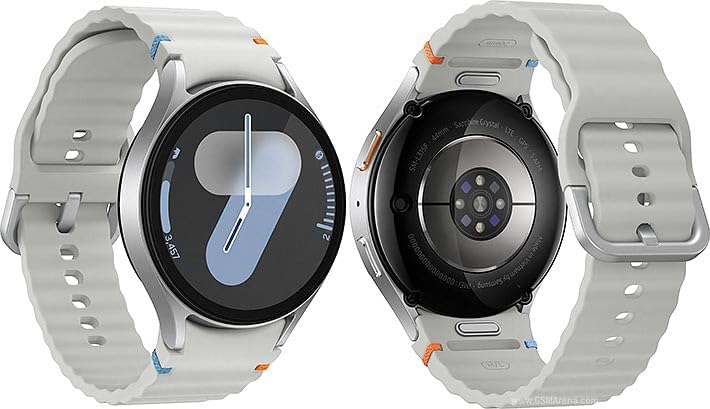
The Watch7 uses Samsung’s own Super AMOLED layered under sapphire crystal, with an aluminum case rated for 5ATM and IP68, and it also passes the MIL-STD-810H battery of shock, vibration, and extreme-temperature tests. That military pass is not a marketing badge; it requires the unit to survive accelerations and thermal swings far beyond what running or swimming produce. Trekking and climbing users who bang a wrist on rock regularly tend to notice that certification more than spec sheets suggest.
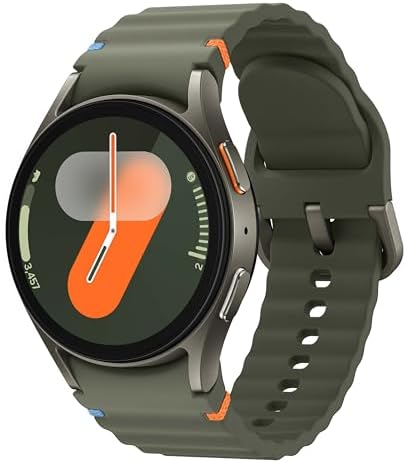
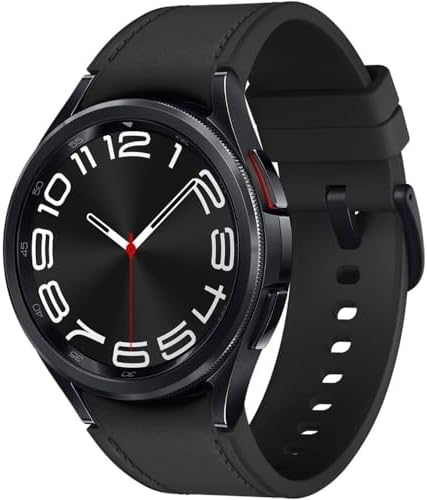
What that ruggedness looks like in person is captured by the Samsung Galaxy Watch7 40mm L300N GPS Green, a compact 40mm aluminum case with a sapphire front and armor-friendly lug design, all in a colorway that pairs with the sort of smartwatch straps casual users already own. The Pixel Watch 3 uses a custom 3D Gorilla Glass 5 over a domed case that looks softer but handles the same active lifestyle.
For buyers who care about long-run durability, Samsung offers an additional cushion on this generation: the case and glass assembly on Watch7 models remains serviceable, and the band interface takes standard 20mm straps on the 40mm and 44mm versions. Options for replacement straps are plentiful, and the standard band on the Google Pixel Watch 3 (45mm) uses Google’s proprietary lug system, which is elegant but narrows the third-party accessory market.
That accessory lock-in is a long-term cost most buyers forget to budget for. Google’s band family has expanded substantially and now includes woven, active, stretch, metal mesh, and two-tone leather options, but strap selection still trails the third-party market available on Samsung’s ecosystem. Samsung uses a hybrid quick-release mechanism, and although its first-party bands are also well catalogued, the watch itself accepts a wider variety of third-party brands without adapters.
Sizing and Wrist Fit Compared
Wrist size turns out to be a more important variable than many spec-focused reviews admit. A 40mm Watch7 sits lightly on a 145-165mm wrist, while the 44mm model suits 165-185mm wrists, and the 45mm Pixel Watch 3 fits nicely in between, but with a larger dome that presses slightly more on the wrist bone. Try both in person if possible, since thickness matters almost as much as diameter, and both watches hover in the 9.7-10.5mm range but with very different crown placement.
Cellular Options and Carrier Flexibility
Both watches offer LTE models, but only the cellular versions can function fully without a nearby phone. Samsung and Google both offer carrier-agnostic LTE in many regions, and Google’s implementation works with more carriers out of the box, including MVNOs like Google Fi, Mint, and US Mobile. Samsung’s LTE is historically tighter with the major postpaid carriers, so anyone who mainly uses an MVNO should check the carrier support list carefully before purchasing the cellular model.
Software Support and Long-Term Ownership
Samsung markets four generations of Wear OS upgrades for the Galaxy Watch7, which roughly translates to four years of major OS versions plus a further stretch of security patches. Google has committed to three years of Wear OS upgrades for the Pixel Watch 3, plus faster delivery of its quarterly Pixel feature drops, which can add new tools long after the base OS is frozen. Both schedules are unusually generous for the smartwatch market, and either covers the realistic useful life of the hardware before battery degradation catches up.
The distinction matters most for buyers who plan to pass the device along or use it for five or more years. Fewer than 4\% of smartwatch owners in most markets keep a single model past four years, and battery replacement tends to be the real limiter. So the OS window matters, but the wrist fit and daily ecosystem habit matter more.
Charging, Battery Life, and What the Numbers Mean in Practice
The battery side of the spec sheet looks like a tie on paper, but the day-to-day difference lands in a familiar pattern: a well-run Pixel Watch 3 typically exits a morning workout with between 40\% and 55\% remaining, and the Galaxy Watch7 with a similar 45-65\% remaining depending on LTE usage and heart-rate sampling rate. Spikes of always-on display, continuous SpO2, or workout GPS drain both at roughly the same rate, so the difference feels minimal for the first year.
Where Samsung edges ahead is in what that battery powers. The Watch7 can push higher-resolution sensor streaming even while the always-on display is lit, which is useful for high-intensity interval training where heart rate should be captured at multiple beats per reading. The Pixel Watch 3 tends to throttle which sensors run simultaneously when battery dips below 20\%, trading granularity for run-time. Fitness feature prioritization is one of the real buying criteria that the spec table cannot tabulate.
Charging speed is almost the reverse. Google’s magnetic pin charging gets a depleted Pixel Watch 3 back to about 50\% in 30 minutes, while Samsung’s wireless power share is roughly comparable but slightly slower on the pad, mainly because the Watch7 supports 5W input while Pixel 3 supports a higher peak rate. Overnight charging makes this trade-off moot, but for shift workers and travelers who need a quick top-up, the Pixel Watch 3 clears the bar a bit sooner.
Which Buyers Should Choose Which
A few groups tend to settle the decision quickly. People who already own a Samsung Galaxy phone and use Samsung Health should choose the Galaxy Watch7; the phone-to-watch synchronization, body composition readings, and MIL-STD-810H durability make it the more natural daily tool. People who own a Pixel, OnePlus, Nothing, or Motorola phone, and who already use or would pay for Fitbit’s platform on the Google side, will usually be happier with the Pixel Watch 3 because its operating system is bloat-free and Fitbit’s platform brings structured recovery guidance. Those weighing the Samsung option across its full range can compare models across the Galaxy Watch7 lineup before deciding on a case size.
Size matters just as much as software here. Buyers with narrow wrists should look at the 40mm Watch7 or 41mm Pixel Watch 3, while wider wrists can confidently choose the 44mm or 45mm options. Because both watches stand out more by software refinement than by dramatic hardware leaps, there is no wrong brand; there is only a wrong pairing between the watch and the phone it has to live with.
There will always be another update cycle coming, and both the Samsung Galaxy Watch7 40mm L300N GPS Green and the Pixel Watch 3 reference the same shared foundation in Wear OS 5. What differs is the philosophy sitting above the operating system: one tuned by a phone maker who wants the wrist to be an extension of a Galaxy, and one tuned by a platform maker who wants the wrist to be a clean canvas for whatever phone the wearer carries.