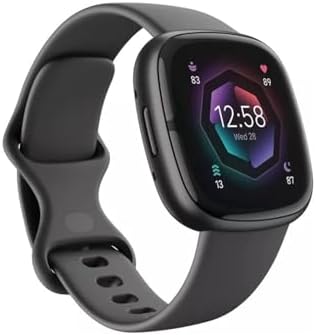
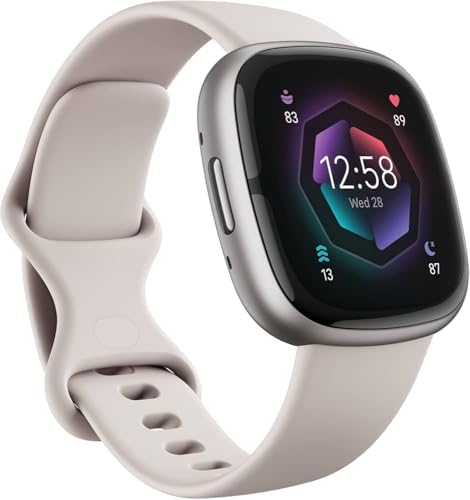
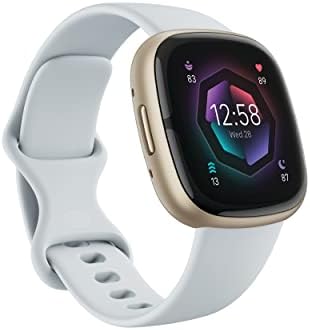
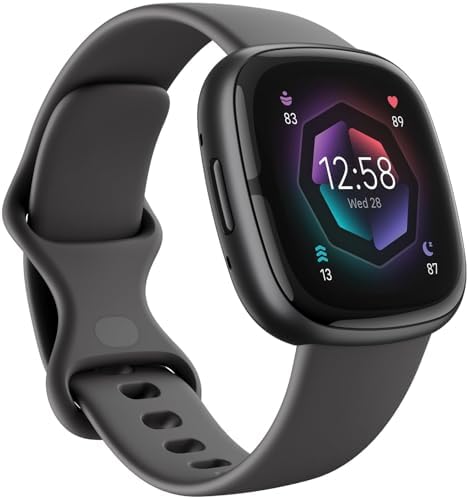
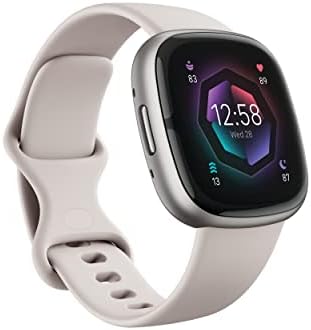
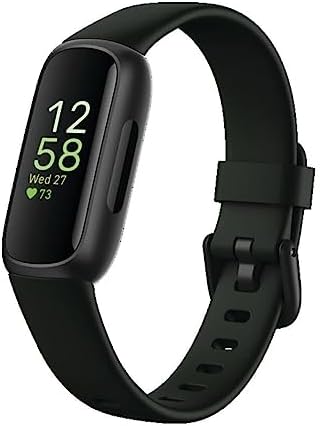
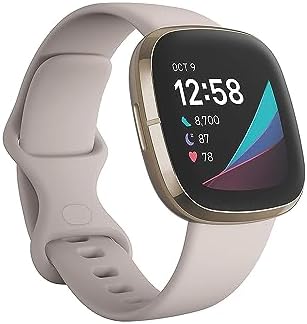
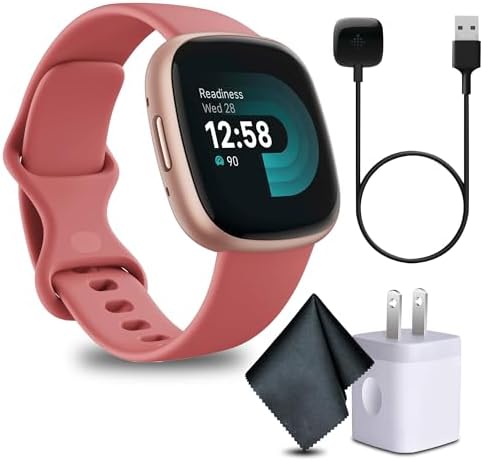
The Fitbit Sense 2 and the Apple Watch Series 11 approach wrist-based health tracking from opposite directions. The Sense 2 series is a wellness-focused wearable built around electrodermal stress sensing and multi-day battery endurance; the Series 11 collection is a full smartwatch that pairs clinical-grade sensors with a deep app ecosystem. The right choice depends on what a buyer tracks daily, how independent the wrist experience must be, and how much clinical detail is genuinely useful.
This buying guide isolates the dimensions that change daily ownership: sensor loadout, battery behavior, phone independence, and platform flexibility. The comparison below treats the Sense 2 series and the Series 11 collection as product families, then narrows to the configurations shoppers actually encounter.
| Feature and Selling Point | Fitbit Sense 2 | Apple Watch Series 11 |
|---|---|---|
| Display type and brightness | AMOLED, always-on display | Always-on LTPO OLED, brighter panel |
| Case materials offered | Aluminum, stainless steel | Aluminum, titanium, stainless steel |
| Case size options | One case size | Multiple size options |
| Battery behavior | Multi-day per charge, charger less often needed | Roughly one day of mixed use, nightly charge routine |
| Core health sensor loadout | Continuous heart rate, skin temperature, EDA stress sensing | Heart rate, ECG, blood oxygen, temperature, sleep apnea notifications |
| Clinical and diagnostic features | Irregular rhythm notifications, stress management focus | ECG app, high heart rate alerts, medication tracking |
| Sleep and recovery analysis | Sleep stages, stress score, daily readiness score focus | Sleep score, sleep stages, wrist temperature trends |
| GPS and mapping | Connected GPS via phone | Built-in GPS, phone-free route tracking |
| Phone independence | Most features rely on a paired smartphone | Standalone app ecosystem and cellular variant available |
| Water resistance and swim use | 50m, pool swim tracking | 50m, swim tracking, water temperature and depth logging |
| On-watch apps | Minimal, focused app set | Extensive App Store library |
| Contactless payments | Wallet support, limited regional availability | Wide-settlement contactless payments |
| Phone compatibility | Android and iOS | iOS pairing required |
| Best-fit user profile | Long-battery wellness tracking, cross-platform users | Phone-free autonomy, deep clinical sensor set, iPhone owners |
The two decisive rows are battery behavior and phone independence. The Sense 2 trades sensor breadth for endurance, surviving days between charges, while the Series 11 delivers an always-on, app-dense experience and expects a nightly charging habit. Buyers who track sleep consistently should weigh that charging routine heavily, because sensor quality means little if the watch sits on a charger overnight.
The Health Sensors That Actually Differ
Both devices measure heart rate continuously and both offer stress monitoring, but they approach sensing from opposite philosophies. The Fitbit Sense 2 relies on an electrodermal activity sensor to monitor how the skin conducts electricity, a signal the company uses to estimate stress response and prompt breathing exercises. On Apple’s side, health sensing leans clinical: the Series 11 includes an ECG app, blood oxygen measurement, and sleep apnea notifications, and the company has continued building higher-frequency heart rate sampling into newer generations of its health sensing platform.
The practical gap is diagnostic ambition. A wearable that can record a single-lead ECG, alert on irregular rhythm, and log nightly breathing disturbances during sleep covers functions that in the recent past required a separate device. The Sense 2 tracks wellness and flags irregular rhythm notifications, but it does not attempt to reproduce a hospital-adjacent sensing suite. Neither device should be read as a substitute for medical evaluation, and each manufacturer positions its features as screening and awareness tools rather than diagnostic instruments.
For buyers who value a consistent wearable presence over feature depth, the medical emphasis of the Apple brand’s health platform is the stronger argument. For those who mainly want to understand stress patterns, sleep quality, and daily readiness, the Sense 2 sensor set covers the essentials at a fraction of the power cost, which is why its model exists as a distinct approach to wearable health sampling rather than a cut-down version of anything else in its lineup.
Battery Philosophy and What It Costs
Battery capacity is where the divergence becomes a lifestyle question. The Series 11 is designed around an always-on display and a dense sensor pipeline, and it expects to be placed on a charger each night. The Sense 2 is engineered the other way: sensing priority over screen priority, with an approximately multi-day cycle that lets it be worn during sleep without negotiation. That distinction sounds small in a specification list and enormous in daily use.
Sleep tracking illustrates the stakes. Continuous overnight data is only as useful as the compliance rate, and a watch that must be removed for charging produces gaps. A buyer who intends to use a device for nightly heart rate variability, temperature trends, or sleep staging should plan the charging schedule before choosing hardware. A quick top-up before a morning shower can solve the Series 11 routine for some users and not for others, so the honest test is whether a nightly ritual fits the routine.
The Series 11 compensates with utility density: cellular options, standalone apps, and contactless payment coverage that lets a wearer leave a phone behind. Those are ecosystem services, not sensor services, and they consume battery accordingly. Recognizing that the two devices spent their power budgets on opposite goals is the cleanest way to decide which trade an individual buyer prefers.
Platform Lock-In and the Phone Question
The most underrated decision dimension is the phone in the pocket. The Series 11 requires an iPhone for full functionality, which makes it an easy pick for iPhone owners and a non-starter for anyone else. The Sense 2 pairs with both Android and iOS, making it one of the more flexible mainstream options in the category, and it keeps stress tracking, sleep analytics, and the daily readiness pattern available across platforms.
App depth marks the second half of that platform question. The Series 11 can run third-party applications directly on the watch, from navigation to audio and beyond, and the cellular variant extends that to messages and calls without a phone nearby. The Fitbit Sense 2 offers a deliberately narrow on-watch app set, and its richer analysis lives in the companion app. A buyer who wants the wrist to be a small phone should read that as a deciding factor, not a footnote, particularly since the Apple Watch Series 11 GPS 46mm brings the latest generation into a realistic aluminum-bodied price bracket.
There is a quieter cost to consider. Locking into Apple’s ecosystem means accessory investment, band compatibility, and data living in Apple Health, which is an excellent aggregator and an imperfect export tool. On the other side, Fitbit’s analytics platform pushes its insights into a Google account ecosystem. Both are acceptable; neither is neutral, and buyers should assume the health data they accumulate over five years will be read through the app they start with.
Fitness Tracking, GPS, and Conditions
Running and cycling differences come down to a single sensor. The Series 11 includes built-in GPS, so it records distance and route data independently of a paired phone. The Sense 2 uses connected GPS from the phone, which works well for casual walkers and becomes a limitation for athletes who train without a phone. Anyone who runs regularly will notice this not in a spec sheet but on a long run when the phone is out of reach or out of battery.
Water handling sits closer together. Both offer a 50-metre rating and pool swim tracking. The Apple device adds depth and water temperature logging during shallow-water activities, a niche but genuinely useful measurement capability for snorkelers and open-water swimmers. The Sense 2 keeps the standard swim tracking set, and neither aims at the dedicated dive watch market.
For the bulk of gym attendees and walkers, both devices deliver the fundamentals: heart rate zones, calorie estimation, and workout summaries. The Series 11 adds fall detection, crash detection, and emergency calling, all features aimed at safety rather than performance. Those capabilities are less relevant to a 30-year-old runner and extremely relevant to the parent of a teenager or anyone buying for someone living alone. The Sense 2 is not designed around emergency services, so that evaluation belongs entirely to the Apple buyer.
Design, Wearing Comfort, and Daily Style
Physical design separates the two more than the specs suggest. The Fitbit Sense 2 is a lightweight wearable with a curved case and limited size choices, and it wears unobtrusively through the night, which matters for sleep tracking. The Apple Watch Series 11 offers a more polished aluminum, stainless steel, or titanium case and multiple case sizes, and it reads as jewelry in ways the Fitbit deliberately does not. The Series 11’s LTPO OLED screen keeps the time visible in low light, and brightness improvements carry over into direct sunlight without draining the battery at the same rate.
Aesthetics are not a shallow purchase criterion. A watch worn every waking hour and most sleeping ones has to survive injury-level collisions with door frames, sleeves, and gym bags. Ceramic and titanium options on the Apple side resist scratches well, and third-party bands expand personal style options considerably. The Sense 2 keeps a simpler aluminum or stainless steel shell with fewer case sizes, and its bezel geometry forms part of the product’s identity rather than an interchangeable accessory. Anyone who cares about band interchangeability or resale appeal should weigh the Apple ecosystem advantage before purchase.
Where the Fitbit Sense 2 Makes More Sense
The Fitbit Sense 2 wins a specific set of buyers clearly. Android users get full features without juggling paired-phone restrictions, which is rare among premium health wearables. Anyone who wants round-the-clock monitoring without a nightly charging schedule is better served by it. And a user who wants to understand their stress baseline through EDA sensor data will get a purpose-built tool rather than a generic health platform.
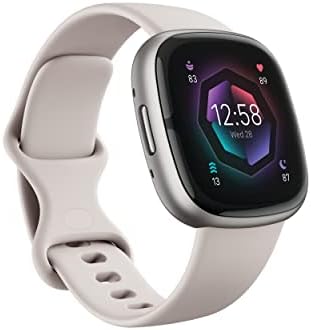
Budget reality matters too. The Sense 2 arrives as a focused, comparatively accessible purchase, and that pricing stability is part of the value proposition rather than a compromise. Those who primarily walk, swim in a pool, and sleep-track will find the Fitbit option delivers better hours of operation per charge than any Apple Watch variant. The Fitbit Sense 2 reflects this attention to everyday tracking and lets buyers select the finish that suits their routine without choosing between platforms.
The honest caveat is that the Sense 2’s analytics are its product, and its product is ongoing subscription logic for deeper insights in some regions. That is a realistic factor in the decision, especially for multi-year ownership, and it is exactly the kind of detail that a thorough purchase comparison should surface before the decision rather than after.
Who Should Buy Which
A buyer should select the Series 11 collection if three or more of these statements apply: they own an iPhone; they want an ECG and blood oxygen reading available on the wrist; they run without a phone; they want contactless payments and on-watch apps; or they consider fall and crash detection close to essential. In every one of those cases, the Apple wearable offers something the Fitbit option was not built to match.
A buyer should lean toward the Sense 2 series if most of these apply: they use an Android phone; they prioritize wearing the device in bed every night; they want a clear stress and readiness picture more than a diagnostic instrument; and they prefer to charge twice weekly rather than nightly. The less the phone in the pocket is an iPhone, the clearer the answer becomes, regardless of marketing comparisons.
What separates a decision that lasts well from a purchase that is quickly regretted is honesty about habits. A five-second nightly charging commitment sounds trivial and is often the reason a health tracker ends up living in a drawer. The Fitbit Sense 2 is a product about measurement continuity; the Apple Watch Series 11 is a product about integration, and buyers should choose the continuity or the integration according to which one their life already exercises. Buyers weighing more platform options can compare the broader Fitbit range accordingly, but no comparison changes one reality: professional craft is less about the specification table than whether the buyer thinks about the purchase as a long-term commitment to keeping better information about themselves. That is a quiet place to start, and perhaps the finest ambition a wrist-worn instrument can have.