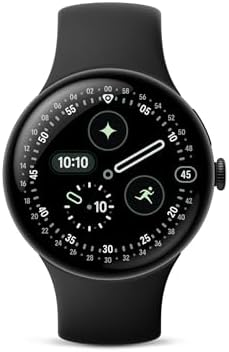
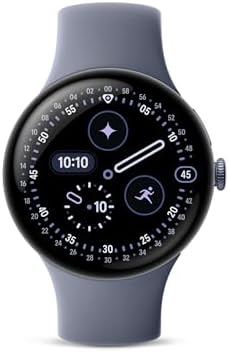
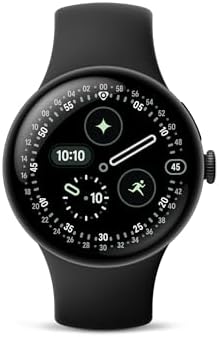
The Google Pixel Watch 4 and the Samsung Galaxy Watch 9 answer the same brief in opposite ways: one leans on a domed lens and the Fitbit platform, the other on a flat crystal and the widest sensor array Samsung has put on a wrist. Both run Wear OS, both handle contactless payments and voice control, and both expect to be paired with a phone from the same family to reach full behaviour. What separates them is measurable, and it comes down to case geometry, published battery figures, sensor breadth, and how much each brand asks of the handset in your pocket.
This is a buying guide rather than a feature parade. The table below lines up the specifications that actually change daily use, and every section after it explains what those numbers mean once the watch is on your wrist for a week. Readers who intend to keep a smartwatch for three or four years should treat the comparison as the reference point and the analysis as the reasoning behind it.
| Feature & Selling Point | Google Pixel Watch 4 | Samsung Galaxy Watch 9 |
|---|---|---|
| Case sizes offered | Multiple sizes, with 45mm as the larger variant | 40mm and 44mm across the line |
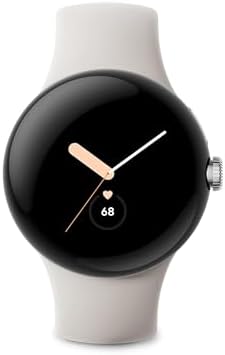
| Crystal geometry | Domed, lens-like glass curving into the case | Flat crystal with a defined bezel edge |
| Rated endurance | Up to 30 hours of typical use per Google | 390mAh cell on the 40mm model |
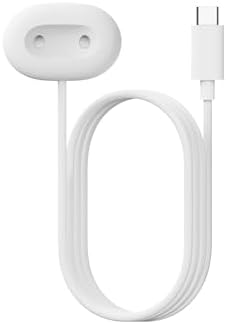
| Charging hardware | Proprietary magnetic pin charger | Magnetic wireless charging puck |
| Connectivity tiers | Wi-Fi and LTE variants in the series | Bluetooth and LTE variants |
| Software foundation | Wear OS with Gemini built in | Wear OS with Samsung One UI Watch |
| Paired-phone reach | Android only, deepest features on Pixel phones | Android and iOS, full features on Galaxy phones |
| Core sensor set | Heart rate, ECG, SpO2, skin temperature, sleep staging | Heart rate, ECG, SpO2, skin temperature, sleep tracking |
| Standout measurement | Fitbit readiness scoring and coaching library | BioActive sensor with body composition |
| Navigation support | GPS with Google Maps turn guidance | GPS with Samsung route guidance |
| Water rating | Swim-proof per Google’s specification | 5 ATM plus IP68 |
| On-device controls | Haptic crown plus a single side button | Two side buttons plus touch bezel |
| Strap attachment | Proprietary quick-release system | Standard lug fittings for third-party bands |
| Best suited to | Fitbit users and Pixel phone owners | Galaxy phone owners wanting maximum sensor range |
Two rows in that table settle most purchases before any other specification is read. Samsung publishes a 390mAh figure for the 40mm model and supports iOS pairing, while Google ties its appeal to a 30-hour rating and the Fitbit platform. Everything else, from crystal shape to strap fittings, refines a decision that the ecosystem and the sensor suite have usually already made.
Two Case Philosophies and What They Cost
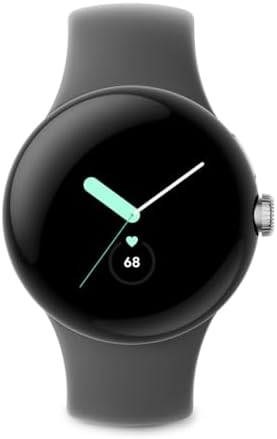
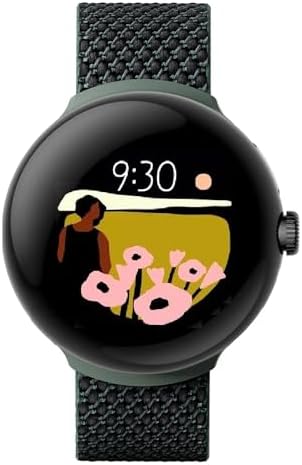
The Pixel Watch 4 builds its identity around a domed crystal that flows into a rounded case with no visible seam between glass and metal. That geometry makes the display read as a single circular object rather than a screen seated in a housing, and it also removes the hard edge that catches on a shirt cuff. The cost is practical: curved glass shows fingerprints readily, resists third-party screen protectors, and reflects light in a way that some users find distracting under direct sun.
Samsung goes the other way with a flat crystal and a more architectural case profile. The 40mm Galaxy Watch 9 sits in a tighter dial that suits narrower wrists, and the two-button layout is deliberately quieter than a crown. Several generations of refinement have produced a silhouette that reads closer to a conventional watch, which matters for buyers who want the device to disappear under a sleeve during a meeting. Case geometry is the first thing anyone notices on a wrist, and it is worth trying both shapes on before reading further.
Endurance, Charging, and the Daily Routine
Google rates the Pixel Watch 4 at up to 30 hours of typical use, a figure that assumes a night of sleep tracking plus a workout or two. The practical consequence is a daily charging habit: most owners will top up during a morning shower rather than push the watch into a second full day. That rhythm suits sleep tracking because the watch spends the night on the wrist, but it turns the charger into travel equipment rather than an occasional accessory.
The 40mm Galaxy Watch 9 carries a 390mAh cell, which Samsung states is roughly 20 percent larger than the equivalent Watch8 model and 30 percent larger than the comparable Watch7. Capacity alone does not guarantee endurance, because display brightness and processor load consume the gain, but a larger cell gives the software room to run always-on display and continuous heart-rate monitoring without an early evening shutdown. Buyers who want the longest interval between charges should compare the official endurance claims for both models rather than capacity figures in isolation, since the two brands measure battery life on different assumptions.
Health Tracking: Sensor Breadth Against Platform Depth
Both watches cover the modern baseline: continuous heart rate, ECG for rhythm checks where regional approval allows, blood oxygen readings, skin temperature for sleep and cycle insights, and automatic detection across dozens of activities. The divergence appears above that line. Samsung’s BioActive sensor arrangement adds body composition analysis, estimating skeletal muscle, body fat percentage, and body water, and that has become a genuine differentiator for anyone tracking physique changes rather than calories burned alone.
Google’s advantage is platform depth rather than sensor count. The Pixel Watch 4 runs on the Fitbit health ecosystem, which brings a long-standing library of sleep staging, readiness scoring, and coaching content, plus an optional Fitbit Premium subscription for deeper analysis. For a buyer with years of Fitbit history, moving to a Samsung watch means starting a new record from zero. That continuity is worth more to some people than any single sensor, and it is the one advantage Google holds that Samsung cannot match with hardware.
Which Ecosystem You Already Live In
This is the row that should carry the most weight, and it rarely gets the attention it deserves. The Google Pixel Watch 4 is designed to work best with Pixel phones and the Google services people already open every day: Assistant, Maps, Wallet, and now Gemini on the wrist. Pairing it with a non-Pixel Android handset works, but some conveniences become less reliable and the watch never quite reaches its intended behaviour.
Samsung answers with a deeper hook of its own. The Samsung brand’s wearable platform pairs most completely with Galaxy handsets, and features such as body composition sync and camera control behave best inside that pairing. Samsung also supports iOS pairing, which the Pixel Watch does not, so a buyer carrying an iPhone who prefers Samsung hardware has an option Google simply does not offer. Compatibility documentation published by Samsung is worth checking before purchase, because watch features vary with the paired phone’s operating system version.
Choosing the Right Case Size for Your Wrist
The Galaxy Watch9 lineup splits across 40mm and 44mm cases, and that two-size approach serves buyers who want a smaller dial without dropping to an entry-level model. Wrist circumference, not preference, should drive the choice: a 40mm case on a narrow wrist sits flatter and catches less on sleeves, while the 44mm version gives a larger canvas for map reading and interval timing.
Google offers the Pixel Watch 4 series in more than one size as well, and the 45mm variant is the one that suits broader wrists and larger hands. Measure the wrist before deciding, and weigh the strap system alongside the case: the Pixel’s proprietary band attachment limits third-party options compared with standard lug fittings. That sounds like a minor detail until a third-party band becomes part of daily wear and the selection turns out to be narrow.
Display, Durability, and Daily Abuse
Both screens are OLED-based and both remain readable outdoors, but the Pixel’s domed glass changes how reflections behave in direct sun, while Samsung’s flat crystal produces a cleaner, more even reflection that some users prefer for reading notifications at a glance. Both watches carry water resistance suitable for swimming and showering, though the rating language differs: Samsung publishes 5 ATM and IP68 figures, while Google describes its watches as swim-proof without stating an equivalent ATM class in the same terms. Buyers planning open-water swimming or contact sports should confirm the specific rating for their chosen model against the official specification page rather than infer it from marketing language.
Which Watch Should You Actually Buy?
The decision path shortens once the ecosystem is fixed. A buyer who uses a Galaxy phone, wants body composition data, prefers a flat crystal, and values a 40mm option should choose the Samsung Galaxy Watch 9. The capacity gain in the 40mm cell, the two-case strategy, and the breadth of the BioActive sensor suite all reward that choice, and staying inside the Galaxy pairing removes the compromises a mixed setup would introduce.
A buyer already inside the Pixel phone family, with Fitbit history and a preference for Google’s approach to software, should choose the Pixel Watch 4. The 30-hour rating supports a sleep-tracking routine, Gemini integration is an advantage only Google can offer, and the domed design remains distinctive in a market of flat-screen rectangles. Anyone who values body composition analysis, wants standard lug fittings for third-party bands, or needs a smartwatch that pairs with an iPhone should look toward Samsung instead, because those requirements point to strengths Google does not claim.
Both watches track sleep and workouts well, both are built to survive years of daily wear, and both will serve most owners until the next generation arrives. The purchase that lasts is the one made with the phone in hand and the wrist measured, not the one made from a specification sheet alone. The Google brand’s long bet on software-first wearables and Samsung’s parallel bet on sensor breadth both pay off here, just for different owners.