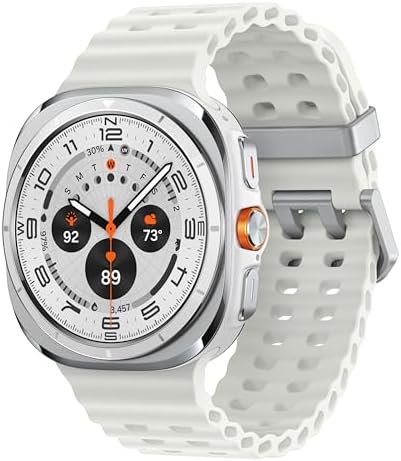
The smartwatch segment’s toughest battle in 2025 sits squarely between two titanium-bodied flagships: the Samsung Galaxy Watch Ultra 2025 64GB 47mm LTE Fitness Tracker and the Apple Watch Ultra 3 GPS + Cellular 49mm Titanium Black Ocean Band. Both target athletes, divers, and outdoorspeople who want a wrist computer that survives more than it breaks. This guide exists as a practical decision aid, so save it for reference when weighing the two.
| Feature & Selling Point | Samsung Galaxy Watch Ultra 2025 | Apple Watch Ultra 3 |
|---|---|---|
| Case Size | 47mm | 49mm |
| Case Material | Titanium | Grade 5 Titanium |
| Display Type | 1.5″ AMOLED | LTPO3 OLED, Wide-Angle |
| Resolution | 480 x 480 | 502 x 410 |
| Processor | Exynos W1000 (3nm) | S10 SiP |
| Storage & RAM | 64GB + 2GB | 64GB + 1GB |
| Battery Capacity | 590mAh | ~545mAh |
| Satellite Connectivity | No | Yes (Emergency SOS & Messages) |
| Water Resistance | 10 ATM / IP68 | 100m / EN13319 / IP6X |
| Blood Pressure | Yes (App Dependent) | No |
| Sleep Apnea Detection | Yes (FDA Cleared) | Yes (FDA Cleared) |
| Processor Advantage | 3nm Efficiency | LTPO Power Savings |
| Key Selling Point | Largest battery & BP monitor | Satellite SOS & brightest screen |
| Best Use Scenario | Multi-day treks, Android users | Backcountry solo, iOS users |
The most striking divergence in the table above is connectivity. Apple offers satellite capability for off-grid emergencies, while Samsung counters with a larger battery capacity, a bigger AMOLED panel, and a blood-pressure sensor that requires periodic cuff calibration. Buyers prioritising urban health monitoring and extended battery life will lean toward the Galaxy Watch Ultra, whereas remote-area safety gives Apple a strong pull.
Design Philosophy: Titanium Frameworks, Divergent Philosophies
Titanium defines both chassis, yet the design briefs behind them diverge sharply. Samsung frames the Galaxy Watch Ultra 2025 with a 47mm cushion-shaped case that sits flatter on smaller wrists, using a titanium grade that Samsung selects for impact absorption. The Apple Watch Ultra 3 extends its footprint to 49mm, with a raised edge around the display that acts as a bumper during rock contact. The orientation of each build reflects each company’s existing design language: Samsung adopts a rounder profile mimicking traditional dive watch geometry, while Apple pushes a square-with-squircle-corners silhouette that has matured across eight generations.
The case finishes tell another story. Where Apple polishes a natural brushed titanium that hides micro-scratches well, Samsung’s titanium exhibits more sheen, catching light differently in outdoor settings. Both resist corrosion from saltwater exposure during daily swims.
Also recognise that pairing ecosystems matters here. Continuing as an Android-only companion, the Samsung Watch 7 Ultra 2025 LTE Titanium Blue 47mm Fitness Tracker Model L705FZB1GTO pairs with a Galaxy smartphone. Similarly, the Apple Watch Ultra 3 requires an iPhone. Neither switch-hits, so existing phone allegiance usually decides the purchase.
Display: Brightness, Resolution, and Legibility Dynamics
AMOLED vs LTPO3 Technologies
Samsung fields a 1.5-inch AMOLED panel achieving 480 x 480 resolution. This produces a pixel density slightly higher than Apple’s 502 x 410 resolution across a larger 49mm diagonal. In real-world terms, text on the Galaxy model appears marginally sharper in static reads. However, Apple’s LTPO3 panel drives a compelling advantage: it enables an always-on display with a lower refresh floor and a peak brightness Apple rates at 3000 nits. Samsung does not exceed 3000 nits with the Galaxy Watch Ultra 2025 either, but it sets a higher typical brightness, a practical factor when reading outdoors on a cloudless day.
Wide-Angle Viewing Experience
Apple equips its Ultra 3 with a wide-angle OLED construction that increases off-axis brightness, a subtlety that pays off when the watch sits angled during an arm swing. Samsung’s AMOLED has excellent off-axis response as well, though it loses some contrast at steep angles. For users who wear gloves or long sleeves covering the lugs, the screen brightness matters more than viewing angle, and here both remain class-leading.
Performance and Battery: Efficiency Platforms Compared
Samsung’s Exynos W1000 builds on a 3nm process, delivering large performance-per-watt gains over the previous 5nm generation. Apple’s S10 SiP takes a different route: re-engineering core components for power efficiency across the entire package. Both chipsets handle Wear OS or watchOS respectively without visible lag in daily navigation. Storage sits evenly at 64GB on the LTE variants, useful for offline music and maps.
Battery is Samsung’s clearest battleground. The 590mAh cell inside the Galaxy Watch Ultra 2025 outpaces the estimated capacity in the Ultra 3, and with its 3nm chipset, Samsung asserts multi-day use that eclipses Apple’s roughly 36 hours in low-power mode. Apple counters with fast-charging architecture, where users gain near-full capacity within an hour on compatible USB-C chargers.
Charging differentials matter in the field. If you backpack without reliable power, the Samsung’s larger cell and slightly lower normal screen brightness state a practical edge. Conversely, Apple’s charging speed helps city dwellers who wear the watch all day but charge quickly at night.
Sensors and Health Monitoring: Blood Pressure vs Satellite Emergency
Samsung equips the Galaxy Watch Ultra 2025 to measure blood pressure, though it requires calibration against a traditional cuff every four weeks. Sleep apnea detection gains FDA clearance on both devices, and each monitors ECG, heart rate, and blood oxygen. Apple’s breakthrough arrives in satellite connectivity: the Ultra 3 can send Emergency SOS messages and share location via satellite when cellular and Wi-Fi are unavailable. Samsung does not offer satellite messaging on this model.
Apple’s health suite also includes the new sleep score algorithm and hypertension notifications for users in supported regions. Samsung responds with an AI body-composition sensor that tracks skeletal muscle and body-fat percentage, plus sleep coaching that ties recovery patterns to daily readiness. Both watches also deliver temperature sensing for enhanced cycle tracking.
For athletes seeking deep physiological data without a phone tether, Samsung’s BP feature offers more medical-grade screening without external hardware. Those who venture beyond cell coverage will find no substitute for Apple’s emergency satellite link.
Ruggedness and Outdoor Readiness: Dive Ratings and Environmental Certification
The Apple Watch Ultra 3 carries 100 metres water resistance and EN13319 certification for dive use, meaning it can serve as a backup dive computer at recreational depths. Samsung matches with 10 ATM but does not hold a dive certification, so scuba use remains off the table. Both handle swimming, showering, and snorkelling without issue.
Dust protection also diverges: Apple’s IP6X covers total dust ingress during desert conditions. Samsung lists IP68 for both dust and water, which is slightly less rigorous against fine dust over long durations. Additionally, Apple exposes a configurable Action Button and depth gauge, plus water temperature readings, features dedicated triathletes will value. Samsung’s rotating bezel emulation through touch controls suits gesture-driven navigation when hands are wet, though its tactile feedback is less discernible than a physical bezel.
Software, Ecosystem, and Longevity Commitments
watchOS 26 runs the Apple Watch Ultra 3 with tighter integration to AirPods, HomeKit, and Apple Music. Samsung’s One UI Watch, built on Wear OS 5, provides better cross-app support through Google Play services and allows customisation far deeper than watchOS supports. Apple commits to multi-year OS updates; Samsung follows a similar release cadence for flagship watches.
The eSIM provisioning flexibility differs by carrier. Samsung’s unlocked LTE variants work with more international carriers and include Tmobile, Mint, and Tello compatibility on some Latino versions. Apple’s cellular models enjoy strong carrier support but sometimes require regional activation. Frequent travellers may find Samsung’s carrier-agnostic approaches to eSIM setup simpler.
The Decision Point: Matching Ecosystem and Adventure Profile
The Galaxy Watch Ultra 2025 suits Android users who want blood-pressure monitoring, the largest battery in the category, and a subtly smaller case. Its 3nm processor teams with 64GB storage to future-proof daily activity tracking for years, and the round silhouette appeals to traditionalists put off by squarish smartwatches. Meanwhile, the Apple Watch Ultra 3 exists for iPhone owners who need satellite emergency messaging, a wide-angle always-on display, and the most complete dive-ready certification in either line.
Neither model obsoletes the other. Samsung wins on raw battery and medical sensing, Apple wins on off-grid communication and display engineering depth. The final choice reduces to which phone currently lives in your pocket and which set of trade-offs aligns with your willingness to get lost off the map. Both the Samsung brand’s health-first philosophy and the Apple brand’s connectivity-first vision chart quietly confident paths for the next generation of wrist technology.
![Samsung Galaxy Watch Ultra (2024) 47mm LTE AI Smartwatch w/Energy Score, Wellness Tips, Heart Rate Tracking, Sleep Monitor, Fitness Tracker, GPS, Titanium Gray [US Version, 1Yr Manufacturer Warranty]](http://www.donysterling.com/images/202608/1785845310189_987pss_0.jpg)
![Samsung Galaxy Watch Ultra (2024) 47mm LTE AI Smartwatch w/Energy Score, Wellness Tips, Heart Rate Tracking, Sleep Monitor, Fitness Tracker, GPS, Titanium White [US Version, 1Yr Manufacturer Warranty]](http://www.donysterling.com/images/202608/1785845331583_j2xoqb_0.jpg)
![Samsung Galaxy Watch Ultra (2024) 47mm LTE AI Smartwatch w/Energy Score, Wellness Tips, Heart Rate Tracking, Sleep Monitor, Fitness Tracker, GPS,Titanium Silver [US Version, 1Yr Manufacturer Warranty]](http://www.donysterling.com/images/202608/1785845293832_tby7r0_0.jpg)
![Samsung Galaxy Watch Ultra (2024) Bespoke Edition 47mm LTE AI Smartwatch, Wellness Tips, Heart Rate, Sleep Monitor, Fitness Tracker, Titanium Silver [US Version, 1Yr Manufacturer Warranty]](http://www.donysterling.com/images/202608/1785845204080_cj9m8z_0.jpg)
![Samsung Galaxy Watch Ultra (2024) LTE 47 mm Titanium Smartwatch 鈥� White 鈥� Rugged Design with Dual-Band GPS, 100-Hour Battery, Fitness & Health Tracking, 10 ATM Water Resistant [International Version]](http://www.donysterling.com/images/202608/1785844095734_26m4my_0.jpg)
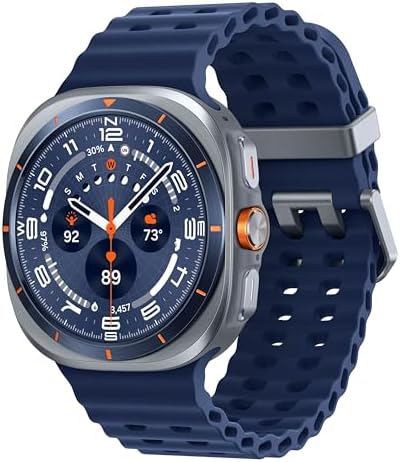
![Samsung Galaxy Watch Ultra (2025) 47mm LTE Smartwatch, Titanium Casing, Advanced Sleep Coaching, Running Coach, Energy Score, Heart Rate Tracking, GPS, Titanium Blue [US Version, 2 Yr Warranty]](http://www.donysterling.com/images/202608/1785850134018_qgztvp_0.jpg)
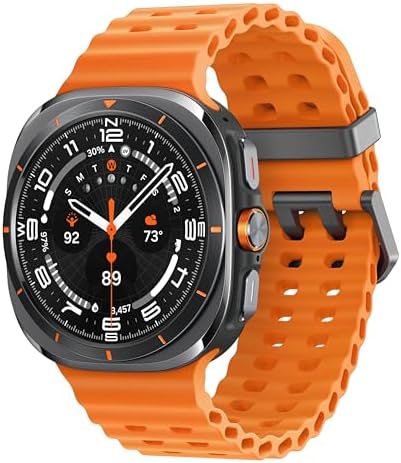
![Samsung Galaxy Watch Ultra (2025) 47mm LTE Smartwatch, Titanium Casing, Advanced Sleep Coaching, Running Coach, Energy Score, Heart Rate Tracking, GPS, Titanium Gray [US Version, 2 Yr Warranty]](http://www.donysterling.com/images/202608/1785849800787_joye99_0.jpg)
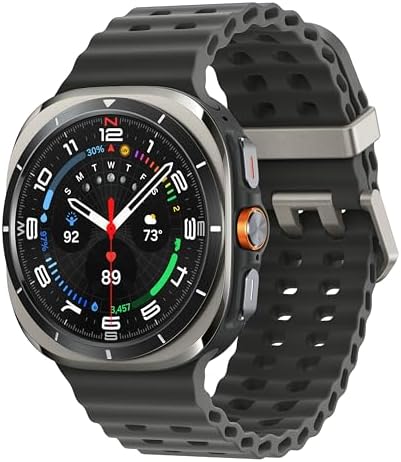
![Samsung Galaxy Watch Ultra (2025) 47mm LTE Smartwatch, Titanium Casing, Advanced Sleep Coaching, Running Coach, Energy Score, Heart Rate Tracking, GPS, Titanium Silver [US Version, 2 Yr Warranty]](http://www.donysterling.com/images/202608/1785850097351_bemdr5_0.jpg)