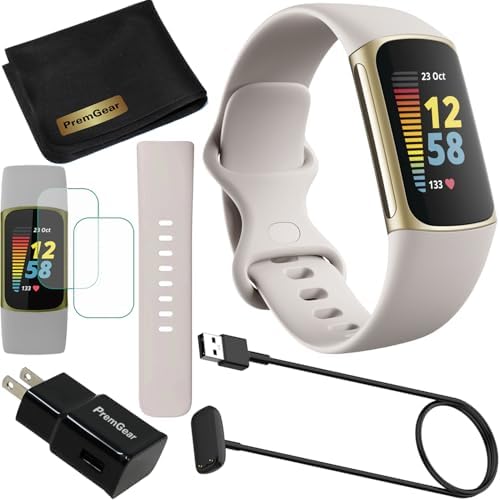
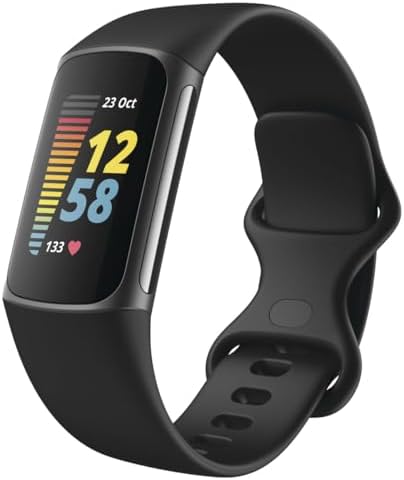
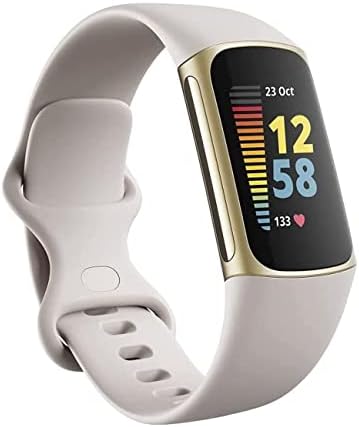
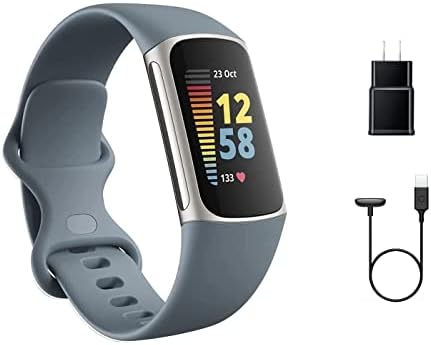
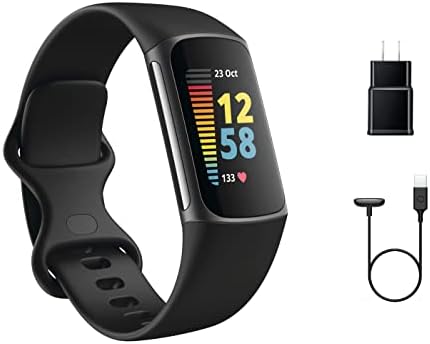
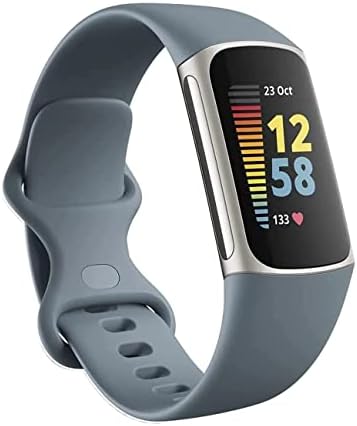
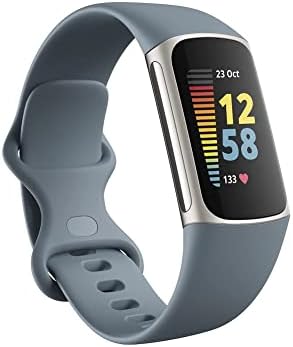
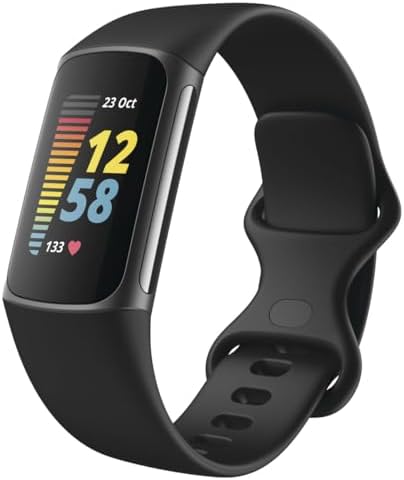
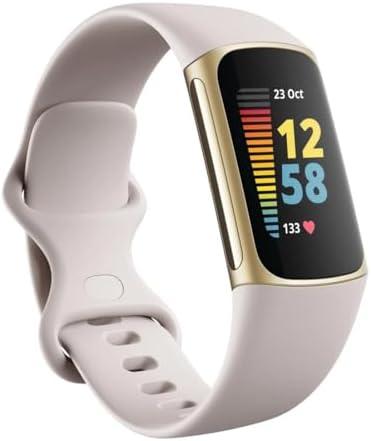
The Fitbit Inspire 3 and the Fitbit Charge 5 occupy two different positions in the same fitness-tracking family, and the choice between them usually comes down to one question: how much do you need built-in GPS and an always-on colour screen? The Inspire 3 is a slim band offered in the Midnight Zen colourway, aimed at people who want continuous heart-rate and sleep data without a bulky display. The Charge 5, shown here in Graphite Stainless Steel with a bundled charging adapter, adds standalone GPS, an EDA stress sensor, and a brighter AMOLED panel. This guide works through the real trade-offs so the decision becomes clear rather than guesswork.
| Decision Factor | Fitbit Inspire 3 | Fitbit Charge 5 |
|---|---|---|
| Built-in GPS | No (connected GPS via phone) | Yes (standalone tracking) |
| Battery Life (rated) | Up to 10 days | Up to 7 days |
| Display Type | Colour AMOLED touchscreen | Colour AMOLED, always-on option |
| EDA Stress Sensor | No | Yes |
| ECG App | No | Yes (supported regions) |
| Continuous Heart Rate | Yes | Yes |
| Sleep Tracking and Score | Yes | Yes, with Smart Wake |
| Water Resistance | 50m swim-proof | 50m swim-proof |
| Case Profile | Slim band, low wrist profile | Wider case, stainless steel accents |
| SpO2 Monitoring | Yes | Yes, with trend data |
| Display Brightness | Standard outdoor visibility | High-brightness AMOLED, sun-readable |
| Smart Features | Notifications, alarms | Notifications, NFC tap-to-pay (select markets) |
| Who It Suits Best | All-day wellness, minimal footprint | Runners and data-hungry users |
| Included Extras | 6-month Google Health Premium | Power bundle with adapter |
Reading the table, the Inspire 3 wins only on battery stamina, advertising a general estimate of up to 10 days while the Charge 5 sits at roughly 7 days. The Charge 5 almost immediately claws back the advantage by offering built-in GPS, an EDA stress sensor, and an ECG app, none of which appear on the Inspire 3. The rest of this article unpacks what those differences mean for the way you actually wear and use each tracker.
Battery Life and Charging
Battery longevity is the clearest differentiator before you ever strap either device on. The Fitbit Inspire 3 Health & Fitness Midnight Black is designed for a charging rhythm that fits around your week rather than dominating it. With continuous heart-rate tracking, sleep monitoring, and periodic syncing, it tends to hold a charge across multiple days, and the official Inspire manual describes the rated capacity in simple, useful terms rather than marketing superlatives. That makes it a natural fit for wearers who dislike swapping chargers or hunting for a cable every third night.
The Fitbit Charge 5 tells a different story. Its always-on display option and richer sensor package pull more from the battery, and Fitbit’s manual guides users on maximising runtime by adjusting brightness, notification frequency, and the GPS setting. On days when GPS is disabled, the difference narrows; on days with a tracked outdoor run, the Charge 5 will typically burn faster. What closes that gap is convenience: the bundled power adapter in this comparison is a practical accessory, and the recommended charging window of roughly one to two hours restores the device quickly. If you travel light and cannot guarantee overnight charging, the Inspire 3 remains the more forgiving device.
Built-in GPS and Route Mapping
The single most consequential split in this comparison is GPS. The Inspire 3 relies on connected GPS, meaning it borrows your phone’s location signal and records pace, distance, and route only while the phone is nearby. This keeps the tracker slim and affordable, but it also means a phone-free run is impossible. For walkers and gym users, connected GPS is often sufficient; for anyone who wants to leave the phone behind, it is a genuine limitation.
The Fitbit Charge 5 Advanced Fitness with Graphite GPS removes that limitation entirely. Its built-in GPS module locks onto satellites directly, recording a run, ride, or hike without any handset. This is the design decision that lets the Charge 5 operate as a standalone activity tracker rather than a companion device. In practice, the on-wrist accuracy is good enough for everyday training, and the tracked route subsequently uploads to the Fitbit app where pace and elevation can be reviewed. If your training includes trail runs, open-water swims, or long bike rides, this feature alone justifies the step up, while the Inspire 3 remains the better option for indoor and phone-tethered exercise.
Display Quality and Always-On Convenience
Both devices use a colour AMOLED panel, so the difference is one of tuning rather than technology type. The Inspire 3 prioritises a small, discrete display that shows time, stats, and notifications without demanding attention. It is bright enough for typical indoor and shaded outdoor use, and it keeps the wrist profile low under a sleeve cuff, an advantage for anyone who wears formal clothing or accessories on a daily basis.
The Charge 5 pushes display quality higher. Its panel is engineered for stronger outdoor readability and supports an always-on mode that keeps the time visible without a wrist flick. The trade-off is that always-on display draws roughly a third of the day’s energy, and users heading outdoors for long sessions may wish to disable it. Both screens support customisable clock faces, but only the Charge 5 offers the brightness and glanceability that a dedicated runner tends to expect.
Health Sensors, Stress, and Recovery Tools
Sensor depth is where the two devices diverge in ways that are easy to overlook in a spec sheet. The Inspire 3 covers the fundamentals: continuous heart rate, active-zone minutes, real-time pace, and sleep-stage tracking with a morning readiness view in the app. Stress management is present but generalised, and the device lacks an electrodermal activity sensor, so it cannot measure the body responses associated with a guided EDA session.
The Charge 5 adds the EDA sensor tied to the on-wrist Body Response experience, alongside an ECG app for supported markets that reports heart-rhythm patterns. These features broaden the Charge 5 from a fitness tracker into a light wellness instrument, so the decision turns on whether you would realistically engage with stress tracking and heart-rhythm awareness. For someone whose primary interest is step count, sleep, and resting heart rate, the Inspire 3 delivers the same core picture with fewer sensors drawing on the battery.
- Inspire 3 core sensors: optical heart rate, 3-axis accelerometer, SpO2, skin-temperature variation
- Charge 5 core sensors: optical heart rate, 3-axis accelerometer, SpO2, skin-temperature variation, plus EDA and ECG support
Design, Comfort, and Everyday Wearability
The physical character of the two wears quite differently. The Inspire 3 is built for versatility and slip-under-the-cuff moments, with a narrow band, a slim buckle, and a profile that avoids snagging on sleeves or gloves. In the Midnight Zen colourway, the tracker practically disappears during the workday and reads as a piece of minimal sportswear at the gym. This is the model to choose if you want to leave the tracker on continuously and forget about it.
The Charge 5 is wider and more assertive. The Graphite Stainless Steel case in this bundle gives it a slightly dressier tone than the standard plastic variants, and the proportions look deliberate rather than incidental. It takes up more wrist real estate, which some wearers find reassuring during exercise and others find noticeable overnight. Neither is waterproof beyond a 50-metre rating, so pool swimming is fine on both, but open-water activities should stay off the Inspire 3’s list because the absence of independent GPS leaves no route record behind.
Which Fitbit Should You Buy?
The decision comes down to the shape of your training and the amount of data you want collected automatically. Buy the Inspire 3 if your priorities are a low-profile band, the longest possible stretch between charges, and an accessory that works with dress wear and sleep in equal measure. It is the better match for someone who walks, attends fitness classes, and checks in on sleep quality and resting heart rate but does not need route mapping. Retailers often discount the Inspire 3 more aggressively than the Charge 5, making it a sensible first tracker.
Choose the Charge 5 if you run, cycle, or hike outdoors and want a device that tracks routes without carrying a phone. Its GPS, EDA sensor, ECG app, and higher-brightness AMOLED display represent the meaningful step up in this pairing, and the power bundle with adapter covers the more demanding charging pattern. If the Inspire 3’s strengths sound more aligned with your week, but you still want better screen visibility, the Charge 5 remains the natural upgrade path within the Fitbit brand’s wrist tracker lineup, and the dedicated Inspire 3 and Charge 5 pages break down the individual model lines in more detail.