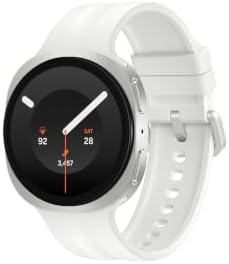
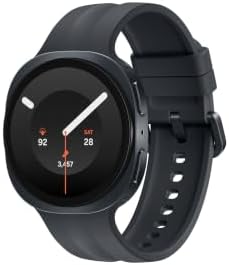
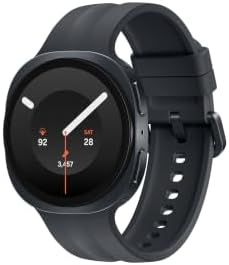
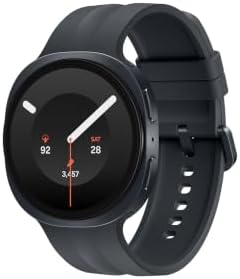
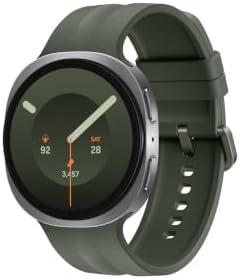
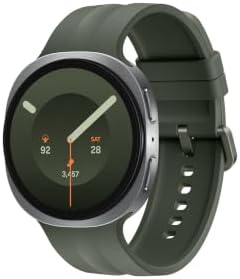
The Samsung Galaxy Watch9 and the Apple Watch Series 11 represent two mature but fundamentally different answers to the same question: what should a smartwatch actually do for its owner. The Galaxy Watch9 keeps a circular Super AMOLED face, a physical rotating bezel, and a battery rated for up to 40 hours of typical use. The Apple Watch Series 11 pairs a rectangular LTPO OLED display with Apple’s most complete health suite and a hard iPhone-only activation rule. This guide is designed as a permanent buying reference, mapping the specific decision points that separate a purchase worth keeping from one that gets resold within a year.
| Feature & Selling Point | Samsung Galaxy Watch9 | Apple Watch Series 11 |
|---|---|---|
| Phone Compatibility | Android 11 or newer | iPhone only |
| Case Sizes | 40mm and 44mm | 42mm and 46mm |
| Display Shape and Type | Circular Super AMOLED, up to 2,000 nits | Rectangular LTPO OLED, up to 2,000 nits |
| Processor | Exynos W1000 | Apple S10 SiP |
| Typical Battery Life | Up to 40 hours | Up to 24 hours, 38 hours in low power mode |
| Charging Speed | Magnetic wireless, full charge in about 90 minutes | Magnetic fast charge, full charge in about 75 minutes |
| Water and Durability Rating | 5 ATM, IP68, MIL-STD-810H | 50m swimproof, IP6X dust resistance |
| Health Sensor Suite | Heart rate, ECG, BIA body composition, skin temperature | Heart rate, ECG, temperature, blood oxygen |
| Sleep Features | Sleep apnea detection, sleep score, snore tracking | Sleep score, sleep apnea alerts, broader regulatory clearances |
| GPS Accuracy | Dual-band L1 and L5 | Dual-band L1 and L5 |
| Navigation Control | Rotating bezel plus touch | Digital Crown plus touch |
| App Ecosystem | Google Play Store on Wear OS | Apple App Store on watchOS |
| Cellular Option | LTE available | GPS plus Cellular available |
| Case Materials | Armor Aluminum, stainless steel | Aluminum, titanium |
| Storage | 32GB | 32GB and 64GB |
| Resale Value After Two Years | Moderate depreciation | Stronger retention on the secondary market |
The table isolates where each watch genuinely pulls ahead. Samsung owns battery endurance, charging value for the money, and the tactile rotating bezel. Apple counters with faster charging, wider regulatory clearances for sleep apnea notifications, and stronger resale retention. Neither column is universally superior, which is why the phone already in your pocket eliminates one option faster than any spec sheet can.
Ecosystem Lock-In Decides the Winner Before Specs Do
The Galaxy Watch9 runs Wear OS and requires Android 11 or newer, reaching full function on Samsung Galaxy phones where ECG, blood pressure calibration, and Samsung Wallet all activate. The Apple Watch Series 11 will not complete setup on anything except an iPhone. Cross-platform workarounds exist, but they strip ECG readings, sleep apnea alerts, and on-wrist message replies, leaving a premium device operating at half capacity. Buyers carrying a Galaxy handset should treat the Samsung brand’s wearable line as the default path, while iPhone owners have a single rational route through the Apple brand’s ecosystem. This is not a matter of taste. It is a compatibility fact that removes one option immediately for most shoppers.
Battery Life and the Daily Charging Ritual
Samsung rates the Galaxy Watch9 at up to 40 hours of typical use, enough for two full days of light wear or one overnight sleep-tracking cycle without a daytime top-up. Apple positions the Series 11 around 24 hours, extending to 38 hours in low power mode. For anyone who wants continuous sleep data without sacrificing daytime use, the Galaxy Watch9 removes the nightly charging habit that Apple users accept as routine. Fast charging narrows the practical gap, since both watches recover several hours of runtime from a short 15-minute session, and Apple’s charger is the quicker of the two when starting from empty.
Design Language and On-Wrist Feel
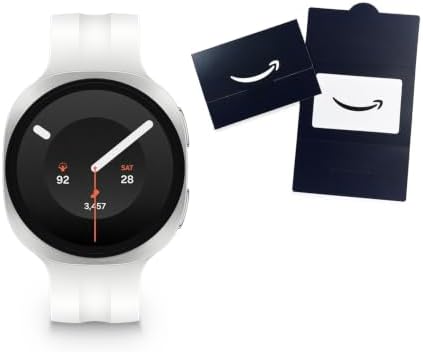
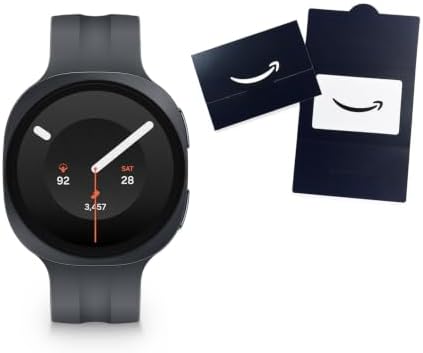
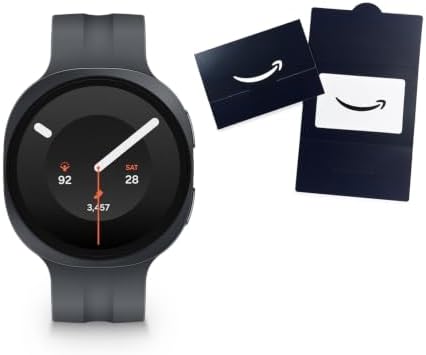
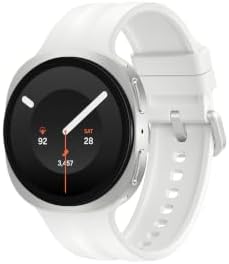
The Galaxy Watch9 keeps Samsung’s circular face and rotating bezel, a combination that reads as traditional watchmaking and allows menu scrolling without covering the screen with a finger. The graphite 40mm Bluetooth variant is the lightest configuration in the lineup, and on a smaller wrist the Samsung Galaxy Watch9 Graphite 40mm Bluetooth sits close to the skin without overhang. Apple goes rectangular with the Series 11, a shape that fits more text per screen and suits Apple’s health app layouts. The 46mm jet black aluminum model, Apple Watch Series 11 Jet Black Aluminum 46mm GPS, gives users who want maximum screen area a clear reason to choose the larger case. Both panels peak at 2,000 nits, so outdoor readability is effectively equal.
Health Monitoring: Sensor Count Versus Clinical Depth
Samsung’s BioActive sensor on the Galaxy Watch9 combines optical heart rate, electrical ECG, and bioelectrical impedance analysis for body composition readings, alongside skin temperature tracking and sleep apnea detection. For Android users who want the broadest sensor set without an iPhone, this remains the most complete package on Wear OS. Apple counters with regulatory clearances for sleep apnea notifications in multiple regions that Samsung has not matched everywhere, and its Health app aggregates ECG, blood oxygen, and temperature data in a format clinicians recognize. The gap is less about how many sensors each watch carries and more about how deeply each platform validates and integrates those readings.
Fitness Tracking and GPS Performance
Both watches now include dual-band GPS with L1 and L5 frequencies, an upgrade that improves route accuracy in dense cities and under tree cover. Running dynamics, VO2 max estimates, and recovery metrics are mature on both platforms. The Galaxy Watch9 suits athletes who log multi-part training across Google Fit and Samsung Health, while the Series 11 does the same work inside Apple’s Fitness app. Overnight wearers should weigh battery life here, since long GPS sessions drain both watches faster than daily use, and Samsung’s larger reserve gives it more headroom for back-to-back training days.
Price Positioning and Long-Term Cost
At launch, the Galaxy Watch9 undercuts the equivalent Series 11 by a meaningful margin, and Samsung’s Bluetooth-only configurations are the most affordable entry into a premium smartwatch. Apple charges more for its brand, health research, and cellular options. Over three years the gap narrows, because Apple watches retain resale value better than Samsung models on the secondary market. Buyers who upgrade every two years should track resale math as closely as the launch price, since a higher upfront cost can partially return at trade-in.
Which Watch Belongs on Your Wrist
The decision collapses into one question. If your daily phone is an iPhone, the Apple Watch Series 11 is the only device that unlocks its full feature set, and a Galaxy Watch9 on the same wrist becomes a compromised companion. If you carry a Samsung Galaxy or another Android phone, the Galaxy Watch9 delivers two-day battery, body composition analysis, and a circular dial that no Apple model offers. Compare the Android-first detail level of the Galaxy Watch9 lineup against the iPhone-first approach of the Series 11 models, and the choice maps directly to the phone in your pocket. Neither watch loses on hardware. Each simply refuses to serve the other’s owner well.