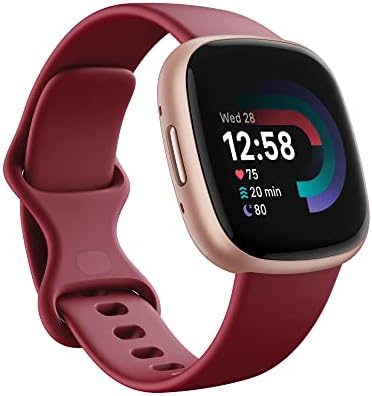
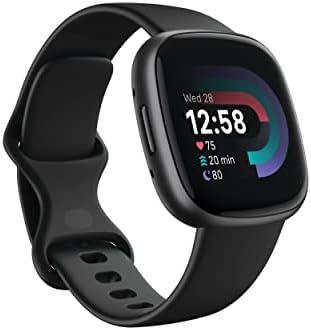
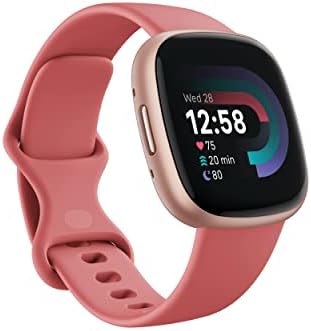
Two smartwatches, two very different answers to the same question: how much should a wrist companion ask of its owner? The Versa 4 series leans on multi-day battery life and a fitness-first software stack, while the Galaxy Watch7 series brings a 3nm-class chip, dual-frequency positioning, and a full app store onto the wrist. This guide is built to be saved: the specifications sit side by side below, the real trade-offs are named in plain terms, and by the end the decision criteria should point clearly at one watch or the other.
| Purchase Decision Factor | Fitbit Versa 4 | Samsung Galaxy Watch7 |
|---|---|---|
| Case sizes available | 40mm aluminum | 40mm and 44mm aluminum |
| Display and cover glass | AMOLED, always-on option | Super AMOLED with sapphire crystal |
| Processor class | Fitbit platform SoC | 3nm-class chip |
| Memory (RAM) | Entry-tier | Minimum 1.5GB |
| Battery life (typical use) | Up to 6 days | 1 to 2 days |
| GPS positioning | Built-in GPS, single band | Dual-frequency GPS |
| Connectivity options | Bluetooth only | Bluetooth and LTE variants |
| Health sensing suite | Heart rate, SpO2, sleep stages, Daily Readiness | Heart rate, ECG, sleep, stress, body composition |
| Onboard AI features | Basic coaching prompts | Galaxy AI companion features |
| Workout modes | 40 plus modes | 100 plus, auto-detection |
| Operating system | Fitbit OS | Wear OS with Google services |
| Third-party app access | Limited companion apps | Google Play store access |
| Compatible phones | Android and iOS | Android only |
| Durability rating | 5 ATM, glass screen | 5 ATM plus IP68 with sapphire cover |
| Ideal user profile | Long-battery, cross-platform fitness tracking | Galaxy phone owners wanting AI and app depth |
The table surfaces the two decisive splits. Battery life favors the Versa 4 by several days, while positioning accuracy, app flexibility, and sensor depth belong to the Galaxy Watch7. Every section below follows that same logic: match the specification to the daily habit, not the marketing to the shelf.
GPS Accuracy: Single-Band Versus Dual-Frequency Tracking
Positioning is where the two watches separate most in outdoor terms. The Samsung Galaxy Watch7 40mm L300N GPS Green carries dual-frequency GPS, a system that listens to satellite signals on two bands rather than one. In dense urban canyons, under tree cover, or along trails flanked by cliffs, that dual reception reduces the multi-path errors that can stretch a recorded running route hundreds of metres off line. Samsung positions the feature as a way to keep tracks steady when users move fast and change direction, a claim reflected across the Galaxy Watch7 series.
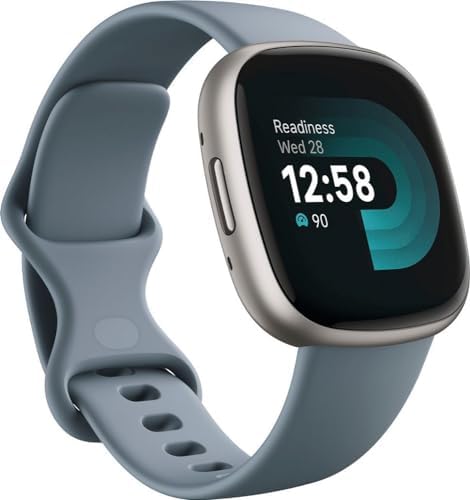
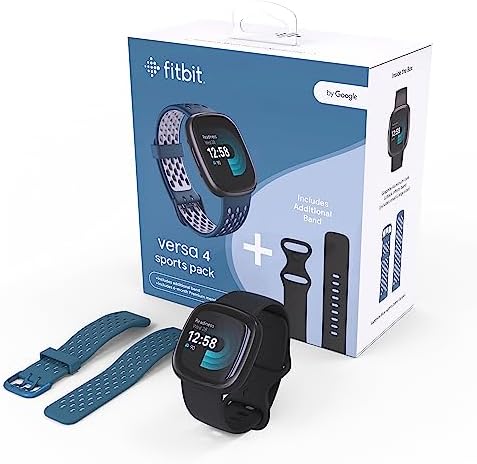
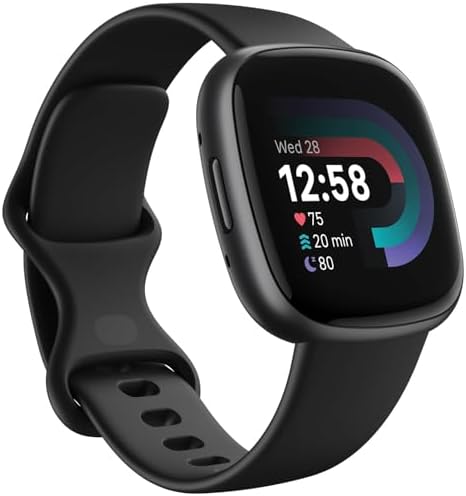
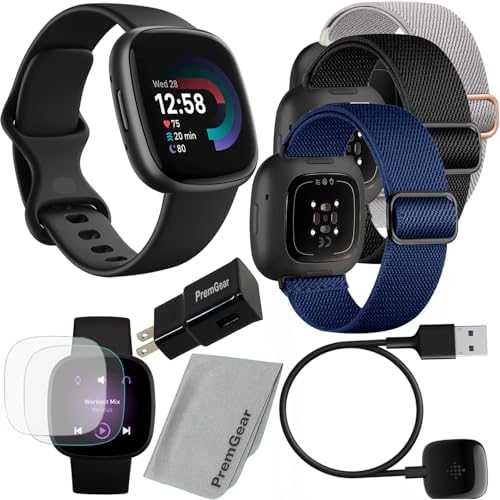
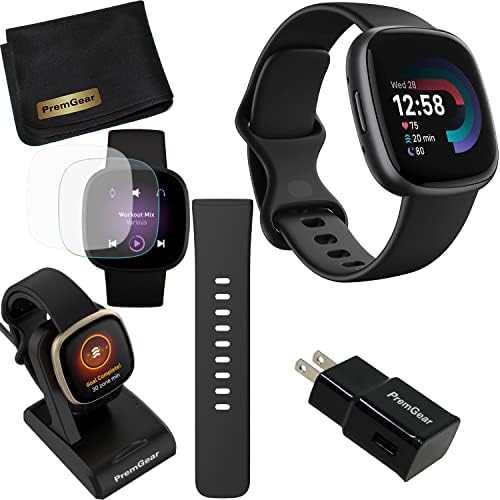
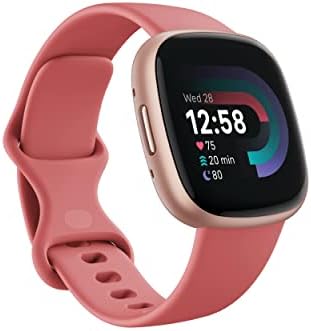
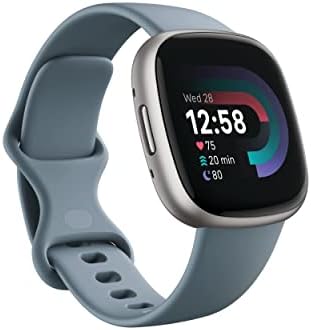
The Fitbit Versa 4 Fitness with Daily Black Graphite GPS takes a simpler route. Its single-band GPS module locks onto position for outdoor runs, rides, and hikes and feeds those tracks back into the Fitbit app for pace charts and route history. Accuracy in open sky is more than adequate for daily fitness. Where it struggles is exactly where dual-frequency hardware pays off: grade-crossing city runs, tunnel-heavy commuting routes, and forest trails with heavy canopy cover. Put another way, the gap is not on a football field at noon, it is on a winding alley at dusk.
Battery Life as a Daily Ritual, Not a Spec Sheet Number
The Versa 4 advertises battery life measured in days, extending up to six under typical mixed use, with aggressive always-on settings cutting into that figure. That changes the relationship between user and charger. A weekly or bi-weekly charge window is easy to keep in a habit: the watch simply charges while the user showers on Sunday and runs again by Monday morning. Sleep tracking becomes far more useful when the device is not abandoned on a bedside table for the first four hours of the night.
The Galaxy Watch7, with its brighter display and more powerful silicon, requires a nightly top-up for many owners. That is not a failure of design; it is the price of running a 3nm-class chip and a high-brightness screen all day. An LTE-equipped variant that receives calls and notifications away from the phone draws even more current. Owners who already charge a phone every night rarely mind, but those who want to disappear into a weekend and come back with battery to spare will feel the difference most on overnight trips without a spare charger.
The Health Platform Question: Fitbit Insights Versus Samsung Sensors
Tracking breadth and the app behind it
The Versa 4 leans on Fitbit’s software story. Daily Readiness, heart rate tracking around the clock, stress scores, and detailed sleep stages are packaged inside a single app environment that has been refined over more than a decade. The ecosystem is the luxury here: workouts, recovery scores, and sleep trends sit in one timeline, and the data presentation is almost forgiving for newcomers. Around 40 workout modes cover small-group classes, commutes, and weekend sports.
Sensors that measure more, and need more
The Galaxy Watch7 measures a similar base set – heart rate, SpO2, sleep, and workouts – but adds electrical sensors powerful enough for on-body measurements such as body composition, and brings additional pressure on the user to interpret a larger data picture across a broader app library. Samsung’s own material positions the watch as an AI-powered daily companion that keeps track of heart rate, workouts, sleep, and stress, then translates them into suggestions. Hikers, gym-goers, and home athletes do not need every layer of that data, but for health-kit users who value the raw depth, the Samsung side records more data points per workout than the Fitbit package.
Wear OS and the App Question: What the Watch Can Run
The operating system split is the quiet dealbreaker. The Galaxy Watch7 runs Wear OS and connects to Google services, which opens third-party watch apps, voice assistants, maps, and cross-app notifications that go well beyond thin companion apps. Users who genuinely like small utility apps on the wrist – laundry timers, music reference tools, delivery notices – will find the Galaxy ecosystem far richer. No comparable investment is coming for Fitbit’s OS, which is intentionally a focused fitness platform.
The trade-off lands squarely with the phone in the pocket. The Galaxy Watch7 is wired tightly into Galaxy phones, with seamless pairing, digital assistant access, and remote camera controls on Samsung handsets. iPhone owners face a harder wall; core features that depend on its AI layer and app side-loading come with friction, and there is no iPhone option to sidestep it. The Fitbit brand’s platform does not ask the user to pick a side; Android or iPhone, the Versa 4 and similar models run on either without losing core function.
Wrist Fit, Materials, and Long-Term Wear
The Versa 4 is light on the wrist and easy to forget, which matters most for people who intend to wear a watch through an eight-hour desk day and into an evening workout. The aluminum case keeps weight low, and the strap options run wide enough for sleep and training use. The durable screen holds up to daily wear, though it will pick up micro-scratches with enough contact against tabletops and car doors.
The Galaxy Watch7 counters with sapphire crystal over the display, a material that resists scratching far better than standard glass, and an IP68 rating that adds dust protection on top of the 5 ATM water resistance both watches share. That combination matters for anyone who wears a watch through yard work, beach trips, and gym sessions without taking it off. The trade is weight and thickness: the Samsung case carries more mass, which some sleep trackers notice during the first week before the wrist adapts.
Which Buyer Should Choose the Fitbit Versa 4
The strongest case for the Versa 4 is the one its battery profile describes. Anyone who does not want to think about charging every night, who splits time between an Android phone and an iPhone in the household, and who values recovery scores and readiness over raw sensor breadth will get more out of the Fitbit path. The watch is thin, quiet, and unremarkable in the best sense: it does its job for six days and stops asking for attention. In this corner of the market, it sits alongside focused devices that trade sensor count for consistency, and the Versa 4 series is the clearest expression of that philosophy.
Which Buyer Should Choose the Samsung Galaxy Watch7
Choose the Galaxy Watch7 if the smartphone in your pocket is a Galaxy, the daily routine includes at least one workout worth logging accurately, and pulling AI-assisted health insights or quick third-party apps onto the wrist is genuinely useful. Dual-frequency GPS, a 3nm-class chip, at least 1.5GB of memory, and optional LTE – these are features that buy speed and accuracy and ask for a nightly charge in exchange. The entry configuration is accessible in the 40mm L300N GPS variant, among other colorway options within the same hardware family.
Look at the two watches again without spec sheets. Both fit the wrist, both count steps and sleep, and both tell time. What separates them is habit: how a person charges a gadget, how deep they want their health data to run, and how closely the watch is knitted to a specific phone. Once that habit is named honestly, the choice stops being a comparison and becomes a match.