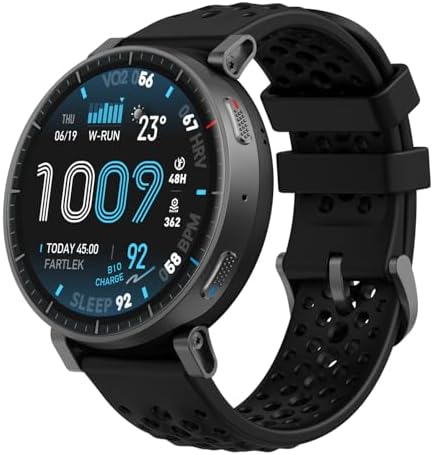
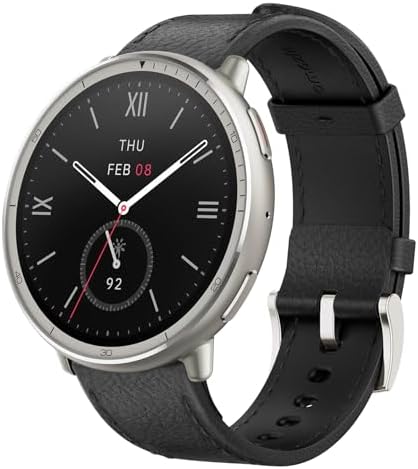
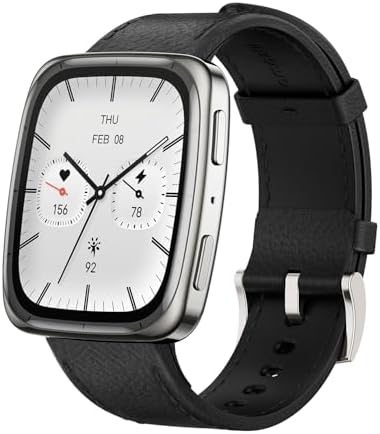
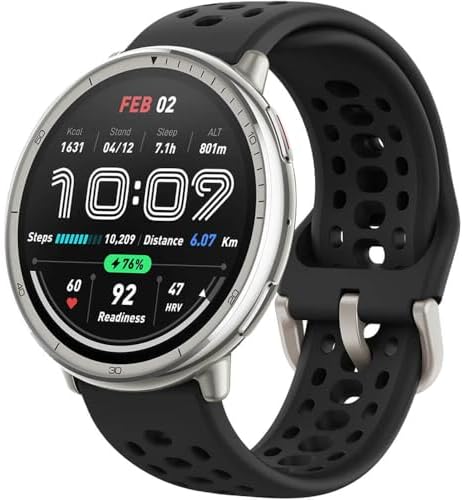
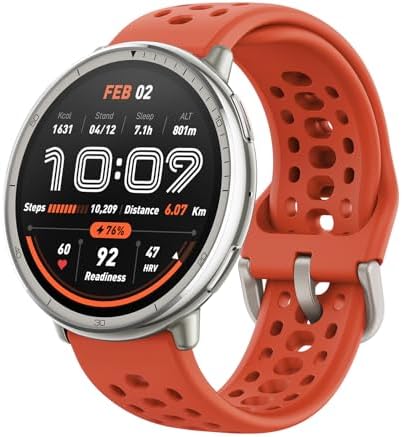
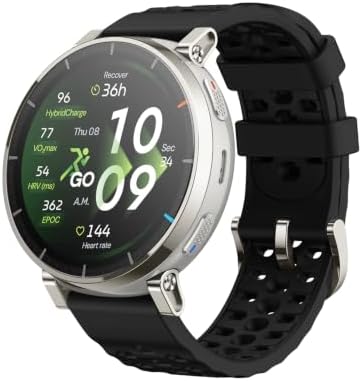
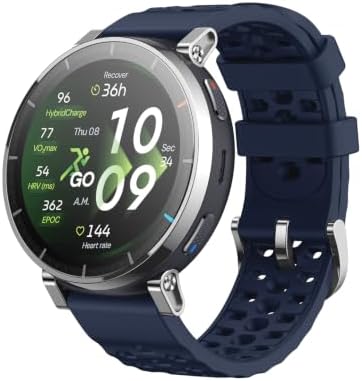
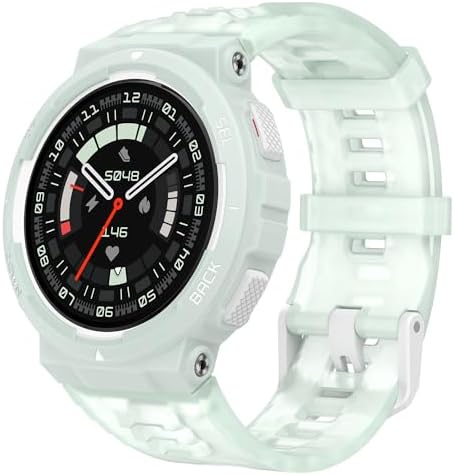
The Amazfit Active Max and the Amazfit Balance 3 sit close together in price and size, yet they are built for noticeably different owners. Both carry a 1.5-inch AMOLED panel and a 48mm case, and both run the same Zepp OS ecosystem, so the decision rarely comes down to raw hardware alone. What separates them is a set of trade-offs between battery endurance, case materials, onboard storage and navigation hardware, and those trade-offs matter a great deal once the watch leaves the shop.
This guide is written for buyers who intend to keep the watch for years rather than weeks. It sets the two models side by side on the specifications that actually change daily use, then explains who should pick which. Keep it bookmarked, because the ranking of these differences shifts depending on whether you prioritize days away from a charger or a case that survives scrapes against door frames.
| Specification | Amazfit Active Max | Amazfit Balance 3 |
|---|---|---|
| Display Size and Type | 1.5-inch AMOLED | 1.5-inch AMOLED |
| Peak Brightness | 3,000 nits | Not specified in official listing |
| Glass Protection | Standard cover glass | Sapphire glass |
| Case Material | Lightweight composite build | Stainless steel |
| Case Size | 48mm | 48mm |
| Stated Battery Life | Up to 25 days | Up to 21 days |
| Onboard Storage | 4GB | 64GB |
| GPS Hardware | GPS positioning | Dual-band GPS |
| Offline Maps | Supported | Supported |
| Built-in Flashlight | Not listed | Yes |
| Sport Modes | 170+ modes | 180 modes |
| Health Tracking | Heart rate and sleep tracking | Heart rate and sleep tracking |
| Water Resistance | Water-resistant | Water-resistant |
| Strap and Fit | Lightweight build, broad compatibility | 22mm silicone strap, 140-210mm wrist range |
| Charging | Magnetic charging base | Magnetic charging base |
| Primary Audience | Endurance-focused, outdoor-leaning users | Material-conscious, everyday premium users |
The table reveals where the two watches diverge most sharply. Battery life favors the Active Max by four days in official figures, storage swings the other way by a wide margin in favor of the Balance 3, and the case materials tell two entirely different stories about how each watch is meant to age on your wrist. Those three rows will settle the decision for most buyers before any other specification is considered.
Amazfit Active Max: Built Around Endurance, Brightness and Low Weight
Amazfit positions the Active Max as a performance-first device, and the official launch material frames the upgrade path in three deliberate steps: a bigger display, bigger storage than older Active models, and a bigger battery. The headline figure is up to 25 days of typical use, which is the longest runtime in this comparison and among the longer figures across the Amazfit brand’s current wearable range. For anyone who has grown tired of charging a watch every second or third evening, that number reframes what the device is for.
The 1.5-inch AMOLED panel reaches 3,000 nits of peak brightness according to Amazfit. That matters more than it sounds. A watch is glanced at, not studied, and those glances happen in harsh midday sun, under gym lighting or behind a windscreen. A high-nit panel keeps contrast legible without tilting the wrist or shading the face. Combined with the lightweight build, the Active Max reads as an outdoor companion that disappears on the arm during long sessions.
- Runtime: Up to 25 days stated by Amazfit
- Display: 1.5-inch AMOLED with 3,000 nits peak brightness
- Storage: 4GB, enough for offline map regions and music
- Training: 170+ workout modes including smart recognition
- Navigation: GPS positioning with offline map support
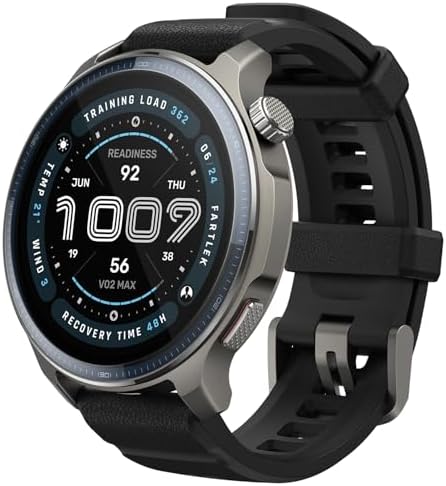
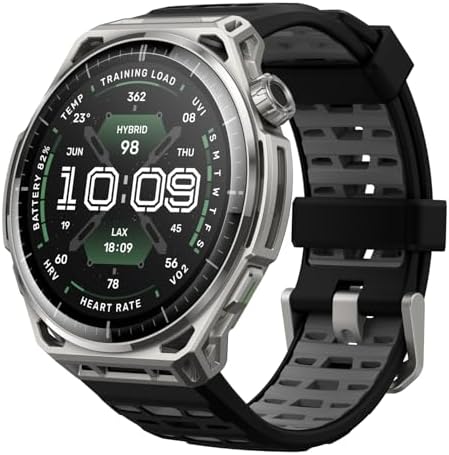
The 4GB storage allocation deserves a closer look because it defines how offline capability feels in practice. It is sufficient for a handful of downloaded map tiles and a compact music library, and that combination covers the realistic needs of a runner who wants to leave the phone at home. The Amazfit Active Max Smart Watch 1.5″ 48mm GPS keeps that utility without stretching into the price bracket of the Balance 3, which is precisely the appeal of the endurance argument.
Amazfit Balance 3: Sapphire, Steel and Dual-Band Positioning
The Amazfit Balance 3 answers a different question. Where the Active Max trims weight and storage to buy runtime, the Balance 3 spends its budget on materials and positional accuracy. The case is stainless steel rather than a lightweight composite, and the crystal is sapphire, a material that resists scratching far better than standard cover glass and appears on relatively few mid-range smartwatches. Those two choices change not just durability but the character of the watch on the wrist.
Dual-band GPS is the other decisive upgrade. Dual-band receivers track more than one satellite frequency, which reduces the multipath errors that occur when signals bounce off buildings, cliffs or dense tree cover. The practical outcome is a cleaner recorded route in city running and mountain hiking alike, which matters if your training data feeds into performance analysis. Fewer corrupted splits and fewer zigzag tracks mean training load and pace figures carry more weight.
The Balance 3 also carries 64GB of storage and a built-in flashlight, two features aimed squarely at extended outdoor use. The flashlight turns the watch into a workable light source for navigating a tent interior or reading a map after dark, while the larger storage pool comfortably holds extensive offline map regions and a much larger music library. The official listing specifies a 22mm silicone strap with a 140-210mm wrist range and a classic pin buckle, so the fit is adjustable but firmly on the larger side.
Battery Life, Charging and the Real Cost of Weekly Charging
The stated gap between 25 days and 21 days is four days per cycle, which sounds modest in isolation. Converted into charging events over a year, however, the difference compounds. The Active Max demands roughly 15 charges annually at its claimed maximum, while the Balance 3 asks for about 18. More telling is the difference in calendar terms: both watches are comfortable reaching a weekend away or a short business trip without a charger, though the Active Max holds a wider margin when heavy GPS use erodes the baseline.
Charging hardware is shared territory rather than a differentiator. An Amazfit Charging Base for Various Models is documented as compatible with both the Active Max and the Balance family, so owners moving between models do not lose their dock. That small detail matters for households that already have an Amazfit accessory setup, and it softens the practical cost of switching sides.
Display, Brightness and Legibility in the Field
Both watches use a 1.5-inch AMOLED panel, which means identical screen real estate and comparable resolution density. The distinction lies in brightness. Amazfit lists 3,000 nits for the Active Max, a figure that puts it among the brightest small wearables on sale. The Balance 3 official page does not publish a comparable number, so a literal comparison is not possible from public specifications alone, but the sapphire cover introduces a trade-off: sapphire resists scratching and is marginally more reflective, while standard cover glass tends to transmit slightly more light in dim conditions.
For buyers, this translates into a question of usage. Brightness-first buyers who run midday, cycle in open sun or ride motorcycles will feel the Active Max advantage every day. Buyers more concerned about a face that remains unmarked after a year of desk edges and door handles will find the sapphire protection on the Amazfit Balance 3 Smart Watch 1.5″ 48mm GPS a worthwhile trade-off against the Active Max’s brightness advantage.
Health, Training Modes and the Software Experience
The two devices share more than they differ here. Both cover heart rate and sleep monitoring, both support offline maps, both route notifications from iOS and Android, and both use the same companion app for data review and firmware updates. The mode counts are close, with Amazfit listing 170+ workout modes for the Active Max including smart recognition, and 180 modes on the Balance 3. In day-to-day use that ten-mode gap matters less than it appears, because smart recognition covers the activities most people forget to log manually.
Where the software experience diverges is in how positional and storage headroom feed back into training. Dual-band GPS on the Balance 3 produces consistent distance measurements in difficult environments, which in turn makes pace, cadence and training-load summaries more reliable. The Active Max handles the same metrics competently in open conditions. Buyers who read their split tables carefully should weigh this difference more heavily than the raw mode count suggests.
Case Construction, Weight and Daily Wearability
A 48mm case is large, and both watches share that footprint. The decisive variable is mass and material. The Active Max is deliberately lightweight, a design choice that reduces wrist fatigue during running and sleep tracking. The Balance 3 uses stainless steel, which raises perceived heft and gives the watch a more formal presence. On the wrist, the steel case works with a jacket sleeve in a way that a composite build rarely matches, while the lighter body proves more forgiving during long efforts and overnight wear.
Neither watch is a dress piece, and neither is a hardened expedition instrument. The honest framing is that the Balance 3 leans slightly toward everyday premium use, and the Active Max leans slightly toward action. Buyers who literally alternate between a desk and a trail should decide which of those two environments is harder on a watch, then choose accordingly rather than attempting to optimize for both.
Who Should Buy the Amazfit Active Max
The Active Max suits the buyer whose primary frustration with smartwatches is runtime: the runner logging 60-kilometre weeks, the hiker planning multi-day routes with offline map tiles, the traveller who resents packing a second charger. The 25-day figure, 3,000-nit panel and 4GB storage combine into a coherent package for someone who prioritizes stamina over packaging. It also fits anyone who trains in bright outdoor conditions and wants a display that stays readable at a glance.
The lighter build is not merely a comfort feature either. Less mass on the wrist produces fewer false readings from movement noise during sleep and steadier optical heart rate measurement during long, low-intensity sessions. Buyers who hold their device to a strict accuracy standard in those contexts will find the weight design a functional advantage rather than a cosmetic one.
Who Should Buy the Amazfit Balance 3
The Balance 3 suits the buyer who wants one watch that moves credibly from a meeting to a training session. Stainless steel, sapphire glass and the additional heft read as a deliberate material upgrade, and the pairing of dual-band GPS with 64GB of storage makes it the stronger choice for anyone who records routes in cities, canyons or forest and keeps a substantial offline map archive. The flashlight is a genuine convenience for camping, late-night walking and power cuts.
Buyers should accept two realities before choosing it. First, 21 days is a long runtime by any standard, but it is the shorter of the two figures here, and heavy GPS use will bring charging forward. Second, the glass brings scratch resistance rather than indestructibility. Sapphire is tough against abrasion and still vulnerable to a direct hit on a hard edge, which is worth remembering for anyone who works with their hands.
The Decision Criteria That Actually Matter
Strip away the marketing framing and four questions determine the purchase. How many days between charges do you genuinely need? Will your routes be recorded in environments where dual-band positioning measurably improves accuracy? Do you want a steel case and sapphire glass enough to accept slightly less runtime? And how much onboard storage do your offline maps and music actually consume? Answer those honestly and the choice becomes straightforward.
Buyers who answer “long runtime, bright screen, light body” should take the Active Max. Buyers who answer “durable materials, precise routes, large storage, extra utility” should take the Balance 3. The watches are close enough on software and health tracking that neither choice is a compromise on fundamentals, only a preference on priorities. Whichever side of the table fits, both occupy a sensible middle ground between budget fitness bands and premium multisport devices.
The Amazfit ecosystem has matured to the point where a 48mm watch with offline maps, multi-day battery life and credible health tracking no longer requires a flagship budget. The Active Max and Balance 3 represent two answers to the same brief, and the fact that the split hinges on endurance versus materials rather than core competence is a sign of how strong the baseline has become.