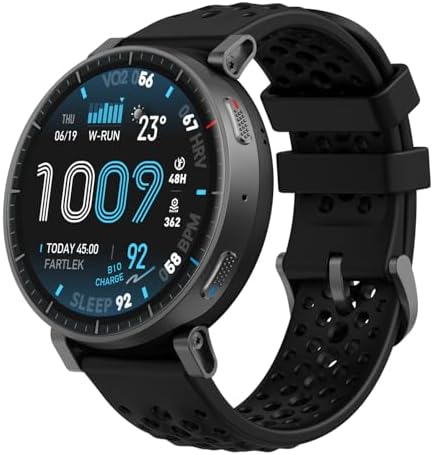
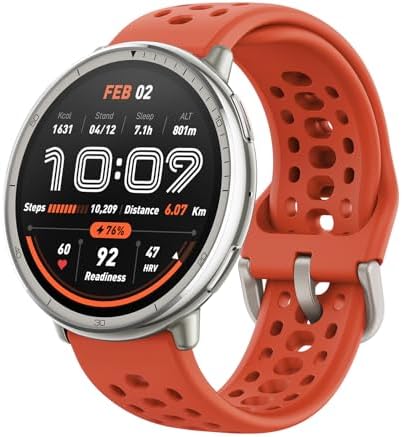
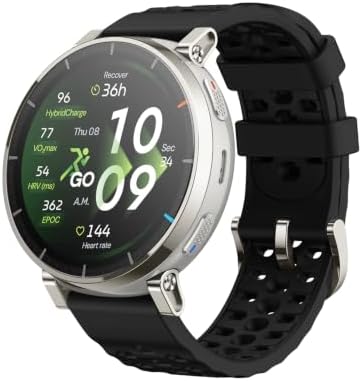
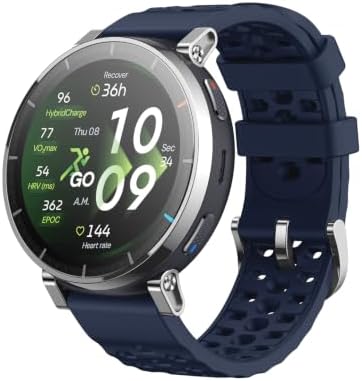
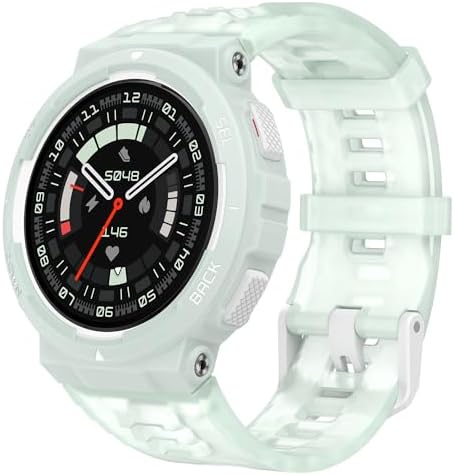
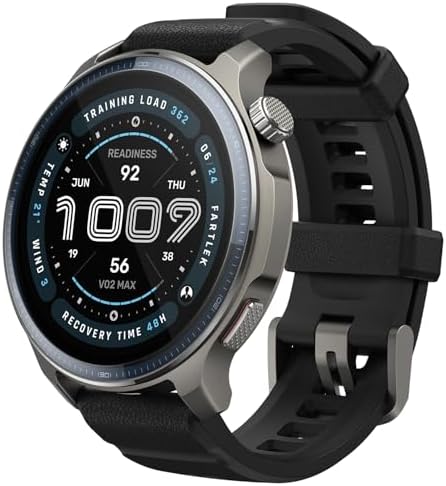
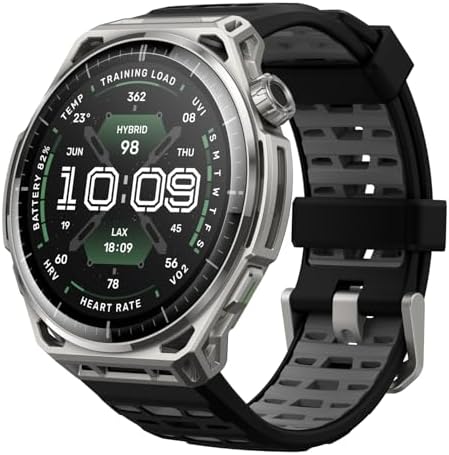
The Amazfit Active Max puts a 1.5-inch AMOLED panel with 3,000 nits of peak brightness on a lightweight chassis, a combination that matters most when a run stretches past sunrise into harsh midday glare. Rather than chasing the premium tier, this model targets runners who want dependable GPS tracking, offline navigation, and long stretches between charges without paying flagship money.
That positioning raises an obvious question: how does a mid-range wearable hold up against the specific demands of distance running, interval training, and everyday training load? The answer sits in the balance between display quality, battery endurance, mapping capability, and the practicalities of wearing a 48mm case through tempo sessions and recovery days alike.
Display Brightness and Readability on the Move
A runner glances at a watch, not studies it. A quick flick of the wrist has to deliver pace, heart rate zone, and distance in less than a second, often with sweat in the eyes and the sun directly overhead. The 1.5-inch AMOLED screen on this model addresses that scenario directly through its 3,000-nit peak brightness, a figure Amazfit lists among the core specifications. High brightness translates into contrast that survives direct sunlight, which is precisely when lower-output panels turn into mirrors.
AMOLED technology contributes more than raw luminance. Because each pixel emits its own light, dark watch faces stay genuinely dark, reducing glare and improving legibility of white-on-black data fields that most runners prefer. The larger 1.5-inch diagonal also allows more data fields per screen, so pace, cadence, and heart rate can share space without shrinking to unreadable sizes.
Battery Endurance Across a Training Block
Amazfit states that the Active Max delivers up to 25 days of battery life in a lightweight design. That figure almost certainly refers to typical smartwatch usage rather than continuous GPS, and the distinction matters for anyone planning long runs. GPS tracking draws substantially more power than idle timekeeping, so the realistic endurance for a runner will depend on how many tracked sessions occur per week and how long each one lasts.
Even so, a 25-day envelope between charges under mixed use is meaningful. It means the watch can survive a full training block, or several weeks of commuting and gym visits, without the nightly charging ritual that shorter-endurance wearables demand. For runners who track three to five sessions per week and wear the device as a daily watch, that translates into charging roughly once or twice a month rather than every few days. The practical gain is reliability: a watch that is always near full charge is a watch that never fails at the start line.
Offline Maps and 4GB Storage for Unfamiliar Routes
Route exploration is where the Amazfit Active Max separates itself from simpler trackers. The device carries 4GB of storage specifically for offline maps, a feature aimed at outdoor activities where cellular coverage is unreliable or absent entirely. Downloading a route before setting out removes dependence on a phone signal, which is exactly the situation long-distance trail runners and city explorers in unfamiliar districts encounter.
The value of offline cartography is easy to underestimate until a wrong turn occurs on an unfamiliar loop. On-device maps let a runner check position without pulling out a phone, and they allow preloaded courses to guide a session from start to finish. Combined with GPS positioning, this turns the watch into a standalone navigation tool rather than an accessory tethered to a handset.
Workout Modes, Training Load, and Everyday Tracking
Amazfit lists more than 170 workout modes, including Smart Strength training, on this model. The breadth matters less for a dedicated runner than the depth applied to running-specific metrics, but a wide mode library does keep a single device useful across cross-training, cycling, swimming, and strength work. Runners rarely run exclusively, and a watch that tracks the entire weekly load avoids the fragmentation of switching between devices.
Heart rate and sleep tracking round out the health side of the package, feeding recovery awareness into the training picture. The 48mm case size is worth noting before purchase: it is a large footprint, and runners with slender wrists should consider how the watch sits during high-cadence arm swing. Fit at the wrist affects optical heart rate accuracy, so strap tension and case size are practical considerations, not cosmetic ones.
How It Compares Within the Amazfit Range
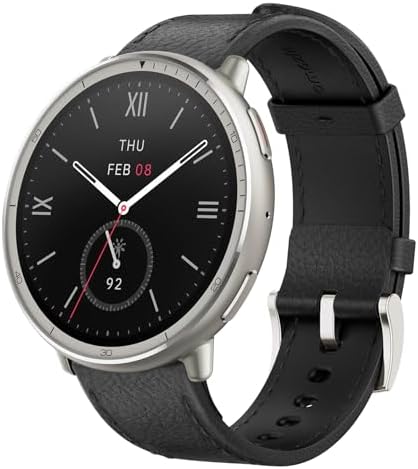
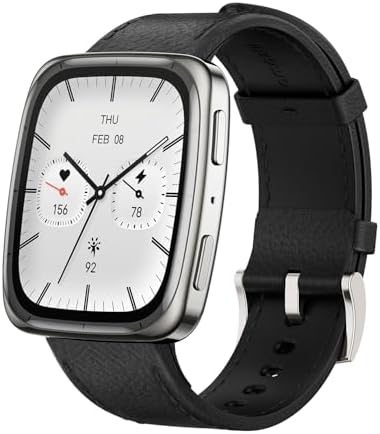
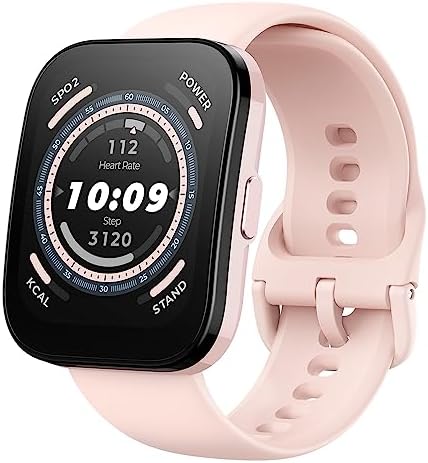
Runners comparing options within the Amazfit brand’s current lineup will notice that the Amazfit Bip 6 Smart Watch 1.97″ 46mm GPS Bluetooth offers a different route to the same athlete. Its 1.97-inch display is larger, and its 14-day battery rating sits below the 25-day figure of the Active Max, while 140+ workout modes and free maps position it as an everyday fitness companion with a wider screen. A runner prioritizing sheer display area and a slightly smaller case may lean toward the Bip 6, though the Active Max’s offline map storage and longer endurance estimate favor extended outdoor use.
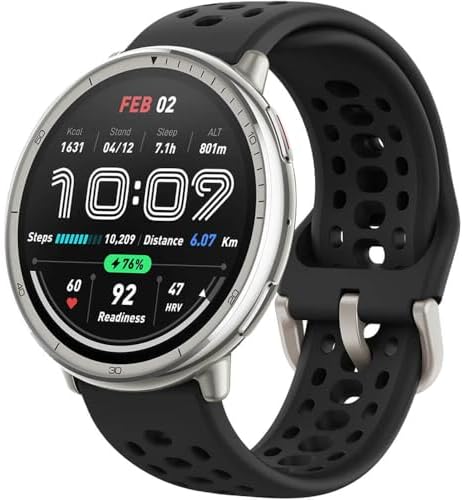
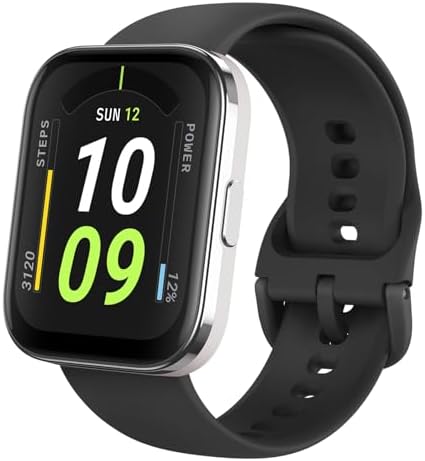
At the more compact end, the Amazfit Active 2 Smart Watch 1.32″ 44mm GPS trades battery capacity for a 44mm case, a 10-day rating, and 160+ workout modes with a slim silicone strap. Runners with smaller wrists or a preference for unobtrusive wearables will find that footprint appealing, while those who value maximum battery life and on-device mapping will see the Active Max as the stronger tool for long outings.
Who Should Consider the Active Max
Distance runners who train outdoors and regularly venture onto unfamiliar routes sit at the center of this watch’s appeal. The combination of offline maps, long battery endurance, and a bright 1.5-inch display lines up with the practical checklist for marathon preparation, trail exploration, and weekend long runs. Amateur athletes managing a mixed training week will also benefit from the broad workout mode coverage and continuous heart rate and sleep data.
Runners who mainly use a treadmill, or who prefer a minimal watch for interval sessions on a track, may find a smaller case and simpler feature set more comfortable. The 48mm chassis is the clearest trade-off in the package: it houses the battery and the screen, but it will feel substantial on a narrow wrist.
Building a Running Setup Around This Watch
Getting useful data out of any GPS wearable depends on a few habits. Locking satellites before the run starts prevents early pace errors. Calibrating stride length through a few outdoor runs improves treadmill accuracy if indoor sessions are part of the plan. Consistent overnight wear yields better sleep data, which in turn informs recovery decisions. And downloading offline maps before a new route removes the risk of navigation failure at the worst possible moment.
- Display: 1.5-inch AMOLED with 3,000 nits peak brightness
- Battery: Up to 25 days as stated by Amazfit
- Storage: 4GB for offline maps
- Workouts: 170+ modes including Smart Strength
- Case: 48mm lightweight design
- Positioning: GPS with offline map support
Whether these specifications add up to the right watch depends on which runner is asking. The Amazfit Active Max sits among larger endurance tools rather than compact daily trackers, and that is exactly the category it was built for. It reads as a device made for people who measure a good week in kilometers logged and a good watch by how seldom it needs a charger. For the runner who wants mapping on the wrist, a screen that holds up in full sun, and enough endurance to forget about the charging cable, this model makes a coherent case.