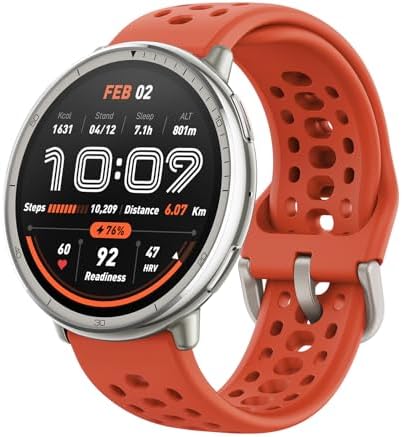
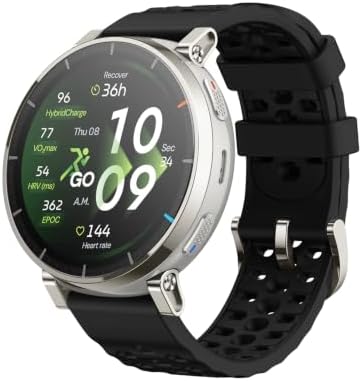
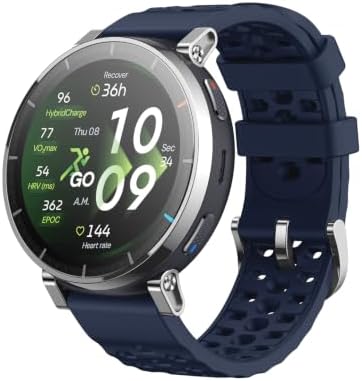
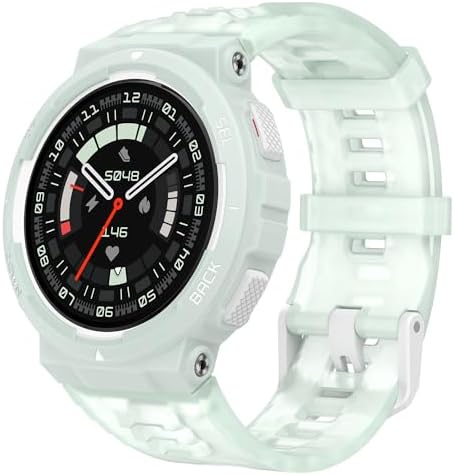
The Amazfit T-Rex 3 Pro series and the Amazfit T-Rex 3 collection both sit at the tough end of the wearable market, yet they target noticeably different buyers. One pushes toward premium materials and tactical styling, the other stays lean, light, and remarkably long-running. This guide is built to be kept as a reference: it sets out the real trade-offs between the two lines so the right purchase decision becomes obvious for a given wrist, budget, and training routine.
| Feature & Selling Point | Amazfit T-Rex 3 Pro | Amazfit T-Rex 3 |
|---|---|---|
| Case Sizes Offered | 48mm and 44mm | Single 48mm-class case |
| Dimensions | 48 x 48 x 14mm / 44.8 x 44.8 x 13.2mm | Rugged 48mm-class footprint |
| Weight Without Strap | 52g (48mm) / 46.8g (44mm) | Lighter single-case build |
| Bezel Material | Titanium bezel | Standard rugged bezel |
| Glass | Sapphire crystal | Reinforced mineral-type cover |
| Display | 1.5-inch AMOLED | 1.5-inch AMOLED, 2000 nits |
| Battery Life | 25 days typical | 27 days typical |
| GPS | Dual-band GPS | Rugged GPS navigation |
| Flashlight | Built-in flashlight | Not part of the core spec set |
| Sport Modes | 180+ including HYROX | Broad multi-sport set, HYROX added via update |
| Offline Maps | Supported | Supported via Map POI updates |
| Water Resistance Claim | Water-resistant rugged rating | Waterproof to 328 ft |
| Thermal Range | Built for outdoor extremes | -22F to 158F |
| Design Direction | Tactical, titanium-forward | Functional outdoor tool styling |
| Best Suited To | Tactical users, smaller wrists, sapphire seekers | Endurance athletes chasing maximum uptime |
The sharpest dividing lines sit in three rows: the Pro adds a titanium bezel, sapphire glass, and an integrated flashlight, while the standard T-Rex 3 answers with a longer 27-day battery rating and a wide thermal envelope. Almost every other difference flows from those choices, including the two-case-size strategy on the Pro and the single-case simplicity of the older model.
Why Amazfit Split One Watch Into Two Philosophies
Amazfit already had a proven rugged formula in the T-Rex 3: a 48mm-class body, a 1.5-inch AMOLED panel rated at 2000 nits, water resistance to 328 feet, and operation from -22F to 158F. Rather than replace it outright, the brand widened the family. The Pro treatment moves in the direction of materials and field utility, adding a titanium bezel, sapphire crystal, and a built-in flashlight, plus a smaller 44mm option that measures 44.8 x 44.8 x 13.2mm and weighs 46.8g without the strap.
That second case size matters more than it first appears. The 48mm Pro is 48 x 48 x 14mm and 52g without the strap, which lands in the same territory as the original. The 44mm model, by contrast, opens the rugged line to buyers who found the previous footprint simply too large. For anyone who has tried to wear a chunky adventure watch under a cuff or through a full night of sleep tracking, the smaller case is the most consequential addition in the entire lineup.
Build Materials and Real-World Durability
Sapphire crystal is the single hardest-wearing upgrade in this comparison. It resists scratching far better than the cover glass found on most sub-premium outdoor watches, which matters for climbers, hikers, and anyone who regularly pushes a wrist through rock, brush, or gym equipment. Combined with a titanium bezel, this is a lighter and more abrasion-tolerant package than a stainless or composite bezel can offer.
The standard T-Rex 3 counters with an already impressive toughness story of its own: 328 feet of water resistance and a validated operating range from -22F to 158F. Cold-weather runners and winter mountaineers get an explicit thermal guarantee here that few competitors publish at any price. Neither watch should be treated as a dress piece, but the choices inside this one belong to a broader rugged ecosystem, and the engineering discipline behind the Amazfit brand’s outdoor line shows how consistently it builds for abuse rather than for show.
Battery Life: 25 Days Against 27 Days
On paper the gap looks trivial, yet in practice the difference reflects a design trade. The Pro redirects some of its energy budget toward the flashlight and higher-end GPS modes, landing at 25 days of typical use. The T-Rex 3 states 27 days and pairs that with dual considerations for long expeditions where charging opportunities are scarce. Two days in a month is not much; two days at the end of a multi-week trek, with no power outlet in sight, is exactly the sort of margin that determines which watch goes in the pack.
For multi-day ultra runners and thru-hikers, the longer rating on the standard model is a legitimate argument. For weekend adventurers and everyday wearers, 25 days is still roughly four times what a mainstream smartwatch delivers, which makes the Pro’s other upgrades far easier to justify.
Positioning, Sizes, and Strap Compatibility
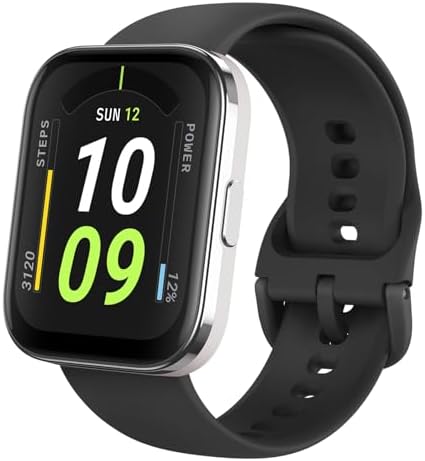
Amazfit positions the T-Rex 3 Pro as a tactical-leaning tool, with colorways such as Tactical Black in the 44mm version, while the T-Rex 3 remains the approachable endurance workhorse. Buyers weighing the two should decide on size first and materials second, because those are the choices that cannot be changed later. The band, fortunately, is a different story: Amazfit Hyrox 22mm Silicone Replacement Strap a broad set of models across the lineup, including the T-Rex 3, which means straps can be rotated for training, swimming, and daily wear without hunting for a proprietary fit.
Training Features and Navigation
Both watches carry broad sport coverage. The Pro lists more than 180 sport modes, with HYROX profiles built in, alongside offline maps and dual-band GPS for more reliable positioning in dense terrain. The T-Rex 3 has also received HYROX PFT support and map POI enhancements through a January 2025 firmware update, which means existing owners are not frozen out of newer training structures.
Where the Pro pulls ahead is the flashlight, a genuinely practical addition for pre-dawn trail runs, tent organization, and power outages. Dual-band GPS is the other meaningful edge for canyon and city-canyon navigation, where multi-path signal interference is common.
Which Buyers Should Choose Which Watch
- Choose the T-Rex 3 Pro if: a sapphire crystal and titanium bezel matter, a built-in flashlight fits your routine, you prefer the 44mm case, or dual-band GPS accuracy is a priority on technical routes.
- Choose the T-Rex 3 if: maximum battery life drives your decision, you want explicit cold-weather ratings down to -22F, or you simply want the proven original at the lower cost point.
- Skip both if: you need a slim dress-adjacent smartwatch, deep third-party app support, or contactless payments above all else.
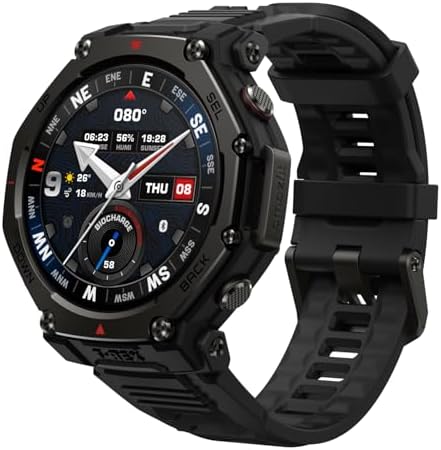
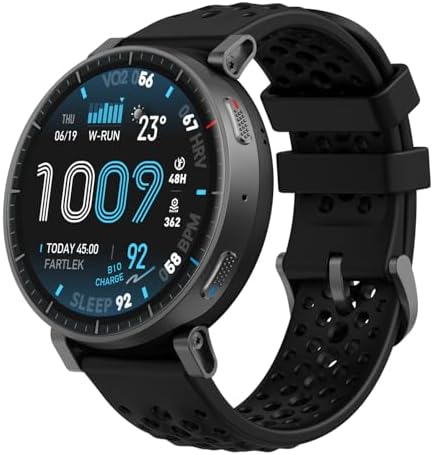
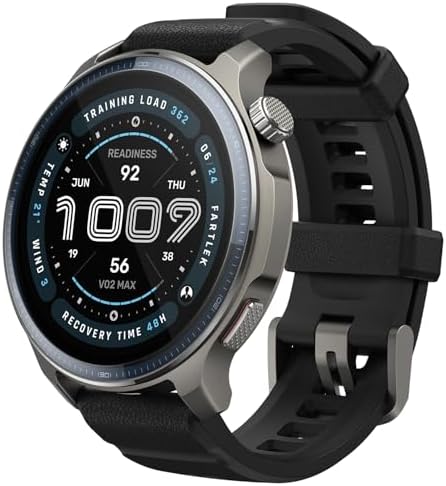
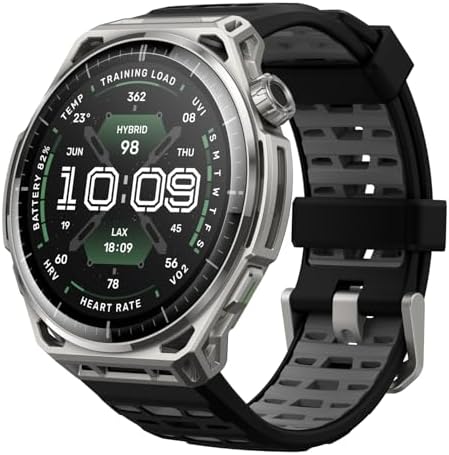
The full Pro package, as stocked by retailers, is a specific configuration: Amazfit T-Rex 3 Pro Smart Watch Titanium 48mm GPS, which features a 1.5-inch AMOLED screen with sapphire glass, a 25-day battery, dual-band GPS, an integrated flashlight, offline maps, and a titanium bezel, so buyers should confirm case size before committing, since the 44mm variant carries its own measurements and weight.
The standard model is equally easy to pin down: the Amazfit T-Rex 3 Smart Watch 1.5″ 48mm GPS pairs a 1.5-inch AMOLED display with a 27-day battery, water resistance to 328 feet, offline maps, and 170 fitness and sport modes, all in a single rugged 48mm case, making it the straightforward choice for buyers who want the endurance-first original without the Pro’s material upgrades.
One accessory worth adding to either purchase is the Amazfit Charging Base for Various Models, which is compatible with both the T-Rex 3 and the T-Rex 3 Pro. A second charging dock keeps one at home and one in a pack or desk drawer, so the long battery ratings on both watches are never undercut by a misplaced cable before a trip.
The Trade-Offs Nobody Advertises
A titanium bezel is lighter and more scratch-resistant but shows scuffs differently than composite materials, and sapphire adds a small premium that never disappears at resale. The flashlight is useful but draws power, meaning heavy nighttime use can erode the 25-day figure. On the older side, the single large case remains the biggest practical barrier; no amount of price advantage fixes a watch that sits awkwardly on a narrower wrist. Both are AMOLED-based, so neither escapes the general rule that always-on display modes reduce battery life relative to the quoted typical figures.
Deciding well means ranking your own priorities honestly: durability first points to the Pro, uptime and thermal headroom first point to the T-Rex 3, and wrist size may settle the question before any spec sheet does. That pragmatic ranking, more than any single number, is what turns a rugged watch purchase into a long-term satisfaction rather than a compromise.