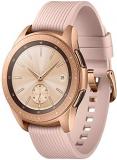
Two philosophies collide in the Galaxy Watch7 collection and the Vivoactive 6 collection: one is built around a full smart operating system, the other around training endurance. This comparison is written as a buying guide worth saving, because the choice between these two families comes down to a handful of decisions that surface only after weeks of ownership, not in the first hour of unboxing.
| Feature & Selling Point | Samsung Galaxy Watch7 | Garmin Vivoactive 6 |
|---|---|---|
| Operating System | Wear OS with full app ecosystem | Proprietary Garmin platform, widget and Connect IQ based |
| Display | Super AMOLED, wide bezel-free face | Brighter AMOLED than its predecessor |
| Battery Life | Around one to two days typical use | Up to 11 days in smartwatch mode |
| Satellite Positioning | Dual-band GPS on supported models | Multi-band GNSS with Garmin’s long-standing fix reliability |
| Health Depth | Energy Score, wellness tips, sleep coaching | Training load, recovery framing, Body Battery style metrics via Garmin Connect |
| Companion App | Samsung Health and Google ecosystem hooks | Garmin Connect for syncing, activity review, and safety features |
| Case Sizes | Two case diameters covering most wrists | Single case size designed as a default fit |
| Water Rating | 5 ATM plus pool and open-water swim modes | 5 ATM plus swim tracking profiles |
| Contactless Payment | Samsung Wallet plus wide travel card support | Garmin Pay, smaller issuing bank network |
| LTE Standalone Option | Yes, on cellular variants | No, Bluetooth pairing required for connected features |
| Phone Compatibility | Best on Android, limited on iPhone | Android and iOS parity |
| Best Suited To | App-heavy urban users, Android phone owners, notification driven daily life | Runners, hikers, and swimmers who charge rarely and train outdoors |
| Wrist Presence | Slim, screen-forward, jewellery-adjacent finish | Light polycarbonate feel, sport first, blend into gym gear |
| Charging System | Wireless puck, nightly habit required | Proprietary cable, infrequent charging interval |
| Long-Term Cost Reality | Easy add-ons, heavier app and accessory spending | Bundled training tools reduce the need for subscription fitness apps |
The two rows that decide most purchases are battery life and phone compatibility. Garmin states that Vivoactive 6 reaches up to 11 days in smartwatch mode, while the Galaxy Watch7 operates on a nightly-charge rhythm typical of full smart OS wearables. On the other side, the Galaxy Watch7 rewards Android owners with app parity, and the Vivoactive 6 keeps the same feature set whether the paired handset runs Android or iOS.
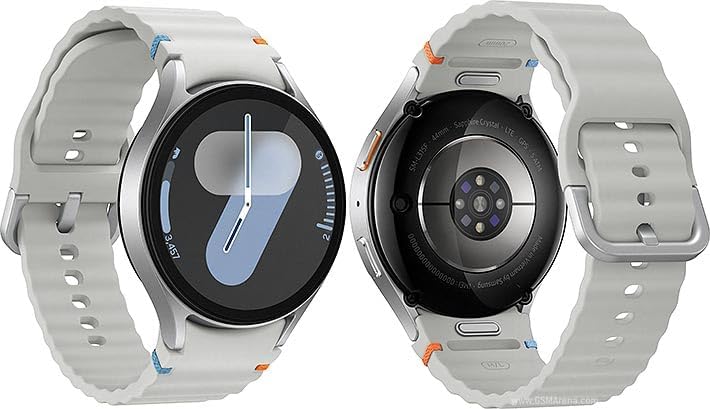
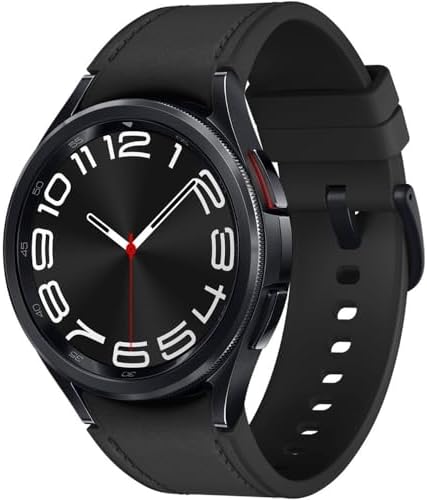
The Samsung Galaxy Watch 7 40mm Bluetooth Cream as a Daily Companion
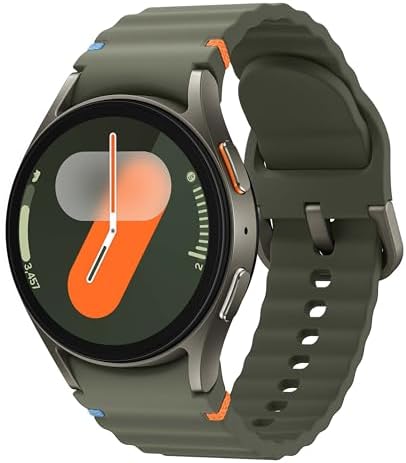
Picking a specific configuration makes the Samsung argument concrete: the Samsung Galaxy Watch 7 40mm Bluetooth Cream pairs a softer case tone with the smallest shell in the lineup, aimed at shoppers who want a compact profile rather than the largest screen available. Where the Galaxy Watch7 line wins is depth of interaction: replying to messages, dictating notes, running third-party apps, and tying into Google services in a way that feels native rather than bolted on, a strength reflected across the Samsung brand’s wider wearable portfolio and the broader Galaxy Watch7 family that anchors it.
Samsung positions the Galaxy Watch7 around its Energy Score and wellness-tips framework, plus advanced sleep coaching and heart rate tracking that runs continuously across day and night. These features are designed for people whose health question is general, such as how recovery is trending, how sleep quality looks, and whether a lighter day makes sense, rather than specific questions about threshold pace at a given lactate level. The AMOLED panel is bright enough for direct sun, and the near-bezel-free front face gives the Galaxy Watch7 a dressier look than most fitness-first rivals.
The practical trade-off is rhythm. A Wear OS smartwatch of this type produces notifications, voice interactions, and background app activity that drain the cell quickly; a nightly charge on the bedside table is part of ownership, and anyone who travels through overnight flights without a socket will feel that pressure. Sleep tracking also improves when the watch is charged before bed rather than mid-evening, so charging habits shape data quality. The compensation is software richness that Vivoactive-class hardware does not attempt.
Garmin Vivoactive 6 and the Endurance Philosophy
Garmin’s newsroom describes the Vivoactive 6 as a health-and-fitness smartwatch with an even brighter AMOLED display than the outgoing generation, and quotes up to 11 days of battery life in watch mode. the Garmin v铆voactive 6 Health and Fitness Gold GPS carries the same silicon in a lighter case tone and a band that leans casual rather than technical, moving the model from running-club tool toward everyday wearable without shedding its training profile library.
The engineering signature here is satellite reliability. Garmin hardware has been pairing multi-constellation receivers with software correction for years, and Vivoactive 6 inherits that lineage. For outdoor runners, the meaningful test is whether a tree-covered loop or a canyon path produces a clean route line; the sibling product pages and manuals for the Garmin brand’s wearables range repeatedly position GPS accuracy and long battery as the core proposition, and the dedicated Vivoactive 6 hub gathers the configurations that carry it. Add built-in swim profiles and 5 ATM water resistance, and you get a watch that disappears into a training diary rather than demanding attention.
The cost of that endurance is a shallower smart layer. Garmin Pay covers fewer card issuers than Samsung Wallet, and dependent features such as safety and live tracking require a Bluetooth link to Garmin Connect on a paired phone, as the official Vivoactive 6 manual spells out. There is no cellular standalone configuration in the lineup. Anyone who wants the watch to stay connected with the phone left at home is shopping in the wrong aisle.
Sensors, Software, and What the Numbers Actually Tell You
Both watches measure heart rate continuously, both track sleep, and both report stress. Where they part company is in the framing and the follow-through. Samsung’s framework converts raw signals into a single composite score and short coaching prompts, which is a deliberate software strategy rather than an instrument limitation: it is aimed at the user who wants a verdict, not a spreadsheet.
Garmin’s accompanying app exposes training load, recovery guidance, and per-activity depth that endurance athletes use to plan blocks of work. Two buyers can look at the same wrist and want opposite things. Honest self-assessment helps here: if the last time training data was opened in an app was months ago, the deeper Garmin toolkit will go partially unused, and the Galaxy Watch7 arguably delivers better day-to-day return for those users.
Neither competitor beats the other in a clean sweep, and brand positions confirm this. Samsung markets the Galaxy Watch7 as a wellness-focused AI smartwatch. Garmin markets the Vivoactive 6 as a health-and-fitness smartwatch with a brighter display and multi-day battery. Both claims are defensible in the marketing register, and each is true to the product’s actual design priority.
Which Should You Buy? A Decision Framework
The purchase decision collapses into three questions. First: does the wrist watch ever leave the phone behind? A cellular line rewards the Galaxy Watch7 in ways Vivoactive 6 simply cannot match through a Bluetooth dependency. Second: how long is a realistic charging interval? Eleven days of watch-mode endurance on the Vivoactive 6 equates to charging roughly twice a month for light gym users and weekly for active GPS users, while the Galaxy Watch7 needs a nightly dock. Third: what phone pairs with it? iPhone owners must genuinely consider whether the limited Apple-side experience of a Wear OS peripheral is acceptable; one knows one’s own tolerance for friction.
For the buyer leaning toward the Samsung, the Galaxy Watch7 collection covers two case sizes and LTE options. For the buyer leaning toward Garmin, the Vivoactive 6 collection prioritizes sport utility in a single fit. Neither requires a subscription to use its core features, which matters more every year as app ecosystems fragment.
The criterion that determines most firm decisions is to match the watch to real behavior, not an aspirational calendar. A desk-heavy week with three gym sessions rewards a showy smart OS and rich notifications. A half-marathon training block, multi-day weekend huts, or a genuine distaste for nightly charging rewards Garmin. The product that gets worn six days out of seven is the right product, and no spec sheet on earth overrules that.
What these two families represent is a fork in smartwatch design, not a ranking. One writes full apps, one runs on a single tank. The market needs both, and a buyer who understands which instinct drives the next purchase will end up with the watch they actually keep on the wrist long after the unboxing smell fades.