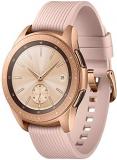
The Galaxy Watch7 series and the Pixel Watch 3 collection occupy the same premium Wear OS bracket, yet they are engineered around different assumptions about who wears them. Samsung builds the Galaxy Watch7 as a diagnostic instrument that rewards loyalty to its own phones, while Google positions the Pixel Watch 3 as an open Android companion carrying Fitbit’s accumulated sleep science. Both tell time, both track workouts, and both cost real money, so the decision rests on measurable differences rather than brand affection.
What follows is a buying guide built for a decision that lasts three years, not a spec recital. The table below isolates the rows that actually change satisfaction: how each watch is charged, what the screen does at noon, how the case sits on a smaller wrist, and which features quietly require a specific phone. Read the table first, then the analysis, and the right model for a given wrist and routine should become obvious.
| Decision Dimension | Galaxy Watch7 | Pixel Watch 3 |
|---|---|---|
| Case Sizes Offered | 40mm and 44mm | 41mm and 45mm |
| Case Material | Armor Aluminum | Recycled aluminum with domed glass |
| Display Protection | Sapphire crystal AMOLED | Custom 3D Corning Gorilla Glass 5 AMOLED |
| Peak Brightness | Tuned for outdoor readability | Actua panel rated up to 2,000 nits |
| Processor | 3nm Exynos chip | Qualcomm Snapdragon Wear platform |
| Health Sensor Stack | BioActive sensor with heart rate, ECG, and body composition | Heart rate, ECG, and skin temperature via Fitbit |
| Sleep Tracking Platform | Samsung Health with Energy Score | Fitbit sleep stages and readiness score |
| Dual-Band GPS | Yes, L1 and L5 support | Yes, dual-band GNSS |
| Water Resistance Rating | 5 ATM plus IP68 | 5 ATM |
| Charging Method | Magnetic wireless puck | Magnetic wireless puck |
| Typical Rated Use | Multi-day with always-on disabled | Up to 24 hours with always-on enabled |
| LTE Variant Available | Yes | Yes |
| Phone Requirements | Android 11 or higher, Galaxy features need a Samsung phone | Android 10 or higher, works across brands |
| Best Suited To | Galaxy phone owners wanting deep health metrics | Mixed-brand Android users wanting Fitbit depth |
The rows buyers underestimate are the phone requirement and the sleep platform. Processor generation and peak brightness dominate the marketing, but a Galaxy Watch7 paired to a non-Samsung handset loses access to a meaningful share of the health features that justify its price, while a Pixel Watch 3 keeps the full Fitbit stack regardless of which Android device is in a pocket. That single asymmetry reshapes the entire comparison before a single workout is logged.
Hardware Philosophy: Armor Aluminum Against Domed Glass
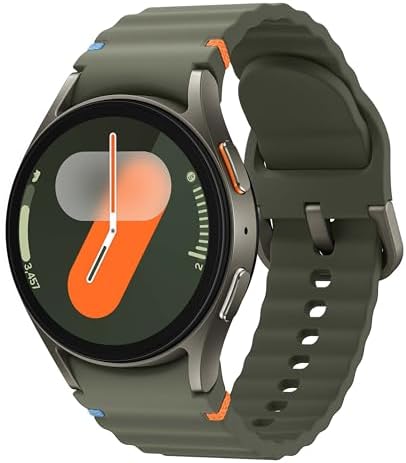
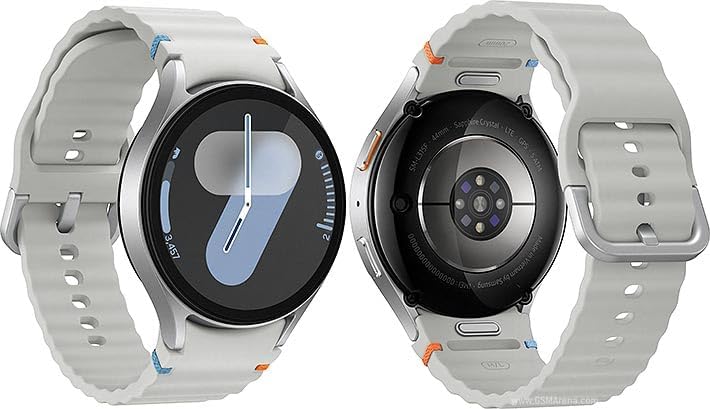
The Galaxy Watch7 is built around Armor Aluminum, Samsung’s structural aluminum treatment applied across its wearable line. The case is flat-sided with a controlled bezel, and the display sits under sapphire crystal, a material chosen for scratch resistance rather than drop performance. On the wrist, the 40mm variant reads compact and the 44mm variant reads substantial, giving buyers a genuine two-size choice rather than a token alternative.
The Pixel Watch 3 takes the opposite route. Its recycled aluminum case is paired with a domed glass face that wraps toward the edges, and the resulting silhouette is rounder, softer, and visually larger than the diameter suggests. That dome is a deliberate aesthetic decision, but it changes the practical experience: the curved surface collects fingerprints along its edges and reflects light differently from a flat sapphire panel. Buyers who prefer a crisp, uninterrupted dial should note this before committing.
How the Two Displays Diverge in Practice
Google rates the Pixel Watch 3 Actua display at up to 2,000 nits, and that figure matters for anyone who runs at midday or commutes on a bright platform. The Galaxy Watch7 panel is also an AMOLED unit with strong outdoor performance, but the ceiling is lower and Samsung markets it around general clarity rather than a headline nit count. In direct sun the difference is visible but not dramatic, and buyers should weight it against the sapphire advantage on the other wrist.
Case Finish and Wear Over Time
Aluminum is the shared foundation, yet the finishes age differently. Samsung’s Armor Aluminum holds a matte texture that resists visible scuffing along the bezel edge, while the polished domed glass of the Pixel Watch 3 tends to show micro-abrasions at the crown-side curve after months of desk contact. Neither is a durability flaw; it is a difference in how wear presents itself, and buyers who treat a watch as a daily driver should weigh it.
Silicon and Sensors: Where the Galaxy Watch7 Pulls Ahead
Samsung equips the Galaxy Watch7 with a 3nm processor, a generation ahead of what most Wear OS competitors deploy. The practical result is not a benchmark number but a behavioural one: app switching, sensor polling, and background health sampling consume less power per task, which is why the watch can maintain continuous heart rate logging without the battery collapsing by mid-afternoon. This is the kind of engineering detail that rarely appears in marketing copy but shapes daily use.
The health sensor package is the Galaxy Watch7’s strongest argument. The BioActive sensor array handles heart rate, ECG, and body composition measurement in a single optical module. Body composition analysis, which estimates skeletal muscle and body fat through bioelectrical impedance, is a capability the Pixel Watch 3 does not offer in comparable form. For a buyer tracking training load rather than just step counts, that distinction carries real weight.
- Galaxy Watch7: BioActive sensor, body composition, ECG, dual-band GPS with L1 and L5
- Pixel Watch 3: Heart rate, ECG, skin temperature, dual-band GNSS via Fitbit
- Shared: Sleep staging, SpO2 sampling, workout auto-detection
What Samsung does well here is consolidate. A single optical module reduces the number of sensor windows on the caseback, which keeps the watch flatter against the wrist and limits the light bleed that degrades heart rate accuracy during high-motion activities. It is an unglamorous advantage, but it explains why the Galaxy Watch7 holds a stable reading during interval training where older Wear OS designs drift.
The Fitbit Factor and the Software Split
The Pixel Watch 3 inherits Fitbit’s sleep architecture, and that is not a minor inheritance. Fitbit sleep staging has been refined across more device generations than any competing consumer platform, and its readiness score draws on resting heart rate variability in a way that experienced users find more legible than Samsung’s Energy Score. Both systems are useful; they simply speak different dialects of recovery.
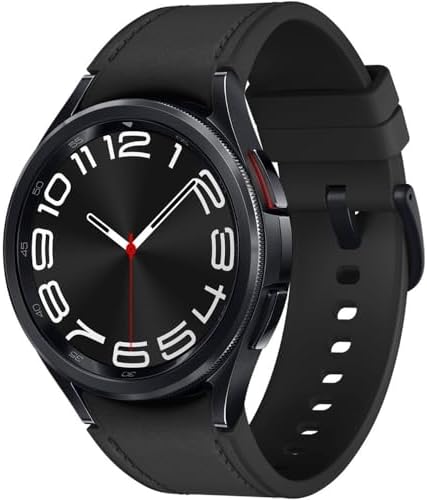
Buyers working inside Samsung’s ecosystem should look seriously at Samsung Galaxy Watch 7 40mm, because the smaller case keeps the sensor module tight against the wrist bones where optical readings are most reliable. Anyone who splits time between a Pixel phone and a Galaxy phone, however, faces a colder calculation: certain Galaxy health features require a Samsung handset to unlock, and the Galaxy Watch7 range makes that hardware dependency visible across every size and finish.
Google’s alternative takes the opposite position. The Pixel Watch 3 is designed to work across Android brands without feature gating, and the Fitbit integration is complete regardless of the phone paired to it. That openness is the Pixel Watch 3’s quiet advantage for anyone who changes handsets regularly or keeps a work phone and a personal phone on separate accounts.
Battery Reality and Charging Ritual
Battery claims deserve scepticism in both directions. The Galaxy Watch7 is typically rated for multi-day use with the always-on display disabled, and that phrasing carries the entire caveat: enable always-on and the interval narrows considerably. The Pixel Watch 3 is rated at up to 24 hours with always-on display enabled, which is a more transparent way to state the same trade-off from the user’s side.
Neither watch escapes a daily or near-daily charging habit. Both use a magnetic wireless puck, and both charge fastest when the screen is off and the watch is cool. The meaningful difference is not the charge rate but the margin: a Galaxy Watch7 buyer with always-on disabled can realistically leave the charger at home for a weekend, while a Pixel Watch 3 buyer should treat the charger as part of the travel kit.
Sizing changes this calculation more than buyers expect. The 40mm Galaxy Watch7 and the 41mm Pixel Watch 3 carry smaller cells than their larger siblings, so the multi-day margin on the small Galaxy case is thinner than the headline rating implies. Buyers who want the battery figure should pair the smaller case with discipline about the always-on setting.
Wrist Fit, Sizing, and Who Should Buy Which
This is where the comparison becomes genuinely personal. Wrists under roughly 160mm do better with the 40mm Galaxy Watch7 or the 41mm Pixel Watch 3, and the Pixel’s domed glass adds visual bulk that the Galaxy’s flat profile avoids. Buyers with larger wrists can take the 44mm Galaxy Watch7 or the 45mm Pixel Watch 3 without the case overhanging the wrist edge.
The decision criteria are concrete, not aspirational:
- Phone brand: A Samsung phone unlocks every health feature on the watch. A non-Samsung Android phone does not, which flips the recommendation toward the watch with an open software contract.
- Body composition tracking: Only one watch offers it, and buyers who track training load should weight it heavily.
- Sleep platform preference: Fitbit sleep staging and readiness scoring remain more familiar to experienced users than Samsung’s Energy Score.
- Peak brightness: Outdoor runners and commuters gain most from a higher nit ceiling.
Buyers who prioritize sleep analytics and a higher brightness ceiling should start with Google Pixel Watch 3 (45mm), since the larger case provides more battery margin for overnight tracking and the Actua panel keeps morning metrics legible in daylight. Buyers who want the widest sensor array and a smaller footprint should look at the Google wearable range only after confirming that their training routine truly needs it, because the Galaxy’s body composition module is the harder feature to replace.
The cleaner way to read the whole category is to compare the reference each brand has built. The Samsung wearable range treats the wrist as a diagnostic surface first and a notification surface second, and that ordering explains every design trade-off in the Galaxy Watch7. There is a real comparison worth weighing between the Pixel Watch 3 and a smaller Galaxy case, especially for buyers who monitor recovery after evening sessions and want a watch that does not crowd the wrist overnight.
What Three Years of Ownership Looks Like
Smartwatch value is decided in year two and year three, not week one. Wear OS update commitments differ between manufacturers, and the practical question is whether a buyer will still receive sensor improvements after the launch cycle ends. Samsung’s history with its wearable line shows sustained generation updates alongside new model launches, while Google’s Pixel line has earned a reputation for longer software commitments across its hardware portfolio.
The second longevity factor is the glass. Sapphire crystal on the Galaxy Watch7 resists the fine scratches that accumulate on a domed glass surface, and over a three-year span that difference becomes visible along the edge of the display. Buyers who plan to keep the watch as a daily driver rather than a rotation piece should weigh material resilience as seriously as they weigh sensor counts.
The final variable is the service and accessory ecosystem. Both watches benefit from broad third-party strap compatibility, and neither locks buyers into proprietary bands. That shared openness matters because it keeps the total cost of ownership predictable: the money saved on straps over three years often exceeds the price gap between the two watches at purchase.
Both models represent a mature stage of Android wearable design, where the remaining differences are no longer about whether the hardware works but about whose definition of health data a buyer trusts. The Galaxy Watch7 asks for ecosystem loyalty in return for the densest sensor package on the platform. The Pixel Watch 3 asks for nothing beyond an Android phone and returns a cleaner software contract with Fitbit’s accumulated sleep science behind it. The correct choice is the one whose conditions a buyer can actually meet for the lifetime of the device.