The Google Pixel Watch 4 series and the Apple Watch Series 11 collection answer the same question in opposite ways, and the deciding factor is usually the phone already in a buyer’s pocket. One runs Wear OS with Fitbit health science and Gemini assistance; the other runs watchOS with Apple Health and Siri. This guide is built to be saved and revisited at the point of purchase, because the differences that matter most shape daily ownership rather than the ones printed in the largest font.
| Feature and Buying Criterion | Google Pixel Watch 4 | Apple Watch Series 11 |
|---|---|---|
| Phone Compatibility | Android only | iPhone only for full features |
| Case Sizes Offered | 41mm and 45mm | 42mm and 46mm |
| Display Type | Actua dome OLED, always-on | LTPO3 wide-angle OLED, always-on |
| Rated Battery Life | Up to 30 hours (45mm) | Up to 24 hours, 38 in low power |
| Charging Method | Side-loading charging dock | Magnetic charging puck |
| Water Resistance | 5 ATM swimproof | 50m, ISO 22810, IP6X dust |
| Health Sensor Suite | Fitbit heart rate, SpO2, skin temperature, ECG | Heart rate, ECG, blood oxygen, sleep score |
| Sleep Tracking Depth | Fitbit sleep stages plus sleep score | Sleep Score plus sleep apnea notifications |
| AI Assistant | Gemini built in | Siri on-device |
| Repairability | Modular design, user-replaceable parts | Service-based repair |
| Satellite Navigation | GPS with multi-band support | L1 GPS with GLONASS, Galileo, QZSS |
| Case Materials | Aluminum, polished dome profile | Aluminum or titanium, flat profile |
| Subscription Layer | Fitbit Premium for deeper analysis | Apple Fitness plus for guided workouts |
| Best Suited To | Android users wanting Fitbit depth | iPhone users wanting tight integration |
Two rows decide most purchases before anything else is considered. Phone compatibility is a hard gate: the Pixel Watch 4 is Android-only, and the Series 11 delivers its full feature set only with an iPhone. Battery is the second gate, with Google rating the 45mm Pixel Watch 4 at up to 30 hours and Apple rating the Series 11 at up to 24 hours, extendable to roughly 38 in low power mode. The remaining rows refine a decision these two constraints have already largely made.
Battery Life and the Daily Charging Ritual
Battery life is the specification that shapes behavior rather than the one that wins arguments. A watch rated at 24 hours asks its owner to charge daily, usually during a fixed routine such as showering or the first hour at a desk. Apple’s figure for the Series 11 reflects that expectation, and the low power mode that stretches runtime to roughly 38 hours gives users a buffer for a night away or a long travel day without the charger.
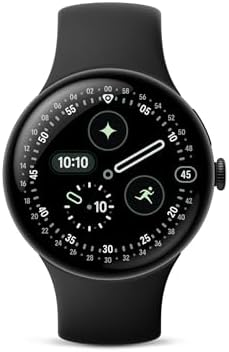
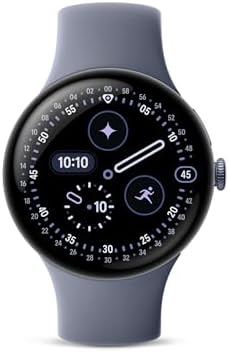
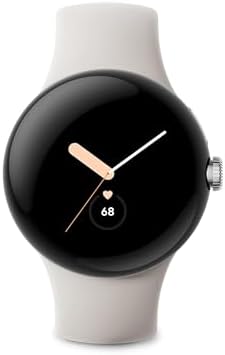
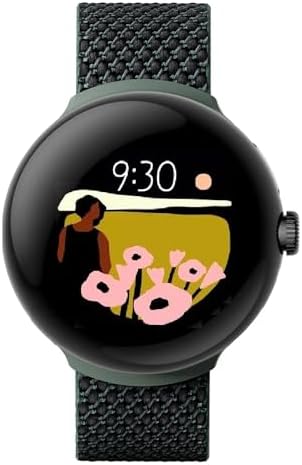
Google’s larger case takes a slightly different position, and the Google Pixel Watch 4 (45mm) – 45mm Wi-Fi is rated at up to 30 hours, which leaves more headroom for sleep tracking without a top-up before bed. For buyers who intend to wear the watch overnight every night, that margin is meaningful, because it removes the awkward choice between tracking sleep and starting the next day with a depleted battery.
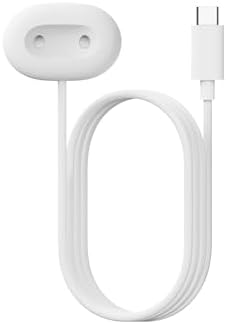
Charging hardware differs in a way that affects travel and desk setup. The Pixel Watch 4 uses a side-loading charging dock, a design choice that keeps the watch face readable while it charges. The Series 11 relies on Apple’s magnetic charging puck, a compact accessory familiar across the Apple Watch line. Neither approach is objectively faster in everyday use, but the accessory each one requires is worth considering if a buyer already owns cables and docks from a previous watch.
Health Sensors and the Depth of Sleep Data
Both watches now treat health monitoring as a core function rather than a bonus, and both include ECG capability alongside optical heart rate and blood oxygen measurement. The meaningful divergence is not the sensor list but the software layer that interprets the data and the subscription model attached to it.
Google’s advantage here is inherited. Fitbit’s sleep science has been refined over more than a decade, and the Pixel Watch 4 carries that lineage into sleep stages, sleep scores, and readiness metrics. Some of the richer analysis sits behind Fitbit Premium, a detail worth checking before purchase, because the free tier and the paid tier do not offer the same depth of reporting. Buyers who want the full picture should factor a subscription into the total cost of ownership.
Apple’s approach centers on the Health app and the Sleep Score introduced alongside recent watchOS versions, complemented by sleep apnea notifications that flag breathing disturbances during the night. The company positions these features as wellness tools rather than diagnostic instruments, and on-device processing keeps most analysis local. For buyers already invested in the Apple Health ecosystem, the value of that continuity is difficult to replicate elsewhere.
Display, Case Design, and Wrist Presence
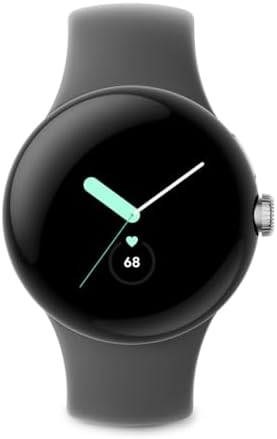
The two watches look fundamentally different on the wrist, and that difference is architectural rather than cosmetic. The Pixel Watch 4 employs a domed Actua OLED display that curves toward the edges of a rounded case, a profile that reads as jewelry first and instrument second. The dome catches light in a way that gives the watch a softer, more organic presence, though it also means the glass sits proud of the bezel.
The Series 11 takes the opposite route. Its LTPO3 wide-angle OLED display sits beneath a flatter cover glass, and the case is offered in 42mm and 46mm sizes with aluminum or titanium options. Apple’s wide-angle OLED improves readability at oblique angles, which matters for anyone who glances at notifications with the wrist turned rather than raised. The flatter profile also accommodates a broader range of bands and sits more cleanly under a shirt cuff.
Case sizing deserves attention because it affects fit more than spec sheets suggest. The Pixel Watch 4 comes in 41mm and 45mm, while the Series 11 offers 42mm and 46mm. A buyer moving from an older 44mm watch will find the 45mm Pixel Watch 4 familiar and the 46mm Series 11 slightly larger, and the reverse is true for anyone stepping down from a larger case. Trying both on, or at least checking lug-to-lug dimensions, is the only reliable way to judge comfort across a full day.
Software, Assistant, and Ecosystem Gravity
This is where the comparison stops being about hardware and becomes about the phone in a buyer’s pocket. A Pixel Watch 4 paired with an iPhone loses core functionality, and a Series 11 paired with an Android phone cannot be set up at all. The ecosystem is not a preference; it is a gate.
For Android users, the Google brand’s platform brings Gemini directly onto the watch, allowing voice queries and contextual assistance without reaching for a phone. Wear OS has matured into a capable platform with a wide app selection, and the Fitbit integration gives it a health backbone that feels native rather than bolted on.
For iPhone users, Apple’s wearable remains the most tightly integrated option on the market. Handoff, unlock, Apple Pay, and the deep link between the watch and the Health app create a continuity that third-party watches on iOS cannot match. Series 11 refines this formula rather than reinventing it, and the result is a watch that feels like an extension of the phone rather than a separate device.
The practical guidance is straightforward. An Android user weighing both should recognize that the Series 11 is not a realistic option, regardless of how attractive the hardware appears. An iPhone user faces the mirror-image constraint. Only buyers who are genuinely undecided about their next phone should let watch preference influence that larger decision, and even then, the phone should lead.
Repairability, Longevity, and Total Cost of Ownership
A smartwatch is a multi-year purchase, and how it ages matters as much as how it performs on day one. Google has moved toward a modular internal design on the Pixel Watch 4, with user-replaceable components that extend service life and reduce the cost of a repair after the warranty period. That orientation toward repairability is a genuine differentiator for buyers who keep devices for four or five years.
The Series 11 follows Apple’s established service model, where repairs are handled through authorized providers and the watch is designed as a sealed unit. The trade-off is a more predictable service experience in exchange for less user control over long-term maintenance. Neither approach is wrong, but buyers who have replaced a watch battery or screen on a previous device will have a clear preference.
Total cost of ownership also includes the subscription question. Fitbit Premium unlocks deeper health analysis on the Pixel Watch 4, and Apple Fitness plus adds guided workouts and classes for the Series 11. Both are optional, and both represent recurring costs that should be weighed against the features a buyer will actually use rather than the full catalog.
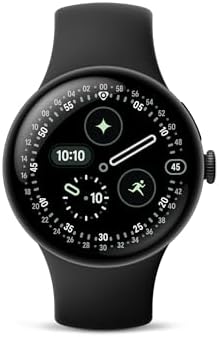
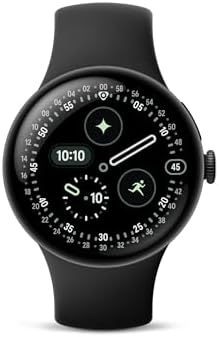
The Apple Watch Series 11 [GPS 46mm] Jet Black Aluminum Black 46mm M/L GPS is the mainstream configuration of its line, pairing the larger case with the aluminum build and a sport band. It is the version most buyers will encounter first, and it demonstrates how much of the Series 11 experience is available without stepping up to titanium or cellular connectivity.
Which Watch Should You Buy?
The decision tree is shorter than the feature list suggests. Android users who prioritize sleep science, repairability, and a domed design should choose the Pixel Watch 4, and the 45mm case is the better pick for anyone who wants the extra battery headroom for overnight wear. The 41mm version suits smaller wrists without giving up the core sensor suite.
iPhone users should choose the Series 11, and the 46mm case with an aluminum build is the sensible default for most people. Buyers with smaller wrists or a preference for a lighter watch should look at the 42mm variant, which carries the same display technology and health sensors in a more compact package.
Those who are switching phones in the near future should let the phone decision come first and treat the watch as a consequence. Those who value repairability above all else will find Google’s modular approach more aligned with a long-term ownership model, while those who value a mature, deeply integrated ecosystem will find Apple’s offering difficult to leave.
The two watches represent mature answers to the same question, and the gap between them is now defined by philosophy rather than capability. One is built around openness, modularity, and the health science of Fitbit; the other around integration, polish, and the gravitational pull of the iPhone. Choosing well means recognizing which of those philosophies matches the way the watch will actually be worn, charged, and relied upon every day for years.