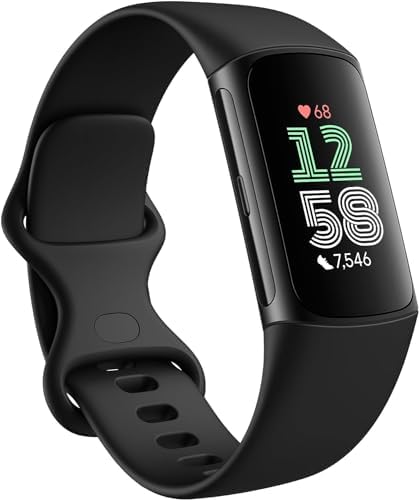
The fitness wearable decision that matters most is rarely about brand loyalty; it comes down to how many days a device survives between charges, how its heart rate data holds up during intervals, and whether the screen stays legible at noon on a sunny run. The Charge 6 approaches those questions from the lean, single-purpose tracker side, while the Series 11 answers them from the wrist-computer end of the spectrum. This guide is built to be saved and revisited at the point of purchase, because the right answer genuinely depends on which trade-offs a buyer can live with.
| Feature and Selling Point | Fitbit Charge 6 | Apple Watch Series 11 |
|---|---|---|
| Form Factor | Slim band-style tracker | Square-case smartwatch |
| Display Type | Colour AMOLED, full-touch | Always-On Retina, LTPO |
| Typical Battery Life | Up to 7 days | Around 24 hours (up to 38 hours in Low Power Mode) |
| Charging | Proprietary magnetic cable | Magnetic fast-charge, USB-C |
| Built-in GPS | Yes (connected GPS plus on-device) | Yes, dual-band GPS on cellular variants |
| Heart Rate Sensor | Continuous optical, on-wrist | Optical array with background readings |
| ECG Function | Not included | ECG app supported |
| Blood Oxygen Tracking | Supported | Supported |
| Sleep Tracking | Sleep stages plus daily Sleep Score | Sleep stages plus Sleep Score and coaching |
| Water Resistance | Water resistant to 50 m, swim tracking | Water resistant to 50 m, swim tracking |
| Third-Party App Access | Limited; Google apps integration | Full App Store library |
| Contactless Payment | Google Wallet support | Apple Pay support |
| Phone Compatibility | Android and iOS | iPhone only |
| Best Suited For | All-day activity, sleep, multi-day wear | Connected life, training depth, phone-free use |
Two rows in that table settle most buying debates before a single review video is watched. The battery gap is measured in days versus hours, which changes whether a device can realistically track sleep every single night. The phone compatibility row then decides the audience outright: the Apple Watch operates inside the iPhone ecosystem, while the Charge 6 works across both major platforms. Everything else in the table refines those two foundational trade-offs.
How Each Device Fits Into a Day
Fitbit built the Charge line around the idea that a tracker should disappear into a routine rather than demand attention. At roughly the width of a wrist strap and weighing almost nothing during sleep, it slides under a shirt cuff, survives a shower, and keeps collecting step and heart rate data without a nightly charging ritual. That quiet persistence is the product’s whole argument, and Google has reinforced it by adding Google Wallet for payments and deeper ties to Google apps for workout data handoff.
The Apple Watch takes the opposite stance. It is meant to be looked at, tapped, and spoken to. The always-on display pushes notifications, timers, and workout metrics into peripheral vision without a wrist raise, and the App Store opens a library that ranges from interval timers to golf rangefinders. That capability has a cost measured in charging sessions, and anyone who has worn a smartwatch through a weekend camping trip understands the calculation involved.
Sensor Depth and What the Data Actually Tells You
Heart Rate and Workout Accuracy
Both devices track heart rate continuously and both offer built-in GPS for outdoor runs and rides, but they approach precision differently. Fitbit’s optical sensor is tuned for steady-state work and all-day background readings, which suits step-based goals, sleep-stage estimation, and resting heart rate trends over months. Apple’s sensor array is engineered to support higher-intensity interval work and the ECG app, which records a single-lead electrocardiogram when the wearer places a finger on the digital crown. Buyers who specifically need ECG documentation should treat that feature as a deciding factor rather than a footnote.
Sleep, Recovery, and the Charging Problem
Sleep tracking only works if the device stays on the wrist overnight, and this is where battery life stops being a spec-sheet number and becomes a behavioural constraint. A device that needs charging every evening forces a choice between sleep data and readiness the next morning. The week-long runtime of the Charge 6 removes that trade-off entirely, which matters far more to habitual sleep trackers than any single sensor upgrade.
Design Language, Materials, and Wrist Presence
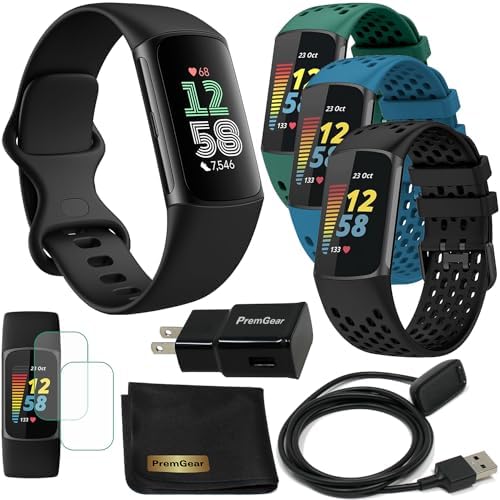
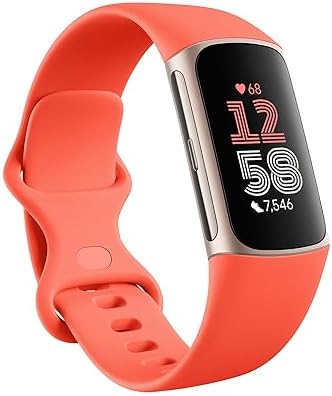
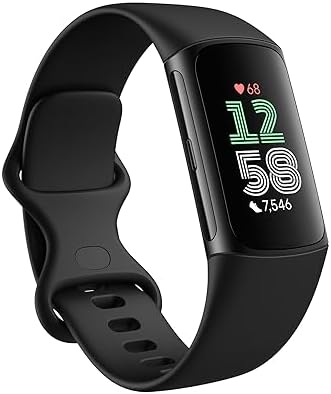
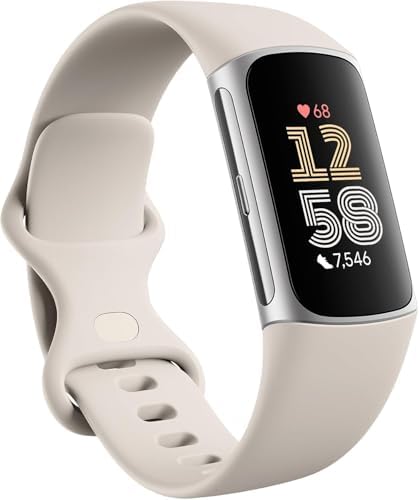
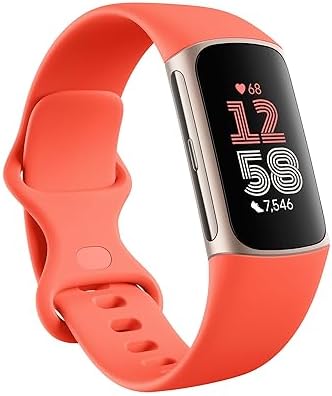
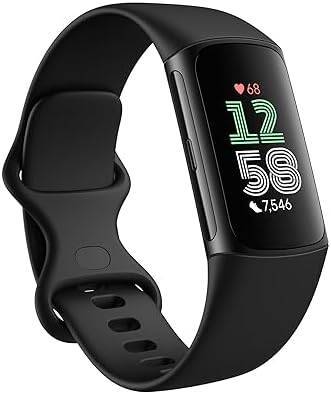
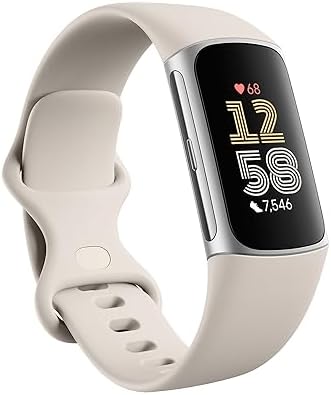
The Charge 6 reads as athletic equipment. Its aluminium case, curved screen edges, and silicone band communicate function first, and it pairs naturally with gym wear and casual clothing while staying understated in an office.
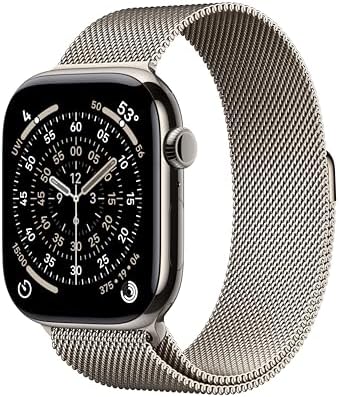
The Apple Watch is designed to be accessorised. Case finishes, band materials, and face complications turn it into something closer to jewellery on some wrists and a training tool on others. The trade-off is physical presence: a square case with an always-on display draws the eye in a way a slim tracker never does, and that visibility is either the point or the problem depending on the wearer.
Who Should Buy Which
The decision framework here is refreshingly concrete. The Google Fitbit Charge 6 makes sense if sleep tracking, week-long battery life, cross-platform phone support, and a near-weightless wrist feel sit at the top of the priority list. It covers the fundamentals of activity, heart rate, and GPS without asking for a daily charging habit or an iPhone.
The Apple Watch Series 11 GPS 46mm earns its place if the wrist device is expected to do more than fitness: replying to messages, running third-party apps, taking calls, and offering ECG readings. The larger case option also suits buyers who want a more legible display for outdoor workouts. The honest trade-off is a nightly charging routine and iPhone dependency, neither of which is a flaw so much as a boundary condition of the platform.
For anyone weighing a second device for a household member, the cross-platform compatibility of Fitbit trackers means the same model can serve an Android user and an iPhone user without any ecosystem friction, a practical advantage that rarely appears in specification charts but shows up constantly in real households.
The Verdict That Holds Up Over Time
Wearable choice ages quickly when it is made on launch-day excitement and ages well when it is made on routine. A device that matches an existing phone, survives a full week without a cable, and reports the metrics a wearer actually checks will still be useful three years later. The Charge 6 wins on endurance and quiet consistency; the Apple Watch wins on depth and connected capability. Neither answer is universal, and the buyer who identifies which of those two daily realities matches their own life has already made the decision.