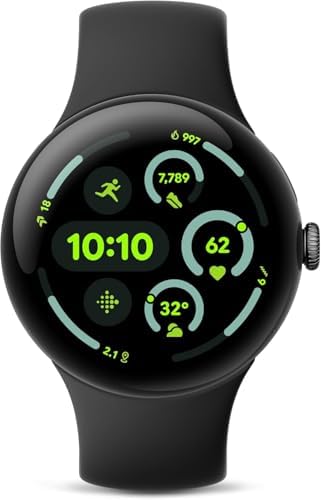
The Google Pixel Watch 3 series and the Samsung Galaxy Watch 7 collection represent two distinct philosophies in modern wearable design, and choosing between them requires weighing real trade-offs rather than skimming a spec sheet. This guide is built to be saved and revisited: it unpacks the hardware, the health platforms, and the ecosystem logic behind each device so that a purchase decision rests on clear criteria. The Pixel Watch 3 leans on Google’s software cohesion and Fitbit’s wellness heritage, while the Galaxy Watch 7 pushes sensor hardware and raw performance. What follows is a decision framework, not a feature recap.
| Feature & Selling Point | Google Pixel Watch 3 | Samsung Galaxy Watch 7 |
|---|---|---|
| Available Case Sizes | 41mm, 45mm | 40mm, 44mm |
| Display & Peak Brightness | Actua AMOLED, 2000 nits | Super AMOLED, 2000 nits |
| Processor | Exynos 9110 | Exynos W1000 (3nm) |
| Battery Life (Always-On) | Up to 24 hours | Up to 30 hours |
| Charging Method | Magnetic Pogo Pin | Wireless (WPC) |
| Case Material Options | Recycled Aluminum | Aluminum or Stainless Steel |
| Health Sensor Suite | Fitbit (HR, SpO2, ECG, EDA) | BioActive (HR, SpO2, ECG, BIA) |
| Sleep Tracking Platform | Fitbit Sleep Score & Profile | Samsung Sleep Coach & Apnea Detect |
| Fitness Feature Depth | Fitbit Daily Readiness, 40+ sports | Energy Score, Race Mode, 100+ sports |
| Durability Rating | 5 ATM / IP68 | 5 ATM / IP68 / MIL-STD-810H |
| Navigation Support | Google Maps with Offline | Google Maps with GPX Import |
| Subscription Cost | Fitbit Premium optional | Samsung Health free tier |
| Best Suited To | Pixel phone owners, wellness-first users | Galaxy phone owners, data-driven athletes |
The single most consequential row is the processor: the Galaxy Watch 7’s 3nm Exynos W1000 is a generational leap over the Pixel Watch 3’s older Exynos 9110, and that gap shapes responsiveness, battery headroom, and long-term software support. The second decisive row is the sensor suite, where Samsung adds BIA body composition that Google does not offer. Neither row alone settles the purchase; together they define the two paths a buyer must choose between.
Design Language and Wearability
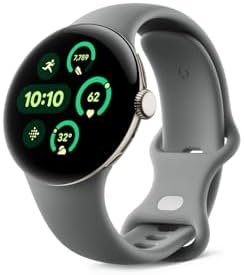
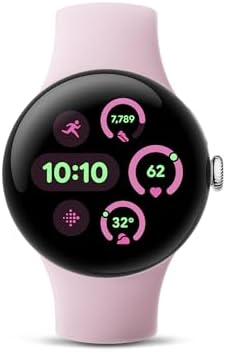
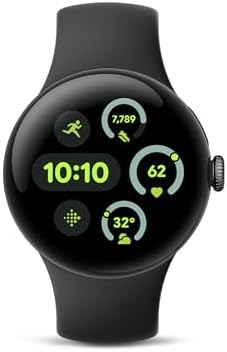
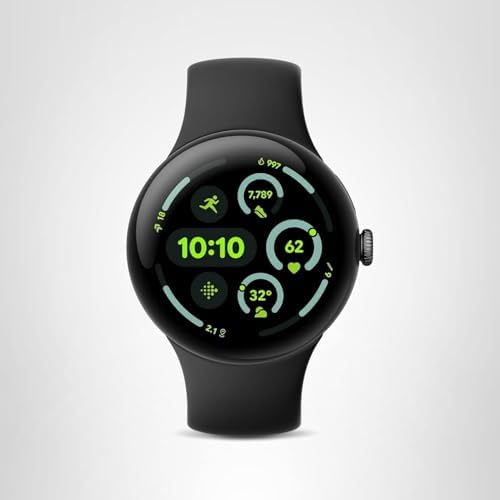
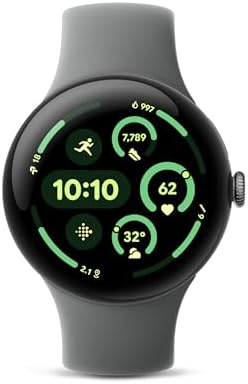
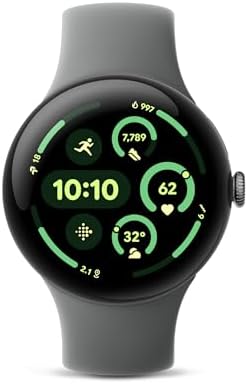
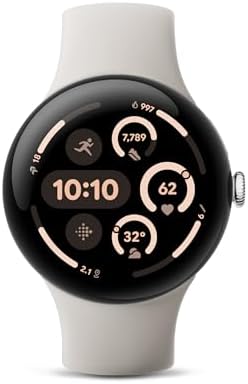
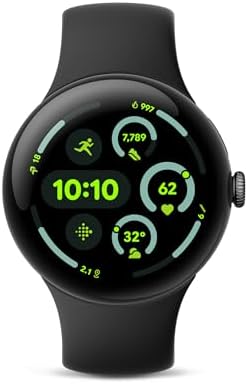
The Pixel Watch 3 carries a domed, pebble-like case milled from recycled aluminum, a silhouette that has become the line’s signature and one that sits flush against the wrist. The Actua AMOLED panel reaches 2000 nits, so legibility holds up under direct sun, and the 45mm variant gives the Wear OS interface more room for complications and tiles. Buyers who want a watch that reads as jewelry-adjacent rather than tool-like tend to gravitate here, and Google Pixel Watch 3 (45mm) Latest Black Aluminum 45mm Wi-Fi is the reference point for that larger-wrist preference.
The Galaxy Watch 7 takes the opposite route, offering a flatter circular display and a choice of aluminum or stainless steel cases across 40mm and 44mm sizes. That material choice matters for buyers who want a dressier finish without leaving the smartwatch category. Samsung Galaxy Watch 7 40mm Bluetooth Cream is the compact entry point for smaller wrists, while the 44mm version suits those who prefer visual heft. Strap and watch-face variety on the Samsung side is broader, which appeals to buyers who treat customization as a core feature rather than an afterthought.
Performance, Battery, and Software Longevity
Hardware performance is where the Galaxy Watch 7 separates itself most clearly. The 3nm Exynos W1000 delivers snappier app launches, smoother multitasking, and more headroom for continuous GPS and heart-rate sampling. Battery life reflects that efficiency, with Samsung rating up to 30 hours in always-on use against roughly 24 hours on the Pixel Watch 3. Wireless charging on the Samsung side also means one fewer proprietary cable to carry. For buyers who run long GPS sessions or forget to charge overnight, these are practical, daily-felt differences rather than spec-sheet trivia.
The Pixel Watch 3 counters with software polish. Wear OS 5 arrives clean and uncluttered, updates come directly from Google, and the experience feels tightly bound to Gmail, Calendar, and Maps. The older chip is not a dealbreaker for messaging, payments, and fitness tracking, but it does narrow the margin for future feature updates. A buyer planning to keep a watch for three or more years should weigh that longevity question seriously, because processor headroom is what determines how gracefully a wearable ages.
Health and Fitness: Two Different Philosophies
The Fitbit Wellness Approach
Fitbit’s platform is the Pixel Watch 3’s defining asset. The Daily Readiness Score synthesizes activity, heart-rate variability, and sleep into a single recommendation about whether to push or recover, and the Sleep Profile breaks down stages with personalized coaching. The catch is Fitbit Premium: deeper analysis and guided programs sit behind a recurring subscription, so the true cost of ownership runs higher than the sticker price. Buyers who already pay for Premium, or who value a curated wellness narrative over raw data, will find the Pixel Watch 3 the more coherent product.
The Samsung Sensor Advantage
Samsung’s 3-in-1 BioActive sensor adds electrical impedance analysis for body composition, capturing metrics such as body fat percentage and skeletal muscle mass that the Pixel Watch 3 does not measure. The Energy Score applies AI to sleep, activity, and heart-rate data for a daily readiness readout, and the fitness catalog exceeds 100 workout types against roughly 40 on the Google side. Race Mode and GPX route import further tilt the Galaxy Watch 7 toward runners, hikers, and cyclists who want to train against their own past performances. For this audience, the sensor depth is the deciding factor.
Ecosystem Lock-In and the Real Decision Criteria
The ecosystem question often outweighs every spec on the table. A Pixel phone owner gains tighter handoff, faster pairing, and a more consistent interface with the Pixel Watch 3; a Galaxy phone owner gets the same cohesion from the Galaxy Watch 7, plus deeper ties to Samsung’s health and smart-home services. Cross-ecosystem use works, but some features degrade, and that friction compounds over years of ownership. Buyers should treat their phone as the first filter, not the last, and Google’s hardware line rewards that loyalty with tighter integration across its own devices, while Samsung’s hardware line does the same for Galaxy owners.
Beyond the phone, three criteria settle most decisions. First, sensor ambition: if body composition and race training matter, the Galaxy Watch 7 is the stronger instrument. Second, subscription tolerance: if a recurring Fitbit Premium fee is unwelcome, Samsung’s free health tier is the leaner path. Third, design preference: the domed Pixel case and the flatter Samsung case appeal to different tastes, and no spec sheet resolves that. A buyer who answers these three questions honestly will land on the right watch without second-guessing the spec count, and the Galaxy Watch 7 family covers both case sizes for those who want to compare finishes in person before committing.
Both devices point toward a future where wearables earn their place by interpreting the body rather than merely displaying notifications, and the right choice is simply the one whose philosophy matches the wrist it will live on.