The Google Pixel Watch 3 series and the Versa 4 series occupy two different positions in the wearable market, yet they share a common fitness engine that makes a direct comparison genuinely useful. This guide is built to be kept as a reference for anyone deciding between them, weighing verifiable specifications rather than marketing language so the choice rests on how each watch fits a daily routine.
| Feature & Selling Point | Google Pixel Watch 3 | Fitbit Versa 4 |
|---|---|---|
| Operating System | Wear OS with Google services | Fitbit OS |
| Display | AMOLED LTPO, up to 3000 nits peak | AMOLED color display |
| Case Size Options | 41mm and 45mm | One size, S and L bands included |
| Battery Life | Up to 24 hours with always-on display | 6+ days |
| Built-in GPS | Yes | Yes |
| Exercise Modes | Fitbit workout suite on Wear OS | 40+ exercise modes |
| Health Metrics | 24/7 heart rate, sleep, Daily Readiness Score | 24/7 heart rate, sleep, Daily Readiness Score |
| Active Zone Minutes | Supported | Supported |
| Premium Subscription Offer | Fitbit Premium included for a limited period | 6-month Premium included |
| Connectivity Focus | Wi-Fi on listed models, Bluetooth, LTE variants | Bluetooth, Wi-Fi on supported builds |
| Audio and Calls | Speaker and microphone for calls | Bluetooth calling supported |
| Case Material | Aluminum, stainless steel variants | Aluminum |
| App Ecosystem Breadth | Wide, Wear OS app support | Limited to Fitbit-approved apps |
| Best Suited To | Daily tool with smart features and Google apps | Fitness-first users who want multi-day battery |
The table makes the central trade-off visible: the Versa 4 holds a multi-day advantage in power endurance, while the Pixel Watch 3 spends that budget on a brighter LTPO display and full access to Google services. Almost everything else, from GPS to the Daily Readiness Score, is shared ground because the same Fitbit fitness engine feeds both devices.
Display Brightness and Everyday Readability
Google publishes a peak brightness figure of up to 3000 nits for the Pixel Watch 3 AMOLED LTPO panel, a number that matters in direct summer light where lower-brightness hardware forces a squint or a wrist tilt. The LTPO substrate also allows the display to drop to very low refresh rates when the screen is static, which is the technical reason always-on timekeeping does not drain the battery at the same rate as a fixed-refresh panel.
The Versa 4 uses a standard AMOLED color display, as listed in the official specification sheet. Fitbit does not publish a nit rating for this model, so absolute peak brightness cannot be compared on paper. What the sheet does confirm is the practical case: the screen is bright enough for outdoor runs and indoor gym lighting, and it is sized for glanceable stats rather than full app interaction. Neither device has an edge in pixel cleanliness that a user would notice on a wrist, and the more meaningful difference is what the screen is being used for.
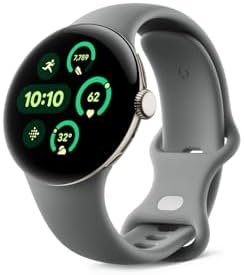
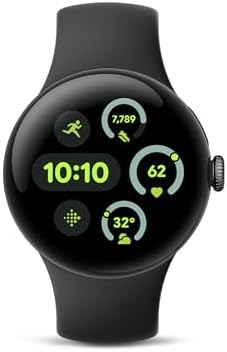
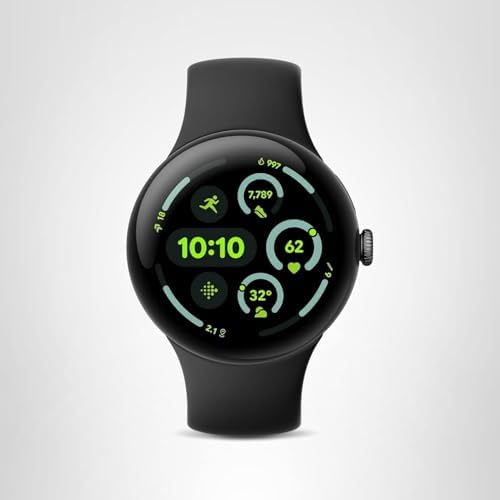
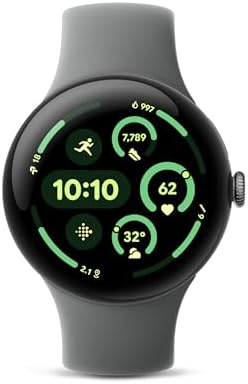
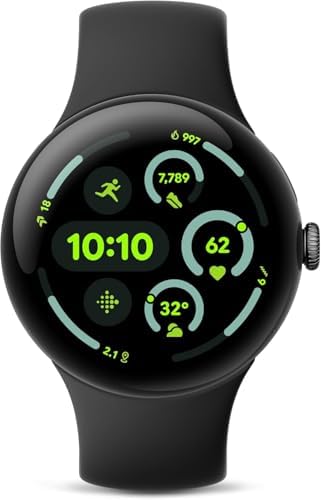
Here the LTPO advantage pairs naturally with the larger case option. Buyers drawn to that configuration can look at the Google Pixel Watch 3 45mm Wi-Fi, which pairs a matte black aluminum case with the bigger screen family and suits users who read notifications, maps and coaching cues on the wrist rather than just workout stats. That case size decision is worth settling early, since the 41mm and 45mm versions change wrist presence considerably.
Battery Endurance and Charging Rhythm
Fitbit states a battery life of 6+ days for the Versa 4, and this single figure reshapes how the watch is lived with. A multi-day charge cycle means sleep tracking never risks a dead device in the morning, and no travel day requires hunting for a proprietary charger. That advantage compounds over a week: it removes a routine task rather than adding a feature.
The Pixel Watch 3 is rated at up to 24 hours with the always-on display enabled. In practice this means a nightly charging habit, and the trade-off is straightforward. Users who want continuous heart rate curves overnight must either charge in the evening before bed or accept a gap. Users who take that routine in stride gain constant access to notifications, voice assistance and Google applications without reaching for a phone.
The right anchor for this decision is not a raw hour count but how each device is used. For a runner logging four sessions a week and sleeping with the watch on, the Versa 4 removes friction. For someone who wants a wrist extension of their phone throughout the working day, the daily charge is a fair exchange for what the screen and OS deliver. Neither approach is wrong, but only one matches a given routine.
- Charging frequency: roughly nightly for the Pixel Watch 3, roughly weekly for the Versa 4
- Always-on risk: the Pixel Watch 3 loses only real endurance with the display always active
- Sleep tracking reliability: the Versa 4 has the structural advantage due to charge cadence
- Travel burden: one vendor charger less often with the Versa 4
Fitness Tracking Depth on Shared Sensors
Both watches list built-in GPS, 24/7 heart rate monitoring, sleep tracking and the Daily Readiness Score in their official materials, so the core fitness apparatus is remarkably similar. The Versa 4 adds 40+ exercise modes and Active Zone Minutes, the latter a metric that converts ordinary movement into a weekly target. The same fitness intelligence powers the Pixel Watch 3 experience, because Fitbit powers both ecosystems.
Where the hardware diverges is in the surrounding application layer. On the Pixel Watch 3, fitness data lives alongside calendar, maps and mobile payments on one screen. On the Versa 4, fitness data is the primary reason the device exists, and the interface reflects that narrowness with fast access to exercise start points. Someone who begins a session spontaneously will find the Versa 4 route to start shorter. Someone who checks a meeting reminder between sets will prefer the Pixel Watch 3.
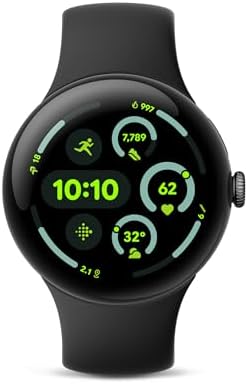
For anyone shopping strictly on the exercise side of the ledger, the Fitbit Versa 4 in Black/Graphite makes its priorities clear: daily readiness, GPS, 24/7 heart rate and 40+ modes are the headlining features, not an afterthought. That focus is why it remains a strong first smartwatch choice for a runner or gym regular who does not want Google services on the wrist.
What the Six-Month Premium Offer Actually Changes
Google bundles a 6-month Fitbit Premium subscription with the Versa 4, per the official product listing. Premium unlocks the deeper Daily Readiness Score analysis, guided programs and expanded sleep breakdowns. Taken together, the hardware and the subscription create a complete out-of-box program for someone starting a training cycle, and the value of that bundling should be counted when comparing what each watch costs to own in year one.
Voice, Calls and On-Wrist Independence
The Pixel Watch 3 includes speaker and microphone hardware for calls, and Wi-Fi connectivity on listed variants. The Versa 4 supports Bluetooth calling, but its design intent is to act as a fitness device that notifies rather than as a second phone. The practical test is simple: if the wrist is meant to be a usable communications endpoint, the Pixel Watch 3 answers yes more confidently; if the wrist is a fitness recorder with notification support, the Versa 4 is sufficient.
App Ecosystem and Platform Lock-In
Wear OS opens a wider catalogue of third-party apps, and for the Pixel Watch 3 that catalogue includes navigation and productivity tools. This flexibility costs battery headroom and adds interface complexity. The Versa 4 runs Fitbit OS, which restricts the app catalogue to Fitbit-approved additions but produces a leaner, more predictable interface with fewer stray animations eating power.
Ownership context matters here. The Pixel Watch 3 is the logical upgrade path inside a Google-centric household, tied to the Google ecosystem, payments and voice layer. The runner who wants a long-form fitness tracker and does not need Google services is better served by Fitbit’s training heritage, whose identity has been built around workout data for years. The two are related by corporate lineage but not interchangeable in philosophy.
Case sizing completes the picture. The Versa 4 is aluminum and offers a single case size with both small and large bands included, reducing selection anxiety. The Pixel Watch 3 offers two case sizes and, on some builds, stainless steel finishes. For anyone comparing multiple options within the Versa 4 category against larger alternatives, case dimensions should be the first filter, followed by battery expectations and app needs.
Which Buyer Should Pick Which Watch
This is the purchase criteria distilled into guidance. Buy the Versa 4 if the following are true: an exercise-first routine of four or more sessions weekly, a hard requirement for sleeping in the watch nightly, a preference for hands-off charging once a week, and comfort with a fitness-focused interface that does not need Google apps. The six-day rating and the 40+ exercise modes do the heavy lifting for that user.
Buy the Pixel Watch 3 if the following are true: a need for a brighter display and a wider app catalogue, daily dependence on notifications and voice assistance from the wrist, an acceptance of nightly charging, and a preference for a case size chosen from two options rather than one. The 3000-nit LTPO panel and the Google service layer are the arguments in that direction, and they are reasonable ones.
Two final checks resolve near-ties. First, decide how often a charger visit fits the week, because that single routine determines which watch feels like an accessory and which feels like a task. Second, decide whether fitness data or smart features dominate wrist time, since the Fitbit engine feeds both but only one device optimizes around training. Budget also drives the outcome, though prices shift over time and no sticker figure here should be treated as fixed. A daily-use smartwatch with fitness support and a fitness-first tracker that also notifies are different products, and the table above is the shortest path to knowing which description fits.