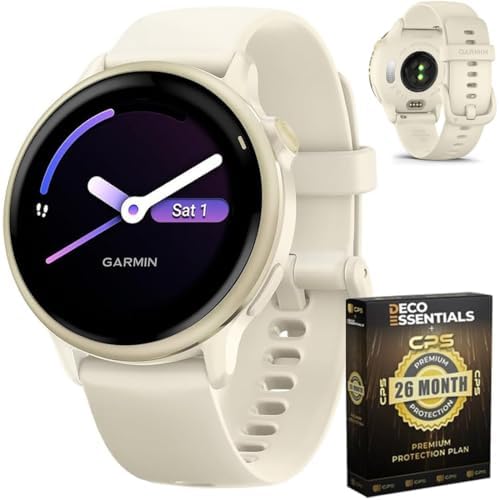
The Garmin Vivoactive 6 and the Garmin Lily 2 Active are both wellness-oriented smartwatches from the same maker, yet they are engineered for two very different wrists and two very different routines. One carries a bright AMOLED panel and a larger case built around all-day activity and training feedback, while the other is a deliberately compact design with a hidden display and a patterned lens that reads more like jewelry than a fitness gadget. This guide is written as a buying decision tool you can keep: it sets the two side by side on the dimensions that actually change what you get day to day, then explains who should choose which.
| Decision Dimension | Garmin Vivoactive 6 | Garmin Lily 2 Active |
|---|---|---|
| Case Footprint | 42.2 x 42.2 x 11.1 mm | Compact, jewelry-scale case |
| Weight | 23 g (36 g with band) | Featherweight for small wrists |
| Wrist Fit Range | 125-190 mm circumference | Designed for narrower wrists |
| Display Type | Bright AMOLED touchscreen | Hidden display with patterned lens |
| Always-On Visibility | Full-color glanceable screen | Tap-to-reveal, discreet by design |
| Battery Rating | Up to 11 days (smartwatch mode) | Up to 9 days (smartwatch mode) |
| Built-in GPS | Yes, for outdoor activity tracking | Yes, built-in GPS |
| Health and Wellness Suite | Broad health and activity metrics | Essential wellness tracking |
| Training Depth | Deeper sport and activity profiles | Lifestyle-first, lighter training focus |
| Smart Notifications | Yes, on-screen alerts | Yes, smart notifications |
| Design Language | Sport-forward, screen-centric | Jewelry-inspired, fashion-led |
| Best Suited To | Active users wanting data at a glance | Style-conscious users wanting subtlety |
| Everyday Wear Feel | Noticeable, tool-like presence | Barely-there, accessory-like presence |
| Charging Cadence | Roughly weekly top-ups | Roughly weekly top-ups |
The table makes the split obvious: the Vivoactive 6 gives you a full-color AMOLED screen and a longer battery rating, while the Lily 2 Active trades screen real estate for a hidden display and a much smaller, more decorative case. Almost every other difference flows from that single design choice, so the real question is not which watch is better, but which of those two priorities matches how you actually wear a watch.
Screen Strategy: Glanceable Data vs Discreet Elegance
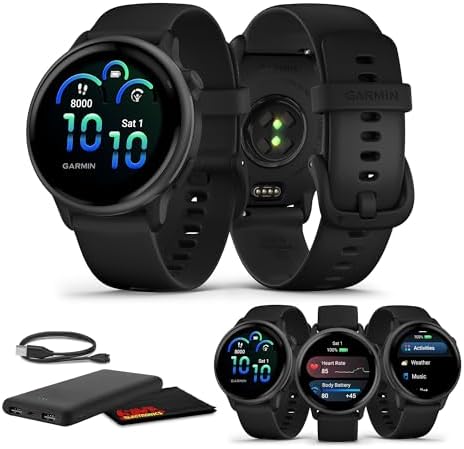
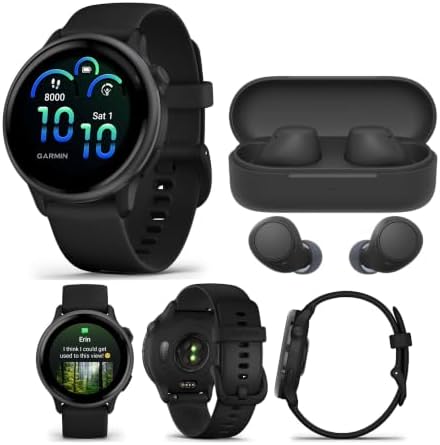
The most consequential difference between these two models is how each one presents information. The Vivoactive 6 is built around a bright AMOLED display that stays readable in daylight and shows health and activity data the moment you raise your wrist. That constant visibility is the point: step counts, heart-rate readings, notifications, and workout stats are all one glance away, which suits anyone who treats a smartwatch as a small dashboard.
The Lily 2 Active takes the opposite approach. Its display is hidden behind a patterned lens and only appears when you tap it, so in everyday use the watch reads as a decorative face rather than a screen. Garmin positions the Lily 2 family as small, stylish smartwatches with metal cases and essential wellness features, and the Active variant adds built-in GPS to that formula. The trade-off is real: you give up the always-visible, information-dense experience of the Vivoactive 6 in exchange for a watch that disappears into an outfit.
Size, Weight, and Who Each Watch Actually Fits
Garmin lists the Vivoactive 6 at 42.2 x 42.2 x 11.1 mm, fitting wrists with a circumference of 125-190 mm, with a weight of 23 g for the case and 36 g including the band. Those numbers describe a watch with a genuine presence on the wrist, comfortable for most adults but clearly a piece of sports equipment rather than a piece of jewelry.
The Lily 2 Active is aimed squarely at narrower wrists and at buyers who find a 42 mm case too much watch. Its smaller footprint and lighter feel are the reason many people choose it, and they are also the reason it cannot match the Vivoactive 6 for on-screen readability. If a watch regularly catches on sleeves or feels bulky under a cuff, the Lily 2 Active solves that problem in a way the Vivoactive 6 does not attempt to.
Battery Life: Eleven Days vs Nine Days in Smartwatch Mode
Battery ratings here are close but not identical. The Vivoactive 6 is rated for up to 11 days in smartwatch mode, while the Lily 2 Active is rated for up to 9 days. In practice both settle into a roughly weekly charging rhythm, and neither is a device you need to charge every night. The two-day gap matters mainly for people who travel frequently or who dislike routine charging, and even then it is a marginal advantage rather than a decisive one.
What matters more is that both watches include built-in GPS, so outdoor walks, runs, and rides can be tracked without carrying a phone. That shared capability is worth noting because it is not universal across small fashion-forward smartwatches, and it keeps the Lily 2 Active credible as a fitness device rather than a pure accessory.
Health, Wellness, and Training Depth
Garmin frames the Vivoactive 6 as a smartwatch with a bright AMOLED display plus health and activity features, and the model sits in the company’s wellness-tracking lineup alongside the Lily 2 family. The Vivoactive line has historically carried a broader set of sport profiles and activity metrics, which makes it the more capable choice for anyone who wants structured feedback on workouts rather than a simple daily summary.
The Lily 2 Active is positioned around essential wellness tracking: the fundamentals are present, but the emphasis is on lifestyle use rather than training load. For a buyer whose routine is walking, yoga, occasional gym sessions, and sleep tracking, that difference is largely academic. For a buyer who runs intervals, cycles with power targets, or wants detailed post-session analysis, the Vivoactive 6 is the more appropriate tool.
Design Language and Everyday Wear
The Vivoactive 6 looks like what it is: a modern fitness smartwatch with a screen-forward face and a sporty strap. It works with athletic clothing and casual outfits but does not pretend to be a dress watch. The Lily 2 Active, by contrast, is designed to be worn as an accessory, with a patterned lens and a case proportioned to read as jewelry on the wrist. That design intent is the reason the hidden display exists at all.
This is the criterion that most often decides the purchase. Buyers who want their watch to look like a watch, with a visible dial and a clear face, tend to be frustrated by the Lily 2 Active’s tap-to-reveal screen. Buyers who want a smartwatch that does not announce itself as a gadget tend to find the Vivoactive 6 too conspicuous. Neither reaction is wrong; they simply reflect different priorities.
Who Should Buy the Garmin Vivoactive 6
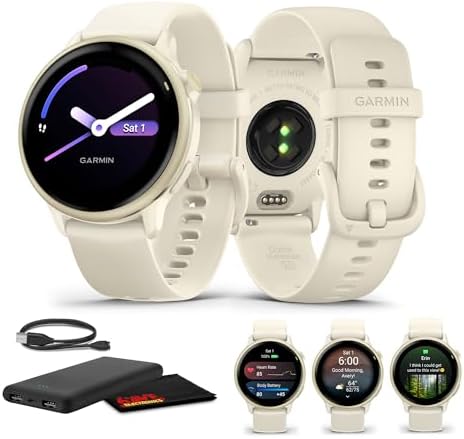
The Vivoactive 6 is the right choice for someone who wants health and activity data visible at a glance, values a bright AMOLED display, and prefers a slightly longer battery rating. It suits regular exercisers who want more than a step counter, and it suits anyone who is comfortable with a 42 mm case and a sport-forward look. Among the options in the Vivoactive 6 lineup, the Garmin v铆voactive 6 Health and Fitness Gold GPS variant pairs the AMOLED display and up to 11 days of battery with a Lunar Gold case and Bone band, which softens the sporty silhouette without hiding the screen.
Who Should Buy the Garmin Lily 2 Active
The Lily 2 Active is the better fit for smaller wrists, for buyers who want a watch that reads as jewelry, and for anyone who prefers a discreet face over a constantly lit screen. It still offers built-in GPS, smart notifications, and up to 9 days of battery, so it covers the wellness basics without demanding attention. Within the Lily 2 family, the Garmin Lily 2 Active Small and Silver Purple GPS version shows the formula clearly: a small silver case, a patterned lens, and a Purple Jasmine silicone band that keeps the look light and wearable.
The Criteria That Should Decide Your Purchase
Three questions settle this comparison. First, do you want to see your data without tapping the screen? If yes, the Vivoactive 6 is the answer. Second, does a 42 mm case feel too large on your wrist? If yes, the Lily 2 Active is the answer. Third, how structured is your training? If you follow plans and review metrics, the Vivoactive 6 offers more depth; if your activity is mostly everyday movement, the Lily 2 Active covers it.
Everything else is close enough to be secondary. Both watches carry built-in GPS, both deliver smart notifications, and both land in the same weekly charging rhythm. The Garmin wellness range simply offers two answers to the same question, and the right one depends on whether you prioritize information or discretion. Choose the screen you want to look at every day, and the rest of the decision follows naturally.