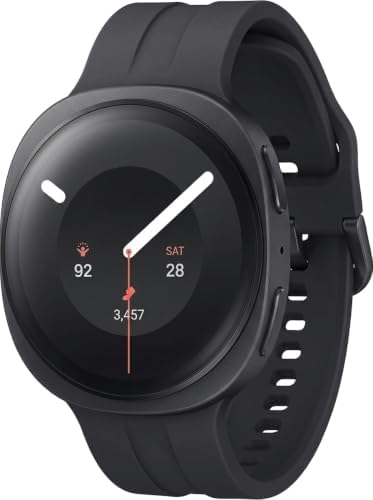
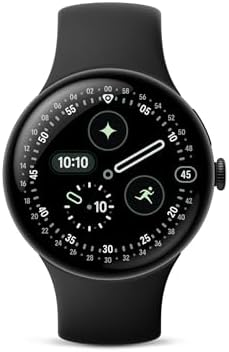
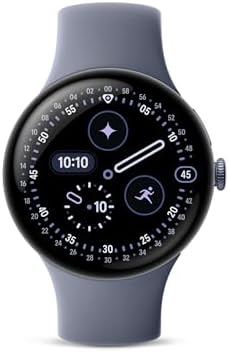
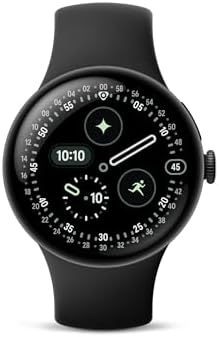
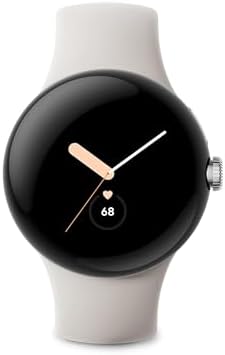
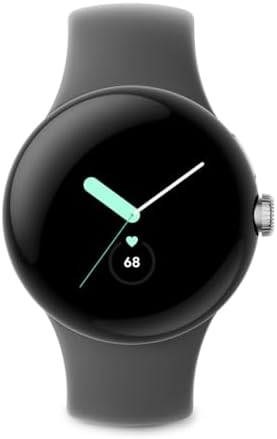
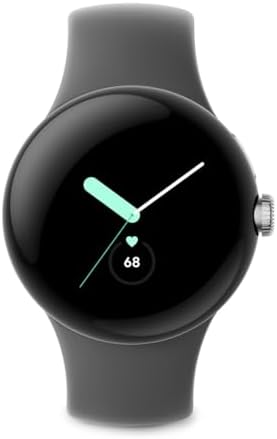
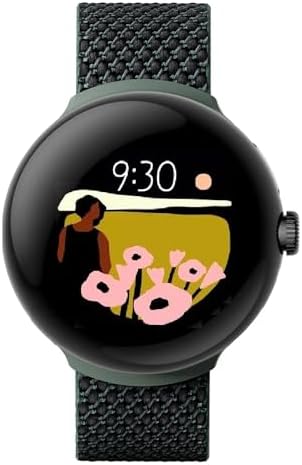
The Google Pixel Watch 4 and the Galaxy Watch9 collection represent two competing answers to the same question: how much health intelligence can a wrist-worn computer deliver without becoming a charger-tethered burden? One arrived as Google’s most refined circular wearable, the other continues Samsung’s long-running sensor arms race. This comparison is built as a permanent buying reference, organised around the specs that actually change the purchase decision rather than the marketing slides.
| Feature & Selling Point | Google Pixel Watch 4 | Samsung Galaxy Watch 9 |
|---|---|---|
| Case Sizes Offered | 41mm and 45mm | 40mm and 44mm |
| Display Type | Domed Actua 360 OLED, always-on | Circular Super AMOLED, always-on |
| Stated Battery Capacity | Up to 30 hours mixed use | 390mAh on 40mm |
| Battery Generational Change | 38\% larger cell than Pixel Watch 3 | 20\% larger than Watch8, 30\% larger than Watch7 |
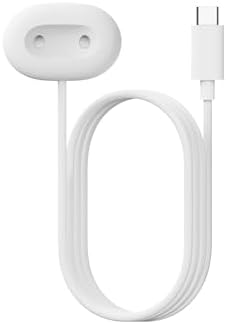
| Charging System | Side-mounted pin contact, fast charge | Magnetic wireless charging puck |
| Processor Platform | Qualcomm Snapdragon W5 Gen 2 | Exynos W1000 octa-core |
| Operating System | Wear OS with Gemini built in | One UI Watch over Wear OS |
| Health Sensor Depth | Heart rate, ECG, skin temperature, oxygen | Heart rate, ECG, blood pressure, body composition |
| Sleep Analytics | Sleep stages, breathing, readiness score | Sleep stages, apnoea detection, coaching |
| Emergency Features | Fall Detection, Safety Signal, Emergency SOS | Fall Detection, Emergency SOS, hard fall alerts |
| GPS Navigation | Dual-band GNSS, offline maps via phone | Dual-band GPS with turn-by-turn routing |
| Water Resistance | 5 ATM plus swimproof | 5 ATM plus IP68 |
| Repairability | Strong emphasis on component repair | Service-centre based support |
| Best Suited Scenario | Pixel owners and AI-first daily wear | Deep health tracking and Samsung phone owners |
The table exposes one decisive split. Samsung invests in sensor breadth and raw battery capacity, while Google invests in software intelligence and hardware longevity. The 390mAh cell and body composition analysis give the Galaxy Watch9 collection a measurable edge for data-hungry users. Everything else on that sheet points to a genuinely close fight.
Where the Two Watches Actually Differ
The surface specs tell only half the story. Read the rows about processor and sensor depth together and a clearer picture emerges: one watch is engineered around a machine-learning assistant, the other around a clinical-grade measurement suite.
Silicon and Software Philosophy
The Google model leans on the Snapdragon W5 Gen 2 architecture, a chip family designed to move heavy inference tasks off the main core in order to preserve charge. The practical result is a steady frame rate through scrolling and a quick response from on-device assistant commands. Samsung’s Exynos W1000 takes a different route, using a multi-core arrangement that favours sustained background processing for continuous sensor sampling. Neither approach is objectively superior; the choice comes down to whether a buyer values conversational assistant speed or all-day biometric collection.
Sensor Breadth and What It Is Worth
According to Samsung, the company positions its Galaxy smartwatches as carrying more advanced sensors than simpler wearables, specifically citing blood pressure, heart rate, sleep, and body composition measurement. That is a defensible technical claim and it matters for anyone tracking body fat percentage shifts during a training block. Google’s sensor stack covers ECG, skin temperature, and blood oxygen but does not match the compositional analysis features in depth. Where the Pixel line retaliates is in the readiness score and assistant-driven wellness prompts, which convert raw readings into plain-language guidance. A prospective buyer should treat body composition as a specialist requirement and readiness scoring as a daily convenience.
Battery Life in Real Use
Longevity claims deserve scrutiny because they are the most common point of disappointment in wearable purchases. the Google Pixel Watch 4 (45mm) – 45mm Wi-Fi is rated at roughly 30 hours of mixed operation, a meaningful improvement over earlier generations and enough for a full day plus an overnight sleep reading. If a buyer forgets the charger, however, the following evening becomes uncomfortable.
Samsung’s published figures for the new generation are more explicit. the Samsung Galaxy Watch 9 40mm International Graphite carries a 390mAh battery, described by the company as 20 percent larger than Galaxy Watch8 and 30 percent larger than Galaxy Watch7. Larger capacity does not automatically translate to longer runtime, since added sensors draw more current, but it does create more headroom when the always-on display is active. For two-night trips without a charger, the Samsung model holds a modest practical advantage, particularly in the graphite finish that pairs easily with most bands.
Fit, Comfort, and the Size Question
Case dimensions decide comfort more than any specification sheet admits. Google offers 41mm and 45mm variants, while Samsung splits at 40mm and 44mm. A narrow wrist therefore has more headroom in the Samsung lineup, and buyers upgrading from an earlier 40mm model will find the latest generation familiar against the skin. Google’s 45mm option suits larger wrists and produces a broader dial surface for map previews and message glances. Cushion-style strap systems on both sides make swapping bands easy, though the attachment mechanisms are not cross-compatible.
Weight balance is the factor most often overlooked during a short retail try-on. Heavier cases cause the watch to rotate during running, forcing the wearer to re-seat it mid-session. Try both on a real wrist for at least a full afternoon before committing.
Ecosystem Gravity: Why Your Phone Decides First
No comparison of these two devices is complete without acknowledging the primary constraint: phone pairing. The Pixel model behaves as an extension of the Android experience, with Assistant and Gemini integration woven into notifications, calendar access, and smart-home control. The Samsung alternative reaches full functionality inside the company’s own handset ecosystem, where features like remote camera control, Samsung Wallet, and earbud handover are tightly integrated.
A Pixel owner who pairs a Galaxy watch loses several convenience integrations. A Galaxy phone owner who pairs a Pixel watch gives up some depth of sensor analysis. Because neither device currently runs at its full feature ceiling across an ecosystem boundary, the honest advice is to select the watch that matches the phone already in the pocket unless a specific sensor or size requirement outweighs the inconvenience.
Durability, Repairs, and the Long Ownership Cost
Watch purchases are rarely one-year commitments. Both manufacturers specify 5 ATM water resistance, which permits swimming and showering but not high-impact water sports, and both employ OLED panels that can suffer burn-in if left on peak brightness for extended periods. The more practical divide lies in servicing. Google has publicly attached unusual importance to repairability for this generation, designing the case so that components can be replaced rather than the whole unit discarded. Samsung’s support structure remains service-centre oriented.
Over a multi-year horizon, this difference can change the total cost of ownership considerably. A buyer who tends to keep devices for four years or more should weigh repairability almost as heavily as battery life, because a swollen cell or failed display is the usual reason a watch retires early.
Which Buyer Belongs to Which Watch
The decision distils into a short set of profiles.
- Choose the Pixel model if: you carry a Pixel phone, value conversational assistant features, want strong day-to-day comfort in a 41mm size, and care about repairability.
- Choose the Galaxy model if: you carry a Samsung handset, want blood pressure and body composition tracking, prefer a 40mm case, or plan multi-day trips away from a charger.
- Look elsewhere if: you rely on iPhone hardware, since neither watch supports it fully, or if you require specialist multisport navigation with extended solar endurance.
There is no cross-platform winner. The right purchase is dictated by the phone in your hand, the size of your wrist, and the depth of data you intend to read every morning.
Both manufacturers have moved toward the same destination from opposite directions: Google towards measurable engineering credibility, Samsung towards software coherence. Whichever wrist ends up wearing one, the standard for what a daily wearable should deliver has risen in ways that ultimately benefit the category far more than either individual model.