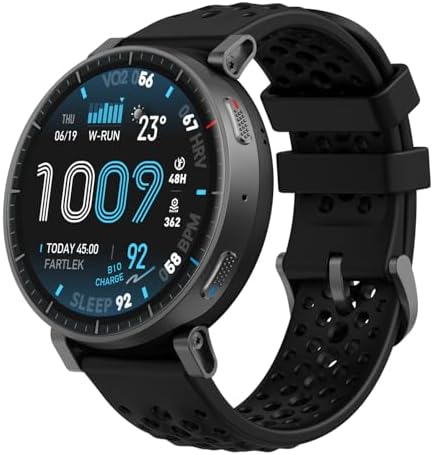
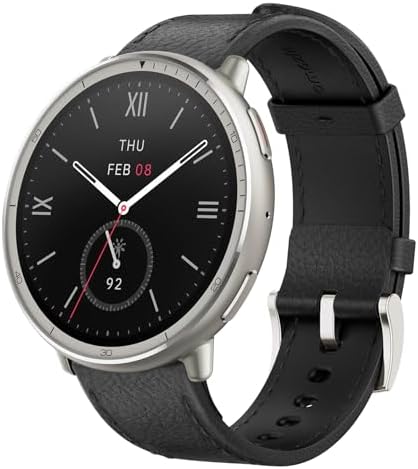
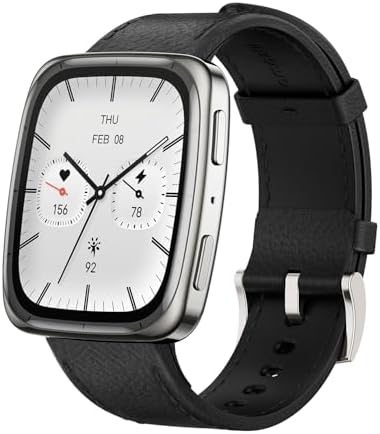
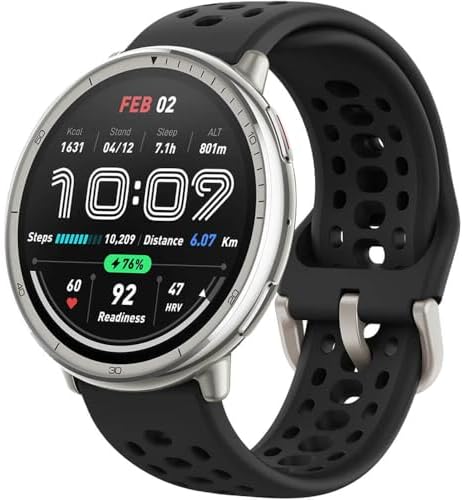
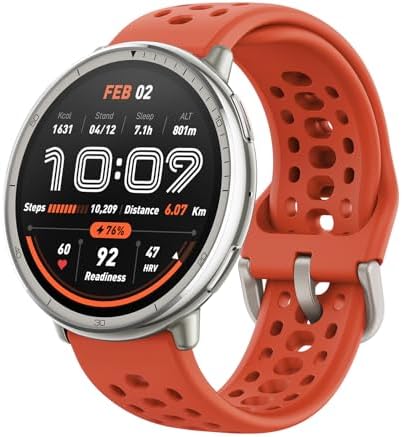
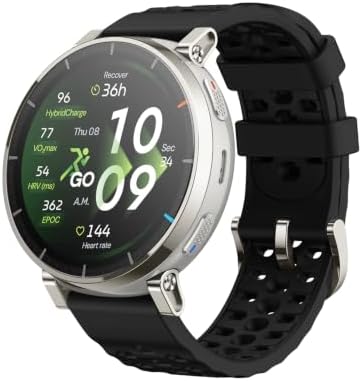
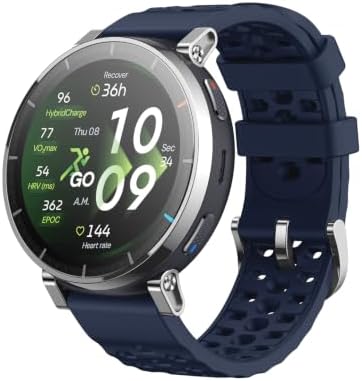
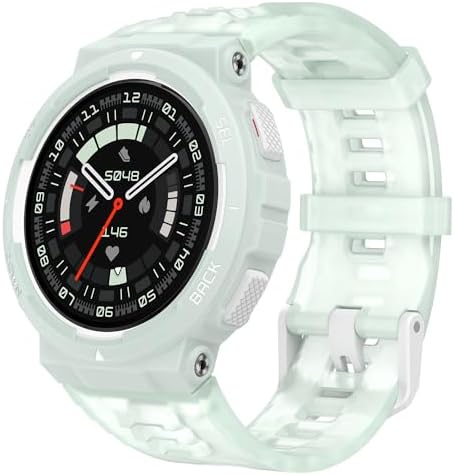
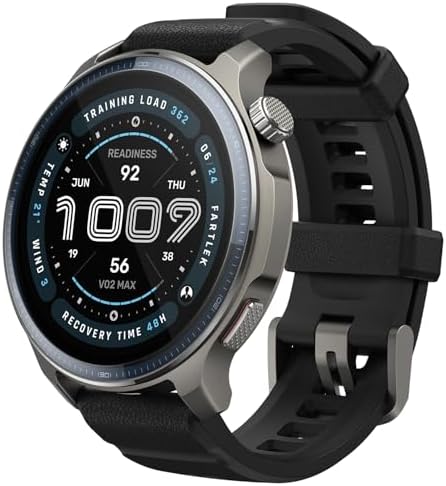
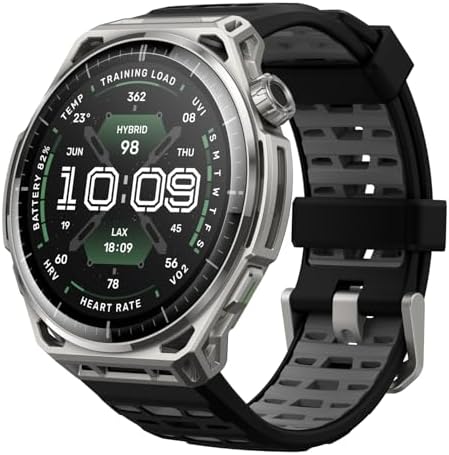
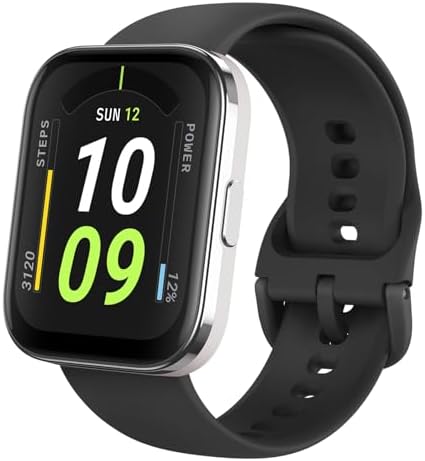
Two Amazfit releases now sit close enough in price to force a genuine decision: the Bip 6 at $79.99 and the Active Max at $99.99. One carries a 1.97-inch AMOLED panel and up to 14 days of battery, the other answers with a chunkier 48mm case, a 1.5-inch display rated at 3,000 nits, and up to 25 days between charges. This guide exists to settle that choice before marketing language gets a chance to blur it, and it is worth keeping for the length of your ownership.
| Feature & Selling Point | Amazfit Bip 6 | Amazfit Active Max |
|---|---|---|
| Display Size | 1.97 inches | 1.5 inches |
| Peak Brightness | 2,000 nits | 3,000 nits |
| Case Size | 46mm | 48mm |
| Stated Battery Life | Up to 14 days | Up to 25 days |
| Frame Material | Aluminum alloy | Not specified in official listing |
| Onboard Storage | 4GB | 4GB |
| Workout Modes | 140+ | 170+, including smart strength training |
| Offline Maps | Free maps supported | Offline maps with watch face layers |
| Bluetooth Calling | Call and text notifications with replies | Phone-assisted calls |
| Health Sensors | Heart rate, sleep, SpO2 | Heart rate, sleep, SpO2 plus training load metrics |
| Cross-Platform Support | iOS and Android | iOS and Android |
| Water Resistance | Water-resistant for swim tracking | Water-resistant for swim tracking |
| List Price | $79.99 | $99.99 |
| Who It Suits | Readers who want the largest panel per dollar and a lighter case | Athletes who trade size for brightness, storage headroom, and a longer charge cycle |
The table makes the central tension plain: the Bip 6 wins on pure screen area and wallet impact, while the Active Max spends its extra $20 on brightness headroom, a deeper training toolkit, and roughly eleven more days of rated endurance. Almost every other row is close enough to be a tie, which is exactly why the decision should be made on use case rather than on spec counting.
Display Strategy: Bigger Panel or Brighter Panel
The 1.97-inch AMOLED panel on the Amazfit Bip 6 is the larger of the two by a meaningful margin, and that difference is felt most in the situations where people actually look at a watch: reading a notification mid-conversation, glancing at pace during a run, or scrolling a weather card without slowing down. More surface area also gives watch faces room to breathe, which matters in a category where complications pile up quickly.
The Active Max takes the opposite route. Its 1.5-inch panel is physically smaller but rated to 3,000 nits, against 2,000 nits on the Bip 6. In practical terms, that gap shows up under direct midday sun, on snow, and on open water, where ambient light overwhelms most wrist displays. Amazfit built the Active Max around that scenario, describing the watch as putting a brighter screen into a package aimed at maximum training output. Anyone who logs miles at noon with the sun behind them will notice the extra brightness before they notice the reduced diagonal.
Battery Life and Charging Rhythm
Rated endurance is where the two watches separate most cleanly in daily life. Amazfit states up to 14 days for the Bip 6 and up to 25 days for the Active Max, and while both figures assume typical use rather than heavy GPS sessions, the ratio holds: the Active Max asks for roughly half as many charging sessions per year. For a device that tracks sleep, that difference matters more than it sounds, because charging has to happen during waking hours and the shorter the interval, the more often the routine is broken.
Neither watch demands the nightly charging that full smartwatches do. What separates them is how forgiving each is when the routine slips. Anyone who has forgotten a cable on a weekend trip will appreciate how much slack the longer cycle on the Amazfit Active Max provides, and that slack is a real consideration for frequent travellers and shift workers. The Bip 6, by contrast, is easiest to live with when a charger stays on the nightstand and Sunday becomes charging day.
Training Depth and the 170-Mode Question
Both watches cover the fitness basics comfortably: continuous heart rate, sleep staging, blood oxygen spot checks, and water resistance that permits swim tracking. Where they depart is the layer above those basics. Amazfit equips the Active Max with more than 170 workout modes including smart strength training, which recognises repetitions and sets rather than simply logging elapsed time, alongside training load and recovery-oriented metrics that feed into a broader picture of accumulated fatigue.
The Bip 6 counters with 140-plus modes and the essential scaffolding of structured training: GPS tracking, pace and distance, heart rate zones, and free map downloads over Bluetooth. For runners and cyclists building a weekly base, that is sufficient. The extra modes on the Active Max matter mainly to gym-focused users who want strength work quantified, or to multi-sport athletes who dislike compromise on niche disciplines. This is a distinction between two approaches to training rather than a deficiency in either.
Wrist Presence: 46mm Aluminum Against a 48mm Case
The Bip 6 uses an aluminum alloy frame across its 46mm case, which keeps the watch light enough for overnight wear and unobtrusive enough to slide under a shirt cuff. Aluminum is also the more forgiving choice for anyone who prefers a matte, tool-watch look over polished hardware. Its 22mm lug width connects it to a broad aftermarket, from sporty silicone to leather, so the visual character of the watch can be swapped in seconds.
The Active Max sits one size class up at 48mm, and on wrists under roughly seven inches the difference is visible rather than theoretical. Heavier devices tend to catch on sleeves and to shift during high-cadence activity, though the larger body also houses more display brightness and a bigger cell. Neither case is objectively better designed; they are simply aimed at different wrist sizes and different visual preferences, and physical fit should be checked before any other specification.
Maps, Storage, and Everyday Connectivity
Both models ship with 4GB of internal storage, which holds offline map regions, music for untethered runs, and local app data without forcing the user to prune aggressively. Offline map support, including layered watch faces on the Active Max, means route-following works without a phone in the pocket, a meaningful capability for trail runners and commuters navigating unfamiliar cities. Neither watch expects a permanent phone connection to remain useful.
Connectivity divides more sharply. The Bip 6 handles Bluetooth calling with on-wrist call and text notifications, plus replies to messages when the paired phone supports them. That makes it the more practical choice for people who leave the phone in a bag during the workday but still need to triage the urgent thread. The Active Max leans toward training performance, and its phone-assisted call handling reflects that ordering of priorities. If quick wrist-based messaging matters more to the day than training load does, the Bip 6 answers that need more directly.
Extras, Compatibilities, and Value Across Time
Accessory compatibility shapes a watch’s long-term ownership more than release-day reviews admit. The Amazfit Hyrox 22mm Silicone Replacement Strap is listed as compatible with the Bip 6 and other 22mm models in the range, so replacement costs stay low and strap choices stay broad. For buyers who find either of these two too large, a smaller sibling such as the Amazfit Active 2 sits at the compact end of the same family, which makes the 44mm-to-48mm spread a legitimate part of the decision rather than an afterthought.
Set against that spread, the Bip 6 at $79.99 is the easier entry point for a first smartwatch or a secondary training device, and the Active Max at $99.99 justifies its premium mainly for people who train seriously and struggle with a smaller screen in bright conditions. Firmware cadence and app maturity are shared across the Amazfit brand‘s wider lineup, so neither model wins on the account of updates or app reliability.
The Buying Decision: Match the Watch to the Week
The Bip 6 is the better buy for a mixed routine: commuting, gym sessions two or three times a week, sleep tracking, and a genuine dependence on notification handling. Its larger 46mm display makes dense information legible, its calling and messaging support covers the working day, and its price leaves budget for a proper strap rotation. Users who wear a watch on the inside of the wrist during winter, or downsize for a formal look, will also find the 46mm chassis easier to dress up. It is the model to choose when the question is what a wrist needs on an ordinary Tuesday.
The Active Max takes the win for anyone whose week is structured around training blocks, daylight running, and gym work that deserves strength-specific tracking. Its brightness figure is not decoration: it is what makes metrics readable during an open-air session with no shade in sight. The extra battery life means less charge-anxiety across a long trip, the 48mm case reads as deliberate rather than accidental, and the wider workout library covers outdoor rides as readily as it covers deadlifts. Triathletes balancing multiple disciplines will exhaust its modes long after they exhaust their own schedule.
The clearest way to decide is to write down the three tasks each user expects to do most often. If two or more of them involve reading a display or replying to a message, the Bip 6 is the natural fit. If two or more involve logging training load or sitting through sun-drenched sessions, the Active Max is worth the premium. Buyers caught between them should choose on wrist size first, because a watch that rides awkwardly will lose to one that disappears on the arm regardless of specification, and then settle the remaining question on brightness versus screen area.
Each watch represents a coherent reading of what a modern sports smartwatch should prioritise, and the pair together says something about where Amazfit is steering: toward larger displays on every tier, toward algorithms that understand fatigue, and toward devices that ask the wrist to do more than count steps. The right owner does not need the most expensive model, only the one whose compromises land outside daily habit.